Showing posts from category Africa.
-
Second Generation Biofuels and Revitalizing African Agriculture
›In “A New Hope for Africa,” published in last month’s issue of Nature, authors Lee R. Lynd and Jeremy Woods assert that the international development community should “cut with the beneficial edge of bioenergy’s double-edged sword” to enhance food security in Africa. According to Lynd and Woods, Africa’s severe food insecurity is a “legacy of three decades of neglect for agricultural development.” Left out of the Green Revolution in the 1960s, the region was flooded with cheap food imports from developed nations while local agricultural sectors remained underdeveloped. With thoughtful management, bioenergy production on marginal lands unfit for edible crops may yield several food security benefits, such as increased employment, improved agricultural infrastructure, energy democratization, land regeneration, and reduced conflict, write the authors. The technological advancements of second-generation biofuels may ease the zero-sum tension between food production and bioenergy in the future, writes Duncan Graham-Rowe in his article “Beyond Food Versus Fuel,” also appearing last month in Nature. Graham-Rowe notes that current first-generation biofuel technologies, such as corn and sugar cane, contribute to rising food prices, require intensive water and nitrogen inputs, and divert land from food production by way of profitability and physical space. There is some division between second-generation biofuel proponents: some advocate utilizing inedible parts of plants already produced, while others consider fast-growing, dedicated energy crops (possibly grown on polluted soil otherwise unfit for human use) a more viable solution – either has the potential to reduce demand for arable land, says Graham-Rowe. “Advanced generations of biofuels are on their way,” he writes, it is just a matter of time before their kinks are worked out “through technology, careful land management, and considered use of resources.”
 -
Emily Puckart, MHTF Blog
Maternal Health Challenges in Kenya: An Overview of the Meetings
›The original version of this article, by Emily Puckart, appeared on the Maternal Health Task Force blog.
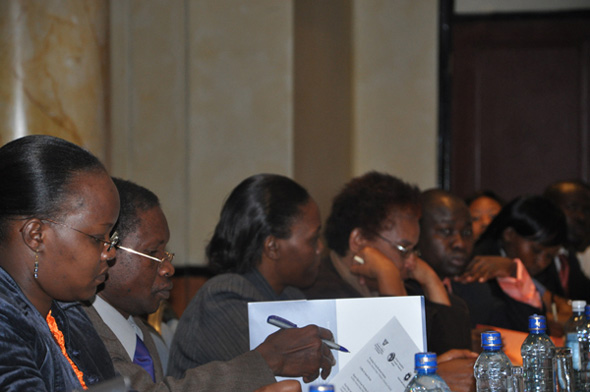
I attended the two day Nairobi meeting on “Maternal Health Challenges in Kenya: What New Research Evidence Shows” organized by the Woodrow Wilson International Center and the African Population and Health Research Center (APHRC). [Video Below]
First, here in Nairobi, participants heard three presentations highlighting challenges in maternal health in Kenya. The first presentation by Lawrence Ikamari focused on the unique challenges faced by women in rural Kenya. Presently Kenya is still primarily a rural country where childbearing starts early and women have high fertility rates. A majority of rural births take place outside of health institutions, and overall rural women have less access to skilled birth attendants, medications, and medical facilities that can help save their lives and the lives of their babies in case of emergency.
Catherine Kyobutungi highlighted the challenges of urban Kenyan women, many of whom deliver at home. When APHRC conducted research in this area, nearly 68 percent of surveyed women said it was not necessary to go to health facility. Poor road infrastructure and insecurity often prevented women from delivering in a facility. Women who went into labor at night often felt it is unsafe to leave their homes for a facility and risked their lives giving birth at home away from the support of skilled medical personnel and health facilities. As the urban population increases in the coming years, governments will need to expend more attention on the unique challenges women face in urban settings.
Finally, Margaret Meme explored a human rights based approach to maternal health and called on policymakers, advocates, and donors to respect women’s right to live through pregnancies. Further, she urged increased attention on the role of men in maternal health by increasing the education and awareness of men in the area of sexual and reproductive health as well as maternal health.
After these initial presentations, participants broke out into lively breakout groups to discuss these maternal health challenges in Kenya in detail. They reconvened in the afternoon in Nairobi to conduct a live video conference with a morning Washington, DC audience at the Woodrow Wilson Center. It was exciting to be involved in this format, watching as participants in Washington were able to ask questions live of the men and women involved in maternal health advocacy, research and programming directly on the ground in Kenya. It was clear the excitement existed on both sides of the Atlantic as participants in Nairobi were able to directly project their concerns and hopes for the future of maternal health in Kenya across the ocean through the use of video conferencing technology.
There was a lot of excitement and energy in the room in Nairobi, and I think I sensed the same excitement through the television screen in DC. I hope that this type of simultaneous dialogue, across many time zones, directly linking maternal health advocates around the globe, is an example of what will become commonplace in the future of the maternal health field.
Emily Puckart is a senior program assistant at the Maternal Health Task Force (MHTF).
Photo Credit: MHTF. -
In Rush for Land, Is it All About Water?
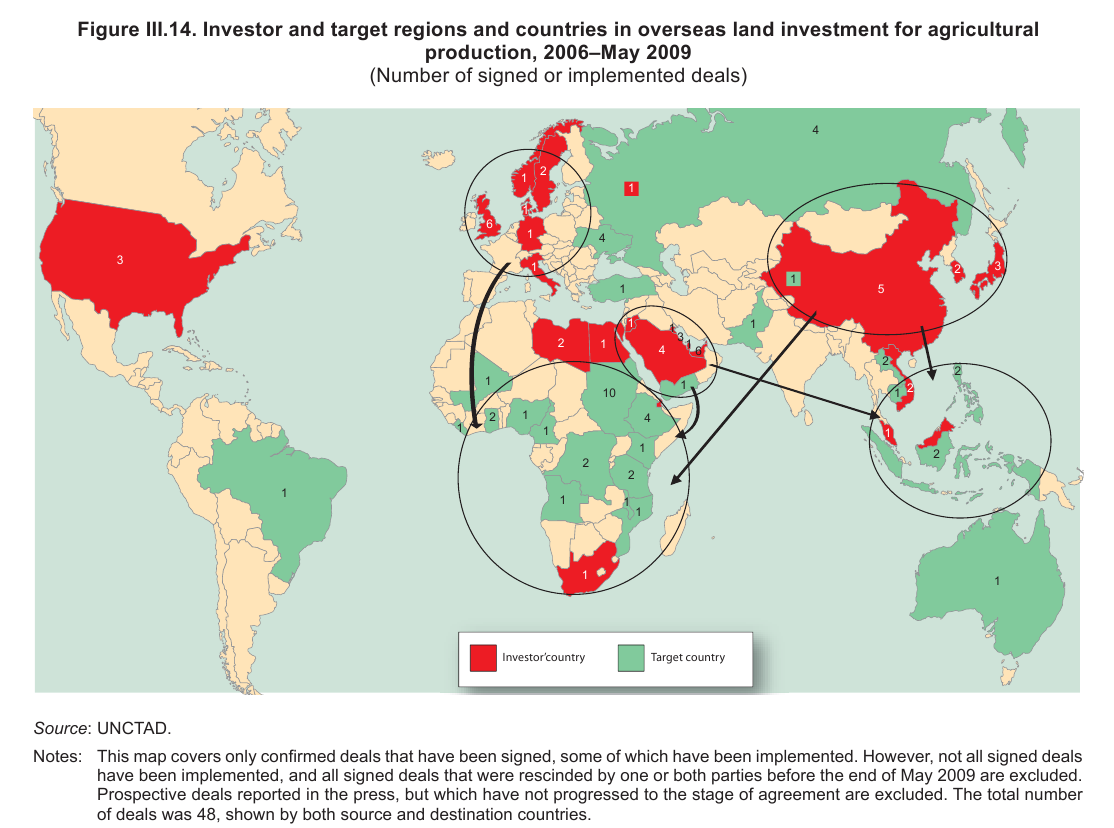
›July 26, 2011 // By Christina DaggettOver the past few years, wealthy countries with shrinking stores of natural resources and relatively large populations (such as China, India, South Korea, and the Gulf states) have quietly purchased huge parcels of fertile farmland in Africa, South America, and South Asia to grow food for export to the parent country. With staple food prices shooting up and food security projected to worsen in the decades ahead, it is little wonder that countries are looking abroad to secure future resources. But the question arises: Are these “land grabs” really about the food — or, more accurately, are they “water grabs”?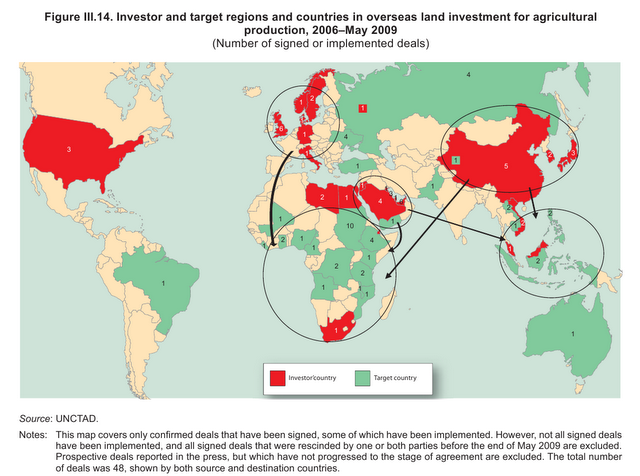
The Great Water Grab
With growing urban populations, an expanding middle class, and increasingly scarce arable land resources, some governments and investors are snapping up the world’s farmland. Some observers, however, have pointed out that these dealmakers might be more interested in the water than the land.
In an article from The Economist in 2009, Peter Brabeck-Letmathe, the chairman of Nestlé, claimed that “the purchases weren’t about land, but water. For with the land comes the right to withdraw the water linked to it, in most countries essentially a freebie that increasingly could be the most valuable part of the deal.”
Consider some of the largest investors in foreign land: China has a history of severe droughts (and recently, increasingly poor water quality); the Gulf nations of Saudi Arabia, Kuwait, Qatar, and Bahrain are among the world’s most water-stressed countries; and India’s groundwater stocks are rapidly depleting.
A recent report from the World Bank on global land deals highlighted the effect water scarcity is having on food production in China, South Asia, the Middle East, and North Africa, stating that “in contrast, Sub-Saharan Africa and Latin America have large untapped water resources for agriculture.”
Keeping Engaged and Informed
“The water impacts of any investment in any land deal should be made explicit,” said Phil Woodhouse of the University of Manchester during the recent International Conference on Global Land Grabbing, as reported by the New Agriculturist. “Some kind of mechanism is needed to bring existing water users into an engagement on any deals done on water use.”
At the same conference, Shalmali Guttal of Focus on the Global South cautioned, “Those who are taking the land will also take the water resources, the forests, wetlands, all the wild indigenous plants and biodiversity. Many communities want investments but none of them sign up for losing their ecosystems.”
With demand for water expected to outstrip supply by 40 percent within the next 20 years, water as the primary motivation behind the rush for foreign farmland is a factor worth further exploration.
Global Farming
According to a report from the Oakland Institute, nearly 60 million hectares (ha) of African farmland – roughly the size of France – were purchased or leased in 2009. With these massive land deals come promises of jobs, technology, infrastructure, and increased tax revenue.
In 2008 South Korean industrial giant Daewoo Logistics negotiated one of the biggest African farmland deals with a 99-year lease on 1.3 million ha of farmland in Madagascar for palm oil and corn production. The deal amounted to nearly half of Madagascar’s arable land – an especially staggering figure given that nearly a third of Madagascar’s GDP comes from agriculture and more than 70 percent of its population lives below the poverty line. When details of the deal came to light, massive protests ensued and it was eventually scrapped after president Marc Ravalomanana was ousted from power in a 2009 coup.
While perhaps an extreme example, the Daewoo/Madagascar deal nonetheless demonstrates the conflict potential of these massive land deals, which are taking place in some of the poorest and hungriest countries in the world. In 2009, while Saudi Arabia was receiving its first shipment of rice grown on farmland it owned in Ethiopia, the World Food Program provided food aid to five million Ethiopians.
Other notable deals include China’s recent acquisition of 320,000 ha in Argentina for soybean and corn cultivation – a project which is expected to bring in $20 million in irrigation infrastructure, the Guardian reports – and a Saudi Arabian company which has plans to invest $2.5 billion and employ 10,000 people in Ethiopia by 2020, according to Gambella Star News.
But governments in search of cheap food aren’t the only ones interested in obtaining a piece of the world’s breadbasket: Individual investors are also heavily involved, and the Guardian reports that U.S. universities and European pension funds are buying and leasing land in Africa as well.
The Future of Land and Water
Whatever the benefits or pitfalls, large-scale land deals around the world look set to continue. The world is projected to have 7 billion mouths to feed by the end of this year and possibly 10 billion plus by the end of the century.
Currently, agriculture uses 11 percent of the world’s land surface and 70 percent of the world’s freshwater resources, according to UNESCO. If and when the going gets tough, how will the global agricultural system respond? Whose needs come first – the host countries’ or the investing nations’?
Christina Daggett is a program associate with the Population Institute and a former ECSP intern.
Photo Credit: Number of signed or implemented overseas land investment deals for agricultural production 2006-May 2009, courtesy of GRAIN and the UN Conference on Trade and Development (UNCTAD).
Sources: BBC News, Canadian Water Network, Christian Science Monitor, Circle of Blue, The Economist, Gambella Star News, Guardian, Maplecroft, New Agriculturalist, Oakland Institute, State Department, Time, UNFPA, UNESCO, World Bank, World Food Program. -
Nepal to East Africa: Population, Health, and Environment Programs Compared
›“Practice, Harvest and Exchange: Exploring and Mapping the Global, Health, Environment (PHE) Network of Practice,” by the University of Rhode Island’s Coastal Resources Institute and the USAID-supported BALANCED Project, explores the successes and challenges of their global population, health, and environment (PHE) network (with a heavy presence in East Africa). In order to increase support of the nascent PHE approach, the network seeks to shorten the “collaborative distance” between “PHE champions,” so they can develop a stronger body of evidence for the links between population, health, and the environment. In their analysis, the authors write that the network has facilitated the development of independent, information-sharing relationships between “champions.” However, they also observed shortfalls in the network, such as its limited reach into less technologically advanced yet more biodiverse regions, its bias toward BALANCED meet-up event participants, and its exclusion of those experts unlikely to be included in published works.In “Linking Population, Health, and the Environment: An Overview of Integrated Programs and a Case Study in Nepal” from the Mount Sinai Journal of Medicine, Sigrid Hahn, Natasha Anandaraja, and Leona D’Agnes provide both a broad survey of the structure and content of programs using the PHE method and an in-depth case study of a successful initiative in Nepal. Hahn et al. praise the Nepalese program for simultaneously addressing deforestation from fuel-wood harvesting, indoor air pollution from wood fires, acute respiratory infections related to smoke inhalation, as well as family planning in Nepal’s densely populated forest corridors. “The population, health, and environment approach can be an effective method for achieving sustainable development and meeting both conservation and health objectives,” the authors conclude. In particular, one benefit of cross-sectoral natural resource and development programs is the inclusion of men and adolescent boys typically overlooked by strictly family planning programs. -
Tim Siegenbeek van Heukelom, State-of-Affairs
Food Security in Kenya’s Yala Swamp
›June 21, 2011 // By Wilson Center StaffThe original version of this article, by Tim Siegenbeek van Heukelom, appeared on State-of-Affairs.
In West Kenya on the Northeastern shore of Lake Victoria, the Yala swamp wetland is one of Kenya’s biodiversity hotspots. The Yala swamp also supports several communities that utilize the wetland’s natural resources to support their families and secure their livelihoods. Even more, many people recognize the swamp’s extraordinary potential as agricultural land to significantly boost Kenya’s food security. These are three widely diverse interests, which may seem to be difficult to reconcile. Yet, with proper management, sufficient investment and effective communication, a differentiated utilization of the Yala swamp can be realized through a system of multiple land use. This will be a difficult but certainly not unrealistic objective.
A Brief History
The most recent development of the Yala swamp was undertaken by Dominion Farms, a subsidiary of a privately held company from the United States investing in agricultural development. The reclamation and development of the swamp, however, is far from a new phenomenon.
The intention of the Kenyan government to transform parts of the Yala swamp into agricultural land for food production goes back as far as the early 1970s. Around that time, the Ministry of Foreign Affairs of the Netherlands was consulted extensively by the Kenyan government for technical assistance on reclamation of the swamp and the feasibility of agricultural production.
Throughout the 1980s numerous reports were commissioned by the Kenyan Ministry for Energy and Regional Development and the Lake Basin Development Authority to the Dutch Ministry of Foreign Affairs. Reports like the “Yala Integrated Development Plan” and the “Yala Swamp Reclamation and Development Project” focused in depth on the potential of the development of the swamp and made recommendations on practical matters, such as drainage and irrigation, soil analysis, agriculture, marketing, environmental aspects, employment opportunities, human settlement, management, and financial planning.
As a result, small-scale reclamation and development of the swamp land was undertaken throughout the 1980s and 1990s under the supervision of the Lake Basin Development Authority. The development of the swamp was partially successful, yet its scale was small and financial benefits were too marginal. Major investment was therefore required to extend the scale of the project.
Then, in 2003, an American investor expressed interest to make significant long-term investments into bringing parts of the swamp into agricultural production. Subsequently, a lease for 45 years was negotiated between Dominion Farms and the Siaya and Bondo County Councils to bring into agricultural production some 7,000 hectares of the Yala swamp. The whole Yala swamp wetland covers 17,500 hectares, which means that Dominion Farms is allowed to reclaim and develop roughly 40 percent of the swamp.
Protracted Conflict
Since the early days of the arrival of the foreign investor in 2004, there has been lingering tension and occasional flares of conflict between the communities surrounding the project site, third parties (i.e. government officials, politicians, NGOs, CBOs, environmentalists), and the investor.
The most commonly touted complaint is that Dominion Farms “grabbed” the communities’ land. While it is hard to trace back the exact procedures and individuals that were involved, there are clear contracts with the Siaya and Bondo County Councils that substantiate the transfer of land-use to Dominion Farms for a period of 45 years. Some claim, however, that the negotiation process for the lease was entrenched in bribery and corruption, yet no one has been able to show this author a single trace of evidence to substantiate these accusations. Similarly, there are complaints by local residents that they were never consulted in the negotiation process – where they should have been, as they rightly point out that the swamp is community trust land. However, the land is held in trust by the relevant county council for the community. The county council should therefore initiate consultations with the local communities and residents to get their approval to lease the land to third parties. So it appears that some of the resentment over the loss of parts of the swamp should not be directed at the foreign investor but rather target the local county council and their procedures.
Continue reading on State-of-Affairs. -
New Oxfam Report Tackles Broken Food System
›June 17, 2011 // By Ramona Godbole“The global food system is broken,” reads a new report from Oxfam International. While much of Growing a Better Future: Food Justice in a Resource-Constrained World essentially reviews the major factors that contribute to food insecurity, Oxfam’s call to transform the food system is certainly timely, given this year’s high food prices (blamed in part for inflaming popular revolts in the Middle East) and fears of another global food crisis.
Despite producing enough food for everyone, one in seven people globally face chronic under-nutrition and almost one billion people are food insecure. Hunger is concentrated within rural areas in developing countries, and within families, women are often disproportionally affected, having serious implications for maternal and child health.
“We face three interlinked challenges in an age of growing crisis: feeding nine billion without wrecking the planet; finding equitable solutions to end disempowerment and injustice; and increasing our collective resilience to shocks and volatility,” write the authors of the report.
A “Perfect Storm” for Hunger
If current trends continue, population growth, natural resource scarcity, and climate change will put increasing stress on the food system in the future and create a “perfect storm” for more hunger, says Oxfam.
In the short term, oil price hikes, extreme weather, and speculative trading in markets have caused food prices to rise. With global population slated to grow to 9.1 billion and the global economy projected to be three times as big, demand for food may increase by as much as 70 percent by 2050. Food scarcity will also be deeply affected by the depletion of other natural resources including water, oil, and land.
According to the report’s predictions, child malnutrition levels in sub-Saharan Africa are expected to grow by 8 million by 2030. This estimate is before taking into account the effects of climate change, which could reduce agricultural yields by 20 to 30 percent in sub-Saharan Africa by 2080. The latest UN Population Division projections over that same time period predict an additional two billion people will be living in the region.
The Broken Food System
Up until now, many governments in developed countries have either ignored rising food prices or made it worse by imposing trade restrictions or encouraging the production of biofuels, says Oxfam. Thirty to fifty percent of all food grown is wasted, at least in part, as the result of poor consumer and business practices in rich countries, write the authors, and national governments are not doing enough to address climate change and manage scarce resources, especially water.
Another major challenge that contributes to global hunger is equitable access to land, technology, and markets, says Oxfam. In Guatemala, for example, less than eight percent of agricultural producers hold almost 80 percent of the land, and in developing countries, despite sharing an equal or larger burden of the work, women account for only 10 to 20 percent of landowners. Large companies, rather than local farmers, make the majority of decisions regarding key resources such as land, water, seeds, and infrastructure, while ignoring the technological needs of small-scale farmers.
“Growing a Better Future”
The report concludes that “from the failing food system to wider social and ecological challenges, the dominant model of development is hitting its limits.” The authors recommend three ways to effectively reduce hunger and fix the broken food system:1) Make food security a top priority for national and international governing bodies;
To make this a reality, write the authors, governments must invest in climate adaptation, disaster risk reduction, and social protection, while international governance of trade, food aid, financial markets, and climate change must work to reduce risks of future shocks and respond quickly and effectively when shocks do occur. The policies and practices of both governments and businesses should support the needs and interests of small-scale farmers, ensuring access to natural resources, technology, and markets.
2) Support small-scale food producers in developing countries; and
3) Set clear global targets for the equitable distribution of scarce resources.
While not exactly novel or ground-breaking ideas, these reforms certainly are lofty and the report avoids sugarcoating issues of food security, directly calling out governments and the private sector for their role in supporting food injustice. But, some argue that simpler solutions, like promoting fertilizers and new technologies among poor farmers, might be more effective at fighting malnutrition. Others question the validity of the reports assertion that the average food prices will more than double in the next 20 years.
Despite criticisms, this report and the corresponding GROW campaign will hopefully help further highlight the importance of food security and the need to move towards a more sustainable future.
Image Credit: “Thriving in Africa,” courtesy of flickr user Gates Foundation. -
Watch: Catherine Kyobutungi on Monitoring the Health Needs of Urban Slums
›Addressing the maternal health needs of the nearly 60 percent of urban residents who live in slums or slum-like conditions will be a critical step to improving maternal health indicators of a rapidly urbanizing Kenya, said Catherine Kyobutungi, director of health systems and challenges at the African Population Health Research Center in Nairobi.
“In some respects, [the urban poor] are doing better than rural communities, but in other ways they are behind,” said Kyobtungi. But, she said, there are many unique opportunities to improve maternal health in slums: “With these very high densities, you do have advantages; with very small investments, you can reach many more people.”
Output-based voucher schemes – in which women pay a small fee for a voucher that entitles them to free, high-quality antenatal care, delivery services, and family planning – have been implemented to help poor, urban women access otherwise expensive services. But poor attitudes towards health care workers, transportation barriers, and high rates of crime still prevent some women from taking advantage of these vouchers, said Kyobtungi. -
Global Climate Change Vulnerability and the Risk of Conflict
›In a study from the Center for Sustainable Development at Uppsala University in Sweden titled “Climate Change and the Risk of Violent Conflicts in Southern Africa,” authors Ashok Swain, Ranjula Bali Swain, Anders Themnér, and Florian Krampe examine the potential for climate change and variability to act as a “threat multiplier” in the Zambezi River Basin. The report argues that “socio-economic and political problems are disproportionately multiplied by climate change/variability.” A reliance on agriculture, poor governance, weak institutions, polarized social identities, and economic challenges in the region are issues that may combine with climate change to increase the potential for conflict. Specifically, the report concludes that the Matableleland-North Province in Zimbabwe and Zambezia Province in Mozambique are the areas in the region most likely to experience climate-induced conflicts in the near future.The “Climate Vulnerability Monitor 2010: The State of the Climate Crisis,” published by Madrid-based DARA and the Climate Vulnerable Forum, is a comprehensive atlas of climate change vulnerability around the world. The report examines country vulnerability in four impact areas – health, weather disasters, habitat loss, and economic stress – and compares current levels of vulnerability with those expected in 2030. Of the 184 assessed countries, nearly all registered high vulnerability to at least one impact area. The report estimates that there are 350,000 “climate-related deaths” each year, almost 80 percent of which are children living in South Asia and sub-Saharan Africa. Finally, the report features an overview of climate change basics, country profiles, and reviews on the effectiveness of several climate adaptation methods.