-
Global Youth Wellbeing Index Launched
›An estimated 1.8 billion people today are between the ages of 10 and 24 and 85 percent of them live in developing economies and/or fragile states. Such youthful age structures can lead to a number of challenges, including increased potential for instability, and countries with large numbers of young people must find ways to address their unique needs.
-
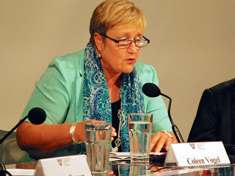
Beyond Scarcity: Coleen Vogel on Reframing Water Security
›
What exactly is meant by “water security?” Different conceptualizations of the problem can lead to different, possibly misguided, solutions, says Coleen Vogel in this week’s podcast. Vogel, professor at the University of Pretoria and a lead author of the IPCC’s 4th and 5th assessment reports, calls for reframing the water security discourse in three key ways.
-
Effective Conservation Efforts Must Recognize Livelihoods, Participatory Decision-Making, Research Finds
›A new report from the International Institute for Environment and Development seeks to understand why Uganda’s Bwindi Impenetrable National Park continues to be exploited despite park officials’ implementation of “integrated conservation and development” (ICD) efforts. The study finds that local people’s perceptions of the benefits of the integrated conservation and development vary depending on five primary factors: age, level of education, homestead distance to the national park, quality of life, and wealth. -
Proven and Promising Solutions to Strengthening Maternal Health Supply Chains
›In 2012, as part of the Every Women Every Child movement, 13 vital health commodities were identified by a UN panel that could save the lives of more than 6 million women and children over the course of five years. There are often significant cultural and behavioral barriers to these commodities reaching people in low- and middle-income countries, but physical logistics is also a major problem. -
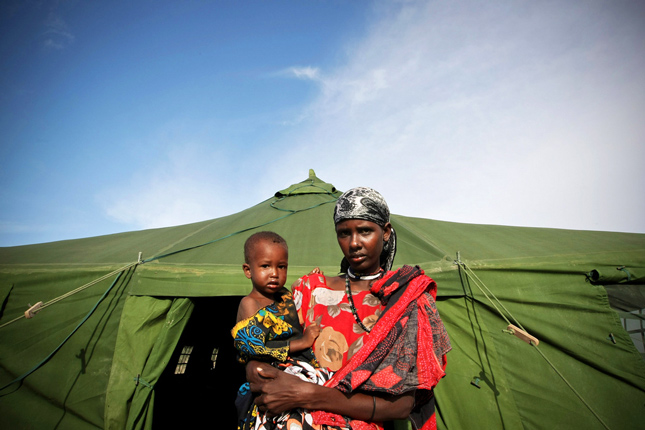
Somali Refugees Show How Conflict, Gender, Environmental Scarcity Become Entwined
›Under international law, someone who flees their country because of conflict or persecution is a refugee, but someone who flees because of inability to meet their basic household needs is not. In the case of Somalia, it is increasingly difficult to make any meaningful distinction between the two.
-
Africa’s Trifecta: Food Security, Resilience, and Demographics at the U.S.-Africa Leaders Summit
›August 5, 2014 // By Roger-Mark De Souza“You can’t build a peaceful world on an empty stomach,” Secretary of State John Kerry said yesterday at a high-level working session on resilience and food security, quoting Norman Borlaug, the father of last century’s “Green Revolution.”
-
Three Things to Watch at the First-Ever U.S.-Africa Leaders Summit
›As presidents, prime ministers, and other policymakers from across the continent gather in Washington, DC, this week for the first-ever U.S.-Africa Leaders Summit, what are the issues to watch?
-
Family Planning and Environmental Sustainability Assessment Aims to Shed Light on Pop-Environment Link
›As global environmental change accelerates, understanding how population dynamics affect the environment is more important than ever. It seems obvious that human-caused climate change has at least something to do with the quadrupling of world population over the last 100 years.
Showing posts from category Africa.