-
What Paul Ehrlich Missed (and Still Does): The Population Challenge Is About Rights
›In 1968, Stanford University biologist Paul Ehrlich predicted hundreds of millions would starve to death over the next decade, many of them Americans, and the world would generally decline into chaos in his book The Population Bomb.
-
The Environmental Democracy Index: Ranking Access to Information and Justice
›June 2, 2015 // By Carley Chavara
Conventional wisdom has been that wealthier countries have better environmental protections than poorer countries. However, a new annual report launched this year, the Environmental Democracy Index, reveals that a strong economy does not necessarily ensure strong environmental rights.
-
Parfait Eloundou-Enyegue: Generational Inequality in the Sahel a Security Risk
›
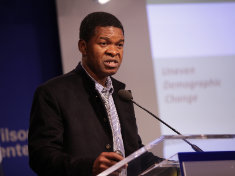
Rapid population growth, which many Sahelian countries are experiencing, is often associated with an increased risk of sociopolitical violence. But in this week’s podcast, Cornell University Professor Parfait Eloundou-Enyegue argues there is another factor related to demographic change that governments and development organizations should account for: inequality.
-
Saplings and Contraceptives: Results From a Population, Health, and Environment Project in Kenya
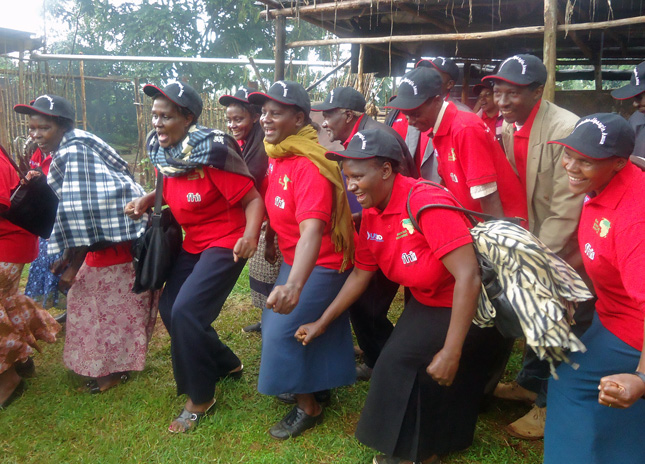
›East African countries like Kenya have made great strides in recent decades in increasing access to modern contraception, leading to marked declines in fertility rates. But disparities remain.
-
How Midwives Can Answer the World’s Maternal Health Woes
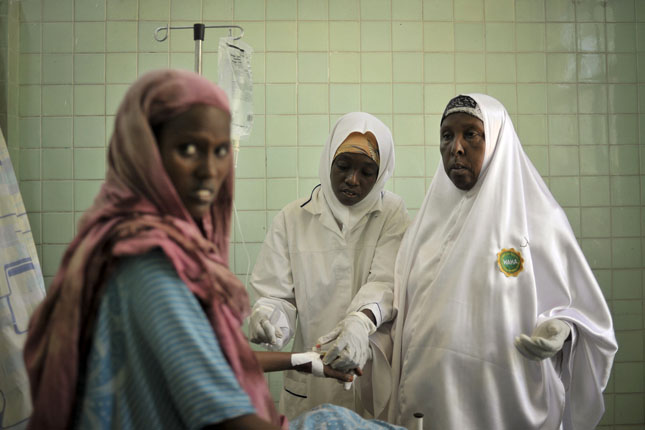
›The world is about to hit a “turning point” in maternal and newborn health, said Laura Laski, chief of the sexual and reproductive health at UNFPA, at the Wilson Center on March 23. “In terms of strengthening the new health system for achieving the MDGS or any other goals, we have to focus on the human resources for health.” In particular, midwives.
-
USAID’s Sylvia Cabus on the Sahel: “We Help Farmers…and Their Husbands”
›In the Sahel, one of the most food-stressed regions of the world, “women bear the brunt in terms of coping mechanisms that are employed at the community level,” says Sylvia Cabus, gender advisor for USAID’s Bureau for Food Security, in this week’s podcast.
-
Cooperation Is Not Enough: Why We Need to Think Differently About Water
›In 2003, the United Nations General Assembly declared 2005 to 2015 to be the decade of “water for life” as a way to encourage countries to reach their water-related targets under the Millennium Development Goals. In summing up the last 10 years, it was noted that water cooperation had been promoted widely, featuring at international fora and in government initiatives and development agendas. Water cooperation is described as having the potential to enable peace and sustainable development. However, just as focusing on “water wars” might undermine the everyday challenges of securing safe and adequate supplies of water, focusing only on “more cooperation” may well simplify the problem at hand.
-
The Dark Side of Development: Displacement, Eviction in World Bank Projects and Ethiopia
›With the help of international aid, foreign land grabs in the Gambella region of Ethiopia have resulted in environmental degradation, more severe economic and social inequality, and human rights abuses, according to a new study by the Oakland Institute. We Say The Land Is Not Yours collects testimony from victims of “villagization,” a policy of forced displacement started under the military Derg dictatorship and, according to many, continued to this day under the guise of land investment.
Showing posts from category Africa.