

Showing posts from category Africa.
-
Are Fences the Bridge to a Sustainable Future in Kenya?
›May 18, 2009 // By Brian Klein “Kenya is destroying itself,” Julius Kipng’etich, director of the Kenya Wildlife Service, told The Observer. “The population has reached an unsustainable level. We are killing ourselves by slowly destroying the forests and settling there.” Drought, poverty, and population growth have led large numbers of the rural poor to encroach on protected forests in search of arable land, reports The Observer, jeopardizing Kenya’s food and water security and hydroelectric energy production. The government’s inability to manage land tenure has further exacerbated the situation.
In response to these developments, a local conservation group called Rhino Ark has erected a 250-mile electric fence (see photo slideshow) around the Aberdare mountain range north of Nairobi. When members began the project in 1989, they were attempting to protect the area’s rhinoceroses. However, their efforts eventually grew into a broader campaign to safeguard the Aberdares’ critical water and forest resources.
Proponents of the Aberdare fence—including Nobel Peace Prize-winning environmentalist Wangari Maathai—contend that it serves multiple purposes. First, it discourages settlers from grazing livestock in the forest or felling trees to make way for crop cultivation. Other regions of the country—notably the Mau Forest Complex, the water source for millions of people in Kenya, northern Uganda, and southern Sudan—have suffered severe deforestation and degradation, with serious consequences for human and ecological health. Forests provide a wide spectrum of essential ecosystem services, such as regulating the water cycle, filtering groundwater, and sequestering atmospheric carbon.
The fence also mitigates human-wildlife conflict, argue its supporters. According to a recent 60 Minutes report, some Maasai herdsmen have resorted to poisoning lions and other predators to protect their livestock. Farmers have targeted elephants and other animals that trample crops to safeguard their livelihoods. As a result, wildlife populations—the lifeblood of the Kenyan tourism industry—have been devastated. A study published in the Journal of Zoology found precipitous declines in wildlife at Maasai Mara, one of Kenya’s most renowned national parks. Robin Reid, a co-author of the paper, explains, “There appears to be a ‘tipping point’ of human populations above which former co-existence between Maasai and wildlife begins to break down.”
Following Aberdare’s example, the Kenyan government is considering building thousands of miles of fencing around similarly vulnerable forests and parks. Yet fences may soon prove inadequate. The country’s population has grown from 10 million to 36 million over the past 45 years, and it could exceed 65 million by 2050, given that the decline in its fertility rate has stalled. In addition, its GDP per capita has steadily decreased, leaving more than 55 percent of citizens below the official poverty line.
With more people clamoring for more resources, a sustainable future will depend on robust community conservation programs and land-rights reform. Successful models of community conservation in East Africa include the Lion Guardians and Il Ngwesi Group Ranch, as well as other efforts discussed at the Wilson Center last year. A 2008 report from the Rights and Resources Initiative argues that authorities should shift away from traditional forms of conservation, which focus on excluding people from protected areas, in favor of approaches that empower local communities to care for and benefit from the land through customary tenure or individual property rights.
Finally, Nairobi should craft national forest management practices with an eye toward ongoing international climate negotiations. Policymakers are poised to include provisions for compensating developing countries for reducing greenhouse-gas emissions from deforestation and forest degradation in the next international climate treaty, to be concluded in Copenhagen this December. Kenya could benefit substantially if the government takes appropriate action.
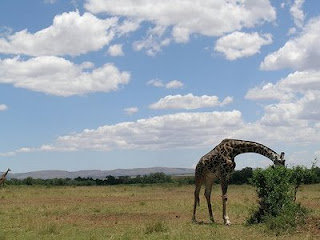
Photo: A giraffe in Maasai Mara, where their population has declined 95 percent over the last 15 years. Courtesy Flickr user angela7dreams. -
Weekly Reading
›Focus author Gladys Kalema-Zikusoka, who founded and directs the Ugandan NGO Conservation Through Public Health, won the Whitley Gold Award (see video of her work) for her efforts to protect the endangered mountain gorillas while improving local communities’ quality of life. The other five finalists were also seeking to reduce human-wildlife conflict in diverse contexts.
In Seed magazine, seven experts—including Peter Gleick and Mark Zeitoun—weigh in on whether “water wars” are a serious menace or an improbable threat, inflated by breathless media coverage of water shortages.
A major report on managing the health effects of climate change, co-authored by University College London and The Lancet, claims that climate change is the biggest health threat of the 21st century.
On his blog, Signs From Earth, National Geographic editor Dennis Dimick has collected a variety of resources about the possibility of “climate refugees.”
It’s not news that the U.S. and U.K. militaries are studying climate change’s potential security impacts, or seeking to increase energy efficiency on bases and in combat zones. But Geoffrey Lean, the environment editor of the Independent, is surprised that legendary Vietnamese General Vo Nguyen Giap has come out against bauxite mining in Vietnam’s central highlands, which he says “will cause serious consequences on the environment, society and national defense.”
Photo: Gladys Kalema-Zikusoka receives the Whitley Gold Award from Her Royal Highness The Princess Royal. Courtesy of the Whitley Fund for Nature. -
Land Grab: The Race for the World’s Farmland
›The world is experiencing a grain rush. With increasing frequency, wealthy, food-importing, and water-scarce countries—particularly the Arab Gulf states and the rich countries of East Asia—are investing in farmland overseas to meet their food-security needs. Similarly, the private sector is pursuing farmland deals abroad, with many investors perceiving land as a safe investment in an otherwise-shaky financial climate.
These investments are sparking both hope and fear. Some believe the deals can boost global agricultural productivity and farm yields, thereby bringing down global grain costs. Others, however, point to the land acquisitions’ negative impacts on small-scale farmers. On May 5, the Asia Program and four other Wilson Center programs hosted a half-day conference that considered the implications for investors, host countries, and food security, highlighting case studies from Asia, Africa, Europe, and the former Soviet Union.
Global Trends
The private sector—including private firms, agribusiness and trading houses, and sovereign wealth funds—now plays a key role in overseas land investment, noted David Hallam of the Food and Agriculture Organization. These investors come from China, the Arab Gulf states, South Korea, and Japan, and they have mainly targeted Africa. Hallam asserted that these investors could potentially benefit developing countries through asset and advanced-technology transfers, employment opportunities, and economic and infrastructure development.
Alexandra Spieldoch of the Institute for Agriculture and Trade Policy examined the “lopsided” power relations that prevail in foreign land acquisitions. Smallholders in poor countries like Sudan, Ethiopia, Madagascar, Zimbabwe, and Pakistan “have no political voice,” making them vulnerable to exploitation. The loss of land invites political conflict and violence, as exemplified by the public outcry in Madagascar over that country’s proposed land deal with South Korea’s Daewoo. Gary R. Blumenthal of World Perspectives, Inc., acknowledged that displacing small farmers in favor of large agribusiness activities generates “social push-back,” but contended that modern farms and private-sector funding are necessary to feed the world’s hungry and growing population.
Ruth Meinzen-Dick of the International Food Policy Research Institute discussed prospects for a “code of conduct” to regulate foreign land deals. She proposed that such a code have teeth and be modeled after the European Union’s code of conduct on bribery. Meinzen-Dick argued that questions regarding land use, land tenure, property rights, environmental concerns, and transparency should be settled before finalizing land deals. She also underscored the key role of governments in safeguarding and monitoring people’s rights, and of the media and civil society in increasing transparency and keeping up the pressure against “unjust expropriations.”
Case Studies: Asia, Africa, Europe
Raul Q. Montemayor noted that in Asia, some local people are facilitating land deals on behalf of foreign investors. In the southern Philippines, “goons and rogue elements” have been “let loose” to terrorize farmers, compelling the latter to lease their land—or evacuate. Montemayor argued that Asian farmers stand to benefit little financially from leasing their land to agribusiness enterprises. Those who have done so are receiving rental payments between 50 cents and a dollar per day. Yet he argued that any Asian farmer with his or her own standard two-hectare plot can generate the same, if not higher, daily income without renting out land.
Chido Makunike, a Senegalese agricultural commodities exporter, declared that without understanding local conditions, agribusiness investments in Africa are destined to fail. Like Spieldoch, he singled out the deal between Daewoo and the Malagasy government, which would have given Daewoo a 99-year lease on 1.3 million hectares of land—with Madagascar receiving little in return. The deal collapsed after it triggered political unrest. “It’s not enough to look at risk factors,” Makunike argued. “You must look at the sentiments of the people.” In Africa, far from being perceived as a mere “economic resource,” land has cultural, sentimental, and political meanings, and its loss was “one of the strongest symbols of dispossession” during the colonial era.
Carl Atkin of Bidwells Agribusiness highlighted investment opportunities in Central and Eastern Europe and the former Soviet Union. Land in these areas boasts high-performing and resilient soil, and production costs are low. However, there are also considerable challenges. Infrastructure is lacking, and grain storage is problematic. Obtaining land titles can be “complex,” and land tenancy laws can be “very archaic.” According to Atkin, however, the biggest challenge is local management: “Can people on the ground get things done?”
Though they indicated varying levels of support for overseas farmland acquisitions, all panelists agreed that international investment in agriculture can be a good thing—if done the right way.
While Meinzen-Dick and others lobbied for an international code of conduct to govern the transactions, other panelists insisted that foreign land investment must respect regulations in host countries. Montemayor, for example, called for “clear rules consistent with national policy goals,” and implored foreign investors to respect local laws.
Michael Kugelman is a program associate with the Wilson Center’s Asia Program; and Susan L. Levenstein is a program assistant -
Weekly Reading
›In Conservation magazine, David Malakoff examines how cellulosic ethanol may threaten biodiversity around the world.
A Comprehensive Approach to Congo’s Conflict Minerals, a report by the Enough Project, argues that ending resource-related violence in the DRC will require:- Making the consumer-electronics supply chain transparent;
- Pinpointing and securing strategic mines;
- Reforming and expanding governance; and
- Providing miners with economic opportunities.
The New Agriculturalist describes how some African farmers are adapting to climate change.
Worldchanging features an interview with Wangari Maathai, founder of the Green Belt Movement and recipient of the 2004 Nobel Peace Prize. -
Projecting Population: A Risky Business
›May 6, 2009 // By Sean PeoplesAssumptions about human behavior drive our knowledge of future global population trends. Demographers analyze population and other survey data in order to forecast trends, but uncertainty colors these projections.
In the 2008 Revision of World Population Prospects, the UN Population Division projects that our planet will grow to 9.15 billion people by 2050. Yet this medium-variant projection is just one of several possible scenarios released in this latest round of number crunching. The low- and high-variant projections—7.96 billion and 10.5 billion, respectively—could instead become reality, given slight shifts in fertility rates in developing countries, where growth rates remain higher than in more developed nations. Although both developing and developed nations are susceptible to shifts in fertility rates, uncertainties are greater in the developing world due to factors such as inconsistent data collection, weak health system infrastructure, and low government capacity.
Elizabeth Leahy and I investigate the underlying assumptions behind population projections in an article in the May/June edition of World Watch magazine. By comparing three of the leading population-forecasting institutions, we find that small variations in assumptions can lead to significant differences in projections.
Uganda’s demographic outlook is a prime example. Between 1960 and 2005, Uganda’s population grew by 22 million people, while the country’s fertility rate fell by less than 3 percent. The UN medium-variant population projection assumes the country will buck precedent and experience a 61 percent fertility rate decline between 2005 and 2050, resulting in a population of 91 million people. The U.S. Census Bureau, on the other hand, assumes a less drastic fertility decline and projects a population of 128 million people by 2050. The International Institute for Applied Systems Analysis (IIASA), an Austrian institution that projects population on a regional basis, recently revised its population projections to reflect greater growth in sub-Saharan Africa due to stalling fertility decline and stagnant educational-attainment rates.
Fertility rates rarely decline when governments have not made the proper investments in health and education. The UN medium-variant projection is commonly cited as an inevitable scenario; few people know that one of its underlying assumptions is that access to modern contraception will continue to expand. Without real-world development investments to match these assumptions, a very different scenario could easily materialize. By empowering women, bolstering access to education, and providing comprehensive family-planning services to citizens, governments and policymakers can translate these assumptions into reality.
-
The Challenge for Africa: A Conversation With Wangari Maathai
›May 5, 2009 // By Rachel Weisshaar“Almost every conflict in Africa you can point at has something to do with competition over resources in an environment which has bad governance,” said Wangari Maathai, founder of the Green Belt Movement and recipient of the 2004 Nobel Peace Prize, at an April 13, 2009, event co-sponsored by the Wilson Center’s Environmental Change and Security Program and Africa Program and the International Gateway at the Ronald Reagan Building & International Trade Center. Maathai discussed her new book, The Challenge for Africa, with Environmental Change and Security Program Director Geoff Dabelko.
“This is why I wrote this book: Because I really was challenging us as Africans to think outside the box and to begin to see why when we seem to move forward, we make two steps forward, and we make one step backward, and so we look like we are not moving,” said Maathai. “Some of these issues are complex, they are difficult—but they have a lot to do with the way we have decided to manage our resources and to manage our politics and economics.”
The Three Legs of Stability
Maathai used the traditional African three-legged stool as a metaphor for what she views as the three essential components of a stable society: sustainable environmental management, democratic governance, and a culture of peace. “Those legs are chiseled by a craftsman…[who] chisels all the three legs at the same time, in order to create a balance,” she said. “If we don’t have these three legs, no matter who comes, and with whatever [loans or aid], we shall never develop.”
Land, Politics, and Ethnicity: An Explosive Combination
Maathai explained that in the absence of democratic governance and sustainable environmental management, natural resources have repeatedly ignited conflict in her native Kenya. For instance, the advent of private land ownership during colonialism pitted Maasai herders, who need large tracts of land to graze their cattle, against Kikuyu farmers, who for the first time obtained deeds to their land and began to erect fences to mark the boundaries.
In addition, Maathai noted that politicians often use Kenya’s ethnic divisions and land scarcity to whip up animosity toward internal migrants and bolster their own re-election prospects. “If you don’t, then, therefore, ensure that the resources within the country are equitably distributed, and you encourage these prejudgments that communities have against each other, you’re going to have conflict,” she said.
Holistic Approach Is Key to Successful Development
The Green Belt Movement began as a small, grassroots project that envisioned tree-planting as a way to address rural women’s needs, including firewood, food, clean water, and soil erosion. “Even though that’s how we started, it very quickly became clear to me that these are symptoms, and therefore we needed to get to the causes. And it is in search of the causes that eventually led me into understanding how interconnected these issues were,” said Maathai, who urged governments, development agencies, and nonprofits to adopt an integrated approach to development.
“Unless you deal with the cause, you are wasting your time. You can use all the money you want for all the years you want; you will not solve the problem, because you are dealing with a symptom. So we need to go outside that box and deal with development in a holistic way.”
“I can’t say, ‘Let us deal with governance this time, and don’t worry about the resources.’ Or, ‘Don’t worry about peace today, or conflicts that are going on; let us worry about management of resources.’ I saw that it was very, very important to use the tree-planting as an entry point,” explained Maathai.
“Even though it is the women who provide the drive for planting trees—partly because it is they who suffer when the environment is destroyed, it is also they who work in the field—once we are in the community, we will have to deal with the women, deal with the men, deal with the children, deal with the livestock, deal with everything,” said Maathai.
Climate Change, Forests, and Environmental Justice
According to Maathai, 20 percent of greenhouse gas emissions are due to deforestation and forest degradation—more than the percentage due to transportation. She is working with Avoided Deforestation Partners to make avoiding deforestation part of the Copenhagen agreements—a step that would not only slow global climate change, but also help those who are directly dependent on natural resources like forests for their livelihoods, and therefore most vulnerable to climate change. “This is the one issue which really comes to tell us that indeed, the planet is a small village, and all of us are in this little village together.” -
Weekly Reading
›How Do Recent Population Trends Matter To Climate Change?, from Population Action International, offers the latest research from this constantly changing area of inquiry.
U.S. Global Health and National Security Policy, a timely report by the Center for Strategic and International Studies, examines major threats to human health and international stability, including HIV/AIDS, SARS, pandemic influenza, and bioterrorism.
In the coming decades, Russia will confront “accelerated population decrease; a dwindling of the working-age population; the general ageing of the population; the drop in number of potential mothers; a large immigrant influx; and a possible rise in emigration rates,” warns a new report from the UN Development Programme.
In The National Interest and the Law of the Sea, the Council on Foreign Relations’ Scott Borgerson argues that ratifying the Law of the Sea Convention is vital to protecting the United States’ national security, economic, and environmental interests.
David Sullivan of Enough debates Harrison Mitchell and Nicolas Garrett of Resource Consulting Services (RCS) on the links between conflict and mining in the Democratic Republic of the Congo (DRC). RCS recently published a report arguing that mineral extraction is key to DRC’s development and not the primary cause of conflict in North Kivu.
Responding to the ubiquitous Monsanto ads that ask, “9 billion people to feed. A changing climate. Now what?,” Tod Preston of Population Action International responds, “family planning and empowering women, that’s what!”
Water and War, a publication of the International Committee of the Red Cross (ICRC), outlines how the ICRC provides access to clean water during conflict and humanitarian disasters. -
Food, Water, Energy, Timber, Population: Do Madagascar’s Forests Stand a Chance?
›April 22, 2009 // By Kayly OberA graphic published recently in Le Monde reveals that companies from South Korea, China, Saudi Arabia, and the United Arab Emirates (UAE) are the top purchasers of foreign farmland. These corporations from water-strapped, land-starved, and/or densely populated countries often make bargain-basement deals with unsavory African and Asian governments—or even warlords—to increase their own profits and their home nations’ food security.
A case in point: The International Criminal Court’s indictment of Sudanese President Omar al-Bashir for human-rights abuses has not deterred Saudi Arabia’s Hail Agricultural Development Co. from developing 9,200 hectares of land in Sudan or the UAE from investing in agricultural projects in several Sudanese provinces, including a 17,000-hectare farm for wheat and corn.
As previous New Security Beat posts have pointed out, allowing foreign governments to purchase land could threaten food security within the host country, and around the world. The heads of the Food and Agriculture Organization and the International Fund for Agricultural Development raised eyebrows last weekend when they suggested that these deals could be “win-win” situations, if done right.
These business ventures can also have serious political consequences: Several months ago, seeing an opportunity to capitalize on increasing population growth and limited arable land in its homeland, South Korean conglomerate Daewoo signed a deal to buy more than half of the arable land in Madagascar to grow grain and palm oil. Widespread anger at the terms of the deal—from which the island’s people would gain little—contributed to then-President Marc Ravalomanana’s unpopularity. After weeks of riots, Ravalomanana was ousted by Andry Rajoelina, who immediately axed the deal. “In the constitution, it is stipulated that Madagascar’s land is neither for sale nor for rent, so the agreement with Daewoo is cancelled,” Rajoelina told BBC News.
Yet although Rajoelina’s actions may seem to have preserved Madagascar’s land for its people, the coup he launched has spurred unprecedented destruction of this land, in the form of deforestation. The breakdown of authority that accompanied the coup spread into Madagascar’s protected areas, where groups of thugs have been illegally felling valuable trees at a rapid rate since the coup. This environmental destruction is particularly tragic for a country like Madagascar, which possesses some of the richest biodiversity on the planet and relies heavily on ecotourism for jobs and economic growth.
Next month, a Wilson Center event will explore some of the motivations, patterns, and implications of this rush for farmland. Five Wilson Center programs are co-sponsoring this event—demonstrating the global, cross-sectoral implications of this issue.
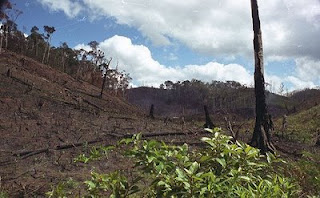
Photo: Deforestation in Madagascar. Courtesy of Flickr user World Resources Institute Staff and Jonathan Talbot.
 “Kenya is destroying itself,” Julius Kipng’etich, director of the Kenya Wildlife Service, told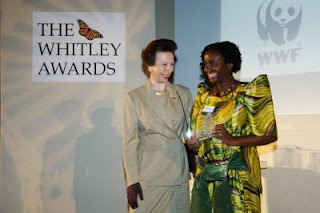


 A
A 

