-
Ruth Greenspan Bell, Bloomberg News
Global Warming Experts Should Think More About the Cold War
›January 2, 2013 // By Wilson Center Staff
The original version of this article, by Ruth Greenspan Bell, appeared on Bloomberg News.
Every year the United Nations convenes diplomats from more than 190 nations to negotiate a climate change treaty, and in many years negotiators go home with little more than the promise of another annual meeting.
-
New Support for International Family Planning: The Significance of the London Summit
›December 21, 2012 // By Carolyn LamereAt a major summit in London this summer the Bill and Melinda Gates Foundation launched one of the most significant efforts yet to revitalize commitments around the world towards providing universal access to family planning. More than 220 million women around the world – mostly in developing countries – want to delay or avoid pregnancy but are not using effective methods of contraception. Meeting the unmet needs of these women could save the lives of hundreds of thousands of mothers and millions of infants, not to mention significantly impact the future of human development. But the last decade has been a period of relative neglect by international donors.
-
Managing the Planet: The World at Seven Billion
›
Population growth “is highly concentrated in what are today the poorest and least well-governed areas of the world,” said George Mason University professor Jack Goldstone at the Wilson Center on December 5.
Goldstone was joined by Suzanne Ehlers, president and CEO of Population Action International (PAI), and Matthew Erdman, population-health-environment technical advisor at USAID, to discuss the implications of seven billion people and counting for the environment as part of the joint Wilson Center-George Mason University Managing the Planet series. [Video Below]
-
CCAPS Looks to Map Climate-Related Aid in Africa
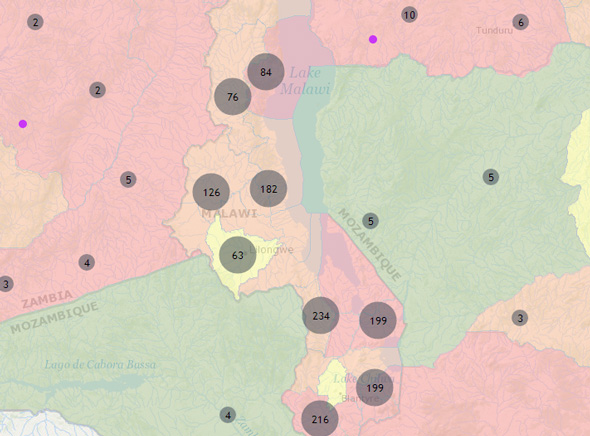
›Adapting to the effects of climate change is increasingly becoming an important component of many international development efforts. But how that integration occurs and what it looks like is an open question. To help answer that, the Climate Change and African Political Stability Program (CCAPS) at the University of Texas at Austin recently released a new database that for the first time tracks all the climate-related aid in one country – Malawi.
-
Climate Change’s Health Impacts, and the Rights-Based Argument for Family Planning
›UNFPA’s recently released State of World Population 2012 brings family planning to the center of the development debate. “There is indisputable evidence that when family planning is integrated into broader economic and social development initiatives, it can have a positive multiplier effect on human development and the well-being of entire nations,” the authors write. The report employs a rights-based approach to make the case for universal access to family planning – a goal which we are far from as 222 million women from the developing world currently have an unmet need for modern contraceptives. Meeting this need and improving quality of reproductive healthcare elsewhere would cost an additional $4.1 billion a year, but save approximately $5.7 billion in maternal and newborn health services. Other recommendations include increasing financial support and political commitment to ensure that family planning is of high quality, reducing the number of unintended pregnancies and abortions, including emergency contraception in family planning services, and engaging boys and men. -
Can Family Planning Save Millions From Malnutrition in a Warming World?
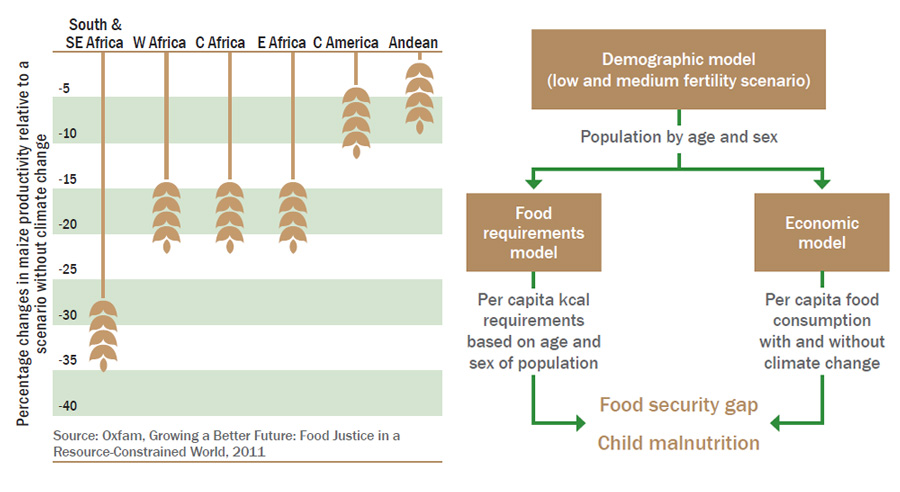
›As the effects of climate change become increasingly apparent, existing poverty and human security challenges are being compounded. Among them, food security is one of the most pressing, especially in the developing world.
Based on a model developed by researchers at Futures Group, a pilot project in Ethiopia reveals that a lower fertility track for some countries could help compensate for the negative effects of climate change on agricultural yields. The study, conducted by MEASURE Evaluation and funded by USAID and The David and Lucile Packard Foundation, suggests incorporating family planning into existing climate change adaptation strategies.
-
Top U.S. Leaders: Global Health Is a Bridge to Security
›November 14, 2012 // By Carolyn Lamere“During my career, my viewpoint changed significantly in the understanding and definition of what security really is,” said retired Admiral William J. Fallon at the Center for Strategic and International Studies (CSIS) on November 2. “My current appreciation of it is that it’s much more fundamental, much more personal, much more at the individual human level than I had thought in earlier years.”
-
What Next? Finding Ways to Integrate Population and Reproductive Health Into Climate Change Adaptation
›November 12, 2012 // By Kathleen MogelgaardThe size, composition, and spatial distribution of human populations are constantly changing, and in some areas of the world, they’re changing very rapidly. Related trends in fertility and reproductive health are also in flux. These changes will affect how people experience climate change, both individually and societally.
Showing posts from category zz Organizations.