-
Once-in-a-Species Opportunity: For a World Free of Poverty, Seize the Demographic Dividend in Africa
›April 11, 2013 // By Laurie MazurA world “free from the stain of poverty” is within our grasp, declared World Bank President Jim Yong Kim in a speech at Georgetown University last week. Kim then announced a plan to virtually eradicate extreme poverty by 2030.
-
Linking Governance and Positive Maternal Health Outcomes in Africa
›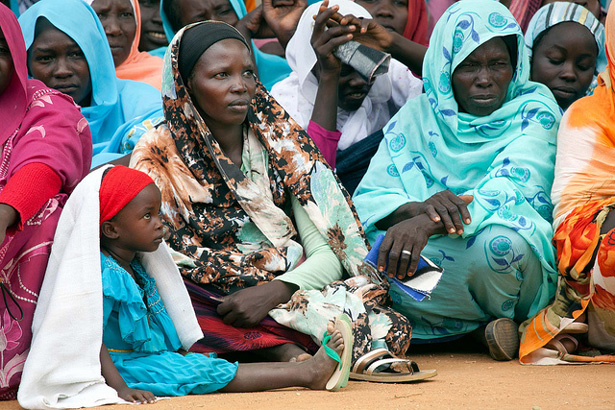
Sub-Saharan Africa is perhaps the riskiest place for a woman to give birth. According to the United Nations Population Fund (UNFPA), African women comprise approximately 56 percent of the maternal deaths and 91 percent of HIV-related maternal deaths worldwide every year. In order to bring life into this world, women in Africa literally must put their own lives on the line.
-
Demographic and Environmental Dynamics Shape ‘Global Trends 2030’ Scenarios
›
“However rapid change has been over the past couple decades, the rate of change will accelerate in the future,” states the newest quadrennial report from the National Intelligence Council (NIC), Global Trends 2030: Alternative Worlds. Released late last year, the report identifies the “game-changers, megatrends, and black swans” that may determine the trajectory of world affairs over the next 15 years, including demographic dynamics and natural resource scarcity. [Video Below]
-
Urban Health and Demography Trends: More Cities, More Problems?
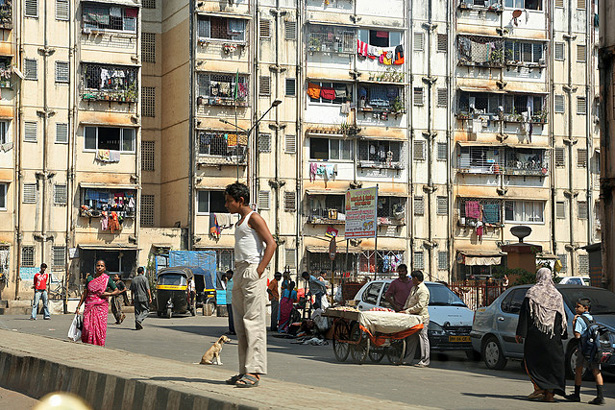
›Some 52 percent of the world’s population lives in cities, a proportion that will only grow throughout the next few decades. Understanding the health challenges facing urban residents is crucial for those who seek to improve human health, especially since many of these challenges differ from those facing inhabitants of rural areas, where global health resources have traditionally been concentrated. At a private meeting on March 4 at the Wilson Center, experts described how factors ranging from climate change and greenhouse gas emissions to reproductive health and rights impact urban health.
-
Demographic Dividend and the Rise of the Global South
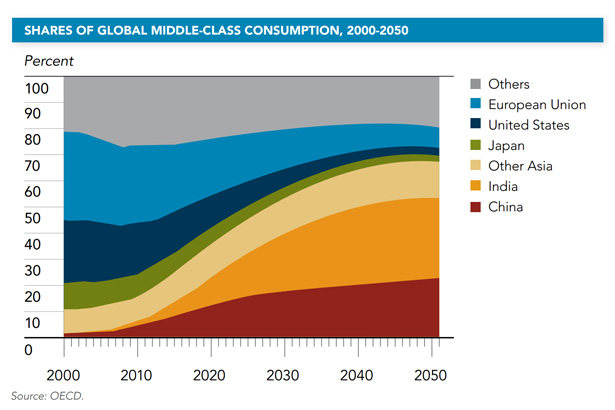
›The Global South is “radically reshaping the world of the 21st century, with developing nations driving economic growth, lifting hundreds of millions of people from poverty, and propelling billions more into a new global middle class,” says the United Nations Development Program’s (UNDP) 2013 Human Development Report, released yesterday. “More than 40 developing countries have made greater human development gains in recent decades than would have been predicted.”
-
The Demographic Dividend in Lower-Income Countries and Global Reproductive Rights Laws
›Many of the fastest growing countries in the world today are also the poorest. A recent bulletin from the National Transfer Accounts Project, “Lower Income Countries and the Demographic Dividend,” examines what it takes for lower-income countries to experience a demographic dividend and the economic growth associated with that period. Achieving the demographic dividend is dependent on a country achieving low fertility rates, which, when coming from a period of high growth, temporarily increases the ratio of the working-age population to dependents, like children and the elderly. For lower-income countries to do this, the report recommends that policymakers invest in healthcare and education programs and focus on boosting the labor force participation rate. Looking forward, the report advises that it is not too early for lower-income countries to begin developing social security and pension programs to support the latter stages of the demographic transition too. -
‘Dialogue’ Interviews Caryle Murphy & John Sullivan: Saudi Arabia’s Demography & 2013’s Big Environment Stories
›Dialogue at the Wilson Center tackled demography and the environment last week, interviewing Pulitzer Prize-winning journalist and former Wilson Center public policy scholar Caryle Murphy about her new book, A Kingdom’s Future: Saudi Arabia Through the Eyes of Its Twentysomethings, followed by John Sullivan, director of the Environment and Health and Safety News Division for Bloomberg BNA, on the most important energy and environmental issues of 2013.
-
After the Arab Spring, Challenges Intensify for Women in the Middle East and North Africa
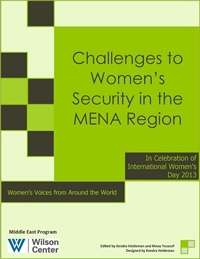
›Excerpted below is the introduction, by Haleh Esfandiari, to Challenges to Women’s Security in the MENA Region. The full report is available for download from the Wilson Center’s Middle East Program.
On the occasion of International Women’s Day 2013, the Middle East Program at the Wilson Center invited a cross-section of women activists, politicians, academics, and entrepreneurs to give us their views on the challenges women face to their security. This publication, “Challenges to Women’s Security in the MENA Region,” includes pieces from 42 women from 20 countries, including the United States, Malaysia, Indonesia, and countries in the Middle East and North Africa (MENA) shared with us their concerns, disappointments, and hopes for women in the region.
Showing posts from category youth.