

Showing posts from category water.
-
Green Objections to the Green Line: A Struggle for a Shared Environment in the Middle East
›March 4, 2010 // By Julien KatchinoffAn emerging coalition in Israel dramatically illustrates how common environmental concerns can create unexpected partnerships across difficult political barriers. Through programs initiated by Friends of the Earth Middle East, the Israeli and Palestinian residents of Wadi Fukin and Tzur Hassadah (see inset map) have joined together to oppose the construction of a planned security barrier between their two communities.
View Good Water Neighbors in a larger map
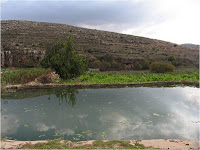
The barrier, an element of the Israeli Green Line, threatens to disrupt karstic springs that support traditional agriculture in the Fukin valley. One third of the Israeli residents of Tzur Hadassah petitioned to halt construction, reports Israeli newspaper Haaretz.
“The Israeli community understood that instead of providing them with security, the fence would harm the springs and lands of the village, and will rob the Palestinian farmers of their livelihood and arouse hatred toward their Israeli neighbors,” Friends of the Earth Middle East (FoEME) Director Gidon Bromberg told Haaretz.
On February 24th, Israelis and Palestinians from both communities met to organize their response to the construction of the separation barrier, including preparing to petition to the Israeli High Court of Justice.
“The case of Wadi Fukin is special, because it is the first time that the resistance of the residents is not based on human rights allegations. Objections here are from an environmental organization,” FoEME attorney Michael Sfard told NRG news. Since 2001, FoEME’s Good Water Neighbors project has helped divided communities come together over shared natural resources. By collaborating with community members to improve their water situation, the organization encourages sustainable water management through information sharing, dialogue, and cooperative ventures. While the majority of the communities share common surface water sources, including the Jordan and Zomar rivers, some, as with Wadi Fukin and Tzur Hassadah, rely on common underground aquifers.
This “natural interdependence,” says Bromberg, helps to create trust and solve problems facing both communities.
Photo: Courtesy Friends of the Earth Middle East -
Visualizing Natural Resources, Population, and Conflict
›Environmental problems that amplify regional security issues are often multifaceted, especially across national boundaries. Obtaining a comprehensive understanding of the natural resource, energy, and security issues facing a region is not fast or easy.
Fortunately, the Environment and Security Initiative (ENVSEC) has created highly informative, easy-to-understand maps depicting environmental, health, population, and security issues in critical regions.
Published with assistance from the United Nations GRID-Arendal, these maps offer policymakers and the public a snapshot of the complex topography of environmental security hotspots in Central Asia, Eastern Europe, Southeastern Europe, and the Southern Caucasus.
Some that caught our eye:• Environmental Issues in the Northern Caspian Sea: Overlaying environmental areas and energy production zones, this map finds hydrocarbon pollution in sturgeon spawning grounds, seal habitats in oil and gas fields, and energy production centers and waste disposal sites in flood zones.• Water Withdrawal and Availability in the Aral Sea Basin: Simple and direct, this combination map and graph contrasts water usage with availability in Turkmenistan, Uzbekistan, and Kazakhstan—which stand in stark comparison to the excess water resources of Tajikistan and Kyrgyzstan.• Environment and Security Issues in Belarus: In addition to noting the parts of the country with poor water quality and potassium mining, the map also delineates wildfires that occurred in areas contaminated by the Chernobyl explosion, thus threatening downwind populations.
Maps: Illustrations courtesy of the Environment & Security Initiative. -
The Diane Rehm Show Tackles Water Challenges With ECSP Director Geoff Dabelko
›March 3, 2010 // By Michelle NeukirchenHow is water shaping geopolitics in the 21st century? Is it an underlying factor for state failure and social conflict, or can it drive peace and cooperation? How will climate change reshape global water resources?Recently, on WAMU’s “The Diane Rehm Show,” ECSP Director Geoff Dabelko, author Steven Solomon, and the World Bank’s Julia Bucknall came together to discuss the history, politics, economics, and future of water.
“Climate change exacerbates the water crisis in very severe ways because it manifests itself through water —through floods, droughts, and melting glaciers,” said Solomon.
The World Bank’s Julia Bucknell highlighted climate change projections that indicate average precipitation increases are likely, mostly in the global North. “It is the poorer countries that show up red on the maps with a reduction in precipitation,” she said.
By compounding failing states’ limited capacity to secure existing water supplies for agriculture, sanitation, and human consumption, decreasing precipitation will result in further intensification of global public health and food security crises.
“We need to improve the existing productivity of the water we’ve got,” said Solomon. “We need to use it more efficiently and fairly in a way that protects the ecosystems.”
Countries such as Australia, Israel, and China are leading the way: even under arid conditions, they use innovative methods to remain productive. In Australia, a new regime allows water rights to be traded, even over cellphones, while China established a credit-based system for individual farmers by using remote sensing technology based on NASA data.
Governments are under pressure to address climate change directly, while managing vexing local and regional challenges. “Our political institutions and our political leaders must not deal with the short term and pretend things will go back to a state of normalcy, but [should] progressively and proactively shape and reshape the institutions,” said Dabelko.Countries with traditionally contentious relationships have cooperated to solve common water problems. The Financial Times recently reported on an agreement between China and India to jointly assess trends in Himalayan glacier and snow melt.
“There are prospects for tensions,” said Dabelko of the Himalayas, “but quite frankly, water is difficult to [obtain] through war. It’s hard to pick it up and take it home.”
To listen to the full audio recording, click here.
Photo: Just Add Water, Courtesy of Flickr Member MΛЯK
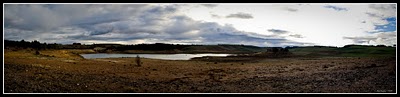
Photo: Melting Glacier at Jokuldalur, Iceland 2, Courtesy of Flickr Member, ChrisGoldNY -
VIDEO – Ken Conca: Future Faces of Water Conflict
›February 24, 2010 // By Julien Katchinoff“Most of the actual violence around water today is not occurring with armies marching out on the field of battle…[it] is more diffuse, more at the community level, more small scale, but quite real and quite important for us to try to address,” says Ken Conca, professor of government and politics at the University of Maryland during this conversation with ESCP Director Geoff Dabelko. Though the world remains fixated on future “water wars,” we “should not forget the actually existing violence in the world today,” he says.
Conca underscores the need to address the multiple forms of violence around water. Factors that incite these conflicts include lax consultation with local communities over large infrastructure projects as well as changes in access to water due to economic or environmental dynamics.
Conca suggests new principles that promote water as a global human right future may be part of the solution to these drivers of conflict. Such conflicts may be avoided by broadening the current conversation, allowing for new approaches to infrastructure development, and applying techniques of effective dispute resolution, particularly at the international level. -
Video—Integrating Population, Health, and Environment (PHE) to Conserve Ethiopian Wetlands
›February 1, 2010 // By Julia GriffinIn our latest video interview about PHE programs in Ethiopia, Zuna–a village elder from the Mettu Woreda region of Ethiopia—describes how an integrated intervention by the Ethio-Wetlands and Natural Resources Association (EWNRA) has benefited her community.
EWNRA aims to raise awareness within Ethiopian communities and governmental organizations of the importance of sustainable wetlands management. The organization also imparts local-level training on resource conservation and wise-use labor techniques.
Zuna recounts how EWNRA provided welcome training in sanitation and housekeeping practices that increased both safety and sustainability within her community. The more efficient, cleaner-burning wood stoves introduced in Mettu Woreda, for example, have improved local air quality while decreasing the frequency of skin burns and amount of harvested fuel required for cooking and other activities.
“We are benefiting from all this and I think the benefits from this intervention are good,” she says through an interpreter. “I want them to keep doing this and hopefully we will improve our activities working with them.” -
Lessons from the Field: Focusing on Environment, Health, and Development to Address Conflict
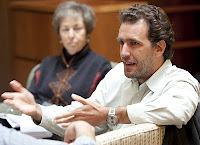
›“Even in the hardest moments of conflict there are opportunities for cooperation, and they need to be seized,” said Juan Dumas, senior advisor of Fundación Futuro Latinamericano during the Pathways to Peace: Stories of Environment, Health, and Conflict roundtable event co-hosted by the Wilson Center’s Environmental Change and Security Program and the Fetzer Institute on January 13th.
“Even as you were talking about the conflict potential,” said Aaron Wolf, professor of Geoscience at Oregon State University, “everywhere you looked there were people talking about water uniting together across boundaries and being able to share… [and] people being willing to talk about water when they wont talk about anything else.”
Dumas and Wolf were joined by Gidon Bromberg, co-director of Friends of the Earth Middle East (FoEME); Shewaye Deribe, project coordinator for the Ethio Wetlands and Natural Resources Association (EWNRA); and Joan Regina L. Castro, executive vice president of the PATH Foundation Philippines, Inc. (PFPI) to discuss work that demonstrates the positive impact multi-dimensional development and peacebuilding programs can have on environmental conflict arenas.
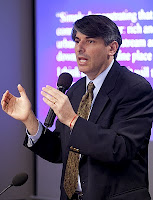
Water as an Entry Point“In the academic world, there’s a growing documentation about the coming wars of the 21st century are going to be about water resources,” said Wolf, discussing how water resources are inherently intertwined with the Arab-Israeli and other regional conflicts. His research, however, suggests the opposite. In recent history, he said, cooperation for the resource, not conflict, was observed in nearly two-thirds of the world’s cross-boundary watersheds.
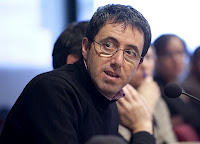
“Water is a wonderful way to have regional dialogue,” he continued, discussing how technical data and modeling are only part of any successful water conflict resolution. “A language that people have in common, and when we talk about water—because it’s connected to everything we do—we end up talking about our shared vision of the future.”“We came out with a vision that is a shared vision,” echoed Bromberg in describing the Good Water Neighbors (GWN) project—a FoEME program seeking to improve water scarcity and quality in the Jordan River watershed by fostering cooperation between Israeli, Palestinian, and Jordanian leaders. “The Jordan office advocates that vision to the Jordanian government, the Israeli office to Israeli government, the Palestinian office to the Palestinian authority. That’s proven to be very effective because it’s the same vision.”
While hesitant to say the program could lead to or be a model for peace in the Middle East, Bromberg did underscore how multi-dimensional methods used in GWN could productively serve future peacebuilding efforts in the region.
“By empowering young people to go out and improve their own water reality with their own hands [through rainwater harvesting and grey water collection] they learn together, and then they build the facilities within their own communities,” said Bromberg. “…Not only does it empower the youths but it helps create peacemakers.”
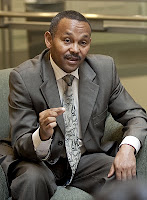
Integrated PHE and Conflict Avoidance“Water is common for all of us because it is the base of our life, of our survival,” said Deribe, linking ENWRA’s integrated population, health, and environment (PHE) wetland restoration program in Ethiopia to the greater discussion. “I think it is a lack of altruism, a lack of mutualistic thinking which leads us to this kind of conflict.”
Castro, pointing to her own PHE experience with PFPI, found that multi-sectoral programs promote improved environmental quality and community stability. In the Philippines, her program targeted local youth, fishermen, and policymakers to promote food security through sustainable resource management, improved medical and family planning services, and expanded livelihood training.
Castro found that a PHE program could continue even after funding ran out. “A project can be sustained and can be owned by the local governments and local communities if they are provided the capacity to be able to continue to implement the programs and that they see the value of the programs that they do,” she said.
Lessons in Conflict Resolution
Funding, said Dumas, is the biggest limiting operating factor for organizations that facilitate dialogue in environmental conflict areas. The ability to travel across Latin America on short notice to help resolve conflict has been extremely beneficial to Dumas’ organization; but in an arena where funders require full proposals with specific outcomes and indicators, such availability over the long-term is “not financially sustainable.”
Dumas did, however, suggest ways to reduce the need for conflict resolution while opening accessibility to funding. He recommended that institutions mainstream environmental considerations into all sectors of decision-making, thereby improving capacity to respond to environmental conflicts within the given population. He also suggested the creation of “early action funds” – pools of money that his and other organizations can use on short notice for dialogue facilitation support. -
Water: The Next Climate Negotiation Tool?
›January 21, 2010 // By Kayly OberWhen the dust settled at the COP15 in Copenhagen, participating parties failed to reach a formal climate change agreement and old divisions between developed and developing countries intensified. Despite such setbacks, there may be a natural building block in formal climate change negotiations between the north and south in the future: water.
Luis Alberto Moreno, president of the Inter-American Development Bank, argues in a recent LA Times op-ed that economic interdependence and, more concretely, basic survival hinge on water in both developed and developing countries alike, most especially in Latin America.
With 31 percent of the world’s freshwater resources,
Water’s importance in the region is obvious, but why should developed countries care about it when negotiating a climate deal? The simplest answer, according to Moreno, is that developed countries can invest in projects that resolve near-term, climate-related problems such as water supply and sanitation as they look for ways to spend the billions in aid they have just pledged for climate adaptation in the developing world. And many international donors, particularly the UN Development Programme, World Bank, and World Wildlife Fund already have invested millions of dollars towards water management and sanitation adaptation projects.
On the other side of the coin, Latin American governments should “start treating water as a truly strategic resource instead of a free and limitless one.” Moreno claims this would mean “prioritizing investments and reforms in basic services in order to reduce waste, closing the coverage gap and eliminating waterborne diseases among the poor” in the short term and would also require “a willingness to make concessions in pursuit of global emission reductions that…could be crucial to ensuring reliable supplies of water.”
While it may seem that Latin America’s water problems are not pressing, it is undeniable that if not properly managed, essential components of the region—such as the vital agricultural economy, the health of the population, and political and economic stability—may be in jeopardy.
Photo: Man drinking water from a pipe in Ecuador. Courtesy Edwin Huffman and the World Bank. -
Water, Conflict, and Cooperation: Practical Concerns for Water Development Projects
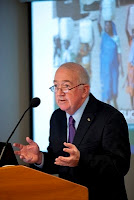
›“Water disputes that can start at the local level—little things—have the potential, in extreme cases, to burgeon into something much bigger,” warned Ken Hackett, president of Catholic Relief Services (CRS), during a discussion at the Woodrow Wilson Center (Webcast) for the launch of CRS’ new publication, Water and Conflict: Incorporating Peacebuilding into Water Development. The report provides guidance to water development practitioners, civil society members, and others striving to incorporate water and peacebuilding into their project frameworks.
In recognition of water’s potential to drive conflict, Hackett—part of a panel featuring Jason Gehrig, Water and Conflict‘s primary author; William Hall, professor of conflict resolution at Georgetown University; and Tjip Walker, team leader of USAID’s conflict management and mitigation office‘s warning and analysis unit—urged those working on water to focus attention on identifying and diffusing areas of emerging disagreement while they are still manageable. “We must, in a proactive way, incorporate peacebuilding methodologies in water and sanitation work,” said Hackett.
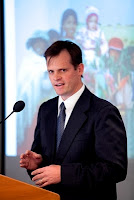
Looking Beyond Tubes and TanksPrior to witnessing violent protests within the Altiplano region of Bolivia, Jason Gehrig assumed that the primary obstacles to successful water development efforts would be found in the technical phase of designing or building delivery systems. Local political developments, however, demonstrated that “we can’t just be looking at development without also looking at the structural issues at play,” said Gherig.
Emphasis on “social infrastructure” and the inclusion of peacebuilding paradigms allows for conflict transformation and the mitigation of future violence through heightened conflict sensitivity by local practitioners. Such understanding and sensitivity to local conflicts and structures, Gehrig asserted, can only be achieved by “listening, winning hearts and minds (beginning with our own) by getting close to the people so that their struggle for life, for dignity, for peace, becomes our own.”
Defining the Role of Environmental Conflict ResolutionWilliam Hall noted that conflict sensitive practices apply several elements of environmental conflict resolution (ECR), such as in-depth social participation, context analysis, stakeholder involvement, and the use of neutral parties.
For Hall, the goal of ECR is not only conflict resolution, but “also how people will be involved.” Adapting a framework design from the International Association for Public Participation, Hall reminded the audience that decision-makers must clearly communicate both the goals of their intervention as well as the degree of public involvement required and desired. These issues are sensitive; Hall emphasized that, once a commitment has been made, it is extremely important “to be true to [one’s promises.]”
In situations such as those included in the CRS report, successful peacebuilding efforts—which result in high-quality agreements and improved working relationships between the affected parties—must include effective engagement of appropriate stakeholders, proper mediation, and high-quality information. While many of these factors may be seen as additional procedural complications and expenses, Hall countered that recent research has shown that, compared to standard methods, agreements reached within an ECR context grant economic and environmental benefits beyond those afforded by alternative processes.
Peacefully Managing the CommonsTjip Walker noted that effective governance of water and other common pool resources, often magnets for mismanagement and contention, should be a pivotal concern for peacebuilders in fragile states. Drawing on research on governance and conflict, Walker explained that countries that are more democratic, and allow for greater social participation, are at a lower risk for violent conflict.
With regard to threats posed by common pool resources, Walker reminded the forum that Elinor Ostrom’s work demonstrates it is possible—providing a “enabling environment” for governance—to manage such resources without exposure to dire consequences. In many cases, however, Ostrom’s requirements for sustainable management are unfortunately difficult to achieve and are further complicated by pre-existing challenges stemming from economic dependencies and political arrangements.
Referring to previous trans-boundary river conflict projects, Walker noted that “most of them have been positive…[which] seems to suggest that we are all in this together.” Successes such as these grant hope for the future, yet also demonstrate a need for negotiated agreements across political boundaries. “Under the right circumstances,” Walker concluded, “we do have the ability to manage these resources effectively in ways that are perceived as generally being effective and legitimate.”
For more information about water, conflict and cooperation, as well as other events and publications under ECSP’s Navigating Peace Initiative, please visit www.wilsoncenter.org/water.
Photo: Courtesy David Hawxhurst, Woodrow Wilson Center.
 Since 2001, FoEME’s


 Countries with traditionally contentious relationships have
  “Even in the hardest moments of conflict there are opportunities for cooperation, and they need to be seized,” said
  “In the academic world, there’s a growing documentation about the coming wars of the 21st century are going to be about water resources,” said
  “We came out with a vision that is a shared vision,” echoed
  “Water is common for all of us because it is the base of our life, of our survival,” said
 “Water disputes that can start at the local level—little things—have the potential, in extreme cases, to burgeon into something much bigger,” warned Ken Hackett, president of
  Prior to witnessing violent protests within the Altiplano region of Bolivia, Jason Gehrig assumed that the primary obstacles to successful water development efforts would be found in the technical phase of designing or building delivery systems. Local political developments, however, demonstrated that “we can’t just be looking at development without also looking at the structural issues at play,” said Gherig.
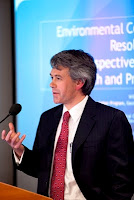 William Hall noted that conflict sensitive practices apply several elements of environmental conflict resolution (
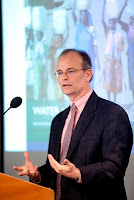 Tjip Walker noted that effective governance of water and other common pool resources, often magnets for mismanagement and contention, should be a pivotal concern for peacebuilders in fragile states. Drawing on research on governance and conflict, Walker explained that countries that are more democratic, and allow for greater social participation, are at a lower risk for violent conflict.


