-
Assessing Our Impact on the World’s Rivers
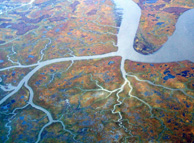
› In a special “Rivers in Crisis” issue of Nature, the lead article, “Global Threats to Human Water Security and River Biodiversity,” presents damning evidence that manipulation of river systems — through the construction of canals, levees, hydroelectric projects, and other infrastructure — has caused serious and lasting biological damage to watersheds throughout both the developing and developed worlds. The authors (all 11 of them!) report that key rivers have become shadows of their former selves in terms of the amount of aquatic life they can support. Without drastically improved stewardship of waterways, “we are pushing these river systems toward catastrophe,” warns Peter McIntyre, an article co-author.The human impact on the world’s river systems will be hard to reverse, says Margaret Palmer, author of a second Nature article on freshwater biodiversity loss, “Beyond Infrastructure.” Human-induced changes to watersheds affect local hydrology at a fundamental level, she contends, weakening rivers’ ability to deliver crucial “ecological goods and services” — such as clean water and nutrient-rich sediment loads — that help maintain the health of local environments and the human populations that depend on them. To fully understand the scope of the problem, Palmer says more research is needed to explore the linkages between biodiversity levels and “ecosystem services” that healthy rivers provide.
 -
Admiral Mullen and the “Strategic Imperative” of Energy Security
›October 13, 2010 // By Geoffrey D. DabelkoTop American military brass weighed in this morning on energy security with an emphasis on conservation, efficiency, and alternatives. A little climate change even crept into the discussion as well.
The occasion was a Department of Defense conference titled “Empowering Defense Through Energy Security” sponsored by the Office of the Under Secretary of Defense for Acquisition, Technology & Logistics and the United States Air Force, Army, Navy and Marine Corps leadership. The new Office of Operational Energy Plans and Programs was on point.
Starting at the top, Chairman of the Joint Chiefs of Staff Admiral Mike Mullen set the tone:My friend and columnist Tom Friedman has spoken eloquently of the growing need – and awareness – to rethink our views on energy – and minimize our dependence on overseas energy sources that fuel regimes that do not always share our interests and values, while not further damaging a world that is already becoming overheated, overpolluted, and overstretched.
The wider context of climate change and its security implications also found a place in Admiral Mullen’s remarks:
We in the Defense Department have a role to play here – not solely because we should be good stewards of our environment and our scarce resources but also because there is a strategic imperative for us to reduce risk, improve efficiencies, and preserve our freedom of action whenever we can. …
So, to start with, let’s agree that our concept of energy must change. Rather than look at energy as a commodity or a means to an end, we need to see it as an integral part of a system … a system that recognizes the linkages between consumption and our ability to pursue enduring interests.
When we find reliable and renewable sources of energy, we will see benefit to our infrastructure, our environment, our bottom line … and I believe most of all … our people. And the benefits from “sustainability” won’t just apply to the military.Beyond these immediate benefits, we may even be able to help stem the tide of strategic security issues related to climate change.
Admiral Mullen then gave way to General Norton A. Schwartz, chief of staff of the U.S. Air Force; General Peter W. Chiarelli, vice chief of the U.S. Army; Aneesh Chopra, the federal chief technology officer; and Secretary of the Navy Ray Mabus, with Sharon Burke, director of operational energy plans and programs, running the show.
This is no small matter. In addition to the newly developing waterways near the polar icecaps, in 2008, the National Intelligence Council identified twenty of our bases that are physically at risk as a result of the rising level of the ocean.
And regardless of what the cause of these changes is – the impacts around the world could be sobering – and far-reaching.
As glaciers melt and shrink at a faster rate, water supplies have been diminishing in parts of Asia.
Rising sea levels could lead to mass migration and displacement similar to what we have seen in Pakistan’s flood … and climate shifts could drastically reduce the arable land needed to feed a burgeoning population as we have seen in Africa.
This scarcity of – and potential competition for – resources like water, food, and space – compounded by an influx of refugees if coastal lands are lost … could not only create a humanitarian crisis, but create conditions of hopelessness that could lead to failed states … and make populations vulnerable to radicalization.
These challenges highlight the systemic implications – and multiple-order effects – inherent in energy security and climate change.
And while the brass met inside, clean energy companies exhibited their wares in the Pentagon’s inside courtyard.
Photo Credit: “the Pentagon from above,” courtesy of flickr user susansimon. -
Choke Point U.S.: Understanding the Tightening Conflict Between Energy and Water in the Era of Climate Change
›Without sharp changes in investment and direction, the United States’ current strategy to produce sufficient energy — including energy generated from clean sources — will lead to severe water shortages, and cause potentially major damage to the country’s environment and quality of life. These are the conclusions from a comprehensive reporting project, “Choke Point U.S.” presented by Circle of Blue at the Woodrow Wilson International Center for Scholars on Sept. 22, 2010.At the event hosted by the China Environment Forum and Environmental Change and Security Program, J. Carl Ganter, Director of Circle of Blue, Keith Schneider, Circle of Blue’s senior editor, and Jeffrey J. Fulgham, Chief Sustainability Officer and Ecomagination leader at General Electric, discussed the findings of “Choke Point: U.S.,” an analysis of the tightening linkage between the nation’s rising energy demand and finite domestic freshwater supplies. The four-month Circle of Blue project explored whether the nation’s transition to a clean-energy economy will have net dividends or deficits for U.S. freshwater resources in an era of climate change, rising population, and a projected 40-percent rise in energy demand by 2050.
“In the next decade, every single sector will need to reform due to water shortage. This is not in fifty years, this is in the next decade,” Schneider told an audience of more than 70 energy and environmental experts from the research, policy, business, and security sectors.As part of the project, Ganter said that Circle of Blue dispatched reporters to the coal fields of southern Virginia, the high plains of the Dakotas, California’s Central Valley, Midwestern farms, and other regions throughout North America. On one hand, their reporting revealed riveting narratives about the urgent contests between energy development and water supply, and how those contests can be resolved. On the other hand, the reports also recognized the extraordinarily difficult challenges that the energy-water nexus will pose to regional economies, governing practices, technological development, and the quality of natural resources.
Schneider, who directed the reporting, summarized the findings:- Unless the U.S. government plans more carefully, generating energy from clean alternatives is almost certain to consume much more water than the fossil fuels that green energy sources are meant to replace.
- The region confronting the energy-water choke point in the most dramatic fashion is the Southwest, where climate change is steadily diminishing snowmelt in the Rocky Mountains, and a prolonged drought is threatening to halt energy production at the Hoover Dam.
- The next era of hydrocarbon development is well underway in the United States, as energy companies invest billions of dollars a year to tap the “unconventional” oil sands of Canada, the oil shales of the northern Great Plains, and the gas shales of the Northeast, Texas, Oklahoma, and the Upper Midwest. However, tapping each of these carbon-rich reserves is using three to four times more water than the conventional oil and gas reserves they are replacing.
- Developers in North Dakota are spending roughly $7 billion annually to drill 1,000 wells a year now into the Bakken Shale. That effort will produce 100 million barrels of oil and 100 billion cubic feet of gas this year, but will use billions of gallons of North Dakota’s scarce groundwater.
- Each of the thousands of wells drilled each year into the unconventional gas shales underlying the Northeast, Gulf Coast states, the West, and Midwest requires three million to six million gallons of water injected under high pressure to fracture the rock and enable gas to flow out of the rock.
- In Kern County, California, where the agriculture and oil industries compete for diminished supplies of water for irrigation and energy production, the winner is the oil industry.
- The energy vector in the United States points strongly to more fossil fuel consumption, not less.
- All new energy technologies except wind and solar PV will require increased freshwater withdrawals.
Jeffrey J. Fulgham of General Electric addressed the potential solutions to the tight water-energy nexus, focusing on water demand, water pricing, and the use of new technologies. According to Fulgham, smarter policies coupled with the implementation of new low-flow irrigation technology could potentially reduce the use of water for agriculture by 50 percent. Applying the same “reduce before we produce” principle to energy production could achieve significant water-use reductions in that sector as well, he said.
From General Electric’s perspective, the next five to ten years will produce significant leaps in water technology that, if combined with efficient water use, appropriate valuation of water, and more holistic policies, will be key in avoiding an impending water Choke Point.
The speakers said that the trends identified in “Choke Point U.S.” could have serious implications not just for the United States, but also for freshwater supplies around the world. In August, Circle of Blue joined with the Wilson Center’s China Environment Forum to develop “Choke Point: China,” — a companion to the “Choke Point: U.S.” study — which will produce front-line research, reporting, and analysis about one of China’s most important resource competitions.
Peter Marsters is a Program Assistant with the China Environment Forum at the Woodrow Wilson Center.
Photo Credit: “Hoover Dam overlook,” courtesy of flickr user Creativity+ Timothy K Hamilton. -
Scarcity, Climate, Population, and Natural Resources
Integrated Analysis for Development and Security Policymakers
›Development, population, security, scarcity, climate, and natural resources: Increasingly, policymakers are realizing that the issues in this laundry list are inextricably linked. But how do policymakers break out of their institutional stovepipes to address these connections in an integrated way?
In an event hosted by the Environmental Change and Security Program on September 2, 2010, Alex Evans of New York University and Global Dashboard and Mathew Burrows of the National Intelligence Council (NIC) focused on the current state of integrated scarcity issues in the policymaking world.
A Developing Problem
“Why should we be worried with scarcity issues in the first place?” asked Evans. The crux of the problem, he said, is that people are simply consuming more across the board – particularly more energy, water, and food. In addition to general population growth, higher demand is driven by an expanding global middle class that is shifting to more Western-style diets and consuming more energy.
Globally, demand in key resources is outpacing supply:
You can’t address one of these scarcity issues without affecting another, argued Evans. In Haiti, for example, deforestation led to soil loss and erosion, thus degrading agricultural land. Deforestation also changed the country’s precipitation patterns. Together, these effects reduced food supplies even before the earthquake. Today, the UN estimates that more than 2.4 million people in Haiti are food-insecure.- Demand for oil is rising by a percentage point each year, and the International Energy Association has warned that investment is not keeping up;
- Demand for water will increase 32 percent by 2025, but one of the first impacts of climate change is expected to be less available water; and
- Demand for food will increase 50 percent by 2030, but food supplies are only growing by one percent annually.
Evans recommended that these concerns be better integrated into current development and aid efforts, focusing on five areas:
A New International System- Establishing land tenure and renewable resources;
- Exploring the overlaps between resilience and peacebuilding;
- Empowering women and stabilizing population growth;
- Improving agricultural investment; and
- Increasing general investment in the energy sector.
In addition to the physical dangers of scarcity, Evans pointed out that the perception of scarcity can drive what he sees as dangerous behavioral dynamics such as protectionism.
“Look at the way 30-plus countries slapped export restrictions on their exports of food in 2008,” said Evans. “It’s perceptions of scarcity driving irrational behavior, it’s fertile ground for panic and we need to factor that into our policymaking.” He called for a mechanism similar to NAFTA, which restricts sudden price changes, to help the global trade system become more resilient to changes in energy and food supplies.
Burrows pointed out that a big reason for the rising disparity between food, water, and energy demand and supply is the large “middle class” of emerging powers. “You are seeing this phenomenal change going on on the resource side, but at the same time, the international system is in great flux,” he said.
Scarcity will also affect the international legal system as well. “Of the world’s 263 transboundary river systems, 158 lack any kind of cooperative management framework,” said Evans, asking if they could be peacefully managed during times of scarcity. He offered another example: How will the U.N. Convention on the Law of the Sea handle coastlines that change with the climate? “We haven’t really begun to ‘stress test’ existing legal infrastructure, to look for these kinds of instances,” said Evans.
The biggest elephant in the “international room,” however, is how to settle the issue of carbon sharing, without which there can be little global cooperation on these issues that does not end in a zero-sum game, Evans said:For me the jury is still very much out on whether there are limits on growth per se, as a result of scarcity – I’m not convinced of that yet. But I think it is clear that there are obviously limits to how much carbon we can put in the atmosphere, how much oil there is, how much land and water is available, and so on. We can do a huge amount with efficiencies and new technologies, but I think we’re kidding ourselves if we think that efficiencies and new technologies get us off the hook all together from having to face up to the distributional questions, the questions of fair shares that arise in a world of limits.
Is Integrated Policymaking Possible?
Government has come a long way towards addressing scarcity, said Burrows, but serious structural issues remain because there are too many established, vested interests at stake. Often, the tactical takes priority over the strategic: “A lot of these issues, by their very nature, are long-range in character,” he said. “In my experience there are more policymakers that are simply focused on the tactical [and] fewer that take these longer-range perspectives.” In addition, he pointed out that the divide between government and the scientific community continues to impede policymakers’ understanding of the technological options available.
On the positive side, Burrows highlighted improved work by government planning offices, particularly in the intelligence community and the military. “If you compare Global Trends 2020 and Global Trends 2025…you’ll see a huge difference in terms of how we dealt with climate change, environment, and the resource issues,” said Burrows of the NIC’s reports. He said that the intelligence community is performing more long-range analyses, and that other countries like China are now starting similar global trends analyses.
Despite the silo problem, the best solution may not be in creating new government agencies and closing down others, said Evans. “I think instead perhaps we need to see the challenge as more creating shared awareness, common analysis; a common sense of objectives among existing institutional configurations. I think we may find we get better rates of return on that,” he said.
While U.S. and other governments are only beginning to grasp these issues, Burrows praised NGOs and think tanks, which “have played such a big part… in creating those sorts of networks and inter-relationships” that have raised the profile of scarcity issues.
While the political space for dealing with these issues is not there yet, Evans argued that it will eventually emerge – most likely after some kind of shock, because “after sudden-onset crises, people are often, for a short time, prepared to think the unthinkable.”
An adequate response requires readying integrated approaches to address the integrated problem of scarcity. “It’s necessary to have the solutions, so when the crisis hits, you can have some action, and I think we are doing that legwork,” said Burrows.
Sources: International Energy Agency, MSNBC, UN. -
Syria: Beyond the Euphrates
›September 28, 2010 // By Russell SticklorThe Middle East is home to some of the fastest growing, most resource-scarce, and conflict-affected countries in the world. New Security Beat’s “Middle East at the Crossroads” series takes a look at the most challenging population, health, environment, and security issues facing the region.
Across the Middle East, sustained population growth has strained government institutions, natural resources, and the social fabric of entire societies. In Syria, these problems have been particularly acute.
With a total fertility rate of 3.3 children per woman and a population growth rate of 2.45 percent, the country is slated to swell from 22.5 million people to 28.6 million by 2025, and upward to 36.9 million by mid-century, according to the Population Reference Bureau.
“We have a population problem, no question,” acknowledged Syrian economist and former World Bank official Nabil Sukkar in a recent interview with Reuters. “Unless we cope with it, it could be a burden to our development.”
One of the biggest population problems threatening to derail Syria’s continued development is the scarcity of clean fresh water, which has troubling implications for both the security of the country and the region, since Syria shares key transboundary waterways, like the Euphrates River, with neighbors Iraq and Turkey.
As Syria grows more crowded, can Damascus find a way to encourage more efficient management and sustainable use of the country’s water? Or is greater conflict over the resource at home and in the neighborhood inevitable?
From Water Rich to Water Scarce
Historically, Syria has enjoyed plentiful groundwater resources and water from a number of rivers. Even today, Syria typically receives more annual precipitation per capita than seven other Arab nations, placing Syria 13th on a list of 20 released by the UN Development Programme’s 2009 Arab Human Development Report.
However, rapid demographic change, coupled with a series of severe droughts since 2006, has made life considerably more difficult for many Syrians. According to the UN, erratic rainfall in recent years has reduced Syria’s surface water supplies, inducing crop failures and livestock losses, and nudging millions — especially those involved in subsistence farming — into “extreme poverty.” In particular, wheat production has been hit hard, weakening the country’s food security and pushing farmers to migrate to urban centers.
Heading Underground
To cope with the drought, large- and small-scale farmers alike have increased their reliance on groundwater. But in a country where 90 percent of all water withdrawals are used for agriculture, Syria’s efforts are placing a huge strain on its aquifer health. And despite appearances, it’s not just the drought: Syria’s groundwater depletion problems have spanned decades, mirroring its population growth.
According to Syria’s National Agricultural Policy Center (NAPC), the number of wells tapping aquifers nationwide is thought to have swelled from just over 135,000 in 1999 to more than 213,000 in 2007. The rampant pumping — much of it illegal — has caused groundwater levels to plummet in many parts of the country, and raised significant concerns about the water quality in remaining aquifer stocks.
And demand continues to rise: NAPC reports that the amount of land irrigated by groundwater soared from roughly 650,000 hectares in 1985 to 1.4 million hectares in 2005, a trend that has only accelerated in the face of recent rainfall shortages.
Drawing down aquifers is worrisome as long as withdrawals outpace natural recharge. Some, known as “fossil aquifers,” lack natural inputs or outlets and will never refill — once drained, these aquifers are gone for good.
Avoiding the Hard Choices
For decades, Damascus did little to acknowledge or address the country’s growing problem of aquifer overuse. Government officials shied away from implementing robust policies that would have metered, taxed, or even simply monitored groundwater usage. In lieu of encouraging water-use conservation in the agricultural sector, Syria’s water managers instead focused on manipulating supply, by constructing dams or proposing plans to shuttle water between river basins. In doing so, they largely avoided imposing water austerity measures that almost certainly would have proven politically unpopular.
Belatedly, some efforts to mitigate Syria’s water issues are now underway. The country’s 2005 water-use code called for the licensing of all the country’s wells, threatening fines or prison terms for those caught illegally pumping groundwater. In 2008, Damascus took its campaign one step further, eliminating diesel subsidies that once facilitated groundwater removal.
But while these efforts have had some positive effect on groundwater-use trends nationwide, they could undermine stability in the short term. Illegal wells facilitate crop growth in many areas and help employ thousands in the agricultural sector, so shutting them down could heighten regional unemployment, and further weaken the country’s food security.
There Goes the Neighborhood?
With the future of Syria’s groundwater uncertain, there has been speculation that these internal water tensions might increase competition with neighboring countries for transboundary surface waters. The two countries most inextricably linked to Syria’s water crunch are Iraq and Turkey, who share the Euphrates with Syria.
Syria pulls roughly 85 percent of its water from the Euphrates, making the river a vital strategic resource. Yet water availability has historically been subject to the whims of Turkey, which controls the Euphrates’ headwaters.
Meanwhile, Iraq, which lies downstream of Syria, is also heavily dependant on the river. Understandably, as all three countries have seen their populations grow in recent decades, so too have tensions over controlling and sharing the Euphrates’ flow.
Despite Turkey’s long-standing resistance to international water-sharing pacts and penchant for large-scale hydroelectric projects, a new round of water diplomacy may help ease future tensions over the river. A recently created joint institute — backed by Iraq, Syria, and Turkey — is designed to provide a forum for the three countries to share data and policy ideas. Academics and water experts from the three countries will collaborate on efficient management, share best practices, and create a comprehensive map of the region’s water supplies.
The institute may be only a small step, but its emphasis on transparency is undoubtedly a move in the right direction. For Syria — sandwiched between two much larger countries — better communication with its neighbors is not only smart, but necessary to avoid conflict. But that won’t solve the country’s serious water scarcity problem. Leaders in Damascus should also continue to encourage conservation and more efficient use of water to stretch supplies to meet the needs of their growing population.
Sources: BBC, Global Arab Network, IRIN, Mideastnews.com, National Agricultural Policy Centre (Syria), Population Reference Bureau, Reuters, Syria Ministry of Agriculture, Syria Today
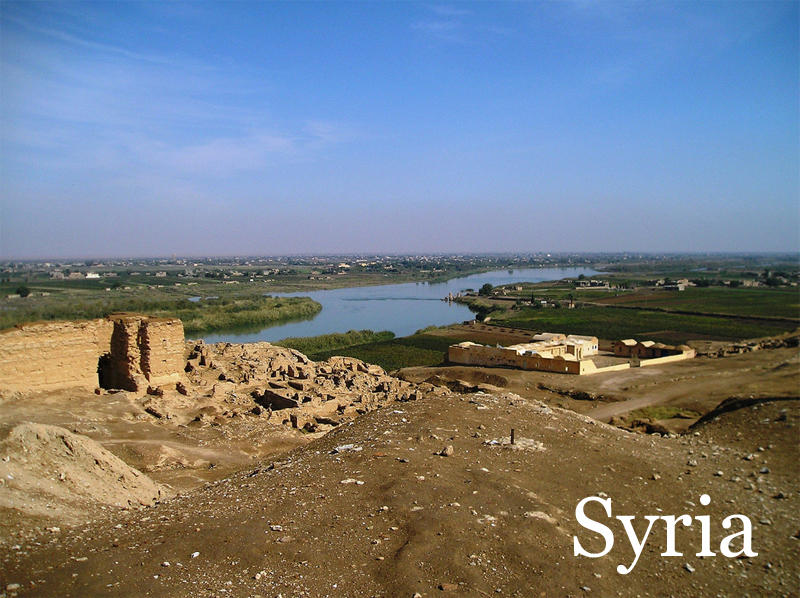
Photo Credit: “Euphrates and the Dig House Dura Europos,” courtesy of flickr user Verity Cridland. -
Weather as a Weapon: The Troubling History of Geoengineering So Far
›September 27, 2010 // By Wilson Center StaffExcerpted from the original version of this article on Slate, by James Fleming.
Is there a technological fix for global warming? Where would we put a “planetary thermostat,” and who would control the settings? The long and tragicomic history of fixing the sky — of rainmakers, rain fakers, weather warriors, and climate engineers — indicates that such ideas are far-fetched. Dosing the stratosphere with sulfuric acid to turn the blue sky milky-white does not sound like a good idea. Neither does dumping an iron slurry into the oceans to fill them with algae and turn them soupy-green. A global forest of artificial trees? Storing massive amounts of carbon dioxide under our feet forever? A flotilla of ships pumping seawater into the clouds? Unlikely, unlikely, unlikely.
Global climate engineering is untested and untestable, and dangerous beyond belief. The famous mathematician and computer pioneer John von Neumann warned against it in 1955. Responding to U.S. fantasies about weaponizing the weather and Soviet proposals to modify the Arctic and rehydrate Siberia, he expressed concern over “rather fantastic effects” on a scale difficult to imagine and impossible to predict. Tinkering with the Earth’s heat budget or the atmosphere’s general circulation, he claimed, “will merge each nation’s affairs with those of every other more thoroughly than the threat of a nuclear or any other war may already have done.” In his opinion, attempts at weather and climate control could disrupt natural and social relations and produce forms of warfare as yet unimagined. It could alter the entire globe and shatter the existing political order.
Continue reading on Slate.
James Fleming is an environmental historian and Professor of Science, Technology, and Society at Colby College. ECSP and the Wilson Center will be hosting the launch of his new book, Fixing the Sky: The Checkered History of Weather and Climate Control, on October 6, 2010.
Photo Credit: Adapted from “Lever du jour,” courtesy of flickr user Solea20. -
The Effects of Climate Change on Water in South Africa and Tibet
›From Hydrology and Earth System Sciences Discussions, “Uncertainty in Water Resources Availability in the Okavango River Basin as a Result of Climate Change,” by D.A. Hughes, D.G. Kingston, and M.C. Todd, explores the effects of a two degrees Celsius global warming scenario on the Okavango River Basin, a “major natural resource for human water supply” shared by Angola, Botswana, and Namibia. The authors conclude that “there is a relatively high probability of large changes to the extent and duration of inundation within the delta wetland system during the 21st century,” and recommend multi-annual to decadal ecological assessments of assumed low rainfall and river flow to guide integrated river basin water management plans.“Climate Change and Environmental Degradation in Tibet: Implications for Environmental Security in South Asia,” by P.K. Gautam in Strategic Analysis, argues for Tibet’s designation as a regional – if not global – common, for the sake of South Asian security. Tibet faces significant risk of ecological degradation due to climate change. Further degradation of its water supply would significantly affect India, China, and Southeast Asia. According to Gautam, establishing Tibetan autonomy would ensure greater ecological preservation, contrary to the rapid development model pursued by China. -
Women, Water and Conflict as Development Priorities Plus Some Geoengineering Context
›September 24, 2010 // By Geoffrey D. DabelkoHere are some useful links to environment, population, and security work that recently crossed my desk.
• NYU’s Richard Gowan dissects UK development minister Andrew Mitchell’s encouraging speech identifying conflict-affected states as special DFID priorities. Gowan pulls out highlights from the speech and parses NGO reaction to it on Global Dashboard.
• Council on Foreign Relations’ Isobel Coleman provides five practical suggestions for tapping into women as the “new global growth engine,” on Forbes.
• The Aspen Institute announced its Global Leaders Council for Reproductive Health this week. Their goal: meeting unmet demand for family planning services by 2015 on the MDG schedule. That is over 200,000,000 women who want services but do not have access.
• I’m heartened to see the U.S. Senate pass the Senator Paul Simon Water for the World Act. Hoping the House will follow suit. Last time Congress passed legislation on water, sanitation, and health priorities, the 2005 Senator Paul Simon Water for the Poor Act enjoyed overwhelming bipartisan support.
• Colby historian Jim Fleming, writing in Slate, puts the increasing fascination with geoengineering as a climate response “option” in some sobering historical context. “Weather as a Weapon: The Troubling History of Geoengineering” is the short read. Tune in to hear Jim present the book length version, Fixing the Sky, at the Wilson Center, October 6th at 10:30 am EST.
Follow Geoff Dabelko (@geoffdabelko) and The New Security Beat (@NewSecurityBeat) on Twitter for more population, health, environment, and security updates.
Showing posts from category water.