-
Engaging Marginalized Groups is Essential to Achieving Universal Health Coverage
› Too often, many in my community are excluded from sexual and reproductive health services, said Ruth Morgan Thomas, co-founder and Global Coordinator of the Global Network of Sex Work Projects, in today’s episode of Friday Podcasts. This episode features highlights from a recent Wilson Center and UNFPA event where Thomas and Zandile Simelane, an HIV Youth Advocate from Eswatini, address the barriers that their respective communities—sex workers and HIV positive youth—face in accessing sexual and reproductive health (SRH) services and universal health coverage (UHC).
 -
We Have to Put the Last Mile First: Ensuring Sexual and Reproductive Health for All
›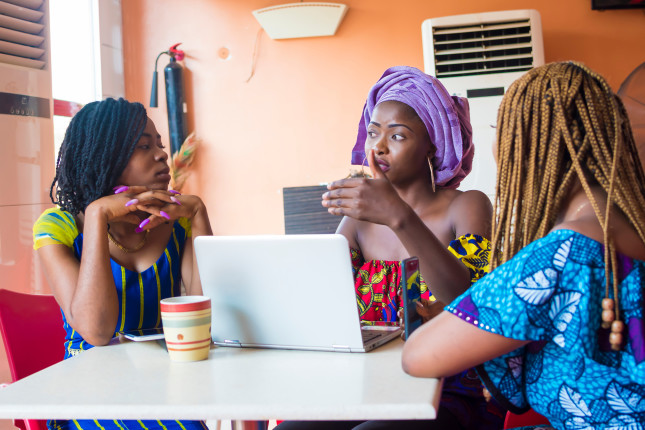
Whether marginalized populations, such as adolescents, LGBTQ+ people, migrant workers, and sex workers are included in health services can be a “litmus test” of our progress towards universal health coverage (UHC), said Sivananthi Thanenthiran, Executive Director of Asian-Pacific Resource and Research Centre for Women (ARROW). Thanenthiran spoke at a recent Wilson Center event with the United Nations Population Fund (UNFPA) and the World Health Organization (WHO) Department of Sexual and Reproductive Health and Research about the importance of engaging stakeholders in sexual and reproductive health (SRH) to achieve UHC for all. In SRH services, the most marginalized and most vulnerable populations are often left out, she said. When engaging stakeholders, representatives from these groups must be included to ensure equity in healthcare services.
-
Vaccines, Family Planning, and Freedom from Violence: Achieving Equity for All Women and Children
›“From birth, from almost from cradle to grave, girls have been seen as some sort of baggage,” said Shamsa Suleiman, Project Management Specialist for Gender and Youth at the U.S. Agency for International Development (USAID), Tanzania. Suleiman spoke at a recent Wilson Center event with USAID MOMENTUM Country and Global Leadership about balancing power dynamics to achieve equity for all women and children in maternal, child, and adolescent health, and family planning. Home should be a safe space, said Suleiman. But for many girls, it no longer is. To escape the poverty and pressures at home, including early marriage and other forms of gender-based violence, some girls leave, said Suleiman. “Girls are trying to escape the safe spaces.”
-
Pandemic Brings WASH to Rare Inflection Point: Despite Fears of Collapse, Water, Sanitation, and Hygiene Draw Closer to Epic Goal
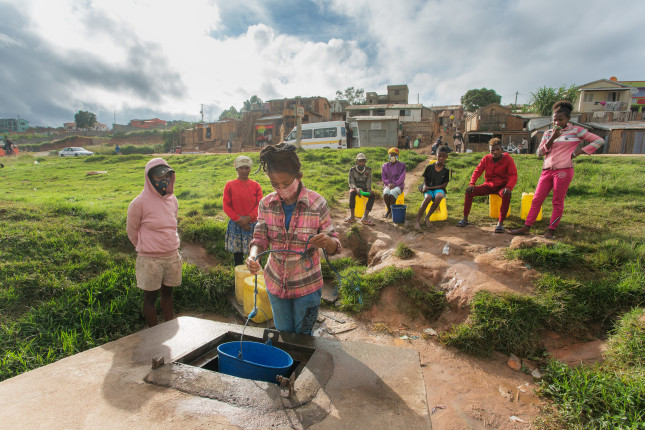
›Until 2016, the agrarian residents of east Kenya’s Kitui county had never encountered a water quality monitor like Mary Musenya. Wearing a bright blue company jersey and furnished with sample bottles and plastic trays, the young Kenyan is a water safety officer for FundiFix, a tiny rural water supply service company. She is one of 20 staff who manage 130 pumps, plus pipes and water tanks that serve 82,000 people across a 1,000 square-mile service area in Kitui and Kwale counties.
-
Gender Equality and Food Security in Rural South Asia: A Holistic Approach to the SDGs
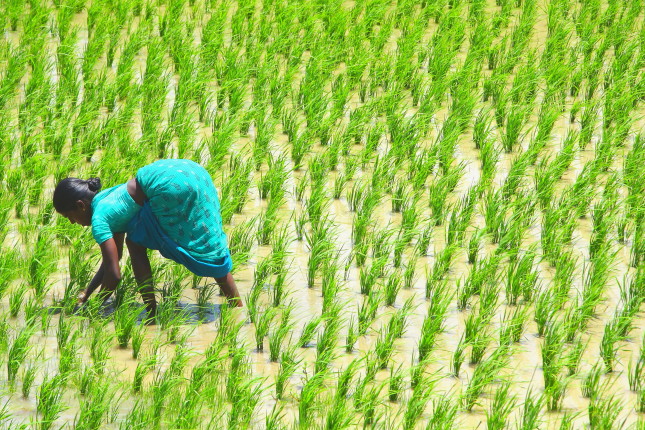
›January 4, 2021 // By Cindy ZhouGlobally, nearly 690 million people were hungry in 2019. Though the number of people who experience hunger in Asia has declined since 2015, the continent still accounts for more than half of the world’s hungry, or undernourished, at approximately 381 million people. Working toward Sustainable Development Goal 2 (SDG 2), “Zero Hunger,” will require major changes to the world’s food production systems.
-
The First Political Order: How Sex Shapes Governance and National Security Worldwide (Book Launch)
›“What you do to your women you do to your nation state. And so, if you decide to curse your women, we argue that you will curse your nation state as well,” said Valerie Hudson, University Distinguished Professor and Holder of the George H.W. Bush Chair at the Bush School of Government and Public Service at Texas A&M University, at the launch of The First Political Order. Co-authored by Hudson, Donna Lee Bowen, Professor Emerita at Brigham Young University, and P. Lynne Nielson, Professor of statistics at Brigham Young University, The First Political Order is the culmination of 2 decades of research on the linkages between the status of women and the status of nation-state security.
-
Vanessa Nakate on Giving Weight to the Voices of Those Most Affected by Climate Change
›“We need to give more weight to the voices of people who are most affected by climate change,” says Vanessa Nakate, a prominent Ugandan climate activist, in this week’s Friday Podcast. At the local, regional, and global levels, Nakate’s work sheds light on the imperative for policymakers to value the lived experiences of oft-overlooked groups such as women, youths, and citizens of developing nations. “When I talk about climate justice, it is not something that I want for the future—it is something that I want right now, because our present is catastrophic,” she says. -
21st Century Diplomacy: Foreign Policy is Climate Policy (Report & Project Launch)
›Climate change will upend the 21st century world order. It will redefine how we live and work, and change the systems of production, trade, economics, and finance. Even now, in the midst of a global pandemic, it is clear that climate change will be the defining issue of this century. In fact, COVID-19 has only underscored the inadequacy of our responses to global crises and heightened the urgency of this call to action. 21st century diplomacy will have to raise climate ambition, shape the transformative systems change needed, and promote and facilitate new modes of multilateral collaboration.
Showing posts from category SDGs.
 Too often, many in my community are excluded from sexual and reproductive health services, said Ruth Morgan Thomas, co-founder and Global Coordinator of the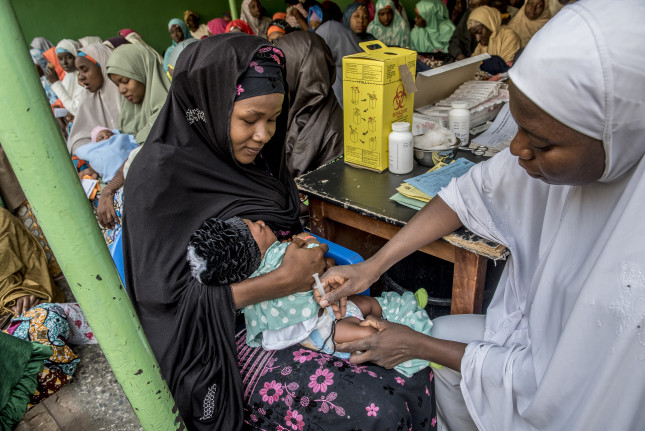

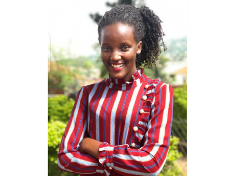 “We need to give more weight to the voices of people who are most affected by climate change,” says Vanessa Nakate, a prominent Ugandan climate activist, in this week’s Friday Podcast. At the local, regional, and global levels, Nakate’s work sheds light on the imperative for policymakers to value the lived experiences of oft-overlooked groups such as women, youths, and citizens of developing nations. “