-
UNEP Highlights Environmental Impacts on Health in Africa
›March 20, 2013 // By Carolyn Lamere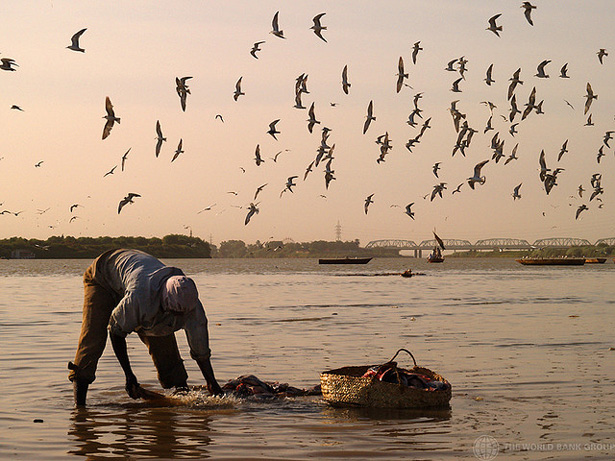
While it can be convenient to think of human health and the environment as unrelated silos, they are in fact closely related. The United Nations Environment Program (UNEP) recently released a report underscoring this point especially for Africa, where large numbers of people are directly reliant on natural resources for their livelihoods.
-
Autumn Spanne, The Daily Climate
Colombia’s Unexplored Cloud Forests Besieged by Climate Change, Development
›December 13, 2012 // By Wilson Center Staff
The original version of this article, by Autumn Spanne, appeared on The Daily Climate.
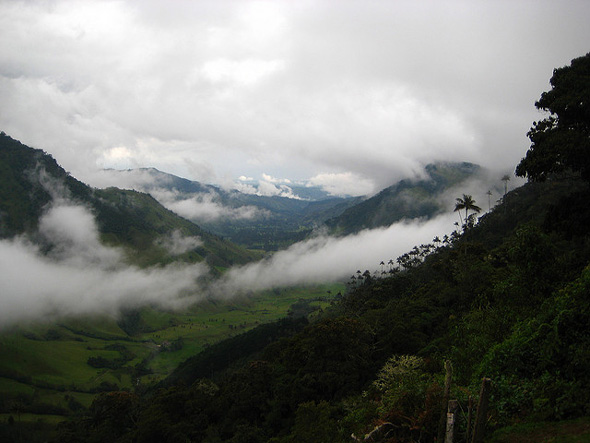
Five hours by truck and mule from the nearest town, a rumbling generator cuts through the silent night to power large spotlights as botanists crouch and kneel on large blue tarps spread across a cow pasture. It’s nearly midnight, and the team works urgently to describe every detail of the dozens of colorful orchids, ferns, and other exotic plants they have collected that day in Las Orquídeas National Park, one of the single most biologically diverse places on the planet.
-
Linking Biodiversity and WASH Efforts in Africa
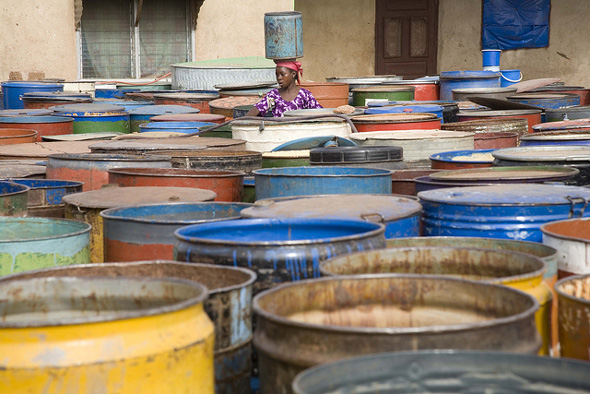
›Sub-Saharan Africa is a key region both for conservationists and those working for improved public health. Nine of the world’s 34 biodiversity hotspots are in sub-Saharan Africa, as are two of the five most important wilderness areas. This hotbed of biodiversity is also home to many of the world’s most rapidly growing populations and swelling urbanization, which is putting increased pressure on natural resources.
-
Peacemakers or Exclusion Zones? Saleem Ali on Transboundary Peace Parks
›“Traditionally, natural resources have been thought of as a source of conflict…but what we’ve been trying to do is look at the other side of the story, which is that natural resources, in terms of their quality, can create that impulse for conservation and cooperation,” said Saleem Ali, professor of environmental studies and director of the Institute for Environmental Diplomacy and Security at the University of Vermont, while speaking at the Wilson Center.
This narrative around peace parks or transboundary conservation areas that are used for peacebuilding is a relatively recent field of research, said Ali. “It’s one thing to have a protected area on a border and have cooperation between friendly parties – like the U.S. and Canada,” he said, “and it’s a totally different thing to explore this in areas where there’s a history of protracted violent conflict.”
Yet, Ali said, we have “a good institutional framework for understanding what kind of parks could potentially be developed.” Cooperation between Ecuador and Peru in the Cordillera del Condor protected area, for example, is an incidence where transboundary conservation was actually written into the peace process between two warring states. Recent tragedies on the Siachen glaciers highlight another case where calls have been made to use peace parks as a way to demilitarize a contentious border over which India and Pakistan have long argued.
Questions remain though about the capacity of conservation processes to sustain peace, and “whether micro-conflicts that might arise through any conservation being practiced can be managed effectively.” Peace parks established in South Africa after apartheid, for example, produced “micro-conflicts between the haves and the have-nots – the classic conflict between conservation as an exclusionary arena versus a more inclusionary vision.”
“A lot of those organizations have learned from those past mistakes and we’re moving in the right direction,” Ali said, “but that’s still an area that requires far more research, and also more applied work, to find the right mix of conservation and economic development.” -
John Williams: Helping People and Preserving Biodiversity Hotspots
›March 16, 2012 // By Schuyler Null“Both humans and the number of species in the world are not evenly distributed across the globe,” said John Williams of the University of California, Davis, who recently spoke at the Wilson Center about his contribution to Biodiversity Hotspots: Distribution and Protection of Conservation Priority Areas. “In particular we find that species diversity is concentrated in what’s called the biodiversity ‘hotspots.’”
Largely in the tropics, Mediterranean climates, and along mountain chains, biodiversity hotspots are “where there’s a real concentration in number of species and also unique species – plants and animals that exist nowhere else on Earth,” he said.
“It’s a very complex relationship between biodiversity and human population, because it’s not necessarily [true] that places of high human population are a threat to biodiversity,” said Williams. Many different factors play a role, “like education, like consumption, like economic development, different cultures – how people interface with the natural world – all these things create nuances as far as what that relationship is between biodiversity and where people live.”
“There are some basic things we can do that are going to be good for human welfare, as well as biodiversity,” he continued. A few are addressing lack of education, especially among girls, in areas of high biodiversity; providing basic health services, including family planning, where rural growth rates are highest; and improving physical access to rural areas to promote economic development.
“We see there’s a direct correlation between each additional year of schooling a girl has and their fertility during their lifetime,” Williams said. “As people climb out of poverty, they also choose to have smaller, healthier families.” -
More People, Less Biodiversity? The Complex Connections Between Population Dynamics and Species Loss
›March 8, 2012 // By Laurie Mazur“For if one link in nature’s chain might be lost, another and another might be lost, till this whole system of things should vanish by piece-meal.”
~ Thomas Jefferson, 1799This much is clear: As human numbers have grown, the number of species with whom we share the planet has declined dramatically. While it took about 200,000 years for humanity to reach one billion people around 1800, world population has grown sevenfold since then, surpassing seven billion last year.
-
The Unconquered: In Search of the Amazon’s Last Uncontacted Tribes
›In the far west of the Brazilian Amazon reside some of the last indigenous tribes on Earth untouched by modern society. In 2002, writer and photographer Scott Wallace, on assignment for National Geographic magazine, undertook a three month journey through the Javari Valley Indigenous Land on an expedition to map and protect the territory of the flecheiros, or Arrow People, named for the poison-tipped arrows they use. Wallace turned the chronicles of his adventure into a book while in residence as a Public Policy Scholar at the Wilson Center.
On November 21, Wallace returned to the Center to present his finished book, The Unconquered: In Search of the Amazon’s Last Uncontacted Tribes.
Over the past 40 years, Brazil’s policies towards indigenous tribes have changed dramatically, said Wallace – from initially wanting to “civilize” tribes through contact, to a modern hands-off approach. He explained that globalization and demand for rubber in the twentieth century meant more contact with indigenous tribes and, ultimately, more upheaval. As a result, many tribes took up hostile attitudes towards outsiders and retreated as far into the wilderness as possible.
Today, the Brazilian Department of Isolated Indians is attempting to map out the extent of uncontacted peoples’ lands in order to better protect them from intrusion. Over the last eight years since the book was written, the official number of uncontacted tribes has increased from 17 to 26. Javari Valley alone hosts eight distinct ethnic groups, making it the largest concentration of uncontacted tribes in the world.
The leader of Wallace’s expedition, Sydney Possuelo, is an explorer who was formerly the head of the Department of Isolated Indians and once one of Brazil’s most famous sertanistas (“agents of contact”). Possuelo is now a champion of the vision that we should no longer contact tribes, said Wallace, but only “identify them and get legal protection for [their] lands and erect control posts to keep intruders out.”
Old Tensions, New Threats
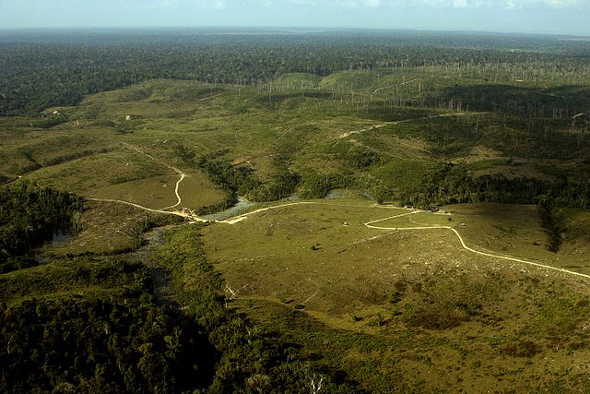
Although Wallace holds up Brazil as one of the countries with the most enlightened policies for native Indians in the Americas, he said there is cause for concern as intrusions continue. As Wallace notes on his blog, isolated Indians are known to travel extensively by foot during the dry season, appearing along the riverbanks as they search for turtle eggs buried in nests along the sandy beaches of the western Amazon. Mounting pressure from logging crews, wildcat gold prospectors, and seismic teams exploring for oil and gas are flushing these isolated indigenes out of the forests.
During their trek to map the flecheiros, Wallace’s group ran into an illegal gold mining operation, and, although they managed to take the dredge to the local authorities, Wallace said he fears corruption may have stymied justice.
Rights-Based Conservation
On the positive side, Wallace pointed out that by protecting indigenous tribes, the government is also protecting tens of thousands of acres of virgin rainforest in what is a mutually beneficial intersection of conservation and human rights. “Indians are the rightful owners of the land and the most efficacious guardians of the rainforest,” he said.
While there are many obstacles threatening the survival of uncontacted tribes, Wallace said that the situation is not hopeless and that conservation through protecting indigenous-rights in Brazil is a good starting point. “When there is a commitment to do something and resources are made available,” he said, “what seems like inevitable development, like the overrunning of forests, can be stopped.”
Event ResourcesPhoto Credit: “Brazil Amazon adventure,” courtesy of jonrawlinson. -
Susanna Murley for The Huffington Post
Compromise Is Hard: The Problems and Promise of REDD+
›December 6, 2011 // By Wilson Center StaffThe original version of this article, by Susanna Murley, appeared on The Huffington Post.
In Durban this week delegates from around the world are examining the options to mitigate carbon emissions. What looks like the best chance for progress? REDD+ (for Reduced Emissions from Deforestation and Degradation, plus co-benefits – like conservation, sustainable management of forests, and enhancement of forest carbon stocks). REDD+ has been seen as a potentially powerful solution to solve both poverty and deforestation – in one fell swoop.
How does it work? Essentially, these programs would be funded by developed nations to help pay for community forestry projects in developing countries, if the communities can demonstrate – with verifiable data – that their efforts are saving forests that would have been destroyed or if they are planting trees that would permanently sequester carbon.
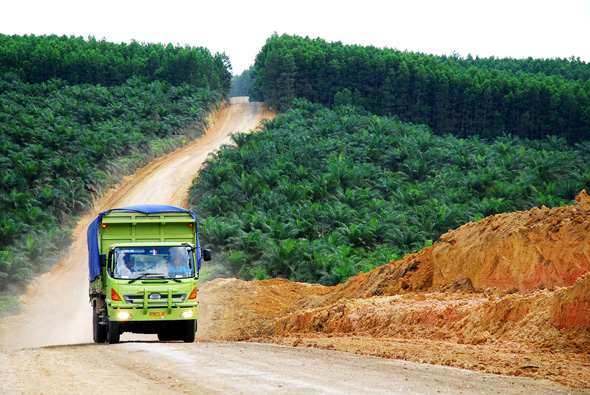
Will this work? Many other systems have tried and failed to reduce deforestation. In Indonesia, where an area of forest about the size of Nevada has been destroyed since 1990, activists have participated in demonstrations, legal actions, blockades and destruction of property to protest timber production. Many international NGOs have joined them in their campaigns against the forestry practices in Indonesia, releasing report after report on the “State of the Forest.” The World Bank and the International Monetary Fund have attempted to regulate forestry as conditions of their loans. None of it worked, and Indonesia continues to see massive amounts of illegal logging and deforestation.
Continue reading on The Huffington Post.
Sources: Center for International Forestry Research, Gellert (2010), MongaBay.com
Photo Credit: “Oil palm plantation,” courtesy of flickr user CIFOR (Ryan Woo).
Showing posts from category protected areas.