

-
Gates: More Money for Global Health Is Good for the Environment
›January 28, 2010 // By Gib Clarke Bill Gates gave the PHE community a much-needed upgrade in his foundation’s 2nd Annual Letter, released this week. Unfortunately it still has a few bugs.
“In the long run, not spending on health is a bad deal for the environment because improvements in health, including voluntary family planning, lead people to have smaller families, which in turn reduces the strain on the environment,” concludes Gates.
This statement could dramatically raise awareness of and funding for population-environment programs. Any time Bill Gates talks, the world listens, as evidenced by the barrage of coverage from Reuters, AFP, and top IT newswires. For the public, it offers a rare glimpse into development strategy, so Gates’ thoughts (and financial commitments) could be seen as representative of the foundation community’s approach to global health problems.
Although it may seem obvious that fewer people place less strain on the environment, this connection has been largely absent from the environmental agenda, including the efforts to combat climate change. Some environmental leaders and organizations have dismissed population as an unimportant distraction from the real business at hand. Others have noted that population growth’s impact on climate change is far greater in the rich world than in poor countries, whose per capita emissions are a fraction of developed countries’.
Gates’ comment may cause those in the first camp to re-evaluate the importance of family planning, and it is likely to energize the converted. But it will have less impact on those focused on consumption. But if it encourages the environmental community to put population and family planning issues back on the table, it will have gone a long way.
However, Gates could have gone further, by explaining that family planning is a relatively inexpensive way to mitigate climate change, compared to complex and emerging technological solutions. He also could have pointed out that climate change is expected to increase the prevalence of vector-borne diseases such as malaria, or that sick or malnourished individuals may be forced to mismanage natural resources.
Because Gates didn’t make these explicit connections, many in the media missed his point. The wire headlines pit health against environment, when Gates was in fact pointing out how interdependent they are. This distortion is symptomatic of the media’s tendency to highlight the horserace. But maybe they would pay closer attention if the Gates Foundation put its money where its mouth is—and funded programs that integrate family planning and the environment.
Perhaps several years from now, we will look back and say that this letter marks the start of the Gates Foundation’s integrated approach to development. But we may need to wait for Letter 3.0 for a complete install.
Photo: Courtesy Flickr User World Economic Forum -
Lessons from the Field: Focusing on Environment, Health, and Development to Address Conflict
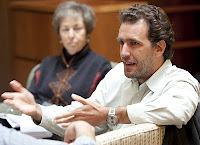
›“Even in the hardest moments of conflict there are opportunities for cooperation, and they need to be seized,” said Juan Dumas, senior advisor of Fundación Futuro Latinamericano during the Pathways to Peace: Stories of Environment, Health, and Conflict roundtable event co-hosted by the Wilson Center’s Environmental Change and Security Program and the Fetzer Institute on January 13th.
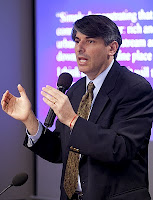
“Even as you were talking about the conflict potential,” said Aaron Wolf, professor of Geoscience at Oregon State University, “everywhere you looked there were people talking about water uniting together across boundaries and being able to share… [and] people being willing to talk about water when they wont talk about anything else.”
Dumas and Wolf were joined by Gidon Bromberg, co-director of Friends of the Earth Middle East (FoEME); Shewaye Deribe, project coordinator for the Ethio Wetlands and Natural Resources Association (EWNRA); and Joan Regina L. Castro, executive vice president of the PATH Foundation Philippines, Inc. (PFPI) to discuss work that demonstrates the positive impact multi-dimensional development and peacebuilding programs can have on environmental conflict arenas.
Water as an Entry Point“In the academic world, there’s a growing documentation about the coming wars of the 21st century are going to be about water resources,” said Wolf, discussing how water resources are inherently intertwined with the Arab-Israeli and other regional conflicts. His research, however, suggests the opposite. In recent history, he said, cooperation for the resource, not conflict, was observed in nearly two-thirds of the world’s cross-boundary watersheds.
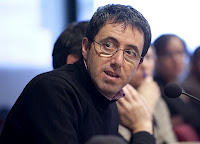
“Water is a wonderful way to have regional dialogue,” he continued, discussing how technical data and modeling are only part of any successful water conflict resolution. “A language that people have in common, and when we talk about water—because it’s connected to everything we do—we end up talking about our shared vision of the future.”“We came out with a vision that is a shared vision,” echoed Bromberg in describing the Good Water Neighbors (GWN) project—a FoEME program seeking to improve water scarcity and quality in the Jordan River watershed by fostering cooperation between Israeli, Palestinian, and Jordanian leaders. “The Jordan office advocates that vision to the Jordanian government, the Israeli office to Israeli government, the Palestinian office to the Palestinian authority. That’s proven to be very effective because it’s the same vision.”
While hesitant to say the program could lead to or be a model for peace in the Middle East, Bromberg did underscore how multi-dimensional methods used in GWN could productively serve future peacebuilding efforts in the region.
“By empowering young people to go out and improve their own water reality with their own hands [through rainwater harvesting and grey water collection] they learn together, and then they build the facilities within their own communities,” said Bromberg. “…Not only does it empower the youths but it helps create peacemakers.”
Integrated PHE and Conflict Avoidance“Water is common for all of us because it is the base of our life, of our survival,” said Deribe, linking ENWRA’s integrated population, health, and environment (PHE) wetland restoration program in Ethiopia to the greater discussion. “I think it is a lack of altruism, a lack of mutualistic thinking which leads us to this kind of conflict.”
Castro, pointing to her own PHE experience with PFPI, found that multi-sectoral programs promote improved environmental quality and community stability. In the Philippines, her program targeted local youth, fishermen, and policymakers to promote food security through sustainable resource management, improved medical and family planning services, and expanded livelihood training.
Castro found that a PHE program could continue even after funding ran out. “A project can be sustained and can be owned by the local governments and local communities if they are provided the capacity to be able to continue to implement the programs and that they see the value of the programs that they do,” she said.
Lessons in Conflict Resolution
Funding, said Dumas, is the biggest limiting operating factor for organizations that facilitate dialogue in environmental conflict areas. The ability to travel across Latin America on short notice to help resolve conflict has been extremely beneficial to Dumas’ organization; but in an arena where funders require full proposals with specific outcomes and indicators, such availability over the long-term is “not financially sustainable.”
Dumas did, however, suggest ways to reduce the need for conflict resolution while opening accessibility to funding. He recommended that institutions mainstream environmental considerations into all sectors of decision-making, thereby improving capacity to respond to environmental conflicts within the given population. He also suggested the creation of “early action funds” – pools of money that his and other organizations can use on short notice for dialogue facilitation support. -
‘DotPop: ’ New Toolkit for Population, Health, and Environment
›December 29, 2009 // By Wilson Center StaffThe PHE Toolkit, launched by Building Actors and Leaders for Advancing Community Excellence in Development (BALANCED), is a new source of information and resources on Population, Health, and Environment (PHE).
The interactive online library of documents, videos, and other resources will provide “one-stop shopping” for the target audience of program managers working on health, family planning, development, and conservation programs—as well as policymakers, researchers, academics, and educators. All users can contribute resources and participate in discussions through the toolkit.
The Environmental Change and Security Program, along with several PHE partner organizations, helped build the framework and will contribute its PHE resources to the toolkit. ECSP is also a member of the PHE Gateway, which can be accessed through the toolkit.
The PHE toolkit is one of five public toolkits housed on the Knowledge for Health (K4Health) website, which is supported by USAID’s Bureau of Global Health. Together, the current and forthcoming toolkits will form an updated and vibrant community for information on health, including family planning, HIV/AIDS, and reproductive health.
The PHE toolkit is made possible through the collaboration of Johns Hopkins University Center for Communication Programs (JHU/CCP) and the BALANCED Project. BALANCED is spearheaded by the Coastal Resources Center (CRC) at the University of Rhode Island and its partners, PATH Foundation Philippines Inc. and Conservation International. -
‘DotPop:’ Copenhagen’s Collapse: An Opportunity for Population?
›December 22, 2009 // By Gib ClarkeWhile the negotiators failed to reach a comprehensive agreement in Copenhagen, the population and reproductive health community might find a silver lining in the stormclouds that derailed COP-15.
Developing countries’ strong protests of their lack of culpability for the climate problem, on one hand, and the dramatic examples of their vulnerability on the other, have focused the world on the problems of poor people—and on potential solutions, including family planning.
The Case of the Missing “P”
The New York Times’ Andrew Revkin complained that population was the “The Missing ‘P’ Word in Climate Talks,” but PAI’s Kathleen Mogelgaard argues in New Security Beat that “there is encouraging evidence that voices of those advocating for increased attention to the role of population and reproductive health and rights in climate change responses are being heard” in Copenhagen, including new funding from the Danish government for family planning.
At a breakfast last week, luminaries including Gro Harlem Brundtland and IPCC Chairman Rajendra K. Pachauri discussed UNFPA’s latest report, Facing a Changing World: Women, Population and Climate in Copenhagen.
According to lead author Robert Engelman, the report is “helping many more people to see population and climate in a more hopeful light, linked as they are through the right of women to equal standing with men and access to reproductive health care for all.”
Women, Population, and Climate
“Climate change is ultimately about people,” declared Congresswoman Carolyn Maloney at the recent Washington, DC, launch of the report. Though the issues are complex and multi-faceted, Engelman said that the report’s message is “stark and optimistic”: that “women in charge of their own lives” can have positive impacts on change climate mitigation and adaptation.
“Women are more sustainable consumers,” said UNFPA’s José Manuel Guzmán at the launch, noting that in many cases women make buying decisions for their families, so empowering them with information and tools is a wise approach to combating climate change.
Inequitable Impacts
Women – especially poor women – contribute fewer greenhouse gas emissions than men, yet are more vulnerable to the impacts of climate change. Unfortunately, this fundamental inequality is difficult to quantify, since most data sources are not disaggregated by gender. The report recommends improving data quality to better informing policy decisions.
Tim Wirth, president of the UN Foundation and the Better World Fund, noted that women face a “double whammy”: they are already less likely to go to school and to have access to paying livelihoods, and more likely to have HIV. Climate change will only increase the inequity.
People Power
PAI’s Karen Hardee called on the population community to focus their efforts on the next phase of negotiations – adaptation. A recent PAI report found that while 37 of 41 National Adaptation Plans of Action say that population pressures exacerbate the effects of climate change, only six include slowing population growth or addressing reproductive health and family planning as a key priority.
“The focus has been on where and what the impacts of climate change will be,” said Guzman, but the conversation needs to shift to who will be affected, and an analysis of their vulnerabilities and their capacities to adapt.
For real progress to occur, said Engelman, “climate needs to be seen through a more human lens.” -
VIDEO – Integrating Population, Health, and Environment (PHE) in Ethiopia
›December 4, 2009 // By Sean Peoples“Incorporating environment, population, and health is a timely issue. Unless we focus on integrated approaches, our Ethiopian Millennium Development Goals cannot be achieved,” says Negash Teklu, executive director of the Consortium for Integration of Population, Health, and Environment (CIPHE), in this short video.
I interviewed Teklu and three other members of CIPHE in Yirgalem, Ethiopia, where they spoke of the importance of PHE integration; why it is vital to involve the community in development projects; and practical steps for implementing integration at the grassroots level.
Everyone agrees that Ethiopia faces serious challenges. Much of the economy is based on agriculture, but drought is all too common, and the land is exacerbated by continual overuse. High rates of population growth coupled with limited resources and uncertain crop yields leaves many people vulnerable to hunger and malnutrition. In addition, the country’s health system struggles to provide comprehensive care.
To combat these interconnected problems, the members of CIPHE truly believe that an integrated PHE approach that uses multi-sectoral interventions will best serve the needs of their fellow Ethiopians.
“If we follow the integrated PHE approach, economically we can be beneficial,” Mogues Worku of LEM Ethiopia told me. “We can share a lot of resources among the different sectoral organizations. At the same time with limited resources we can attain our goal by integrating the different sectoral offices and organizations, even at the grassroots level.”
This video will be the first of many on population, health, and environment problems and solutions in Ethiopia. Subscribe to our ECSP YouTube channel or the New Security Beat blog to see the latest videos. -
Ethiopia: A Holistic Approach to Community Development Blossoms Two Years After Taking Root
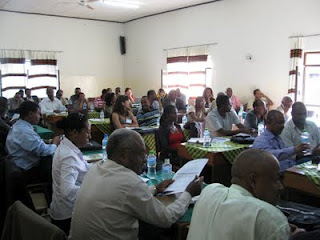
›November 12, 2009 // By Sean PeoplesAs evening fell upon Yirgalem, Ethiopia, more than 70 participants from a large cross-section of Ethiopia’s NGO community—as well as a few international participants like myself—gathered in a packed conference room in the Furra Institute for the second annual General Assembly of the Consortium for the Integration of Population, Health, and Environment (CIPHE). -
Video: Laurie Mazur on Population, Justice, and the Environmental Challenge
›October 21, 2009 // By Wilson Center Staff“It’s fairly well known that we’re at a pivotal moment environmentally . . . but I think it’s less well known that we’re also at a pivotal moment demographically,” Laurie Mazur, director of the Population Justice Project, tells ECSP’s Gib Clarke.
“Half the population, some three billion people, are under the age of 25,” Mazur says. “Their choices about childbearing will determine whether world population grows from 6.8 billion to as many as 8 or even almost 11 billion by the middle of the century.”
Mazur’s new book, A Pivotal Moment: Population, Justice, and the Environmental Challenge, launches at the Woodrow Wilson Center on October 27. Mazur will be joined by contributors John Bongaarts of the Population Council, Jacqueline Nolley Echegaray of the Moriah Fund, and Roger-Mark De Souza of the Sierra Club.
“These issues, population growth and the environment, are connected in ways that are very complex,” says Mazur.
“Population growth is not the sole cause of the environmental problems we face today, but it does magnify the impact of unsustainable resource consumption, harmful technologies, and inequitable social arrangements. It’s a piece of the pie. Slowing population growth is part of what we need to do to ensure a sustainable future.” -
Missives From Marrakech: Enter the Environment
›October 2, 2009 // By Gib Clarke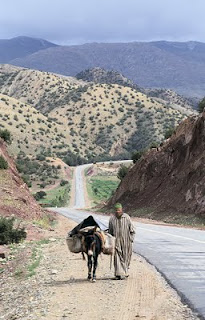
“Contraception is the cheapest way to combat climate change,” read the headline of The Telegraph in mid-September, announcing the release of “Fewer Emitters, Lower Emissions, Less Cost,”a study from the Optimum Population Trust (OPT) and the London School of Economics (LSE). Similar stories appeared in newspapers around the world.
Though there has been near-universal agreement that the OPT-LSE paper oversimplifies the link between demography and climate change, the buzz among the family planning and environment communities has continued during the IUSSP conference in Marrakech. Perhaps this is because demographers are not used to appearing in the press except when discussing census results. More likely it is the timing of the report, with the Copenhagen conference on climate change coming in December.The buzz hit a peak on Thursday at the IUSSP, with a plenary presentation examining the links. Wolfgang Lutz jumped right in, noting that it’s not as simple as the OPT-LSE study makes it. Population growth is important, but size is not the only thing that matters; other aspects such as age distribution, household structures, and levels of urbanization come into play as well.
In addition, between population size and climate change lie a number of intermediary factors, such as consumption levels, technology improvements, and greenhouse gas (GHG) emissions. Lutz argued that demography has a unique contribution to make to the climate discussion, for no other discipline understands the composition of different populations in different places both now and in the future. Therefore, demographers should explain how different groups will contribute to climate change, and how they will suffer the consequences, so that adaptive capacities can be strengthened and social programs can fill the gaps.
Leiwen Jiang described research conducted by some of the giants in climate and demography: National Center for Atmospheric Research, International Institute for Applied Systems Analysis, and Population Action International. Their work uses a “PET” model – Population, Environment, and Technology – which looks at how the PET elements impact four critical predictors of GHG emissions: consumption, energy use, labor, and savings. A forthcoming paper by this group will delineate the complete findings, including the potential for GHG “savings” brought by decreases in fertility and thus reduced population growth, as well as the added GHG due to future urbanization.
Susana Adamo took a step back to show the audience the view from 30,000 feet – literally, with maps demonstrating that population density is highest in areas most vulnerable to impacts of climate change, such as sea-level rises, droughts, floods, and other severe weather events.
Unfortunately, one of the stars of this research, Brian O’Neill, was unable to attend, due to health reasons. His research, to be published soon, is highly anticipated, and should add additional quantitative fuel to the fire.
Not Just Climate
Environmental links with population and demographic factors have also factored in other parts of this “demography” conference. A host of sessions, many organized by the Population-Environment Research Network, have explored linkages between population growth, migration, and urbanization on the demographic side; and deforestation, natural resource management, and environmental degradation on the environmental side. Questions concerning these and other environmental factors have surfaced at panels exclusively dedicated to other topics such as family planning. Some sessions examined how population and environment concerns can be jointly addressed.
It is encouraging to see demographers and reproductive health specialists taking climate and environmental factors so seriously. The response from the environmental community has been mixed, with some interest in population issues, but also some opposition from the climate community to including discussions of family planning in an already controversial topic. At a similarly large gathering of environmentalists and conservationists, the 2008 IUCN conference in Barcelona, only two sessions addressed health or population. So we have a long way to go progress to unite these communities of researchers and practitioners, and come together in a truly fruitful engagement.
Photo courtesy World Bank Photo Collection.
Showing posts from category PHE.
 Bill Gates gave the
  “Even in the hardest moments of conflict there are opportunities for cooperation, and they need to be seized,” said
  “In the academic world, there’s a growing documentation about the coming wars of the 21st century are going to be about water resources,” said
  “We came out with a vision that is a shared vision,” echoed
  “Water is common for all of us because it is the base of our life, of our survival,” said
  As evening fell upon Yirgalem, Ethiopia, more than 70 participants from a large cross-section of Ethiopia’s NGO community—as well as a few international participants like myself—gathered in a packed conference room in the

