-
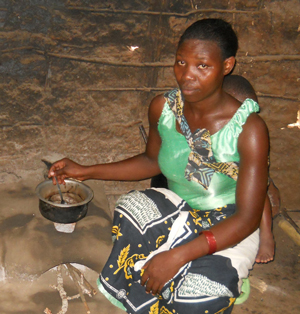
Rukia Seif, PHE Champion
Making Life Easier in Rural Tanzania
›This PHE Champion profile was produced by the BALANCED Project.
Rukia Seif is a population, health, environment (PHE) peer educator who promotes simple economic, environmental, and health behaviors that make sense. In many ways, the Mkalamo village where Rukia lives is a typical rural Tanzanian agricultural village. In another important way it is very different. Mkalamo abuts the biodiversity rich Saadani National Park – the only wildlife park in Tanzania that borders the sea. Ironically, this park does not make life easier for people living in Mkalamo but more difficult. In the park, there is a ban on the cutting of wood, making it difficult to find enough to fuel villagers’ cooking stoves. Also, increasing numbers of the park’s wild animals often destroy the villagers’ precious crops.
As a PHE peer educator, Rukia talks with her fellow community members about simple things they can do to improve their lives. Her messages are clear:- By planning their families, women can ensure their own and their children’s health and can decide the optimal number of children that they can provide for.
- By using fuel efficient stoves, women can spend less time collecting fire wood, freeing up time for other chores or livelihood activities and reducing the amount of needed fuel, thus helping sustain the forests for future generations.
- By joining community-led savings and credit associations, women and men gain access to capital, allowing them to scale-up current livelihoods or diversify to new sources of income.
Rukia sets a good example of how doing these simple things can improve a family’s life and protect the environment. At age 36, she is a mother of three girls, ages 14, 12, and one and a half. Rukia and her husband, Seif Ramadhani, are taking measures to plan their family. Rukia used pills before they decided to have their last daughter. Now they are using condoms as a back-up while Rukia is breastfeeding the baby. Through her work, Rukia meets and talks to many people every day. She discusses family planning and if someone is interested, she refers them to community-based distributors and the dispensary for family planning services.
“I talk to my peers about planning their families so we have enough natural resources to meet the needs of the villagers who depend on these resources,” she said. “Also, when you plan your family, you will get more time to perform other activities.”
An active member of the savings and credit association, where she also acts as the accountant, Rukia is living proof of this last statement. Through savings and loans, Rukia has diversified her income by buying a sewing machine and a fuel-efficient oven. Today, she generates income from cow and poultry husbandry, tailoring, bread-making, selling soft drinks, and constructing fuel-efficient stoves. With this increased income, Rukia and her husband have been able to put an iron sheet roof on their house and send their first-born daughter to secondary school – a great achievement in a country where only five percent of women stay in school beyond the primary level.
Rukia demonstrated her two fuel-efficient stoves: one is a metal oven that she uses for baking breads and cakes, the other is a simple mud stove that she uses for cooking. The mud stove, which costs less than $2 to build, is getting increasingly popular in the community. It saves fuel wood, prevents fires, produces less smoke (a serious health hazard), and cooks the food faster!
“I can even wear my best clothes and put on some lip shine when I use this stove, because it does not foul up the air,” Rukia explains with a laugh. Seeing the benefits of the fuel efficient stoves, she has inspired ten community-based distributors and five village leaders to join the team of individuals showcasing the fuel efficient technologies.
Rukia is a perfect example of practicing what one preaches. She is improving her own life, helping others learn to do the same, and protecting the very natural resources upon which almost everyone in Mkalamo depends.
This PHE Champion profile was produced by the BALANCED Project. A PDF version can be downloaded from the PHE Toolkit. PHE Champion profiles highlight people working on the ground to improve health and conservation in areas where biodiversity is critically endangered. -
Integrating Development: A Livelihood Approach to Population, Health, and Environment Programs
›
Rural communities in developing countries understand that high population growth rates, poor health, and environmental degradation are connected, said Population Action International’s Roger-Mark De Souza at a recent Wilson Center event. An integrated approach to development – one that combines population, health, and environment (PHE) programs – is a “cost-effective intervention that we can do very easily, that responds to community needs, that will have a huge impact that’s felt within a short period of time,” said De Souza. “This is how we live our lives, this makes sense to us – it’s completely logical,” community participants in PHE projects told him.
-
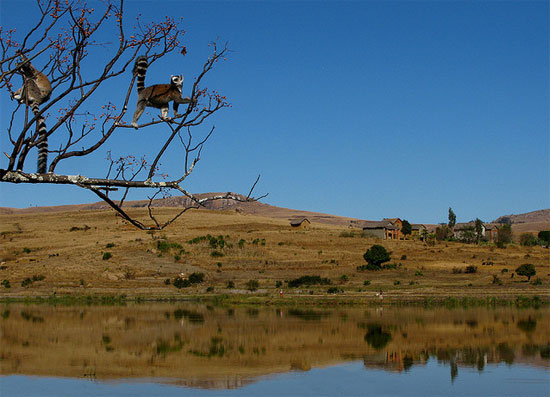
Madagascar, Past and Future: Lessons From Population, Health, and Environment Programs
›In Madagascar, “today’s challenges are even greater than those faced 25 years ago,” said Lisa Gaylord, director of program development at the Wildlife Conservation Society. At an event at the Woodrow Wilson Center on March 28, Gaylord and her co-panelists, Matthew Erdman, the program coordinator for the Population-Health-Environment Program at Blue Ventures Conservation, and Kristen Patterson, a senior program officer at The Nature Conservancy, discussed the challenges and outcomes of past and future integrated population, health, and environment (PHE) programs in Madagascar. [Video Below]
Nature, Health, Wealth, and Power
Gaylord, who has worked in Madagascar for nearly 30 years, gave a brief history of USAID’s activities on the unique island, which she called a “mini-continent.” She used the “nature, health, wealth, and power” framework to review the organization’s environment, health, and livelihoods programs in Madagascar and their results. Governance, she said, is the centerpiece of this framework, but this piece “maybe didn’t have an adequate foundation” in Madagascar to see the programs through the political crisis.
Though its programs started at the community level, Gaylord said USAID’s objective was to scale up to larger levels. “You can’t always work on that level and have an impact,” she said, and there was “tremendous hope” in 2002 for such scaling up when Madagascar elected a new president, Marc Ravalomanana.
Unfortunately, changes in funding, a lack of economic infrastructure, and poor governance forced development programs to scale down. After President Ravalomanana was overthrown in a military coup in 2009, the situation got worse – the United States and other donors pulled most funding, and only humanitarian programs were allowed to continue.
“What worries me is that I think we have gone back” to working on a village level, Gaylord said. “We want to go up in scale, and I think that we felt that we could in Madagascar, but that’s where you have the political complexities that didn’t allow us to continue in that direction.”
Going forward, Gaylord said that it is important to maintain a field-level foundation, take the time to build good governance, and maintain a balance in the funding levels so that no one area, such as health, dominates development activities.
Living With the Sea
Based in southwestern Madagascar, the Blue Ventures program began as an ecotourism outfit, said Erdman, but has since grown to incorporate marine conservation, family planning, and alternative livelihoods. One of its major accomplishments was the establishment of the largest locally managed marine protection area in the Indian Ocean, called Velondriake, which in Malagasy means “to live with the sea.” This marine area covers 80 kilometers of coastline, incorporates 25 villages, and includes more than 10,000 people. The marine reserves for fish, turtles, and octopus, as well as a permanent mangrove reserve, protect stocks from overfishing.
One of the biggest challenges facing the region is its rapidly growing population, which threatens the residents’ health and their food security, as well as the natural resources on which they depend. More than half the population is under the age of 15 and the infant and maternal mortality rates are very high, Erdman explained. Blue Ventures, therefore, set up a family planning program called Safidy, which means “choice” in Malagasy.
“If you have good health, and family size is based on quality, families can be smaller and [there will be] less demand for natural resources, leading to a healthier environment,” said Erdman.
The region’s isolation and lack of education and health services are a challenge, said Erdman, but over the past three years, the contraceptive prevalence rate has increased dramatically, as has the number of clinic visits. The program uses a combination of clinics, peer educators, theater presentations, and sporting events, such as soccer tournaments, to spread information about health and family planning.
A Champion Community
“There is a long history of collaborative work in Madagascar,” Patterson said. Focusing on the commune (county) level, she worked in conjunction with USAID, Malagasy NGOs, and government ministries to try to scale up PHE programs in Madagascar’s Fianarantsoa province, which has a target population of 250,000 people.
“We essentially worked at two different levels,” said Patterson. At the regional level, a coordinating body for USAID and local partners called the “Eco-Regional Alliance” met monthly. The “Champion Commune” initiative, which worked at local levels, had three main goals, she explained:
Though working in such remote areas is expensive, and all non-humanitarian U.S. foreign aid has been suspended since the coup, Patterson hopes that development programs will return to Madagascar. Pointing to its vast rural areas, she stressed the importance of integrated efforts: “The very nature of multi-sectoral programs is that they have the highest benefit in the areas that are most remote. These are the areas where people are literally left out in the cold.”- Create a strong overlap with neighboring communes;
- Promote activities that benefited more than one sector (such as reforesting with vitamin-rich papaya trees); and
- Capitalize on the prior experiences of Malagasy NGOs in implementing integrated projects to help build up civil society.
Image credit: “Untitled,” courtesy of flickr user Alex Cameron.
Sources: The New York Times, Velondriake. -
Integrated Approach Helps “Model Farmers” Increase Productivity in Ethiopia
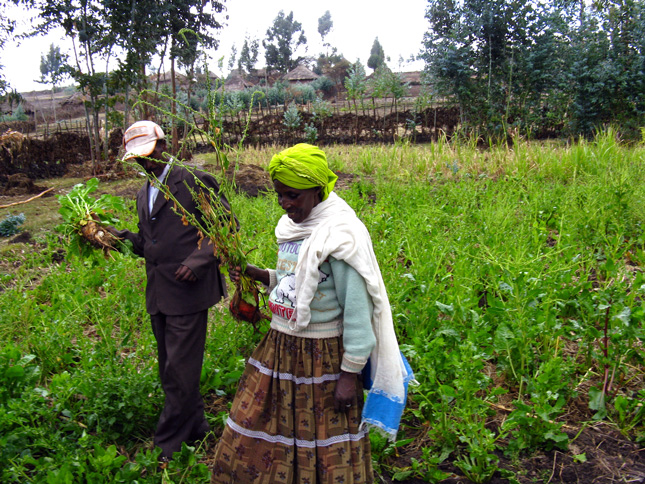
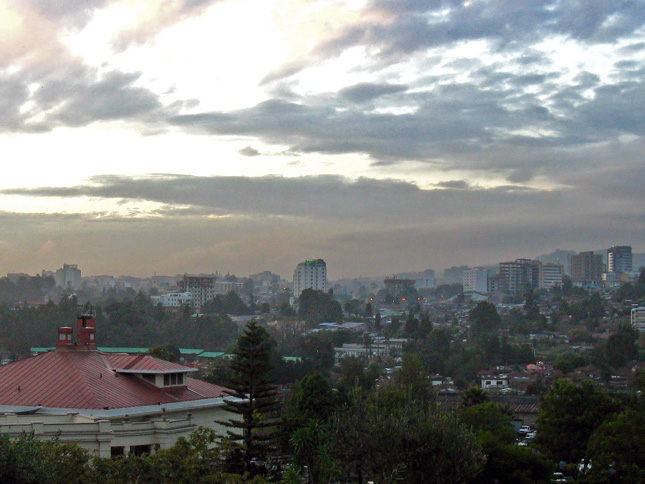
›March 24, 2011 // By Schuyler NullTo reach the village of Grar Gaber from Addis Ababa, you drive up over the Entoto Mountains overlooking the capital then motor down two hours of new Japanese-built highway to the town of Fiche. From there it’s 20 minutes on a broken dirt road across rocky hills. I was joined there by about 20 others from the PHE Ethiopia Consortium’s general assembly (see day one and day two coverage here) and Population Action International, to visit an integrated population, health, and environment (PHE) development program run by LEM Ethiopia.
-
Watch: David Lopez Carr and Liza Grandia on Rural Population Growth and Development in Guatemala
›March 22, 2011 // By Hannah MarquseeDemographers today are largely concerned with two trends: aging in the developed world, and rapid urbanization in the developing world. The majority of people in the world now live in cities, “but this tiny fraction of people that live in rural areas – concealed by the data because it’s a small fraction – still have very high fertility rates, precisely where protected areas are,” said David Lopez-Carr, associate professor of geography at the University of California, Santa Barbara in this ECSP interview.
“You see a gradient. The more rural, the more remote, the higher fertility,” said Carr. In Guatemala, for example, fertility rates range from below four children per woman in Guatemala City, to as high as eight in the remote Maya biosphere reserve, which is mostly indigenous. “These are the populations that are growing the fastest and the ones who are living in direct proximity and whose livelihoods are predicated directly on the rainforest, whether it’s through resource extraction or…agricultural expansion,” said Carr.
Liza Grandia, assistant professor of international development and social change at Clark University, spent many years working in the Maya biosphere reserve with the Guatemalan NGO ProPeten to address deforestation. However, after years of alternative livelihood projects, “it became clear that many of those efforts would be undermined by population growth and continued migration into the region,” she said in an interview with ECSP.
Grandia and ProPeten conducted a study as part of the Demographic and Health Surveys to examine the linkages between health, population, and environmental trends in the Peten region. Based on these findings, Grandia founded Remedios, a program that partnered with International Planned Parenthood Foundation and the Guatemala Ministry of Health to provide family planning services to “one of the most remote places in Latin America.”
Remedios used mass media, such as the radio soap opera “Between Two Roads,” broadcast in Spanish and Q’eqchi’ Maya, to reach people across this remote region. In the popular soap opera, “the villain is a cattle rancher, the heroine is a midwife, and through the tales of daily life in this village we weave in messages about domestic violence, use of family planning, agrarian problems, like land speculation, and a whole host of other issues that come up in people’s daily lives,” said Grandia. “In three years as a result of that work, the total fertility went from 6.8 to 5.8. To date, 10 years later, it’s dropped to 4.3.” -
The Continuing Challenges of Integrated Development
›March 20, 2011 // By Schuyler Null“How are we going to feed all these mouths?” asked Bekele Hambissa, director of the Environmental Protection and Development Organization in Addis, on day two of the PHE Ethiopia Consortium general assembly (read about day one here). Environmental resources are directly tied to Ethiopia’s population growth, said Hambissa, during a discussion of balancing efforts to address population growth, environment, and livelihoods. While poverty alleviation is an important goal of population, health, and environment integration (PHE), it must be environmentally sustainable, he said.
-
“Better Bang for the Buck”: Blogging From Ethiopia’s Population, Health, and Environment General Assembly
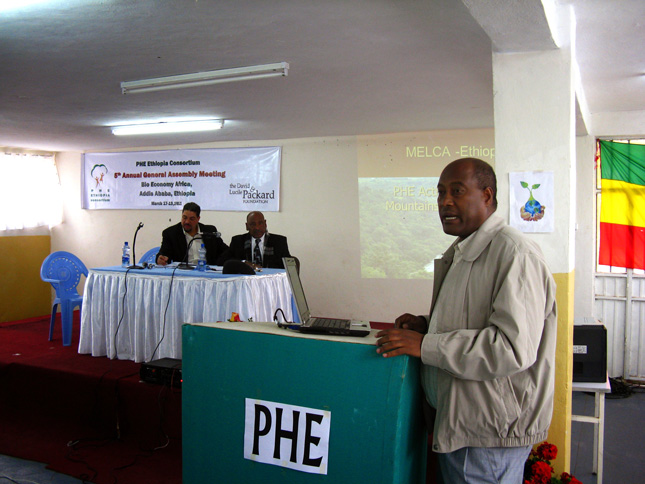
›March 18, 2011 // By Schuyler NullHello from Addis Ababa, where I am blogging from the 5th annual general assembly of the Population, Health, and Environment (PHE) Consortium of Ethiopia (see further coverage here). Along with the Philippines, Ethiopia is the largest PHE programmer in the world, both in terms of number of programs and people affected, and for good reason: The country combines dire need, willing donors, and a great deal of local capacity and will.
-
Watch: Roger-Mark De Souza on the Scaling Advantages of Population, Health, and Environment Integration
›March 11, 2011 // By Schuyler NullBy integrating population, health, and environment (PHE) efforts, development programs can make a difference in people’s lives in a real and meaningful way – one which they understand, appreciate, and desire, said Roger-Mark De Souza in this interview with ECSP. De Souza is the vice president of research and director of the Climate Program at Population Action International.
The PHE approach “allows itself to be applied at different levels,” said De Souza. “It’s easily implemented at the level of a village, or a town, or a city where a number of individuals can say ‘these are concrete results and outcomes that we want in our lives and that we want to live our lives in an integrated way.’”
PHE interventions not only provide tangible results to individuals, said De Souza, but they also help accomplish broader policy objectives, including improving health and alleviating poverty.
“There are lessons to be learned from different areas of integration, not just population, health, and environment,” De Souza said. For example, initiatives that integrate food security and HIV/AIDS deal with issues “similar to the ones we deal with in integrating population, health, and environment,” he said. Lessons and experiences need to be shared between these communities, but they also share similar advantages: From a cost-efficiency stand point, integration simply provides greater “bang for the buck,” he said.
Showing posts from category PHE.