Showing posts from category nutrition.
-
Evidence, Links, and Solutions
Maternal Undernutrition
›“Maternal undernutrition is often overlooked as a strategy for reducing poverty and as a key intervention to reduce maternal mortality and morbidity,” said Mary Ellen Stanton, senior maternal health advisor at the U.S. Agency for International Development. Stanton was joined by Dr. Doyin Oluwole, director of the Africa’s Health in 2010 program, and Amy Webb Girard, assistant professor at the Emory University School of Public Health, in the final meeting of the Advancing Policy Dialogue on Maternal Health series on December 15 where they addressed the linkages between poverty, undernutrition, and poor maternal health outcomes.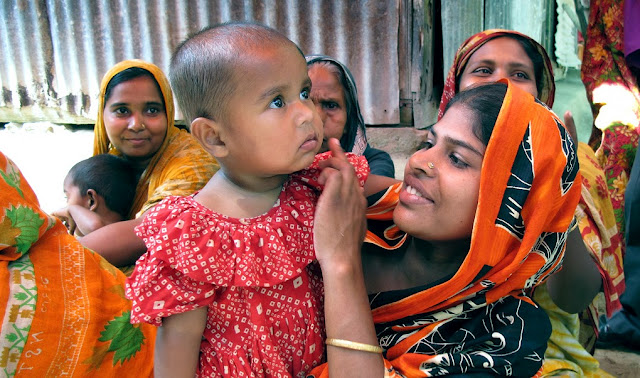
The Cycle of Malnutrition and Poverty
Many factors contribute to a woman’s nutritional status, including lack of capital, access to land, and poverty; thus, said Oluwole, “we must adopt a multi-pronged and multi-sectoral response.”“General malnutrition is usually associated with iron-deficiency anemia, which leads to poor cognitive function and educational achievement, poor health, and fatigue.” Oluwole said. “These three factors lead to low worker productivity, and low worker productivity leads to income poverty.”
“All of these aggravate malnutrition and so the vicious cycle of malnutrition and poverty continues,” said Oluwole. To break this cycle, she pointed out that countries like Malawi and Mexico have implemented various multi-sectoral interventions that have “stimulated economic growth; implemented targeted social, health, and nutrition programs; and put in place safety nets.”
“In the window of opportunity during pregnancy and the first two years of life, we can make a big difference,” Oluwole said. She advocated for an “integrated anemia package” that provides anti-malarials, de-worming medicine, iron folic acid tablets, and extra food during pregnancy. She also noted the importance of family planning and targeted high-coverage interventions, such as salt iodization, vitamin A supplementation, and breastfeeding promotion.
In conclusion, Oluwole provided several recommendations for the development community to improve maternal mortality rates and undernutrition of women:
Maternal Undernutrition: Our Global Disgrace- Promote universal primary and secondary education, especially for girls
- Stimulate economic growth with a focus on gender and equity
- Invest in infrastructure to reduce transportation time to hospitals
- Postpone age of marriage and of first pregnancy
- Provide targeted and effective nutrition and health interventions
- Encourage private sector participation and government leadership
- Integrate the maternal health and nutrition communities and services
“We don’t tend to look at maternal nutrition and its impacts on the woman herself,” said Girard. The lack of data on the relationship between nutrition and maternal health outcomes “hampers our ability to move maternal nutrition onto the health and development agenda,” she added.“Anemia is widespread; worldwide, it is a significant public health burden, both in women of reproductive age as well as in pregnant women,” said Girard. Studies have shown that moderate anemia increases risk of hemorrhage and may also increase the risk of sepsis, while severe anemia has been shown to directly contribute to maternal mortality. Targeted interventions can help reduce these risks greatly. “For every one gram per deciliter increase in hemoglobin level, you can reduce maternal mortality by approximately 25 percent, but the mechanisms by which this occurs are not well elucidated,” noted Girard.
“We need to include women not as just targets of nutritional interventions, but as beneficiaries in their own health,” said Girard. Key nutritional interventions such as micronutrient supplementation, fortification, and behavior change communication can help to improve not only fetal, infant, and child health, but can also reduce maternal morbidity and mortality. In addition, Girard recommended the following strategies to achieve greater impact:
Together, these strategies can help improve access to nutrition and health services, as well as adequate food for women throughout their lives. “We need to integrate health and nutrition – they are actually the same pillar, complementing each other,” Girard concluded.- Improve nutrition throughout the life cycle, not just during pregnancy
- Look for alternate strategies for micronutrient delivery
- Integrate maternal nutrition into food security and agricultural strategies
- Collect indicators specific to women’s health impacts
- Recognize and address gender bias
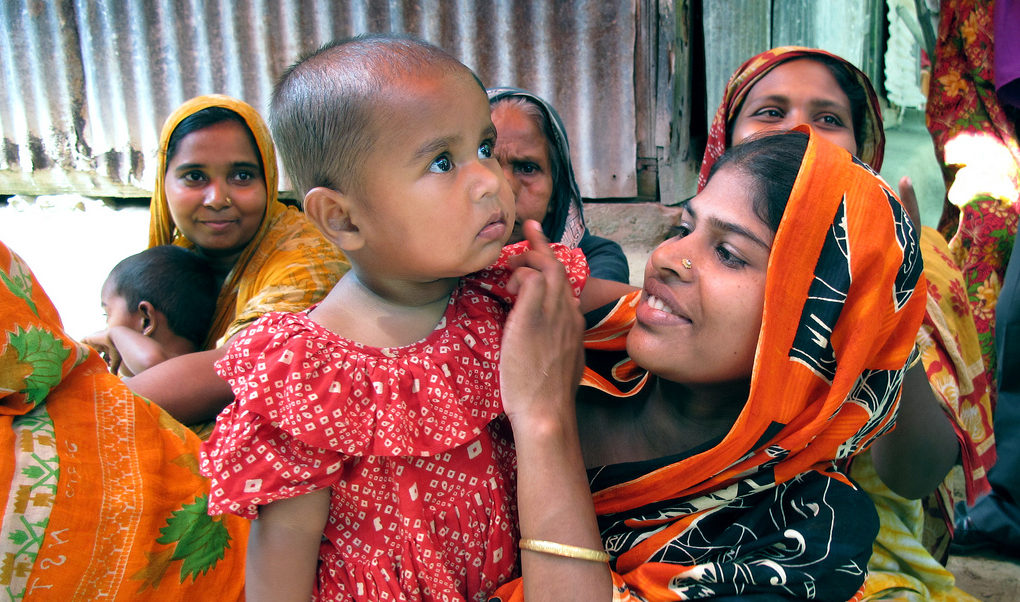
Photo Credit: “Bangladesh mothers, kids,” courtesy of flickr user Bread for the World. -
The Role of Population Dynamics in Climate Adaptation
›December 21, 2010 // By Wilson Center StaffThis post is a synthesis of a panel discussion at the UNFPA Population Dynamics and Climate Change conference in Mexico City with Marcia Castro, of the Harvard School of Public Health; Heather D’Agnes, of USAID; and Lori Hunter, of the University of Colorado at Boulder.
It is well-known that environmental change — including climate change — has important impacts on human health. However, it is less well understood how health systems shape the responses of individuals and households to environmental change. Population dynamics — such as fertility, migration, and mortality and morbidity — influence community health and greatly affect community resilience in the face of environmental changes, including the capacity to adapt to climate change.
Mortality and Morbidity
Morbidity and mortality dramatically shape a household’s ability to adapt its livelihood strategies to a changing climate. For example, in areas of high HIV prevalence, such as sub-Saharan Africa, adult mortality seriously undermines livelihood options. In the face of such loss, the household’s reliance on local natural resources intensifies. If environmental change reduces the amount of available resources, the household has fewer options for energy and sustenance.
Morbidity also affects adaptive capacity, and morbidity itself can be shaped by environmental change. For example, environmental scarcity can increase poverty, which can lead to an increase in risky transactional sex, further fueling the HIV pandemic. Malnutrition resulting from drought and environmental shocks can suppress the immune systems of HIV-positive people, making them more vulnerable to illness and less able to adapt to other external changes.
Fertility and Family Planning
Healthier households are more resilient households, so increasing access to health services, including reproductive health services, is essential for building adaptive capacity. High fertility poses challenges to a family’s livelihood and has negative health effects on women and children. Providing reproductive health services is an effective way to improve the capacity of these vulnerable groups to adapt to climate change. For example, a recent study argues that lowering fertility rates in the Himalayan region could increase community resilience to the predicted fluctuations in water quantity.
However, there is a high level of unmet demand for contraception across the globe. How can community adaptation programs help meet this need? Importantly, research from the Philippines suggests that integrating population, health, and environment programs in a package approach to community development is more effective than single-sector interventions. Including family planning and reproductive health services in community-based climate adaptation programs could not only more effectively meet the community’s needs, but could also improve its adaptive capacity better than health or climate programs alone.
Migration
Another population process, migration, can both impact health and affect the capacity for adaptation. For example, internal migration in the Brazilian Amazon appears associated with the spread of malaria, which negatively impacts the adaptive capacity of households. To mitigate climate change’s health impacts, states should more effectively plan settlements and health systems, including health impact assessments for infrastructure and development projects. (Editor’s Note – northern Nigeria and Niger present another example of similar climate-related migratory patterns that significantly impact health and economic resilience.)
In summary, the scientific evidence is clear that population dynamics — such as mortality, fertility, and migration — and environmental trends are linked. Projects intended to improve a community’s ability to adapt to a changing climate should consider and address these linkages in their design and implementation.
Sources: Foundation for Environmental Conservation, UNFPA, USAID.
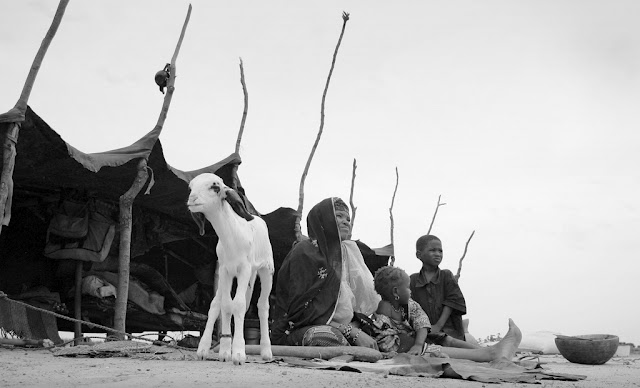
Photo Credit: “Toureg family in Niger,” courtesy of flickr user ILRI. -
Watch: Joel E. Cohen on Solving the Resource-Population Equation in the Developing World
›December 14, 2010 // By Wilson Center Staff“It’s very hard to put a number on a quantity that depends on future events, processes we don’t understand, and values that may change over time,” said Joel E. Cohenof the Rockefeller University in this interview with ECSP. “That doesn’t mean we have no problems and it doesn’t mean there’s nothing we can do.”
There are three schools of thought or proposed “panaceas,” when it comes to balancing natural resources and population, said Cohen: a bigger pie (new technology to increase productivity), fewer forks (reduced consumption), and better manners (reduced irrational market inequities and better governance).
In the 15 years since his book How Many People Can the Earth Support? was published, Cohen’s approach has changed. While the 1996 book lacked a definitive policy recommendation, he is now analyzing options. “The evolution of my thought has moved from ‘how many people can the Earth support?’ to ‘what do we need to solve problems?’” he said.
You need adequate child and maternal nutrition to produce potential problem solvers and you need education to give them the tools to do it with, said Cohen, who studied the impact of universal primary and secondary education with colleagues at the American Academy of Arts and Sciences.
“If you look at a map of stunting in the world, there are parts of South Asia and sub-Saharan Africa where more than half the children are stunted – that means two standard deviations [of] height below normal for their age,” said Cohen. “Those populations are handicapped at the starting gate because they don’t have the problem solvers.” -
IGWG’s K4Health Gender and Health Toolkit Is a One-Stop Shop for Integration
›November 30, 2010 // By Ramona Godbole
Addressing and analyzing gender norms, roles, and relations is increasingly viewed as critical in the development of equitable, effective, and sustainable health care. However, there has been relatively little integration of gender into health policies, programs, and systems.
The Interagency Gender Working Group (IGWG) – founded in 1997 as a way to bring together NGOs and parts of USAID to share best practices – has partnered with K4Health to create a Gender and Health Toolkit specifically designed to bridge this gap.IGWG’s Gender and Health Toolkit provides access to hundreds of tools, databases, training modules, websites, and publications in one place. Broadly divided into sections including program design, implementation approaches, capacity building, monitoring and evaluation, health systems, best practices examples, and even country-specific case studies, the toolkit provides nearly everything needed to begin integrating gender into new or existing public health programs.
Practitioners can also post questions and comments about the toolkit through an integrated discussion board. The toolkit even has a database to share gender-related photos.
While designed primarily for gender and health specialists and practitioners, the scope of the toolkit extends beyond typical public health issues like maternal health, family planning, HIV/AIDS, and reproductive health. The toolkit links to resources and training modules covering a wide range of cross-cutting topics including gender-based violence; nutrition and food security; integrated population, health and environment; and conflict/post-conflict humanitarian assistance.
The accumulated wealth of knowledge presented in the IGWG Gender and Health Toolkit is an impressively comprehensive resource, and it should be bookmarked by environment, health, and gender specialists and interested policymakers alike.
Image Credit: K4Health. -
Stephanie Hanson Reports on PHE in Agricultural Development and Rwanda’s ‘One Acre Fund’
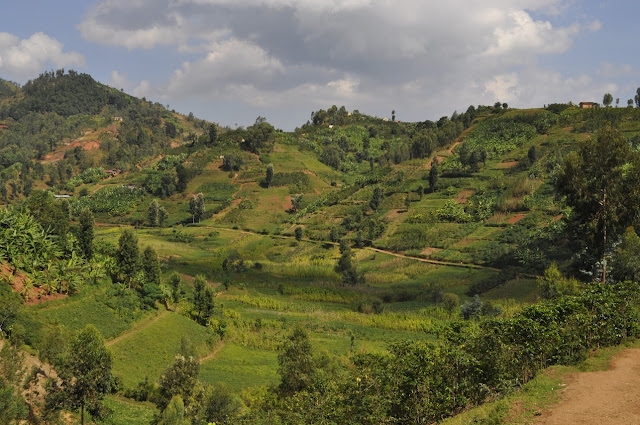
›Driving from Kigali into rural Rwanda, the hills that flank either side of the paved road are covered with bananas, maize, coffee, and beans under cultivation. Most Rwandans are farmers, using any bit of available land to feed their families and generate income. In this country—the most densely populated in Africa—little arable land is left untended.
My organization, One Acre Fund, offers loans and education to smallholder farmers in Kenya and Rwanda. We work with 18,000 farmers in three districts in the southwestern and western part of Rwanda, where we are know as Tubura, which means “multiply” in Kinyarwanda.
Though One Acre Fund is not a traditional population, health, and environment (PHE) project, agricultural development work inherently is PHE work, particularly in Rwanda, which faces significant population and environment challenges.
Our farmers have small plots of land because Rwanda’s population density is so high—375 people per square kilometer, higher than Japan—leaving only .13 hectares of arable land per person. They struggle to grow enough food because it’s difficult to support a big family on a small piece of land, especially without access to high-quality seed and fertilizer.
When farmers don’t grow enough to ensure basic food security for their families, their children are malnourished, which makes them more susceptible to illness.
Finally, agriculture both depends on and affects the environment. Farmers need favorable growing conditions—good soil and adequate rainfall—for a good harvest. Sustainable agriculture practices, such as composting and preventing soil erosion, ensure the environment remains healthy to support future farming.One Acre Fund is acutely aware of the challenges that our farmers face due to high population density, food insecurity, and environmental degradation. We offer a service model that addresses all the needs of a smallholder farmer: financing, farm inputs, education, and market access.
When a farmer enrolls with One Acre Fund in Rwanda, she joins as part of a group of 6-15 farmers. She receives an in-kind loan of seed and fertilizer, which is guaranteed by her group members. One Acre Fund delivers this seed and fertilizer to a market point within two kilometers of where she lives. A field officer provides in-field training on composting, techniques to prevent soil erosion, land preparation, planting, fertilizer application, and weeding.
Over the course of the season, the field officer monitors the farmer’s fields. At the end of the season, he trains her on how to harvest and store her crop. One Acre Fund also offers a harvest buyback program that farmers can choose to participate in.
On average, One Acre Fund farmers double their farm income per acre in one growing season. Ninety-eight percent of our farmers repay their loans, which are due several weeks after harvest.
With their increased harvests, One Acre Fund farmers are able to feed their children, which reduces malnutrition. Anecdotally, we also know that One Acre Fund children experience less illness; this year, we are working to incorporate health indicators into our monitoring and evaluation work.
At a harvest buyback last month, I met many farmers who had benefited from One Acre Fund’s services. One woman, Tamar, had sold 400 kilograms (880 pounds) of beans at the previous season’s buyback, which earned her roughly 132,000 Rwandan francs ($235 USD). She told me that she was using the money to build a bigger home for the six of her ten children who lived at home.However, Tamar really wanted to buy a cow, but she knew that she would not earn enough money this year to afford one. With so many children, she struggled to earn enough money to invest in something that might generate additional income for her and her family.
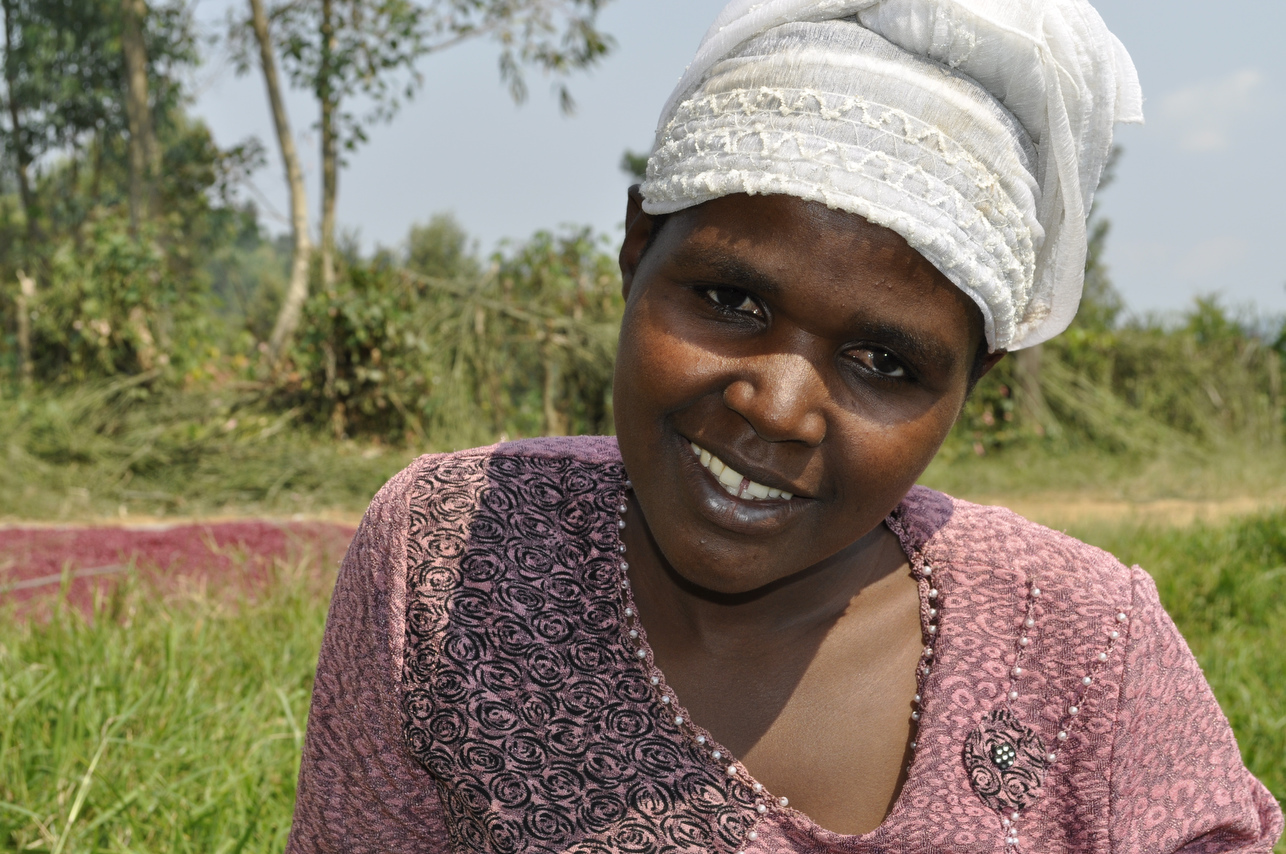
Another woman, Medeatrice, had also made $235 USD from the sale of her beans. With that income, she had opened a small shop with her husband in a nearby market. Unusually for Rwanda, where the average woman has 5.5 children, Medeatrice only had one, a three-year old boy named Prince. I asked her if she planned to have more children.
“I only want one more child,” she told me. “If I only have two children, it is easy to educate and to take care of them.”
The Rwandan government has invested in educating its population on family planning, but it will take time for birth rates to drop. For now, families with five, six, or nine children are not uncommon.
However, research shows that when women have increased access to economic opportunities, birth rates drop. One Acre Fund is focused on helping Rwanda’s families increase their harvests so that they not only have enough to eat, but they can start investing in their futures.
Guest Contributor Stephanie Hanson is the director of policy and outreach at One Acre Fund.
Photo Credit: Rwanda’s hills and Medeatrice, courtesy of Stephanie Hanson.