-
Melinda Harm Benson and Robin K. Craig, Ensia
The End of Sustainability?
›July 30, 2014 // By Wilson Center Staff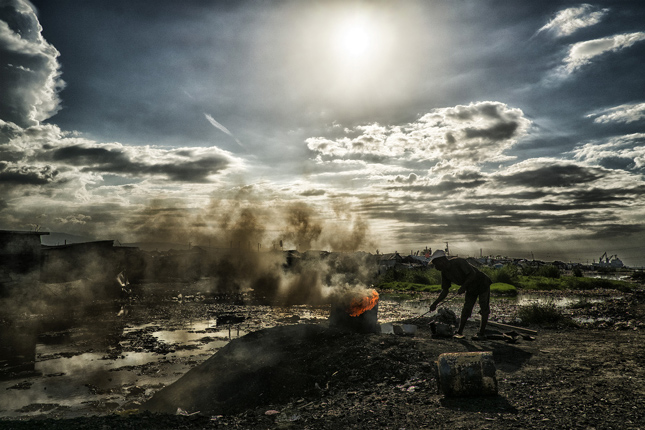
The time has come for us to collectively reexamine – and ultimately move past – the concept of sustainability. The continued invocation of sustainability in policy discussions ignores the emerging realities of the Anthropocene, which is creating a world characterized by extreme complexity, radical uncertainty, and unprecedented change. From a policy perspective, we must face the impossibility of even defining – let alone pursuing – a goal of “sustainability” in such a world. It’s not that sustainability is a bad idea. The question is whether the concept of sustainability is still useful as an environmental governance framework.
-
India’s Faltering Energy Production, Damaged Water Resources Demand Modi’s Close Attention
›
India’s new prime minister swept into office in May on a message of aspiration and a reputation for action.
During the nearly 13 years that Narendra Modi served as chief minister of Gujarat before becoming prime minister, his successes included drastically curtailing the number of hours that manufacturers in India’s premier industrial state went without electricity. The state’s transmission grid was strengthened and he promoted the development of 900 megawatts of solar generating capacity (equivalent to a large nuclear plant).
-
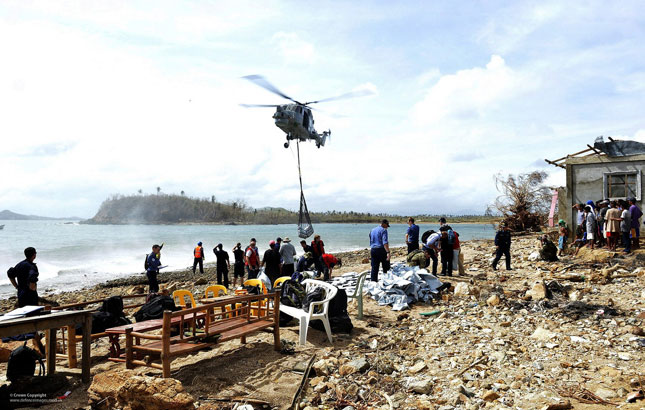
Environmental Dimensions of Sustainable Recovery: Learning From Post-Conflict and Disaster Response
›“Environmental specialists need to change,” said Anita van Breda at the Wilson Center on June 25. “In the new normal, our work has to have a different relevancy.” [Video Below]
-
Climate Change Will Test Water-Sharing Agreements
›July 15, 2014 // By Thomas CurranMany existing water-sharing treaties should be re-assessed in the context of climate change, write Shlomi Dinar, David Katz, Lucia De Stefano, and Brian Blakespoor in a World Bank working paper.
-
Alice Thomas: For Refugees, Environmental Recovery Critical for Return to Normalcy
›
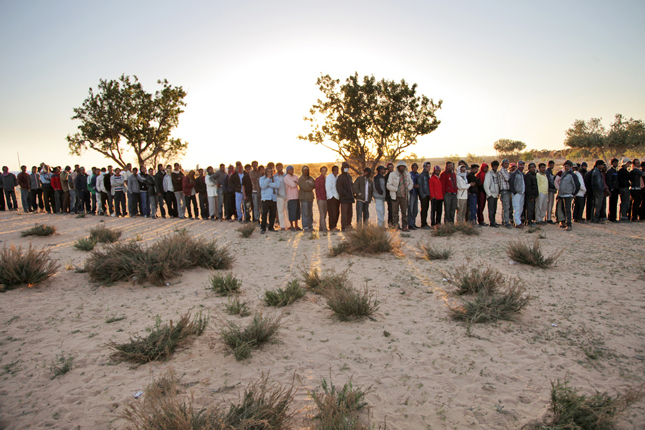
There are now well over 16 million refugees worldwide and 65 million people internally displaced by conflict and disasters, according to recent estimates. As more and more people are uprooted from their homes, mounting environmental pressures threaten to reinforce cycles of poverty and displacement if left unaddressed, says Alice Thomas in this week’s podcast.
-
No REDD+ Program Is an Island: Integrating Gender Into Forest Conservation Efforts
›Since 2005, the Reducing Emissions from Deforestation and Forest Degradation program (REDD+) has functioned as a mechanism to financially incentivize the preservation of forestlands in order to reduce greenhouse gas emissions. But beyond its original use, some organizations have also started exploring ways it can help with other development initiatives, like women’s empowerment. [Video Below] -
Why Do People Move? Research on Environmental Migration Coming of Age
›When she finished her dissertation on migration as a response to climate change in 2003, it was one of only a handful of scholarly papers published on the topic that year, said Susana Adamo, an associate research scientist at Columbia University’s Center for International Earth Science Information Network. But in the decade since, interest in climate migration has exploded – in 2012, more than 10 times as many papers were published. [Video Below]
-
Not Just Climate Change: Marcel Leroy on How Demography Contributes to Africa’s Scarcity Problems
›
The Sahel has endured multiple debilitating food crises over the last five years and climate change has often been fingered as the culprit. But it is important to equally consider the amplifying effects of demographic trends on resource scarcity, says the University of Peace’s Marcel Leroy in this week’s podcast.
Showing posts from category natural resources.

 Since 2005, the