

-
The Melting Arctic Could Spur Even More Migration in the Sahel, But There Are Some Surprising Solutions
›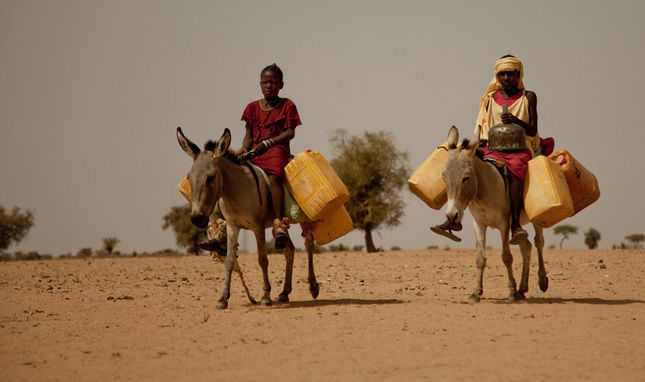
A new study published in the Proceedings of the National Academy of Sciences says that melting in Greenland could change ocean currents and cause unprecedented drought in Africa’s Sahel region, the Washington Post reported last week: “The consequence could be devastating agricultural losses as the area’s climate shifts. And in the most severe scenarios, tens of millions of people could be forced to migrate from the area.”
-
The Deadly “Humanitarian Ping-Pong” of Refugee Rescue at Sea
›
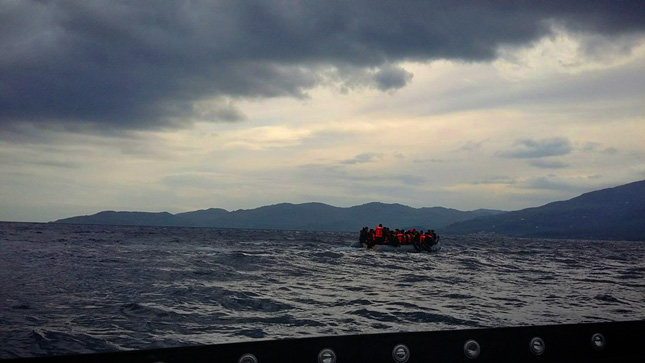
In 2013, a boat capsized 61 miles from the Italian island of Lampedusa killing 268 refugees including 60 children. It was another horrific example of the risks taken by so many families fleeing violence in the Middle East and Africa. But recently released tapes of conversations with coast guard authorities reveal a deeper tragedy.
-
Christophe Angely on Overcoming Pessimism for the Sahel
›The Sahel region of Africa is a wide band that marks the transition from the Sahara Desert in the north to the wetter, sub-tropical regions in the south. The Sahelian countries have some of the most rapidly growing populations in the world and have faced significant environmental change over the past century. In recent years, insurgencies have surged in several countries, new terrorist groups have become active, there have been several droughts, and migration has increased. -
Climate-Induced Migration in the Philippines, and Mercy Corps’ Resilience Work in Ethiopia
›Recent rises in temperature and typhoon frequency and intensity have resulted in more internal migration in the Philippines, according to an article by Pratikshya Bohra-Mishra et al. in Population and Environment. The authors conclude that temperature change and natural disasters, such as typhoons, can have a significant effect on short-distance, sub-national migration because they reduce rice yields, which is used as a proxy for agricultural productivity. -
Backdraft #7: Janani Vivekananda on What Renewable Energy Projects Can Learn From Oil, and Future-Proofing Humanitarian Responses
›As more and more development and humanitarian programs contend with climate-related problems, there are important lessons learned from past experience that should not be forgotten, says Janani Vivekananda, formerly of International Alert and now with adelphi, in this week’s episode of “Backdraft.” -
Violence and Water Scarcity Threaten Historic Quadruple Famine
›An international food crisis is currently unfolding on a scale not seen since World War II. More than 20 million people in Somalia, Nigeria, South Sudan, and Yemen are in danger of famine. UN Under-Secretary-General and Emergency Relief Coordinator Stephen O’Brien said in March, “We are facing the largest humanitarian crisis since the creation of the United Nations.”
-
Water and the Rise of Insurgencies in the “Arc of Instability”
›Water scarcity has contributed to an “arc of instability” characterized by conflict and displacement that stretches from West Africa to the Middle East, said a panel of experts at the Wilson Center on March 1. Two authors from an upcoming compilation of case studies on water security and violent conflict by World Wildlife Fund gave overviews of challenges in Nigeria and Iran and recommendations for U.S. engagement.
-
Backdraft #6: Jesse Ribot on Why It’s So Important for Climate Interventions to Work Through Local Democracy
›In a research project spanning more than two dozen case studies on environmental governance in 13 sub-Saharan African countries, Jesse Ribot, professor at the University of Illinois, and colleagues found that while many forest management projects claimed to be working with communities, they were in fact undermining local democracy in various ways.
Showing posts from category migration.
 The Sahel region of Africa is a wide band that marks the transition from the Sahara Desert in the north to the wetter, sub-tropical regions in the south. The Sahelian countries have some of the most rapidly growing populations in the world and have faced
 As more and more development and humanitarian programs contend with climate-related problems, there are important lessons learned from past experience that should not be forgotten, says Janani Vivekananda, formerly of International Alert and now with adelphi, in this week’s episode of “
 In a
In a 

