Showing posts from category Middle East.
-
VIDEO: Gidon Bromberg on the Good Water Neighbors Project
›March 13, 2009 // By Wilson Center Staff
“Water resources in our part of the world are shared. There is no major source of water that does not cross one or more political boundaries,” says Gidon Bromberg in this short expert analysis from the Environmental Change and Security Program. “Therefore there is this natural interdependence between countries – but more obviously between communities.” And the Good Water Neighbors project uses that “rationale of interdependence to help create trust; to solve livelihood problems that our communities face.” In this short video, Bromberg, a 2008 Time Magazine Hero of the Environment, discusses the Good Water Neighbors project, one of the innovative cross-border initiatives of this award-winning NGO. -
Fallout From Jordan’s Radioactive Water
›March 6, 2009 // By Geoffrey D. Dabelko I just posted on Gristmill about the Jordanian government’s response to Avner Vengosh’s startling new research that found very high levels of naturally occurring radioactivity in some of the country’s fossil groundwater:
Last Friday a Jordan Times story featured government assurances that all of the country’s water was safe — and tried to discredit the messenger. In a transparent attempt to raise doubt about the scientists’ motives, the article points out that lead author Vengosh is Israeli-born (he is now a U.S. citizen).
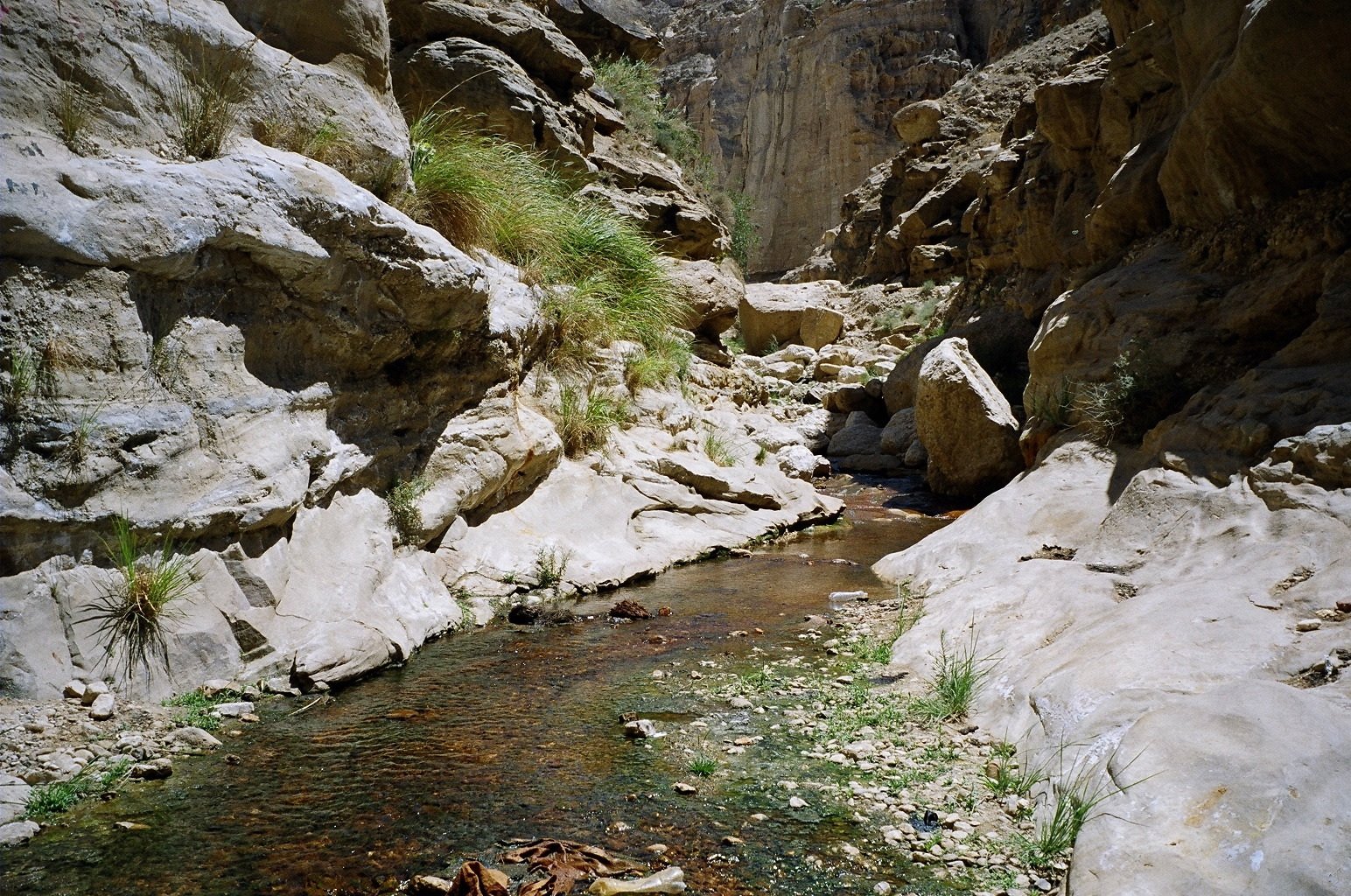
Read the rest of “Tall Glass of Denial” on Gristmill.Photo: Jordanian groundwater. Courtesy of Avner Vengosh. -
Hot Water: High Levels of Radioactivity Found in Jordan’s Groundwater
›February 23, 2009 // By Geoffrey D. DabelkoStartling new research in the peer-reviewed Environmental Science & Technology shows that fossil groundwater in southern Jordan is radioactive at levels up to 2000% higher than the international drinking water standard. That the radioactivity is naturally occurring is little consolation for Jordanians—and perhaps for residents of Saudi Arabia, Egypt, and Libya, who sit atop the same sandstone Nubian aquifer system.
The shocking findings in “High Naturally Occurring Radioactivity in Fossil Groundwater from the Middle East” by Duke University’s Avner Vengosh and colleagues should be cause for major concern. As Vengosh, a geo-chemistry professor with long-standing research collaborations with Jordanian, Israeli, and Palestinian colleagues, wrote in an email: “Most of the Jordanian population is not using the fossil water for drinking—for now. Only few thousand people in Aqaba and Karak might be currently exposed to this water. However, Jordan has launched a huge water project to transfer the water from the aquifer in the south to the capital Amman, which would expose a large population to this water.”
According to Vengosh, although these specific findings are limited to the water groundwater under in Jordan, Saudi Arabia is using groundwater from the same aquifer (the Saq) extensively, mostly for agriculture but also for drinking. In this arid part of the world, countries have turned to nonrenewable fossil groundwater as one of the few remaining options. As stated in the article’s abstract, “These findings raise concerns about the safety of this and similar nonrenewable groundwater reservoirs, exacerbating the already severe water crisis in the Middle East.”
Vengosh shared the findings with Jordanian authorities ahead of publication. While it is hard to predict the social, economic, and political reactions to this news, it is easier to anticipate the effects of sustained consumption of water contaminated with radium isotopes. Vengosh says exposure to much lower levels of radium resulted in higher frequencies of bone cancer in a New Jersey community.
Photo: Avner Vengosh. Copyright Duke University Photography.