-
Top 10 Posts for June 2015
›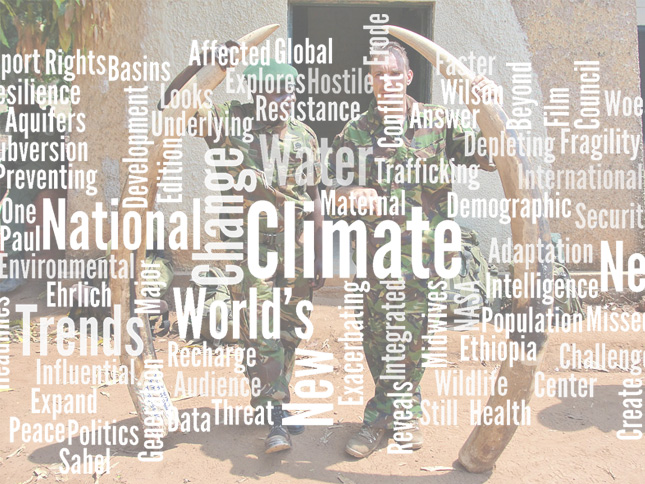
Wildlife trafficking has exploded in recent years and now contributes significant funds to major criminal organizations and even terrorism. That puts it squarely in the realm of national security, according to a research project by the University of Texas, Austin. Cameron Lagrone and Josh Busby explain the connection in last month’s most popular post.
-
Top 10 Posts for May 2015
›
Psychological disorders following childbirth are incredibly common among women around the world, but are routinely ignored. It’s a “topic that has had to work hard to provide evidence about its fundamental importance,” said Jane Fisher at the Wilson Center. A Maternal Health Initiative panel on so-called perinatal common mental health disorders was the most popular story on the blog last month.
-
Top 10 Posts for March and April 2015
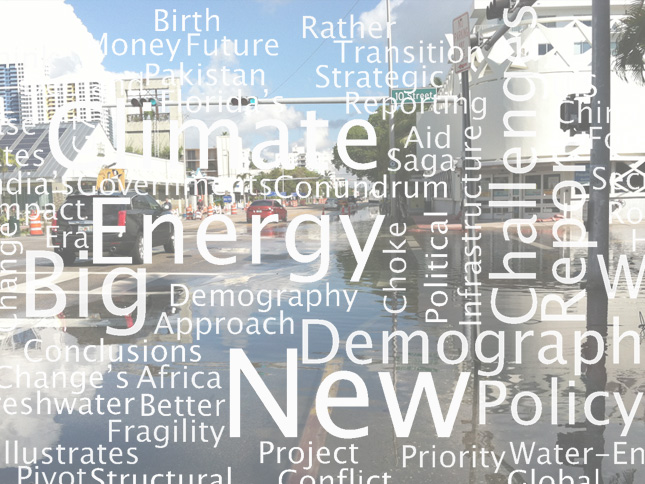
›“The dynamics at play in Florida – massive infrastructure projects with unintended consequences, intensifying effects of environmental change, and political resistance – are a microcosm of what makes adjusting to climate change such a vexing societal challenge,” wrote Wilson Center Fellow Katrina Schwartz in April’s most popular post.
-
China and Crowdsourcing: The Rise of a New Green Generation?
›I distinctly remember the night I saw An Inconvenient Truth in 2006. The film essentially did what no high school teacher could: gave me a purpose to structure my studies, setting me on course to earn a degree in environmental studies, an advanced degree in natural resource conservation, and eventually working here, at the Wilson Center.
-
New G7 Report Highlights Climate Change and Fragility as a Foreign Policy Priority
›At the close of a meeting of G7 foreign ministers in Lübeck today, ministers announced a stronger collective commitment to tackling climate-related risks in states experiencing situations of fragility.
-
World Water Day: A Wellspring for Sustainable Development
›This year’s World Water Day is taking on a broader theme than years past: sustainable development. The theme makes sense as two major international processes – the drafting of the Sustainable Development Goals to replace the Millennium Development Goals, and the most anticipated UN Climate Summit in years – are taking place in 2015. Decisions made over the next nine months will play a huge role in relationships between nations and global development priorities going forward.
-
Top 10 Posts for February 2015
›The Anthropocene is the idea that human activity is now so impactful and widespread, it shows up as a distinct phase in the geological record. This is a scary proposition in many ways, but it’s also an opportunity. True sustainability isn’t possible without humanity being able to understand and manage our interactions with the planet (and each other). Perhaps a new name for the modern era helps us get into that frame of mind.
-
Top 10 Posts for January 2015
›In some parts of the world, natural resources are a given; in others, they’re a daily challenge. Our latest short film, Broken Landscape, examines the confrontation between those that rely on “rat-hole” coal mining for a living in northeast India and those affected by water pollution downstream.
Showing posts from category meta.