

Showing posts from category population.
-
Environment, Population Key Security Concerns in Africa’s Central Albertine Rift
›July 28, 2008 // By Sonia SchmanskiIn the Central Albertine Rift, which runs from the northern end of Lake Albert to the southern end of Lake Tanganyika, “environmental factors are increasingly an underlying cause of instability, conflict and unrest,” says a new report from the Institute for Environmental Security, Charcoal in the Mist, which outlines environmental security issues and initiatives in the Albertine Rift region.
Part of the larger Great Rift Valley, the Central Albertine Rift encompasses portions of Uganda, Tanzania, Rwanda, Burundi, and the Democratic Republic of the Congo (DRC). The area is one of the world’s most important biodiversity hotspots, but is also a geopolitical hotspot, producing critical natural resources for a number of nations recently emerging from devastating civil wars. Lake Victoria, the birthplace of the Nile River, sits in this region, which means that the watchful eyes of its riparian states are trained at all times on the politics of the area. The Albertine Rift is also home to Africa’s Great Lakes, each of which straddles multiple nations and provides significant income to surrounding communities. Questions of access to these waters only heighten existing geopolitical tensions.
Charcoal in the Mist cites armed rebels, illegal mining, and a growing population’s increasing demands for food and energy as threats to regional environmental security. Virunga National Park, an internationally prized wilderness preserve in the DRC, has fallen victim to these pressures. Rampant poaching and illegal mining, as well as conflicts in the DRC and Rwanda, have left park authorities unable to protect the 7,800 square kilometer park. A timeline from National Geographic dramatically illustrates how violent conflict has disrupted conservation efforts in Virunga.
The “interconnectedness between natural resources, development and security” in the Central Albertine Rift region reinforces the need for innovative approaches to address these issues. For example, according to the report, population density around protected areas in this region is far higher than in the rest of sub-Saharan Africa, and the continually growing population already exceeds the capacity of local resources. The area’s population swelled with thousands of refugees fleeing the civil war in Rwanda in the 1990s, and simmering tensions continue to push people away from conflict zones and toward the relative calm of the Albertine Rift. Similarly, conflict stemming from the civil war in DRC, which lasted from 1998 until 2003, has beset North Kivu province. Rebel armies continue to clash in the region, restricting the ability of development organizations to work there and limiting the livelihoods of the local population.
The authors of Charcoal in the Mist call for more comprehensive mapping and monitoring of the Central Albertine Rift ecosystem in order to promote effective policies to address the region’s challenges. They also advocate for enhancing property rights to address fundamental conflicts over land, strengthening environmental law, dampening the illegal natural resource trade, and more aggressively protecting Virunga National Park. They believe that transboundary environmental cooperation has the potential to preserve both the ecological integrity and political stability of this important region.
-
Weekly Reading
›“Women are key to the development challenge,” says Strategies for Promoting Gender Equity in Developing Countries, but “gender mainstreaming has been associated with more failures than gains.” Detailing findings from an April 2007 conference co-sponsored by the Wilson Center and the Inter-American Foundation, the report calls for a redesigned approach operating on multiple fronts. Blogging about the report, About.com’s Linda Lowen dubs the gap between women and men in developing countries a “Grand Canyon-like divide” compared to the “crack in the sidewalk” faced by Western women.
A Council on Foreign Relations backgrounder on Angola—now Africa’s leading oil producer—tackles the familiar paradox of extreme poverty in resource-rich countries. Burdened by “an opaque financial system rife with corruption,” Angola’s leaky coffers are filling up with Chinese currency. As Angolan President Jose Eduardo dos Santos put it, “China needs natural resources, and Angola wants development.” FastCompany.com’s “Special Report: China In Africa” criticizes the overwhelming Chinese presence in Africa: “The sub-Sahara is now the scene of one of the most sweeping, bare-knuckled, and ingenious resource grabs the world has ever seen.”
In Scientific American’s “Facing the Freshwater Crisis,” Peter Rogers writes that the demands of increasing population, along with increasingly frequent droughts due to climate change, signal rough waters ahead, and calls for major infrastructure investments to prevent catastrophe. Closer to home, Circle of Blue reports on a new era of water scarcity in the United States, and director Jim Thebaut’s documentary “Running Dry: The American Southwest” takes a look at the hard-hit region.
Pastoralists are socially marginalized in many countries, making them highly vulnerable to climate change despite their well-developed ability to adapt to changing conditions, reports the International Institute for Environment and Development in “Browsing on fences: Pastoral land rights, livelihoods and adaptation to climate change.” The paper notes that the “high rate of development intervention failure” has worsened the situation, and calls for giving pastoralists “a wider range of resources, agro-ecological as well as socio-economic,” to protect them.
-
Population-Health-Environment Video Featuring Lori Hunter Now on YouTube
›July 18, 2008 // By Sean Peoples“Population, Health, and Environment: Exploring the Connections,” an original ECSP video, offers a lively, brief, and accessible explanation of population-health-environment connections, with examples and photos from successful programs in the Philippines. Presenter Lori Hunter of the University of Colorado, Boulder, spoke at the Wilson Center earlier this year as part of ECSP’s PHE meeting series. View the video on YouTube, then rate it, comment on it, favorite it, or post a video response. -
Population, Health, Environment in Ethiopia: “Now I know my family is too big”
›July 16, 2008 // By Sonia Schmanski In “Life in Abundance,” an article from the latest issue of Sierra magazine, Paul Rauber gives us an inside look at family planning in Ethiopia, speaking with women in urban and rural environments to understand what government support of family planning has meant in practice. The government’s official embrace of family planning is a sharp and welcome shift from the previous dictatorship’s ban on mentioning it, but this endorsement, welcome as it is, doesn’t guarantee funding. Consequently, family planning programming, robust in urban areas, has yet to reach much of the vast rural expanse of Ethiopia. It is also heavily dependent on outside donors and NGOs for funding.
Thanks to one of the highest fertility rates in the world—5.4 children per woman—Ethiopia’s population has quintupled in the last 70 years. It now stands at 77 million, and is projected to double by 2050. Other indicators are equally discouraging: Rauber reports that average life expectancy is 48 years, that one in eight children dies before reaching five years of age, and that half of all children are undernourished.
One group trying to improve these statistics is Pathfinder International, whose integrated population-health-environment program in Ethiopia aims to “boost family planning, healthcare access, and environmental-restoration efforts through improving the lot of women and girls.” Rauber notes that Ethiopian women with at least some secondary education have one-third as many children as women with no or little education. Ethiopia, he says, is ripe for such integrated interventions; two-thirds of women want but lack access to family planning, and only one in 10 rural women uses any form of contraception. Pathfinder’s program, strongly backed by communities, has been successful in enrolling women in literacy classes, testing for HIV, planting mango and avocado trees, and curbing female genital mutilation.
For a look at another integrated PHE program in Ethiopia, see ECSP Director Geoff Dabelko’s photographs of the Berga Wetland Project, which includes conservation activities oriented around the White-Winged Flufftail bird; a small health facility offering basic maternal, children’s, and reproductive health services; and a community school.
Ethiopia has hosted several large PHE events in recent months, demonstrating the country’s enthusiasm for the approach. In November 2007, more than 200 members of the PHE community gathered in Addis Ababa for “Population, Health, and Environment: Integrated Development in East Africa,” a conference sponsored by the Population Reference Bureau and LEM Ethiopia. Rauber’s tour of Ethiopia, which also included substantial birdwatching, was jointly organized by the Sierra Club and the Audubon Society, both participants at the November meeting. Also emerging from this conference, which ECSP helped organize, was the East Africa Population-Health-Environment Network, a group working toward “an Eastern African region where men, women, and children are healthy, the environment is conserved, and livelihoods are secure.” In May of this year, Ethiopia launched its national chapter of the network, the Consortium for Integration of Population, Health, and Environment, in Ambo.
Photo: Health workers in Ethiopia’s Berga valley, where families average seven children. Now, thanks to the Ethiopian Wildlife and Natural History Society’s Berga Wetlands Project, hundreds of local women get contraceptives from health worker Gete Dida, allowing them to limit their family size – and giving the area’s wildlife a chance at survival. Reproduced from Sierraclub.org with permission of the Sierra Club. © 2008 Sierra Club. All rights reserved. -
Weekly Reading
›The authors of an article in the most recent issue of Science report that population tends to grow, not decline, around protected areas. Population growth means increased donor funding for conservation programs, they say, but high population density can negatively impact the effectiveness of such programs.
The latest volume of the journal Population and Environment, featuring contributions from former ECSP speakers Lori Hunter, Roger-Mark De Souza, and Judy Oglethorpe, examines the links between the environment and HIV/AIDS in Africa, calling for greater attention to the connections between these seemingly disparate issues.
Population growth rates and conservation are closely and inextricably linked, says a new UN Population Fund fact sheet that argues that slowing growth rates worldwide through family planning programming is a vital, and currently underfunded, component of the fight against environmental degradation.
“Countries have historically been quick to rattle their sabers over water, but they have nevertheless been content to keep them sheathed,” write ECSP Director Geoff Dabelko and ECSP Program Assistant Karin Bencala in “Water Wars: Obscuring Opportunities,” published in the Spring/Summer 2008 issue of Columbia University’s Journal of International Affairs (PDF previews), which focuses on global water issues. -
Weekly Reading
›Mark Jenkins explores the July 2007 murders of the Virunga mountain gorillas in a piece in National Geographic. The piece is accompanied by a stunning photo slideshow by photographer Brent Stirton.
The Toronto Star takes a look at female feticide and infanticide in India, and how young women are now being trafficked from rural areas to serve as brides in areas where the gender gap is widest.
Climate change is responsible for an upswing in malaria in Kenya’s highlands, reports IPS News. “There is a clear correlation between climatic variations and malaria epidemics,” said Dr. Willis Akhwale, head of Kenya’s National Malaria Control Programme.
A New York Times article explores the causes of low birthrates in Europe—and particularly low ones in southern Europe.
The World Health Organization has released Safer water, better health, the first report to provide country-level estimates of the burden of disease caused by unsafe water and inadequate sanitation and hygiene. -
Danger: Demographic Change Approaching
›June 20, 2008 // By Rachel Weisshaar“From ‘youth bulges’ in the Muslim world to a population implosion in Russia to ‘premature aging’ in China, striking demographic trends the world over will reshape the future environment for U.S. policy,” says a new report from the Center for Strategic and International Studies, which aims to provide a comprehensive analysis of how demographic change will affect national and international security in the 21st century. As its title—The Graying of the Great Powers: Demography and Geopolitics in the 21st Century—indicates, the report focuses primarily on aging populations in developed countries, although one chapter does address the developing world.
The Graying of the Great Powers does a thorough job exploring the economic, geopolitical, and cultural implications of aging in Europe, Japan, and the United States, and it is to be praised for its readability and attention to concrete policy implications. But its focus on the developed world sometimes causes it to downplay the serious economic, socio-political, environmental, and security challenges posed by high population growth in developing countries—and by a global population that is expected to top 9 billion by 2050.
For instance, the authors use the past tense to refer to a time “when the prevailing worry was overpopulation.” Now, the word “overpopulation,” with its implication that some of us should not be here, is somewhat problematic. Nevertheless, it is clear that today, billions of human beings are consuming record amounts of natural resources at unsustainable rates—witness Yemen, where current annual water use is 30 percent greater than renewable water resources. Furthermore, many of the countries least able to provide employment and health care to their citizens have the highest population growth rates—for instance, Somalia and Afghanistan, which both have total fertility rates of 6.8 children per woman.
Wrapped up in their worries about the impact of low birth rates on armed services recruitment and government spending on pensions and health care for the elderly, the authors seem to forget what is actually at stake here: a woman’s decision to give birth to a child. Politicians can institute reforms that will make having children an easier proposition, but they should not pressure people to have children because they wish to avoid geopolitical upheaval. Ultimately, wanting to have a child is the only good reason to bring one into the world. -
This Mangrove Forest Could Save Your Life: Protected Areas and Disaster Mitigation
›June 16, 2008 // By Sonia SchmanskiNatural disasters “are not ‘natural’ at all but are the consequence of our scant regard for the ecosystem services our natural environment provides,” write the authors of “Natural Security: Protected areas and hazard mitigation,” fifth in the Arguments for Protection series published jointly by the World Wildlife Fund and Equilibrium.

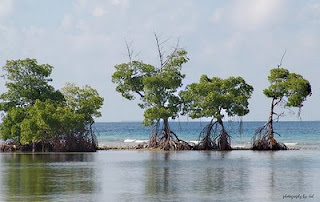 Natural disasters “are not ‘natural’ at all but are the consequence of our scant regard for the ecosystem services our natural environment provides,” write the authors of “

