• woodrow wilson center
  • ecsp

New Security Beat

Subscribe:
  • rss
  • mail-to
  • Who We Are
  • Topics
    • Population
    • Environment
    • Security
    • Health
    • Development
  • Columns
    • China Environment Forum
    • Choke Point
    • Dot-Mom
    • Friday Podcasts
    • Navigating the Poles
    • Reading Radar
  • Multimedia
    • Water Stories (Podcast Series)
    • Backdraft (Podcast Series)
    • Tracking the Energy Titans (Interactive)
  • Films
    • Water, Conflict, and Peacebuilding (Animated Short)
    • Paving the Way (Ethiopia)
    • Broken Landscape (India)
    • Scaling the Mountain (Nepal)
    • Healthy People, Healthy Environment (Tanzania)
  • Publications
  • Events
  • Contact Us

NewSecurityBeat

The blog of the Wilson Center's Environmental Change and Security Program
Showing posts from category video.
  • Measuring Impact: Building on Lessons Learned to Improve Biodiversity Conservation

    ›
    From the Wilson Center  //  August 22, 2018  //  By Rebecca Lorenzen
    USAID-Guatemala

    “Functioning natural systems are critical to human survival itself,” said Carrie Thompson, Deputy Assistant Administrator of the Bureau for Economic Growth, Education and Environment at USAID, at a recent Wilson Center event on USAID’s efforts to increase the effectiveness of its biodiversity conservation programs. Measuring Impact was designed to help support USAID’s 2014 Biodiversity Policy, which is “grounded in a recognition that human well-being and progress are dependent on the health of biodiverse systems and [that] durable development gains are not possible unless these systems are valued and safeguarded,” said Cynthia Gill, Director of USAID’s Office of Forestry and Biodiversity.

    MORE
  • A More Resilient World: The Role of Population and Family Planning in Sustainable Development

    ›
    From the Wilson Center  //  June 27, 2018  //  By Olivia Smith

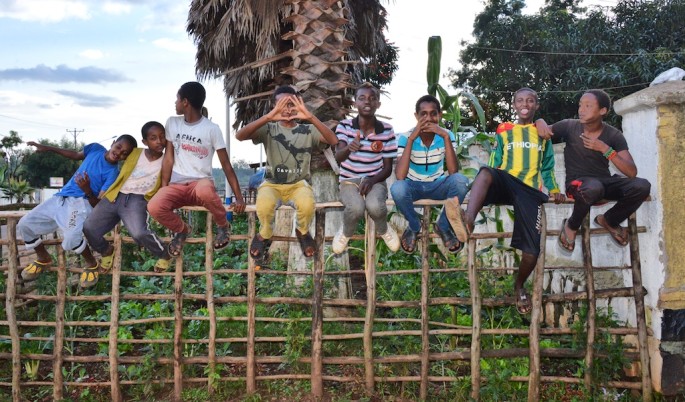
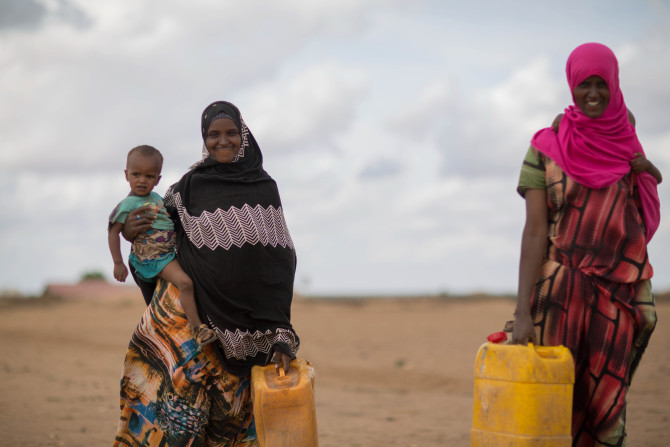
    Girls in jigjiga, jila alu kebele on their way to fetch water from the nearby water point which is recently started by unicef/ethiopia. they explain, their life is much improved in which they get cleaner water in their nearby. ©UNICEF Ethiopia/2016/Tesfaye

    “Community mobilization, local capacity-building, and innovation are the cornerstones of successful development. And that for us includes resilience,” said Franklin Moore, Africare’s Chief of Programs, at a Wilson Center event on family planning and sustainable development. As rapid population growth intersects with challenges like food insecurity and water scarcity, communities in developing countries need not only the capacity to absorb short-term shocks, they also need transformative capacity to address long-term challenges.

    MORE
  • Sustainable Water, Resilient Communities: The Challenge of Erratic Water

    ›
    From the Wilson Center  //  Water Security for a Resilient World  //  June 7, 2018  //  By Rebecca Lorenzen
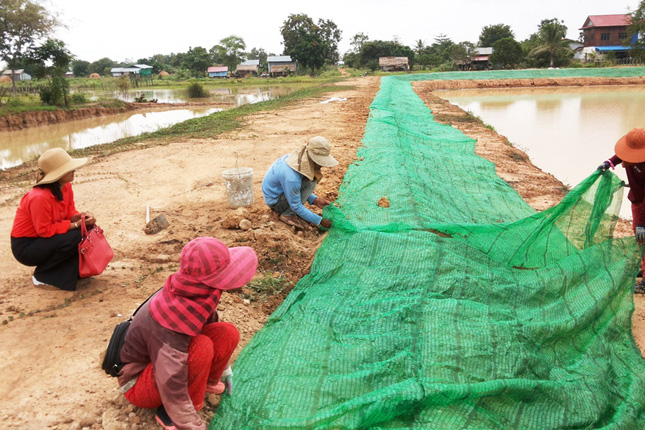
    Cambodia-Water-Management
    This article is part of ECSP’s Water Security for a Resilient World series, a partnership with USAID’s Sustainable Water Partnership and Winrock International to share stories about global water security.

    Water variability is increasing “due to climate change and to more frequent natural disasters,” said Jonathan Cook, Senior Climate Change Adaptation Specialist with the U.S. Agency for International Development, at the fourth and final event in a series on water security organized by the Wilson Center and the Sustainable Water Partnership. To solve the problem of increasingly erratic water, “business as usual is really not acceptable anymore,” said Will Sarni, founder of WetDATA.org, who called for new, innovative ideas: “Hope is not a strategy.”

    MORE
  • Scaling Up Global Healthcare for Women, Children, and Families

    ›
    Dot-Mom  //  From the Wilson Center  //  May 31, 2018  //  By Julianne Liebenguth
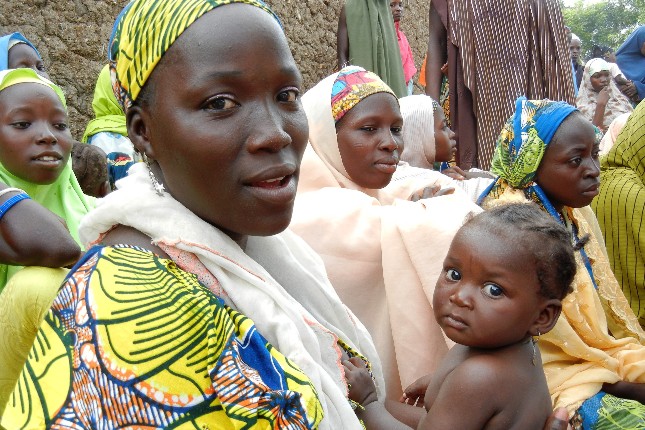
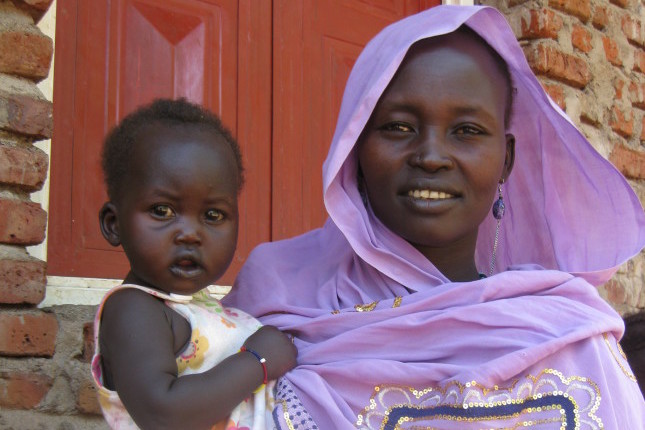
    Mother with Child

    “We are seeing increasingly self-reliant countries develop national health sector plans solidly grounded on technical evidence,” said Dr. Jim Ricca of the United States Agency for International Development (USAID)’s flagship Maternal and Child Survival Program (MCSP) at a recent Wilson Center event. Expanding successful reproductive, maternal, newborn, child, and adolescent healthcare (known as RMNCAH) interventions to the national level could make a significant contribution to meeting the 2030 Sustainable Development Goals for mortality reduction, he said.

    MORE
  • Alaska’s Lieutenant Governor: “Climate Change Is Already Impacting Us”

    ›
    From the Wilson Center  //  May 29, 2018  //  By Wilson Center Staff

    “Alaska is a place in which climate change is already impacting us in very observable ways,” says Byron Mallott, the  Lieutenant Governor of Alaska, in a video interview with Wilson Center NOW.  “We have erosion from sea ice leaving the coast. We have patterns of weather change. We have, in the North Pacific Ocean, ocean water change [and] temperature changes taking place. We have ocean acidification moving further north. We have had impact on fisheries already—economic impact.”

    MORE
  • Faith in Family Planning: Healthy Timing and Spacing of Pregnancies

    ›
    Dot-Mom  //  From the Wilson Center  //  May 23, 2018  //  By Yuval Cohen
    13881120074_02097c2a61_o

    “When you enable a family to be able to time and space their children, you actually improve the overall health of that family,” said Dr. Alma Golden, the Deputy Assistant Administrator of USAID’s Bureau for Global Health, at a recent Wilson Center event on the role of faith-based organizations in family planning. Faith-based groups are an “irreplaceable asset,” said Dr. Golden, when it comes to fighting stigma and marginalization and promoting positive health behaviors.

    MORE
  • Where Are All The Men? Faith-Based Efforts to Engage Men and Boys in HIV Prevention Services

    ›
    Dot-Mom  //  From the Wilson Center  //  May 15, 2018  //  By Yuval Cohen
    14992424874_75e0a82312_o

    In sub-Saharan Africa, “more than half of the men under the age of 35 do not know their [HIV] status and are not on treatment,” said Dr. Sean Cavanaugh of the Office of the Global AIDS Coordinator at a recent Wilson Center event on engaging the faith community in reaching young men and boys with HIV prevention services.  Consequently, men often don’t seek HIV services promptly, decreasing their rates of antiretroviral therapy and viral suppression, and increasing HIV mortality rates.

    MORE
  • Sustainable Water, Resilient Communities: The Unique Challenges and Opportunities of Wastewater

    ›
    From the Wilson Center  //  Water Security for a Resilient World  //  April 27, 2018  //  By Connor Chapkis
    Girl-with-Water
    This article is part of ECSP’s Water Security for a Resilient World series, a partnership with USAID’s Sustainable Water Partnership and Winrock International to share stories about global water security.

    “Globally, nearly one billion people still lack access to safe water,” said Sasha Koo-Oshima, Senior International Water Advisor for the U.S. Environmental Protection Agency, at a recent Wilson Center event on the potential challenges and opportunities of wastewater treatment. “In emerging developing countries, children lose 443 million school days per year due to diseases related to water, sanitation, and hygiene,” she said.

    MORE
Newer Posts   Older Posts
View full site

Join the Conversation

  • RSS
  • subscribe
  • facebook
  • G+
  • twitter
  • iTunes
  • podomatic
  • youtube
Tweets by NewSecurityBeat

Trending Stories

  • unfccclogo1
  • Pop at COP: Population and Family Planning at the UN Climate Negotiations

Featured Media

Backdraft Podcast

play Backdraft
Podcasts

More »

What You're Saying

  • Volunteers,At,The,Lagos,Food,Bank,Initiative,Outreach,To,Ikotun, Pan-African Response to COVID-19: New Forms of Environmental Peacebuilding Emerge
    Rashida Salifu: Great piece 👍🏾 Africa as a continent has suffered this unfortunate pandemic.But it has also...
  • A desert road near Kuqa An Unholy Trinity: Xinjiang’s Unhealthy Relationship With Coal, Water, and the Quest for Development
    Ismail: It is more historically accurate to refer to Xinjiang as East Turkistan.
  • shutterstock_1779654803 Leverage COVID-19 Data Collection Networks for Environmental Peacebuilding
    Carsten Pran: Thanks for reading! It will be interesting to see how society adapts to droves of new information in...

What We’re Reading

  • Rising rates of food instability in Latin America threaten women and Venezuelan migrants
  • Treetop sensors help Indonesia eavesdrop on forests to cut logging
  • 'Seat at the table': Women's land rights seen as key to climate fight
  • A Surprise in Africa: Air Pollution Falls as Economies Rise
  • Himalayan glacier disaster highlights climate change risks
More »
  • woodrow
  • ecsp
  • RSS Feed
  • YouTube
  • Twitter
  • Facebook
  • Home
  • Who We Are
  • Publications
  • Events
  • Wilson Center
  • Contact Us
  • Print Friendly Page

© Copyright 2007-2021. Environmental Change and Security Program.

Woodrow Wilson International Center for Scholars. All rights reserved.

Developed by Vico Rock Media

Environmental Change and Security Program

Woodrow Wilson International Center for Scholars

Ronald Reagan Building and International Trade Center

  • One Woodrow Wilson Plaza
  • 1300 Pennsylvania Ave., NW
  • Washington, DC 20004-3027

T 202-691-4000