-
What Can Demography Tell Us About the Advent of Democracy?
›April 28, 2014 // By Elizabeth Leahy MadsenDemocracy is fickle. Many of the competing theories on the best ways to foment and consolidate plural, inclusive governance or predict its rise and fall focus on political and economic forces. Yet a small group of demographers have explored population age structure as a catalyst for and reflection of a host of changes in societies that can affect governance.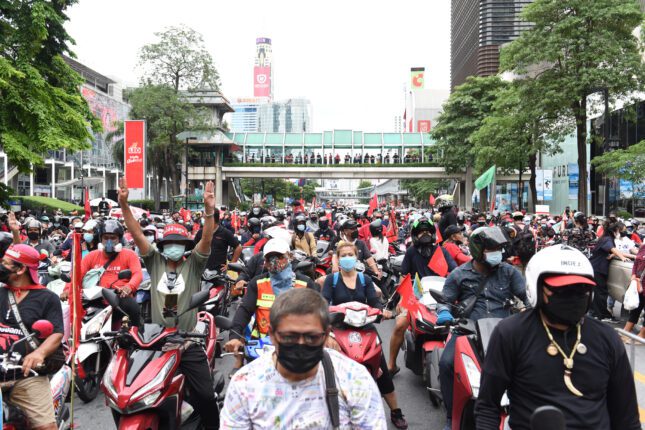
-
Solidarity and Stigma: The Challenge of Improving Maternal Health for Women Living With HIV
›
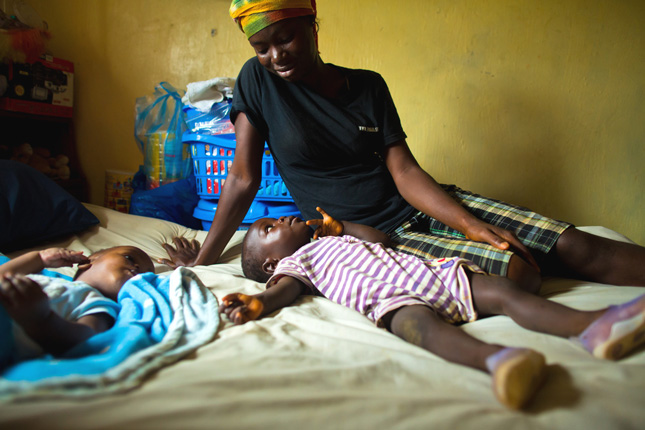
Despite the fact that with proper interventions, the likelihood of mother-to-child transmission of HIV is less than five percent, expectant mothers with HIV or AIDS often face intense stigma and marginalization from health care providers around the world. As a result, in some areas, the mortality rate for mothers with HIV is seven to eight times greater than the rate for non-infected women, said Dr. Isabella Danel of the U.S. Centers for Disease Control. [Video Below]
-
Earth Day 2014: Women at the Center of Sustainable Cities
›April 22, 2014 // By Roger-Mark De SouzaWhen I first came on board the Wilson Center last Earth Day, I wrote that I wanted to forge new paths and identify ways that reproductive health, environmental conservation, and women’s empowerment affect our lives today and in the future.
-
How Does the Media – and Public – Learn Environmental Science? Help Us Find Out
›Years ago, when I was a diplomatic correspondent at a large national magazine, if I encountered what I thought of as “science stuff,” I sent it to the science desk. I was busy covering foreign policy, wars, and ethnic and religious conflicts – not science. It was only when I took a new job focused on educating the U.S. media on a wide range of international issues that I began to discover the rich world I had overlooked, and see new links and connections.
-
Forests on Film: New Stories From Nepal and the Congo Basin
›Given growing awareness about environmental change and how it affects human life, it is perhaps not surprising there is also a growing audience for environmental filmmaking. At the 2014 Environmental Film Festival in the Nation’s Capital on March 25, the Wilson Center premiered ECSP’s latest documentary, Scaling the Mountain: Protecting Forests for Families in Nepal. Together with Heart of Iron, a recent film on mining in the Congo Basin, the event took viewers into some of the world’s most remote forests to see how their inhabitants are adapting to rapid changes in the natural resources on which they depend.
-
Double Dividends: Population Dynamics and Climate Adaptation
›If current projections hold, Africa’s population will more than double in 40 years, putting more people at risk of food, water, health, and economic insecurity as the climate changes, as well as negating progress made in reducing carbon emissions per person. But what if it didn’t? [Video Below]
-
USAID Launches New Water, Conflict, and Peacebuilding Toolkit
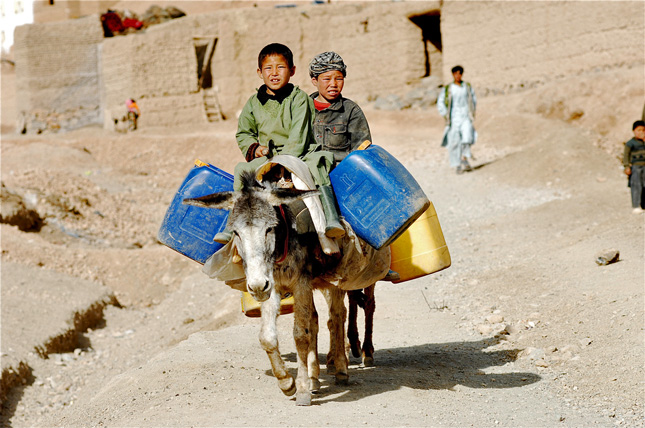
›With almost 800 million people currently lacking access to clean water and two-thirds of the world’s population projected to face conditions of severe water stress by 2025, disputes over water are a growing global concern. But while dwindling water supplies sharpen focus on conflict, long-term peacebuilding opportunities are often overlooked. [Video Below]
-
Assessing Climate Vulnerability and Adaptation: IPCC Working Group II in Their Own Words
›The latest report by the United Nations Intergovernmental Panel on Climate Change (IPCC) brings new evidence to bear on the real and potential impacts of climate change, emphasizing the need to manage risks and build resilience. In a dramatic, slickly produced video accompanying the much-anticipated Working Group II contribution to the report, released on March 30, several of the working group’s dozens of authors discuss key issues addressed in their section, which covers “impacts, adaptation, and vulnerability.”
Showing posts from category video.