

-
Weekly Reading
›From Conflict to Peacebuilding: The Role of Natural Resources and the Environment, based on the work of the UN Environment Programme’s Expert Advisory Group on Environment, Conflict and Peacebuilding, summarizes the links between the environment, conflict, and peacebuilding, and includes 14 case studies of how natural resources affect—or are affected by—conflict.
The authors of “On Population Growth Near Protected Areas” come to an opposite conclusion from Wittemyer et al., who found a pattern of higher population growth near protected areas in Africa and Latin America. “To understand the disagreement, we re-analyzed the protected areas in Wittemyer et al.’s paper. Their results are simply artifacts of mixing two incompatible datasets,” write the authors. “Protected areas may experience unusual population pressures near their edges; indeed, individual case studies provide examples. There is no evidence, however, of a general pattern of disproportionate population growth near protected areas.”
“The President and I agreed to a new initiative that will further cross-border cooperation on environmental protection and environmental security,” said Canadian Prime Minister Stephen Harper yesterday, announcing plans for a U.S.-Canada Clean Energy Dialogue.
Scientists at Purdue University have teamed up with Google Earth to create an interactive map of U.S. CO2 emissions.
Mark Weston, who writes for the Global Dashboard blog, posted an edited version of a recent talk he gave on West African demography and security. -
In Kashmir, No Refuge for Wildlife
›February 20, 2009 // By Will Rogers “Human-animal conflicts have assumed alarming proportions in the region,” Asghar Inayati, a regional wildlife warden in Kashmir, recently told Inter Press Service (IPS) News. Since India and Pakistan gained independence in 1949, both sides have fought for control of the territory. Not only has the decades-long conflict claimed 100,000 lives (by some estimates), it has also displaced animals from their natural habitats, sparking violent encounters with local people and threatening many species’ survival.
 -
New Director of National Intelligence Assesses Climate, Energy, Food, Water, Health
›February 18, 2009 // By Rachel WeisshaarIn the annual threat assessment he presented last week to the Senate Select Committee on Intelligence, new Director of National Intelligence Dennis Blair named the global economic crisis—not terrorism—the primary near-term threat to U.S. national security, prompting accusations of partisanship from the Washington Times. Yet as the U.S. Naval War College’s Derek Reveron notes, “the economic turmoil of the early 20th century fueled global instability and war,” and today’s economic collapse could strengthen extremists and deprive U.S. allies of the funds they need to deploy troops or increase foreign assistance to vulnerable regions.
Further down the list of potential catastrophes—after terrorism, cybersecurity, and the “arc of instability” that stretches from the Middle East to South Asia—the assessment tackles environmental security threats. The four-page section, which likely draws on sections of the recent National Intelligence Council report Global Trends 2025: A Transformed World, summarizes the interrelated natural-resource and population challenges—including energy, food, water, demography, climate change, and global health—the U.S. intelligence community is tracking.
The world will face mounting resource scarcity, warns Blair. “Access to relatively secure and clean energy sources and management of chronic food and water shortages will assume increasing importance for a growing number of countries. Adding well over a billion people to the world’s population by 2025 will itself put pressure on these vital resources,” he writes.
Drawing on the conclusions of the 2008 National Intelligence Assessment on the impacts of global climate change to 2030, Blair portrays climate change as a variable that could place additional strain on already-stressed agricultural, energy, and water systems: “We assess climate change alone is unlikely to trigger state failure in any state out to 2030, but the impacts will worsen existing problems such as poverty, social tensions, environmental degradation, ineffectual leadership, and weak political institutions.” Direct impacts to the United States include “warming temperatures, changes in precipitation patterns, and possible increases in the severity of storms in the Gulf, increased demand for energy resources, disruptions in US and Arctic infrastructure, and increases in immigration from resource-scarce regions of the world,” writes Blair.
Africa, as usual, is the last of the world’s regions to be analyzed in the assessment. Blair notes that “a shortage of skilled medical personnel, deteriorating health systems, and inadequate budgets to deal with diseases like HIV/AIDS, malaria, and tuberculosis” is threatening stability in sub-Saharan Africa, and explains that agriculture, which he rightly calls “the foundation of most African economies,” is not yet self-sufficient, although some countries have made significant improvements in infrastructure and technology. He highlights ongoing conflicts in the Democratic Republic of the Congo, Nigeria, Sudan, and Somalia as the most serious security challenges in Africa. He fails to note, however, that all four have environmental/natural resource dimensions (see above links for details). -
Weekly Reading
›An article in Conservation Letters examining the effect of war on wildlife in Cambodia finds that “the legacy of conflict for wildlife can be profound and destructive. To address post-conflict challenges more effectively, conservation must be integrated within broader peacebuilding processes, including disarmament, demobilization, and reintegration of combatants.”
New York Times environmental reporter Andrew Revkin shares a recent nightmare on his blog, Dot Earth: If human beings achieve inexpensive, renewable energy, will this spur environmentally destructive population growth and consumption?
“Today, one-third of the world’s population has to contend with water scarcity, and there are ominous signs that this proportion could quickly increase,” writes the International Water Management Institute’s David Molden in the BBC’s Green Room. “Up to twice as much water will be required to provide enough food to eliminate hunger and feed the additional 2.5 billion people that will soon join our ranks. The demands will be particularly overwhelming as a wealthier, urbanised population demands a richer diet of more meat, fish, and milk.”
“Climate Wars” is a three-part podcast series by the Canadian Broadcasting Corporation.
Circle of Blue has launched the online radio series “5 in 15”; one episode features water expert Peter Gleick, head of the Pacific Institute, while another highlights Mark Turrell, CEO of technology company Imaginatik. -
In $800 Billion Economic Stimulus Package, Not a Penny for Family Planning
›February 11, 2009 // By Rachel WeisshaarA House-Senate conference committee, with significant input from the White House, is currently striving to produce a compromise stimulus bill that will satisfy all three players. One item that won’t be in the bill is funding for family planning, which was nixed from the House version late last month. The proposal to include money for contraception—which would have been part of a bundle of funds to help states with Medicaid costs—faced high-profile opposition from conservatives, who argued that it would not stimulate the economy. House Speaker Nancy Pelosi, responding to the criticism, countered, “The states are in terrible fiscal budget crises now…one of the initiatives you mentioned, the contraception—will reduce costs to the states and to the federal government.”
It turns out that the debate over whether population growth is a net gain or loss for the economy has been going on for decades. According to Population Matters: Demographic Change, Economic Growth, and Poverty in the Developing World (see ECSP event), edited by Nancy Birdsall, Allen Kelly, and Steven Sinding, in developing countries, rapid population growth slows economic growth, and rapid fertility decline reduces poverty. Furthermore, as described in “Poor Health, Poor Women: How Reproductive Health Affects Poverty,” research by Margaret Greene and Thomas Merrick found that poor reproductive health—which includes unmet need for family planning—negatively impacts certain measures of poverty, including health and educational attainment.
Academics aren’t the only ones exploring these concepts; the popular press has also taken on the question of how population growth affects economic growth. The Christian Science Monitor published “Can Obama’s family-planning policies help the economy?,” which Population Connection’s Marian Starkey criticized for failing to adequately answer the question in its headline. MarketWatch published an op-ed contending that population growth is the world’s biggest economic problem. On the other side of the debate, the Wall Street Journal argued, “A smaller workforce can result in less overall economic output. Without enough younger workers to replace retirees, health and pension costs can become debilitating. And when domestic markets shrink, so does capital investment.”
Population-poverty links are incredibly complex, and it’s worth paying attention to the different dynamics between—and among—developing and developed countries, as well as the distinction between the larger goal of economic growth and the more targeted aim of jumpstarting an economy out of a recession. Nevertheless, policymakers don’t have to be flying blind when it comes to the question of whether access to contraceptives affects economic growth. Demographers and economists have been studying these relationships for a long time, and although they may never have complete answers, they have already come up with some valuable insights. -
Global Public Health: An Agenda for the 111th Congress
›February 11, 2009 // By Gib Clarke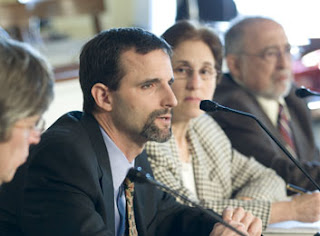 This is an exciting time to be working global public health, with more attention and money going to the field in the last decade than perhaps ever before. In the past, the struggle has been to direct more money and attention to these issues, but recent efforts have focused more on maximizing funds’ impact—by strengthening health systems, focusing on prevention, and finishing so-called “unfinished agendas” in maternal health, child mortality, and family planning. In my remarks at a recent panel on foreign policy challenges facing the 111th Congress, I focused on four issues: infectious diseases, neglected health issues, funding, and capacity building.
 -
For Many, Sea-Level Rise Already an Issue
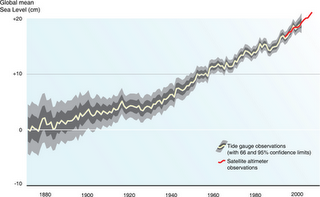
›February 11, 2009 // By Will RogersGlobal sea level is projected to rise between 7 and 23 inches by 2100, according to the Intergovernmental Panel on Climate Change (IPCC). Recent melting of the Antarctic ice sheet has prompted geophysicists at the University of Toronto and Oregon State University to warn that global sea level could rise 25 percent beyond the IPCC projections. These catastrophic long-term predictions tend to overshadow the potentially devastating near-term impacts of global sea-level rise that have, in some places, already begun. -
Weekly Reading
›Conflicts among pastoralists over water and land have increased in drought-stricken northeastern Kenya, reports IRIN News.
Country for Sale, a report by Global Witness, alleges that Cambodia’s oil, gas, and mineral industries are highly corrupt.
Foreign Policy features an interview with General William “Kip” Ward, the commander of the new U.S. Africa Command. The New Security Beat covered General Ward’s recent comments on civilian-military cooperation.
Healthy Familes, Healthy Forests: Improving Human Health and Biodiversity Conservation details Conservation International’s integrated population-health-environment projects in Cambodia, Madagascar, and the Philippines.
Double Jeopardy: What the Climate Crisis Means for the Poor, a new report on climate change and poverty alleviation, synthesizes insights from an August 2008 roundtable convened by Richard C. Blum and the Brookings Institution’s Global Economy and Development Program at the Aspen Institute.
“Although the long-term implications of climate change and the retreating ice cap in the Arctic are still unclear, what is very clear is that the High North is going to require even more of the Alliance’s attention in the coming years,” said NATO Secretary General Jaap de Hoop Scheffer at a seminar on security prospects in the High North hosted by the Icelandic government in Reykjavik.
“I think we will work our way towards a position that says that having more than two children is irresponsible. It is the ghost at the table. We have all these big issues that everybody is looking at and then you don’t really hear anyone say the “p” word,” says UK Sustainable Development Commission Chair Jonathon Porrit, speaking about population’s impact on the environment. Porrit has drawn criticism for his remarks.
A local priest has warned that a Norwegian company’s proposed nickel mines will threaten food security on the Philippine island of Mindoro.
Showing posts from category population.
 “
“ Global sea level is projected to rise between

