-
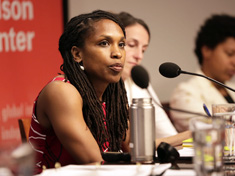
Backdraft #6: Jesse Ribot on Why It’s So Important for Climate Interventions to Work Through Local Democracy
› In a research project spanning more than two dozen case studies on environmental governance in 13 sub-Saharan African countries, Jesse Ribot, professor at the University of Illinois, and colleagues found that while many forest management projects claimed to be working with communities, they were in fact undermining local democracy in various ways.
 -
Samara Ferrara on How Midwifery Can Reduce Unnecessary Surgeries and Save Lives in Mexico
›“Midwives have the knowledge, midwives have the skills, and have the heart and compassion to serve mothers and babies in the most perfect way,” explains Samara Ferrara in this week’s podcast. But they often face demoralizing conditions, poor pay, and in some cases disdain from doctors. -
Backdraft #4: Edward Carr on Climate Response, Motivations, and the Value of Ethnographic Research
›Unintended consequences from climate interventions are often the result of not understanding decision-making at a granular enough level, says Edward Carr in this week’s “Backdraft” episode. -
Ground Truth Briefing: Is Climate-Related Migration a National Security Issue?
›Experts predict that climate change will spur some people to leave their homes and countries. How will national security be affected as a result? -
Backdraft Episode #3: Kimberly Marion Suiseeya on Voice, Justice, and Representation
›“If we think sustainable development is the goal we want to achieve, we have to be radical in elevating those who have been traditionally excluded,” says Northwestern University’s Kimberly Marion Suiseeya in this week’s “Backdraft” episode. “We have to approach conservation and global environmental governance from the perspective of the invisible and the marginalized people.” -
New “Backdraft” Podcast Series, on the Peace and Conflict Consequences of Climate Responses
›The science is clear: To prevent major disruption, the global community must take steps to address climate change. But it is also increasingly clear that efforts to address climate change can have major effects on societies that are not always anticipated. -
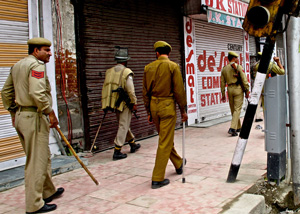
Michael Kugelman Explains the Flare Up in India-Pakistan Water Tensions
›October 21, 2016 // By Schuyler NullLast month, India subtly warned that it could withdraw from the Indus Waters Treaty with Pakistan, one of the oldest and most significant water treaties in the world, because of a lack of “mutual trust and cooperation.” A week later, the Indian military launched a “surgical strike” across the Pakistani line of control in Kashmir against alleged terrorist camps.
-
Maxine Burkett on Why “Climate Refugees” Is Incorrect – and Why It Matters
›
More and more we are hearing stories about “climate refugees.” U.S. Interior Secretary Sally Jewell used the term to describe the Biloxi-Chitimacha-Choctaw tribe, a community which this year became the first to receive federal funding to relocate in its entirety from their sinking island home on the Louisiana coast.
Showing posts from category podcast.
 In a
In a 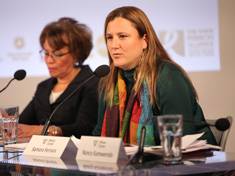 “Midwives have the knowledge, midwives have the skills, and have the heart and compassion to serve mothers and babies in the most perfect way,” explains Samara Ferrara in this week’s podcast. But they often face demoralizing conditions, poor pay, and in some cases disdain from doctors.
 Unintended consequences from climate interventions are often the result of not understanding decision-making at a granular enough level, says Edward Carr in this week’s “
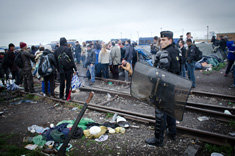 Experts predict that climate change will
 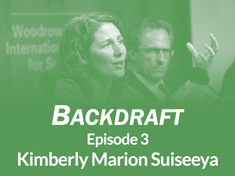 “If we think sustainable development is the goal we want to achieve, we have to be radical in elevating those who have been traditionally excluded,” says Northwestern University’s Kimberly Marion Suiseeya in this week’s “Backdraft” episode. “We have to approach conservation and global environmental governance from the perspective of the invisible and the marginalized people.”
 The science is clear: To prevent major disruption, the global community must take steps to address climate change. But it is also increasingly clear that efforts to address climate change can have major effects on societies that are not always anticipated.