Showing posts from category *Main.
-
Youth Revolt in Egypt: A Country at the Turning Point
›March 2, 2011 // By Wilson Center StaffThe original version of this article, by Farzaneh Roudi-Fahimi, Shereen El Feki, and Tyjen Tsai, appeared at the Population Reference Bureau.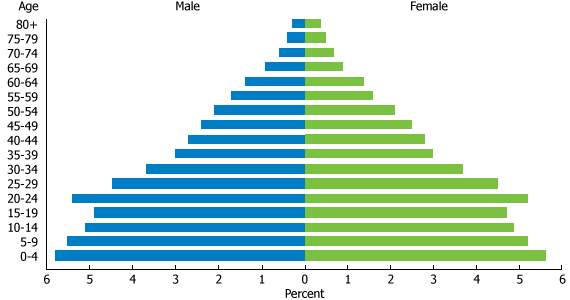
Egyptians know some dates by heart: July 26, 1952, marks the overthrow of Egypt’s last monarch; October 6, 1973, is the date of the country’s attack to reclaim the Sinai Peninsula. Now another date can be added to that list: January 25, 2011, the first day of anti-government protests that led to President Hosni Mubarak’s resignation 18 days later. Mubarak ruled Egypt for nearly 30 years, during which the country’s population grew by 90 percent – from 45 million to 85 million according to UN estimates, despite concerted government campaigns to slow population growth. The demographic strength of Egypt is undeniable, not just in absolute numbers but in its age distribution. Egypt is experiencing a “youth bulge:” One in five Egyptians is between ages 15 and 24, and one-half of the population is below age 25 (see figure above), a powerful engine of renewal for the country.
Youth as the Drivers of Change
Egyptians of all ages and walks of life participated in the protests, unified in aspirations and demands including political freedom, better wages, and better working conditions. But it was the astonishing numbers of young people participating in demonstrations that gave the uprising its momentum, and were key to sustaining it, as hundreds of thousands gathered in Tahrir (Liberation) Square in Cairo and other cities across the country. Egypt’s youth are the faces behind this leaderless revolution; the revolt, in large part, was spurred by their finesse in using social media to organize and make their voices heard.
Young people arguably have the most at stake in the outcome of this revolution. The results have immediate impact and future implications in how they construct their lives. Recent studies show the frustrations young Egyptians feel at the stagnancy of their lives. They are a generation waiting for better access to quality education, secure employment, and the financial stability necessary to get married and start their own families.
Continue reading at the Population Reference Bureau.
Sources: UN Population Division.
Image Credit: Population pyramid from PRB, data from the UN Population Division. -
Watch: Sir John Sulston on the Royal Society’s People and the Planet Study
›March 1, 2011 // By Christina Daggett“At the moment, the agendas of the growing population of people and the environment are too separate – people are thinking about one or the other,” said Sir John Sulston, Nobel laureate and chair of the Royal Society’s People and the Planet working group, in an interview with ECSP. “People argue about, ‘Should we consume less or should we have fewer people?’ The point is it’s both. We need to draw it together. It’s people and their activities.”
Sulston won the 2002 Nobel Prize in Physiology or Medicine for his work on mapping the human genome. He said that experience helped him appreciate the importance of utilizing science to the benefit of the wider public as he advocated for keeping the human genome in the public domain rather than allowing the knowledge to be privatized.
Sulston spoke at the Wilson Center on Febraury 22 on carrying capacity and the Royal Society’s People and the Planet study. He said “what we want to do is to see the issue of population in the open, dispassionately discussed on the environmental agenda, and then we’ll see where it goes.” The study will “draw together the strands, to summarize, and to put it down as a statement of the state of the art of our knowledge and where it’s going.” The study will be released in early 2012 with an eye to informing the UN “Rio+20” conference on sustainable development.
“We have one planet,” Sulston said, and “we have a lot of people, an increasing number of people. Now it’s not straightforward…but I think if you look at the facts dispassionately, you find that actually, because of our sheer numbers and because of our activities, the combination of those two things mean that we are putting an increasing burden on the planet and I think it is something we have to start thinking about.” -
‘Dialogue’ Interviews International Reporting Project Fellows on Liberia
›Since 1998, the International Reporting Project has been a pioneer in the “non-profit journalism” movement that seeks to fill the gap left by much of the mainstream media’s reduction in international news coverage. IRP has provided opportunities to more than 300 U.S. journalists to travel to more than 85 countries to produce award-winning reports. This month on the Wilson Center’s Dialogue program, host John Milewski speaks with guests Sunni Khalid, Ed Robbins, and Teresa Wiltz. They recently participated in an intensive fact-finding visit to Liberia under the auspices of the International Reporting Project where they produced stories on the country’s ongoing development and women’s empowerment efforts (among other topics).
Sunni Khalid is managing news editor for WYPR in Baltimore, Maryland. Previously, he worked for Time, The Washington Times, USA Today, Voice of America, and NPR.
Ed Robbins is an independent, multi-award winning director, writer, producer, and videographer. Outlets for his work have included PBS, The Discovery Channel, National Geographic Channel, ABC, and the BBC.
Teresa Wiltz is a senior editor for The Root, where she helps oversee the production of the African-American web-magazine. She previously served as a staff writer for The Washington Post’s style section.
The full 30 minute interview is available at the Wilson Center.
To hear more about their projects, see The New Security Beat’s “A Lens Into Liberia: Experiences from IRP Gatekeepers.” -
Choke Point China: Escalating Confrontation Between Water Scarcity and Energy Demand Has Global Implications
›The original version of this article, by J. Carl Ganter, appeared on The Huffington Post. Visit Circle of Blue for the latest articles in the Choke Point: China series.
Water scarcity, rapid economic growth, and soaring energy demand are forming a tightening noose that could choke off China’s modernization.
Writes my colleague Keith Schneider in the first installment of the new report, Choke Point: China, from Circle of Blue:Underlying China’s new standing in the world, like a tectonic fault line, is an increasingly fierce competition between energy and water that threatens to upend China’s progress. Simply put, say Chinese authorities and government reports, China’s demand for energy, particularly for coal, is outpacing its freshwater supply.
The 12-part Choke Point: China series presents powerful evidence of the fierce contest between growth, water, and fuel that is virtually certain to grow more dire over the next decade. The project is produced in partnership with the Woodrow Wilson International Center for Scholars’ China Environment Forum.
Tight supplies of fresh water are nothing new in a nation where 80 percent of the rainfall and snowmelt occurs in the south, while just 20 percent of the moisture occurs in the mostly desert regions of the north and west. What’s new is that China’s surging economic growth is prompting the expanding industrial sector, which consumes 70 percent of the nation’s energy, to call on the government to tap new energy supplies, particularly the enormous reserves of coal in the dry north.
The problem, scholars and government officials told us, is that there is not enough water to mine, process, and consume those reserves and still develop the modern cities and manufacturing centers that China envisions for the region. “Water shortage is the most important challenge to China right now, the biggest problem for future growth,” said Wang Yahua, deputy director of the Center for China Study at Tsinghua University in Beijing. “It’s a puzzle that the country has to solve.”
The consequences of diminishing water reserves and rising energy demand have been a special focus of our attention for more than a year. In 2010, in our “Choke Point: U.S.” series, Circle of Blue found that rising energy demand and diminishing freshwater reserves are two trends moving in opposing directions across America. Moreover, the speed and force of the confrontation is occurring in the places where growth is highest and water resources are under the most stress – California, the Southwest, the Rocky Mountain West, and the Southeast.
Stripped to its essence, China’s globally significant choke point is caused by three converging trends:- Production and consumption of coal – the largest industrial consumer of water – has tripled since 2000. Government analysts project that China’s energy companies will need to increase coal production by 30 percent by 2020.
- Fresh water needed for mining, processing, and consuming coal accounts for the largest share of China’s industrial water use, a fifth of all the water consumed nationally. Though national conservation policies have helped to limit increases, water consumption nevertheless has climbed to record highs.
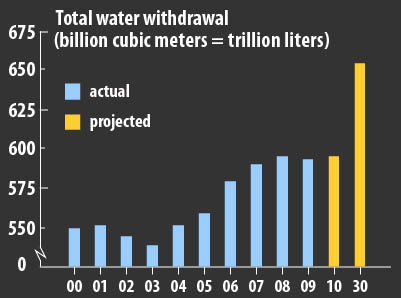
- China’s total water resource, according to the National Bureau of Statistics, has dropped 13 percent since the start of the century. In other words China’s water supply is 350 billion cubic meters (93 trillion gallons) less than it was at the start of the century. That’s as much water lost to China each year as flows through the mouth of the Mississippi River in nine months. Chinese climatologists and hydrologists attribute much of the drop to climate change, which is disrupting patterns of rain and snowfall.
We found a powerful narrative in China in two parts, and never before told: First is how effectively the national and provincial governments enacted and enforced a range of water conservation and efficiency measures that enabled China to progress as far as it has.
Second is that despite the extensive efforts to conserve water, and to develop water-sipping alternatives like wind and solar energy, China still faces an enormous projected shortfall of water this decade to its energy-rich northern and western provinces. How government and industry leaders respond to this critical and unyielding choke point forms the central story line of the next era of China’s unfolding development.
J. Carl Ganter is director and co-founder of Circle of Blue, a leading source of news, science, and data about water issues globally. Choke Point: China is produced in partnership with the Wilson Center’s China Environment Forum.
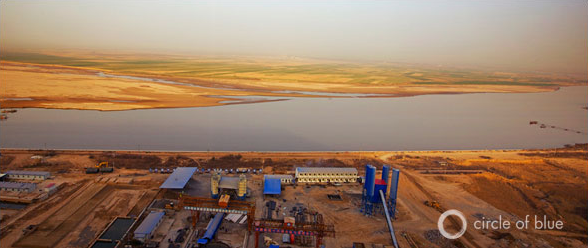
Image Credit: Two tunnels beneath the Yellow River to be completed by mid-decade that will transport more than 35 million cubic meters (9 billion gallons) of water a day from southern China to thirsty cities in the north. Courtesy of Aaron Jaffe and Circle of Blue. -
Mapping Demographics in WWF Priority Conservation Areas
›February 25, 2011 // By Hannah Marqusee“The developing world is urbanizing at a dizzying pace,” yet rural populations living in developing countries are also rapidly increasing, threatening many of the planet’s most biodiverse regions, says a new study, Mapping Population onto Priority Conservation Areas, by David López-Carr, Matthew Erdman, and Alex Zvoleff.
Using comprehensive data from the USAID-sponsored Demographic Health Surveys (DHS), the researchers analyzed population, mortality, and fertility indicators for 10 of the 19 priority places for conservation identified by the World Wildlife Foundation (WWF). These biological hotspots represent parts of 25 countries throughout South Asia, sub-Saharan Africa, and South America, including the Democratic Republic of the Congo, Colombia, Guatemala, Indonesia, Kenya, Nepal, Madagascar, and Thailand.
Urban vs. Rural
The findings confirmed the researchers’ hypothesis that rural areas within WWF priority regions are at a lower state of demographic transition than their urban counterparts, meaning they have higher fertility and infant mortality rates and a younger age structure due to poor access to primary health care, including family planning. Furthermore, women in these regions desire more children than those in urban, non-priority areas, but experience a greater difference between ideal and actual number of children.
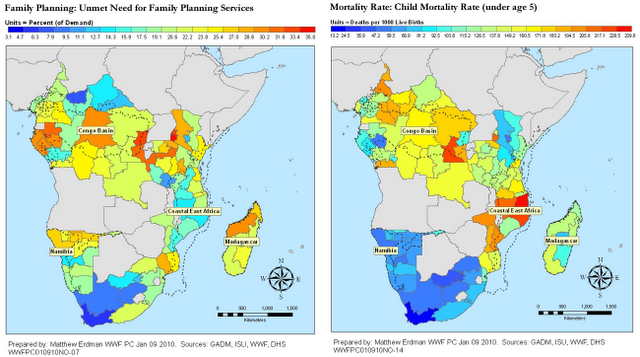
For many of the indicators, the differences between urban and rural, and priority and non-priority, regions of the developing world are striking. In urban Asia, the mean predicted population doubling time is 86.1 years; in rural Africa it is only 24.6 years. Urban Asia and South America also have total fertility rates of 1.8 children per woman, while rural Africa’s is 5.2. Infant mortality also ranged from a low of 20 deaths per every 1,000 births in some developing urban areas, to over 100 in rural parts of Coastal East Africa. In the developed world it is less than 10.
There is also consistently less desire among women in priority areas to limit their childbearing. Worldwide, 49.4 percent of women living within priority areas want to limit childbearing, compared to 56.2 percent outside priority areas.
Rural areas in all regions had the highest unmet need for family planning, with the exception of the Congo Basin, where high infant mortality has persisted and dampened women’s desire to limit childbearing. “If much needed health services were provided in the Congo Basin, along with family planning services, child survival rates would increase, and couples would be more inclined to limit overall births,” the study says.
Lower demand for family planning in priority areas is consistent with Caldwell’s theory of intergenerational wealth flows, the paper noted, which explains how in rural agricultural societies, children are economic assets who move wealth to their parents. As countries develop and people gain access to education, healthcare and female empowerment, wealth flows reverse and children become financial burdens. This transition decreases fertility and increases demand for family planning.
Setting Priorities
As WWF plans to scale up its population, health and environment (PHE) programs, this study will help to prioritize places within priority areas that are most in need of PHE intervention and “are most likely to help alleviate negative environmental and social impacts of rapid population growth.” The results of this study show that many areas are ripe for such intervention:Nearly a quarter of households in Coastal East Africa and the Mesoamerican Reef wish to have access to contraception yet their desire remains unfulfilled. Similarly, households within priority places in Coastal East Africa, the Mesoamerican Reef, Amazon and the Guianas, and the Eastern Himalayas wish to have nearly one child fewer than they currently have.
The findings of this study have already informed the planning of several of WWF’s projects in Madagascar and Namibia.
The limited availability and detail of the DHS data was the primary limitation of the study, the researchers noted. The 25 countries examined did not fully cover all WWF’s priority areas – 17 other countries within the priority areas lacked sufficiently comprehensive data for the study. Furthermore, the district or municipality was the smallest unit of analysis possible with DHS data, making it difficult to exactly pinpoint priority communities.
“Geography matters,” write the authors. “Only with further refined data accompanied by qualitative on-the-ground field research can we credibly answer remaining questions.”
Image Credit:“Family Planning: Unmet Need for Family Planning Services” and “Mortality Rate: Child Mortality Rate (Under Age 5)” courtesy of World Wildlife Fund.
Sources: Population Council, World Wildlife Fund. -
The Middle East’s Demographic Destiny
›February 25, 2011 // By Jennifer Dabbs SciubbaThe original version of this article, by Jennifer Dabbs Sciubba, appeared on her blog. Sciubba will be speaking at the Wilson Center on March 14 about her newest book The Future Faces of War: Population and National Security.
The so-called “arc of revolution” sweeping across the Middle East and North Africa has some demographers feeling smug. In Egypt, Tunisia, Algeria, Jordan, and Lebanon the population ages 15-29 – a key group for demographers – is very large, about 41-50 percent of all adults ages 15-59. No matter where you’re born, this life period is significant because during this time young adults expect to finish their education, get a job, get married, maybe start a family, and have some say in the way they are governed. As many have noted, the problem in each of these countries is that the desires of young adults are being dashed as they are shut out of economic, political, and even social opportunities. The result is all over the headlines.
Aside from structural failures like corruption and inattention of politicians to creating jobs, why are young people so disadvantaged? The answer lies in demography. Opportunities for young adults are limited in these countries because of what demographers refer to as “cohort crowding,” a situation that results when an age group, in Tunisia’s case those aged 25-29, is significantly larger than the preceding age group. Generally, jobs cannot be created fast enough to keep pace with this demographic bump, so those in the large cohorts are “crowded” out of the labor market. This situation turns into protest and violence when youth from large cohorts fall short of the living standards of preceding generations, which are smaller. In a 2009 Pew Global Attitudes survey, 50 percent of respondents ages 18-29 in Egypt said they thought children born today would be worse off than their parents. In Jordan and Lebanon, 38 and 40 percent, respectively, of respondents had a similarly depressed attitude.
Continue reading on The Future Faces of War: Population and National Security blog.
Sources: Pew Research Center, U.S. Census Bureau.
Photo Credit: “DS-RY028 World Bank,” courtesy of flickr user World Bank Photo Collection (Dana Smillie). -
Watch: Laurie Mazur on a Pivotal Moment for the Global Environment and World Population
›February 24, 2011 // By Hannah Marqusee“It’s increasingly clear that we are living in a pivotal moment,” said Laurie Mazur, director of the Population Justice Project, in this interview with ECSP about her new book, A Pivotal Moment: Population, Justice, and the Environmental Challenge. Currently, “nearly half the world’s population – about three billion people – are under the age of 25,” she said, and the choices these young people make, and the choices that are available to them “will determine whether world population grows from the current almost 6.9 billion to anywhere between 8 billion and 11 billion.”
“Numbers do matter,” said Mazur. “Clearly, a world population of 8 billion would be better than 11 billion for both human beings and the environment.” What’s more, “everything we need to do to slow population growth is something we should be doing anyway.”
Investments in family planning, girls’ education, women’s empowerment, and sustainable, equitable development are all means to slowing population growth, as well as being an end in and of themselves. Population growth “is an issue of really broad appeal” and should be of concern to environmental and reproductive health advocates, people of faith, or anyone who cares about development, justice, and eliminating poverty, said Mazur. -
Deforestation, Population, and Development in a Warming World: A Roundtable on Latin America
›“Rural development and MCH [maternal child health] in the most remote, rural areas are going to largely explain the future of Latin American conservation, development, population, and urbanization,” said David Lopez-Carr, associate professor of geography at the University of California, Santa Barbara, at a recent Wilson Center roundtable on “Deforestation, Population, and Development in Latin America.”
Nearly 80 percent of Latin America’s people live in urban areas, yet the continent’s rural populations have a disproportionate effect on its forests. Panelists Liza Grandia, assistant professor of international development and social change at Clark University, and Jason Bremner, director of population, health, and environment at the Population Reference Bureau, argued that meeting the needs of these communities is therefore key to conserving Latin America’s forests. [Video Below]
Rural Populations Have Disproportionate Impact on Deforestation
“There are two Latin Americas,” said Carr. Countries like Argentina, Chile, and Uruguay are 90 percent urban, while countries like Guatemala, Ecuador, and Bolivia are about 50 percent urban. However, despite this rapid urbanization and declining population growth at the national level, rural areas in Latin America are still experiencing high fertility rates and significant forest loss. So how are these trends related?
In his analysis of more than 16,000 municipalities in Latin America, Carr found “no statistical significance between population change at the municipal level and woody vegetation change at the municipal level.” Yet this lack of connection does not mean population growth and deforestation are unrelated, but instead indicates “a problem of place and scale,” he said. Within countries or even within municipalities, there are huge variations in fertility rates. Rural areas, which generally have larger families, more agricultural expansion, higher population growth, and lower population density, account for higher impact per capita on forests.
“Less than one percent of the population of Guatemala moves to any rural frontier at all,” said Carr, “yet that small, tiny fraction of the population has a disproportionate impact on the forests, and that is true throughout Latin America.” Carr also distinguished between the private sector primarily converting secondary forest for corporate agriculture and subsistence farmers clearing old growth forest.
Indigenous Lands Are Key to the Future
There are generally two groups of people on the frontier: indigenous people and “colonists,” who move in to take advantage of undeveloped land. Indigenous people, by and large, act as “stewards of the forests,” exhibiting lower rates of deforestation and forest fragmentation then colonists, Bremner said. “They do have a very protective effect, largely because they are excluding others from those lands.”
Indigenous communities tend to be “common property institutions” with an informal or cultural set of rules and traditions facilitating land use, said Bremner. They are “really good at mobilizing against external threats,” he said, which results in a protective effect over the forest. In the Amazon, for example, “indigenous lands, in the context of all of this colonization and deforestation that is happening, are now seen as key to the future,” he said.
However, as indigenous population growth and growing agricultural and industrial expansion change indigenous communities and livelihoods, more formal rules must be developed to govern land use. If indigenous communities “are the protective factor, then we need to know how to protect them,” said Bremner.
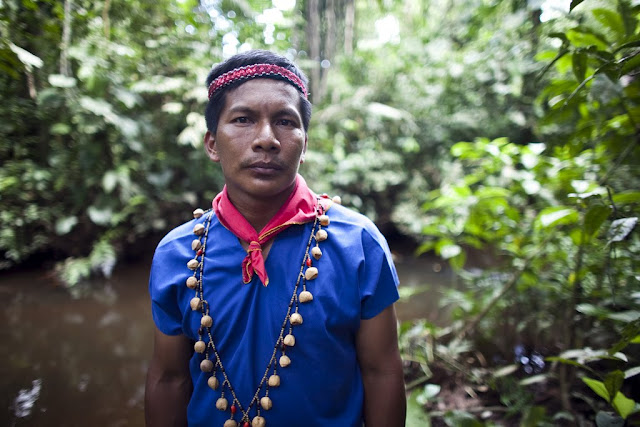
There are few demographic surveys of rural communities, but one of nearly 700 women in the Ecuadorian Amazon found the total fertility rate of indigenous women to be seven to eight children per woman. “Fifty percent of indigenous women didn’t want to have another child…of that 50 percent, 98 percent were not using a modern method of contraception,” Bremner said. “Responding to these women’s needs, I think, would go a long way in terms of changing the future of these communities.”
Guatemala: Reducing Fertility By Thinking Outside the Box
Grandia, with support from Conservation International and ProPeten, conducted a study of population and environment connections as part of the Demographic and Health Survey (DHS) of Peten, a sparsely populated and highly biodiverse municipality of Guatemala. The 90,000 people living in the protected area in this park had “literally no family planning services,” said Grandia, and their population was on track to double within 20 years.
Using the DHS data, Grandia and ProPeten created a “somewhat eclectic population and environment program” that integrated many of the concerns of indigenous Maya communities in Peten, called Remedios. Remedios focused on a diverse set of issues, including agriculture, education, maternal and child health, family planning, and gender issues, and included projects like a “traveling education-mobile” and Between Two Roads, a bilingual radio soap opera in Spanish and Q’eqchi’ Maya, which used the story of a conflict between midwife and cattle rancher in a frontier community “to touch on a whole range of social and environmental issues.”
“As a result of our efforts…the total fertility rate dropped from 6.8 in 1999 to 5.8 in 2002, and in the most recent DHS it had fallen to 4.3,” said Grandia. She credited this success in part to the fact that the programs were “so cross-cutting across many of those schools of thought.” Yet the integration of a diverse range of issues also caused a split between the field-based ProPeten and the DC-based Conservation International, who wanted a more “narrow focus” on family planning and conservation, she said.
“Sometimes working outside the box can have unexpected results,” said Grandia. The population-environment movement could learn from the American environmentalist movement’s evolution from “an elite movement” into a “broader-based socially dynamic movement that involved new constituencies,” she said.
“Population and environment has often begged the articulation of a third field,” said Grandia. “How you fill in that blank often reflects the kind of development interventions you deem appropriate.” Perhaps “justice” should be considered “a new critical third paradigm,” she said.
Sources: Population Reference Bureau, World Bank.
Photo Credit: “Chevron’s Toxic Legacy in Ecuador’s Amazon,” courtesy of flickr user Rainforest Action Network.