-
Ripple Effects: Sharing Water and Building Peace in the Jordan River Valley
›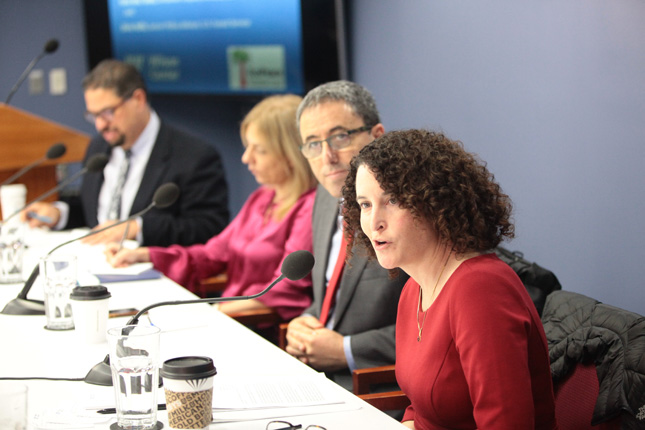
In the war-torn Jordan River Valley, we can meet the “strategic objective of reducing conflict by promoting cooperation on shared waters,” said former defense official Sherri Goodman at a recent Wilson Center event on environmental peacebuilding. Even in the midst of political disputes, Jordanians, Israelis, and Palestinians must work together to manage the scarce supplies of clean water to protect their health, their economies, and their security.
-
Healthy Women, Healthy Families: Saving Money and Lives With Faith-Based Family Planning
›
“All of the major religions of the world are really quite concerned with addressing the needs of the poor and also the disadvantaged,” said Victoria Graham, senior NGO technical advisor at the U.S. Agency for International Development, at the Wilson Center on July 18. “They’re always looking for interventions that address their needs, including health needs. And family planning is probably the most cost-effective way of doing this. Across the continuum – from looking at the economy to the family to saving lives – family planning is an excellent intervention.”
-
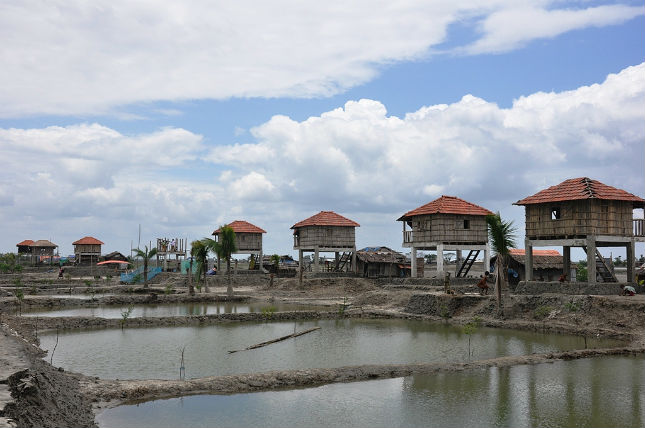
“Let’s Start From Here”: Local Solutions for Loss and Damage and Livelihood Resilience
›Without warning, water rushed into a woman’s home on a raised platform above the floodplain of Bangladesh’s Teesta River. She was just a hand’s distance from her infant son, but she couldn’t stop him from falling into the floodwaters. “She can’t recover back from the trauma,” said the University of Dundee’s Nandan Mukerjee of the mother who lost her child to the currents of climate change.
-
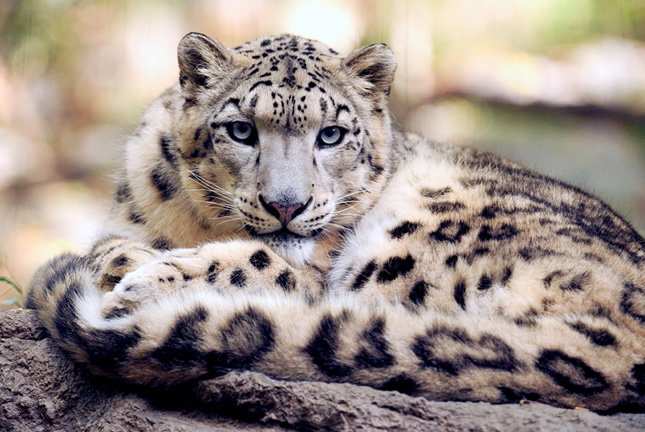
An Unlikely Ambassador: Ghana Gurung on Snow Leopards and Community Resilience
›As a child growing up in Nepal’s mountainous Upper Mustang region, Ghana Gurung understood that his survival depended on the mountains and his community. Today, as senior conservation program director at World Wildlife Fund-Nepal, he works to protect the endangered and elusive snow leopard by improving local communities’ livelihoods and the mountains’ ecosystem. -
Building Stability in the Middle East: Defining a Transatlantic Agenda for Climate Resilience
›Climate change can undermine stability in the Middle East and North Africa, where both the United States and Europe have critical foreign policy and security interests. The Middle East and North Africa (MENA) region “is impacted by climate and resource scarcity risks now, in the medium, and in the long term,” said Nick Mabey, director and chief executive of the environmental think tank E3G, during a recent Wilson Center event on building climate resilience in MENA countries. “It’s a region that is highly vulnerable to climate change,” said Mabey, and “also incredibly vulnerable to global systems.”
-
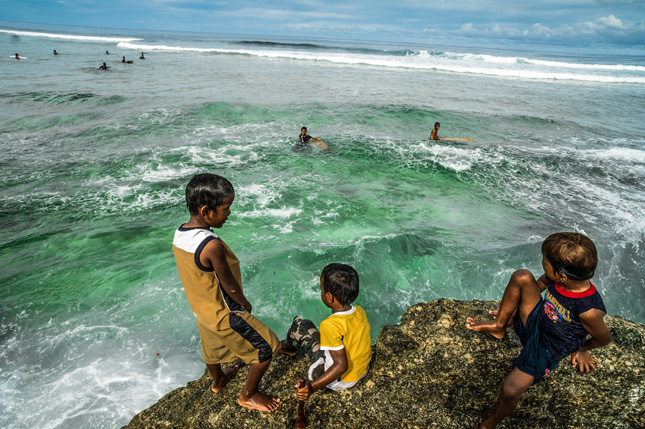
As Fiji Leads COP-23, Camari Koto Reflects on Climate Resilience in the South Pacific Islands
›Climate change poses an undeniable threat to small island states, but many islanders do not even know what climate change is, says Camari Koto, an indigenous Fijian academic and educator at the University of the South Pacific and member of the Resilience Academy, in our latest podcast. “They know it’s happening, they are unconsciously [taking] adaptive responses,” and certainly feel the brunt of its effects, she says. “But they don’t see climate change as an immediate threat.” -
Thermometers of Change: Snow Leopard Diplomacy in Asia’s High Mountains
›“Change is everywhere where snow leopards live,” said World Wildlife Fund (WWF) Vice President Kate Newman at a recent Wilson Center event. “The life of the snow leopard is intimately intertwined with the lives of the people in these high mountains,” she said. If you care about water security and climate resilience in Asia, you should also care about the integrity of the snow leopard’s habitat, added Koustubh Sharma of the Snow Leopard Trust. These beautiful and enigmatic animals are “the thermometers of the health of these ecosystems.”
-
From the Pacific to the Atlantic, Protecting Coastal Communities From Climate Threats
›The frontlines of climate change are the world’s shorelines. “It goes without saying that people living in coastal communities are already observing impacts,” said Erin Derrington, a coastal resources specialist working in the Northern Mariana Islands, at a recent Wilson Center event, the third in a series on coastal resilience presented in collaboration with the Hoover Institute and the Stanford Woods Institute on the Environment. “Although that is a challenge, it is also an opportunity and a driver for change and innovation,” said Derrington.
Showing posts from category media.

 As a child growing up in Nepal’s mountainous Upper Mustang region, Ghana Gurung understood that his survival depended on the mountains and his community. Today, as senior conservation program director at World Wildlife Fund-Nepal, he works to protect the endangered and elusive snow leopard by improving local communities’ livelihoods and the mountains’ ecosystem.
 Climate change poses an undeniable threat to small island states, but many islanders do not even know what climate change is, says Camari Koto, an indigenous Fijian academic and educator at the University of the South Pacific and member of the