-
Environmental Security Weekly Watch: January 12-16, 2026
›
A window into what we’re reading at the Stimson Center’s Environmental Security Program
Illegal and Unregulated Mining Runs Rampant in Venezuela (Inside Climate News)
Located across the Venezuelan states of Amazonas, Bolívar and Delta Amacuro, the Orinoco Mining Arc is a center of mining illegal and unregulated mining activity. Mining has exploded in this area during the Maduro regime, as operations use high-pressure pumps and toxic mercury to strip vast stretches of Amazon rainforest, and choke rivers with sediment and pollutants. Recent activities even carved open-pit mines into the summit of Yapacana National Park’s sacred tepuy mountain. The environmental impacts on populations are also devastating: up to 90 percent of women in mining areas show toxic mercury levels that are linked to neurological damage.
-
Environmental Security Weekly Watch: January 5-9, 2026
›
A window into what we’re reading in the Stimson Center’s Environmental Security Program
Marine Life Plundered in Unregulated Fishing Zone Near Argentina (The Guardian)
One of the world’s largest unregulated squid fisheries is located in Mile 201—a largely ungoverned strip of the high seas just beyond Argentina’s exclusive economic zones. Fishing hours there have increased between 2019 and 2024 in the area, as hundreds of foreign vessels arrive annually to plunder marine life. Yet this free-for-all poses serious concerns for other marine species as well. Crews on more than 50% of Chinese vessels and a fifth of Taiwanese vessels also have revealed the unreported capture and killing of seals, with culls sometimes numbering in the hundreds.
-
Environmental Security Weekly Watch: December 8-12, 2025
›A window into what we’re reading at the Stimson Center’s Environmental Security Program
Race for Copper Damages Protected Region in Colombia (Mongabay)
As Colombia looks to meet the growing demand for strategic minerals, activists working in the department of Choco allege that the country’s only industrial copper mine is harming both the environment and a local community. The El Roble copper mine has operated since 1990 at the base of a valley crossed by the Atrato River, but its acquisition by Canadian multinational Atico Mining in 2013 has meant that daily production has doubled from 400 to 1,000 metric tons over the past 12 years. El Roble also lacks the environmental license required by Colombia’s Mining Code, and continues to operate under a less stringent 1987 environmental management plan, which activists say omits required environmental impact studies.
-
Environmental Security Weekly Watch: September 29 – October 3, 2025
›A window into what we’re reading at the Stimson Center’s Environmental Security Program
Nickel Mining Threat to New Raja Ampat UNESCO Biosphere Reserve (Mongabay)
When Indonesia’s Raja Ampat archipelago received a UNESCO Biosphere Reserve designation on September 27, 2025, the new designation adding to the status it won as a Global Geopark in 2023. Yet this dual honor highlighting the archipelago’s exceptional biodiversity is now under threat from intense pressure from global demand for nickel for electric vehicle batteries that is challenging the reserve’s conservation goals.
-
The Importance of Reporting on Environmental Crime
›September 29, 2025 // By David A. TaylorEnvironmental crime has long been underreported, but globalization and the increased involvement of organized crime involvement is now contributing to a rise in such crime, especially when compared to other types of crime. The financial toll of environmental crimes has been estimated to be hundreds of billions of dollars while the damage they cause to ecosystems compounds the effects of climate change and inflicts a heavy toll on vulnerable communities.
-
Environmental Security Weekly Watch: September 15-19, 2025
›A window into what we’re reading in the Stimson Center’s Environmental Security Program
Mexico’s Mercury Boom is Poisoning People and the Environment (Associated Press)
In Mexico’s Sierra Gorda mountains, soaring international gold prices also have created a mercury boom. Since 2011, mercury prices have skyrocketed from $20 per kilogram to between $240 and $350 per kilogram today. Most of Mexico’s mercury is trafficked to Colombia, Bolivia, and Peru for use in illegal Amazon gold mining operations that contaminate rivers and ecosystems. Yet the country’s adoption of a 2017 UN convention banning mercury mining and exports also allows artisanal mines to operate until 2032.
-
Three Takeaways From the Third UN Ocean Conference
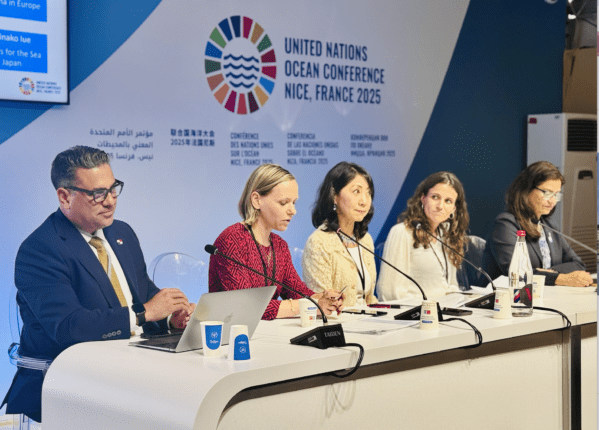
›July 10, 2025 // By Carolyn Gruber“There cannot be a healthy planet without a healthy ocean. It’s urgent business for us all,” said U.N. special envoy for the ocean, Peter Thomson, at last month’s UN Ocean Conference (UNOC).
Hosted in Nice, France, the conference brought together more than 15,000 political leaders, scientists, civil society, the private sector, academic institutions, Indigenous peoples, local communities, and philanthropic organizations with the goal of identifying innovative ways to finance and mobilize action for the ocean.
-
Tackling Scarcity and Building Security: A Response to IUU Fishing
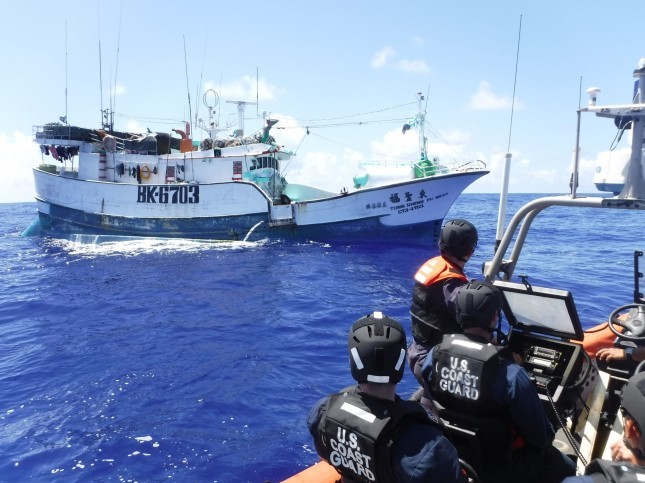
›Last month, as global leaders met in Lisbon for the UN Oceans Conference, President Biden signed a National Security Memorandum to address the challenge of illegal, unreported and unregulated (IUU) fishing. This event is a promising sign that the U.S. and other governments are accelerating the response to the threat that IUU fishing poses—not just to the environment, the economy and human rights, but also to global peace and security.
Showing posts from category IUU.