-
Environmental Security Weekly Watch: April 27-May 1, 2026
›
A window into what we’re reading at the Stimson Center’s Environmental Security Program
Disaster Response Aid: Data Argues for New Focus on Inequality (Dialogue Earth)
When a 2019 oil spill and the COVID-19 pandemic struck coastal fishing communities in north-eastern Brazil back-to-back, researchers tracked 402 small-scale fishers across three states to assess the impacts. What they found was that fallout from these crises was were not uniform. The oil spill’s contamination of nearshore mangroves disproportionately harmed the women who make up the bulk of the workforce that harvests shellfish, while men fishing offshore for open-water species retained more of their income.
-
Environmental Security Weekly Watch: April 20-24, 2026
›
A window into what we’re reading in the Stimson Center’s Environmental Security Program
The Bolivian Cacao Farmers Taking on the Gold-Mining Industry (The Guardian)
Cacao farmers in Bolivia’s Alto Beni and Palos Blancos municipalities successfully pushed for local mining bans in 2021, protecting their organic agroforestry land from the destructive gold rush sweeping the region. Gold prices are up over 64% since 2020—intensifying illegal and legal mining across Bolivia, driving deforestation, mercury poisoning, flooding, and encroachment into protected national parks. Communities near active mining zones report polluted rivers, declining fish populations, and mercury-related illnesses.
-
Environmental Security Weekly Watch: February 23-27, 2026
›A window into what we’re reading at the Stimson Center’s Environmental Security Program
UN Report: One in Five Fish Products Tied to Fraud (Inside Climate News)
A new UN Food and Agriculture Organization report finds that up to 20% of fishery and aquaculture products worldwide are mislabeled. The $195 billion industry is especially vulnerable due to supply chains involving over 12,000 traded species. The study is the first of its kind for the organization, and describes a pattern of fraud that takes many forms, from coloring tuna to appear fresher, to selling farmed fish as wild-caught, to substituting cheap species for expensive ones entirely. In the US alone, as much as a third of seafood may be mislabeled, yet less than 1% of imports are ever tested.
-
Environmental Security Weekly Watch: January 26-30, 2026
›A window into what we’re reading at the Stimson Center’s Environmental Security Program
High Seas Treaty Takes Effect as Global Ocean Protection Framework (Associated Press)
The High Seas Treaty is the world’s first legally binding agreement to protect marine life in international waters, and its broad impacts began when it entered into force on January 17, 2026. The treaty governs the nearly half the planet’s surface comprised of vast ocean areas beyond any individual country’s exclusive economic zone—an area which faces threats from destructive fishing, shipping, plastic pollution, overfishing, and potential deep sea mining.
-
Environmental Security Weekly Watch: September 29 – October 3, 2025
›A window into what we’re reading at the Stimson Center’s Environmental Security Program
Nickel Mining Threat to New Raja Ampat UNESCO Biosphere Reserve (Mongabay)
When Indonesia’s Raja Ampat archipelago received a UNESCO Biosphere Reserve designation on September 27, 2025, the new designation adding to the status it won as a Global Geopark in 2023. Yet this dual honor highlighting the archipelago’s exceptional biodiversity is now under threat from intense pressure from global demand for nickel for electric vehicle batteries that is challenging the reserve’s conservation goals.
-
Environmental Security Weekly Watch: September 15-19, 2025
›A window into what we’re reading in the Stimson Center’s Environmental Security Program
Mexico’s Mercury Boom is Poisoning People and the Environment (Associated Press)
In Mexico’s Sierra Gorda mountains, soaring international gold prices also have created a mercury boom. Since 2011, mercury prices have skyrocketed from $20 per kilogram to between $240 and $350 per kilogram today. Most of Mexico’s mercury is trafficked to Colombia, Bolivia, and Peru for use in illegal Amazon gold mining operations that contaminate rivers and ecosystems. Yet the country’s adoption of a 2017 UN convention banning mercury mining and exports also allows artisanal mines to operate until 2032.
-
Environmental Security Weekly Watch: August 11-15, 2025
›A window into what we’re reading at the Stimson Center’s Environmental Security Program
The Mining Town Funding Congo’s Rebels and Tech Giants (Reuters)
In April 2024, the M23 rebel group seized control of Rubaya, a mining town that produces 15% of the world’s coltan—a critical mineral worth used in mobile phones, computers, and aerospace components. Rebels imposed a parallel administration in the town, and placed a 15% tax on mineral traders that generates $800,000 monthly from levies. Thousands of impoverished miners in the town, however, still work 12-hour shifts in dangerous conditions earning just $5.15 per day.
-
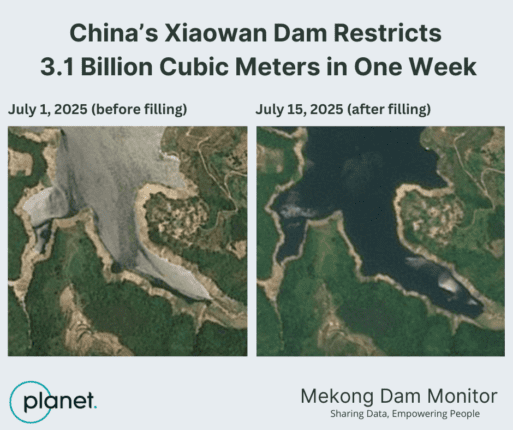
The Mekong Dam Monitor Tracks a River Under Pressure
›The Mekong River’s seasonal floods nurture the world’s most productive inland fishery and irrigate rice paddies that feed millions. Approximately 70 million people live in the lower Mekong Basin, and 75% of them depend on fishing and farming for their livelihoods. But hydropower expansion and other development projects are fragmenting the river and disrupting its natural rhythms, with severe consequences for those living downstream.
Showing posts from category fishing.