• woodrow wilson center
  • ecsp

New Security Beat

Subscribe:
  • rss
  • mail-to
  • Who We Are
  • Topics
    • Population
    • Environment
    • Security
    • Health
    • Development
  • Columns
    • China Environment Forum
    • Choke Point
    • Dot-Mom
    • Friday Podcasts
    • Navigating the Poles
    • Reading Radar
  • Multimedia
    • Water Stories (Podcast Series)
    • Backdraft (Podcast Series)
    • Tracking the Energy Titans (Interactive)
  • Films
    • Water, Conflict, and Peacebuilding (Animated Short)
    • Paving the Way (Ethiopia)
    • Broken Landscape (India)
    • Scaling the Mountain (Nepal)
    • Healthy People, Healthy Environment (Tanzania)
  • Publications
  • Events
  • Contact Us

NewSecurityBeat

The blog of the Wilson Center's Environmental Change and Security Program
Showing posts from category environment.

  • Poor Land Tenure: A Key Component to Why Nations Fail

    ›
    Guest Contributor  //  May 24, 2012  //  By Tim Hanstad

    The murder of five land rights campaigners during the last two months – one in Colombia, three in Brazil, and one in Cambodia – have not captured many headlines, but they are a reminder of the central role land tenure plays not just in rural economic development but also in sparking broadly distributed economic gains throughout a society.

    MORE
  • Philippines’ Bohol Island Demonstrates Benefits of Integrated Conservation and Health Development

    ›
    Guest Contributor  //  May 23, 2012  //  By Janet Edmond

    In March 2012, I participated in a study tour to the island of Bohol, near the unique Danajon double barrier reef ecosystem – the only one of its kind in the Philippines and one of only three in the Indian and Pacific Oceans. Nowhere is the connection between population dynamics and biodiversity more evident than in the Philippines, one of the most densely-populated countries on the planet, with more than 300 people per square kilometer. Nearly every major species of fish in the region shows signs of overfishing, according to the World Bank.

    MORE
  • Improving Food Security Through Land Rights and Access to Family Planning

    ›
    Reading Radar  //  May 22, 2012  //  By Kate Diamond
    “In a future world affected by climate change, population growth is one lever that can be addressed to ameliorate the impacts of climate change, particularly in the area of food security,” write Scott Moreland and Ellen Smith in “Modeling Climate Change, Food Security, and Population,” a recent study for MEASURE Evaluation and USAID. Moreland and Smith combine demographic changes, food needs, and economic capacity into a single aggregate model to assess how family planning and climate change might affect food security from now until 2050. Using Ethiopia as an example, the model finds that if access to family planning services were increased to meet existing needs, the subsequent decrease in demand for food would reduce child malnutrition and effectively counteract a projected 25 percent shortfall in caloric availability from climate change’s impact on agriculture. Programs designed to increase access to family planning should therefore be incorporated into national adaptation and food security strategies, they conclude. “Family planning, especially in countries with high unmet need, provides a potential solution not only for women’s reproductive health, but also for adapting to the effects of climate change.”

    The Food and Agriculture Organization’s Committee on World Food Security recently endorsed a set of voluntary guidelines for land tenure governance in the context of food security that aims to strike a balance between encouraging productive investment and ensuring equitable and sustainable development. Population growth, climate change, and environmental degradation are putting pressure on the legal and cultural systems that govern land rights, resulting in “inadequate and insecure tenure rights” which can “increase vulnerability, hunger and poverty, and can lead to conflict and environmental degradation when competing users fight for control of these resources.” The guidelines, drawn from consultations with hundreds of people from both the private and public spheres and representing more than 130 countries, emphasize the need to safeguard access to land, fisheries, and forests – as well as the resources they provide – in a way that respects customary tenure systems, which are not always reflected in official tenure policies or records. They also emphasize strengthening the ownership rights of women and other traditionally marginalized groups in order to enhance food security and minimize the risk of instability and conflict in the future.
    MORE
  • The Global Water Security Assessment and U.S. National Security Implications

    ›
    From the Wilson Center  //  May 21, 2012  //  By Stuart Kent

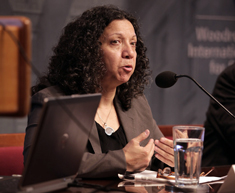
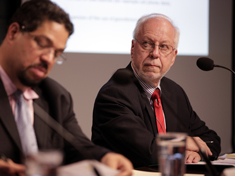
    “Water security is about much more than access to H2O,” said Jane Harman, director, president, and CEO of the Wilson Center at the May 9 meeting, “Global Water Security: The Intelligence Community Assessment.” The event – part of the Wilson Center’s National Conversation Series – brought together a number of experts to discuss a recently released intelligence community assessment of global water security. [Video Below]

    MORE
  • John May, Center for Global Development

    ‘People and the Planet’ Study Re-Introduces Demography to Sustainability Debate

    ›
    May 15, 2012  //  By Wilson Center Staff
    The original version of this article, by John May, appeared on the Center for Global Development’s Global Health Policy blog.

    Population issues have been conspicuously absent from the discussions on the environmental sustainability of our globalized economy in the run-up to the Rio+20 Conference on Sustainable Development, which will take place in Brazil, June 20-22, under the auspices of the United Nations.

    Fortunately, the new report, People and the Planet by the Royal Society, should help change this woefully shortsighted approach. The report demonstrates clearly and convincingly that demographic trends cannot be separated from consumption patterns, and that there is no chance to achieve a path of equitable and sustainable development without tackling population growth and consumption at the same time. In short, population and the environment cannot and should not be considered as two separate issues.

    This strong and long overdue pitch to bring back the “p” word into the environmental debate is most welcome. In recent decades, international attention has shifted from rapid population growth to other urgent issues, such as the HIV/AIDS epidemic, humanitarian crises, climate change, and good governance. But reproductive health and voluntary family planning programs are still very much needed, especially in high fertility countries, and they require political leadership and long-term financial commitment. Broader access to family planning services will be needed to accelerate the decline of high fertility rates, particularly in countries where unmet needs for contraception are high.

    Continue reading at the Center for Global Development.

    Image Credit:
    People and the Planet cover, courtesy of the Royal Society.
    MORE
  • Nigeria Beyond the Headlines: Environment and Security [Part Two]

    ›
    From the Wilson Center  //  May 14, 2012  //  By Kate Diamond & Stuart Kent

    In the coming years, Nigeria’s cohort of unemployed youth has equal potential to “be converted into either a religious or a regional clash, as certain youths get opportunities and other youths do not,” said Pauline Baker, President Emeritus of the Fund for Peace, during the day-long “Nigeria Behind the Headlines” event at the Wilson Center on the April 25 (read part one here). [Video Below]

    MORE
  • Roger-Mark De Souza, Climate and Development Knowledge Network

    Population-Climate Dynamics: From Planet Under Pressure to Rio

    ›
    May 11, 2012  //  By Wilson Center Staff
    The original version of this article, by Roger-Mark De Souza, appeared on the Climate and Development Knowledge Network (CDKN).

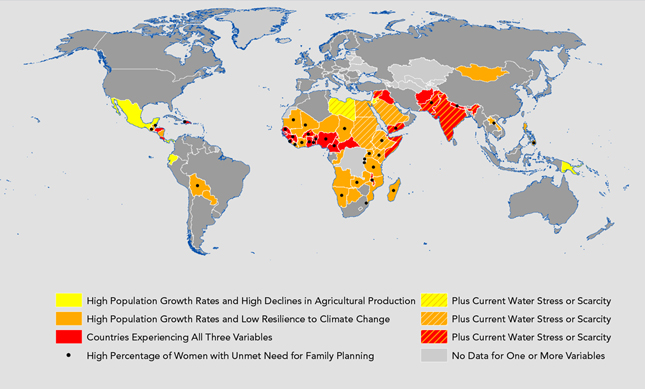
    In late May, I presented research on population and climate dynamics in hotspots at the Planet Under Pressure conference in London, in a session organized by the Climate and Development Knowledge Network. As we prepare for the Rio+20 Earth Summit in June, I reflect on the roles of population dynamics and climate-compatible development for ensuring a future where we can increase the resilience of the most vulnerable to the impacts of climate change.

    1. Improving our well-being and the future we can have is within our reach: We can take action to improve well-being through specific actions that can produce short term results. This is a key message encapsulated in the concept of climate-compatible development, reflected in many presentations and discussions that I heard at Planet Under Pressure. Even though others were not calling it “climate-compatible development,” the essence and the meaning behind the research was the same – small concrete discrete steps are possible, and taking action on population dynamics is one of them.
    2. Population is on the agenda: Population issues – growth, density, distribution, aging, gender – were a constant at Planet Under Pressure – and in more ways than just looking at population as a driver. It is clear that there is interest, and a need, to address population as a key component of climate-compatible development.
    3. But those concerns and issues must be location specific, and must be contextualized for the policy and programmatic environment: Population issues must be framed in the appropriate context – and must move beyond academic exploration. I attended one session where a paper presented an academic supposition of whether we should invest in consumption versus fertility reduction to produce short-term returns for climate, but the analysis was completely devoid of any political, policy, or programmatic truth-testing. We must factor in those considerations when making recommendations, if ultimately we are really looking to make the difference that we can.
    Continue reading on CDKN.

    Photo Credit: “Urbanization in Asia,” courtesy of United Nations Photo.
    MORE
  • Michael Kugelman, AfPak Channel

    Pakistan’s Climate Change Challenge

    ›
    May 11, 2012  //  By Wilson Center Staff

    The original version of this article, by Michael Kugelman, appeared on Foreign Policy’s AfPak Channel.

    Last month, an avalanche on the Siachen glacier in Kashmir killed 124 Pakistani soldiers and 11 civilians. The tragedy has intensified debate about the logic of stationing Pakistani and Indian troops on such inhospitable terrain. And it has also brought attention to Pakistan’s environmental insecurity.

    Siachen is rife with glacial melt; one study concludes the icy peak has retreated nearly two kilometers in less than 20 years. It has also been described as “the world’s highest waste dump.” Much of this waste-generated from soldiers’ food, fuel, and equipment-eventually finds its way to the Indus River Basin, Pakistan’s chief water source.

    Siachen, in fact, serves as a microcosm of Pakistan’s environmental troubles. The nation experiences record-breaking temperatures, torrential rains (nearly 60 percent of Pakistan’s annual rainfall comes from monsoons), drought, and glacial melt (Pakistan’s United Nations representative, Hussain Haroon, contends that glacial recession on Pakistani mountains has increased by 23 percent over the past decade). Experts estimate that about a quarter of Pakistan’s land area and half of its population are vulnerable to climate change-related disasters, and several weeks ago Sindh’s environment minister said that millions of people across the province face “acute environmental threats.”

    Continue reading on the AfPak Channel.

    Sources: Daily Times, Dawn.com, Environment News Service, The Express Tribune, The New York Times, Remote Sensing Technology Center of Japan.

    Photo Credit: “Surveying damage in Pakistan,” courtesy of the U.S. Army.

    MORE
Newer Posts   Older Posts
View full site

Join the Conversation

  • RSS
  • subscribe
  • facebook
  • G+
  • twitter
  • iTunes
  • podomatic
  • youtube
Tweets by NewSecurityBeat

Trending Stories

  • unfccclogo1
  • Pop at COP: Population and Family Planning at the UN Climate Negotiations

Featured Media

Backdraft Podcast

play Backdraft
Podcasts

More »

What You're Saying

  • Volunteers,At,The,Lagos,Food,Bank,Initiative,Outreach,To,Ikotun, Pan-African Response to COVID-19: New Forms of Environmental Peacebuilding Emerge
    Rashida Salifu: Great piece 👍🏾 Africa as a continent has suffered this unfortunate pandemic.But it has also...
  • A desert road near Kuqa An Unholy Trinity: Xinjiang’s Unhealthy Relationship With Coal, Water, and the Quest for Development
    Ismail: It is more historically accurate to refer to Xinjiang as East Turkistan.
  • shutterstock_1779654803 Leverage COVID-19 Data Collection Networks for Environmental Peacebuilding
    Carsten Pran: Thanks for reading! It will be interesting to see how society adapts to droves of new information in...

What We’re Reading

  • Rising rates of food instability in Latin America threaten women and Venezuelan migrants
  • Treetop sensors help Indonesia eavesdrop on forests to cut logging
  • 'Seat at the table': Women's land rights seen as key to climate fight
  • A Surprise in Africa: Air Pollution Falls as Economies Rise
  • Himalayan glacier disaster highlights climate change risks
More »
  • woodrow
  • ecsp
  • RSS Feed
  • YouTube
  • Twitter
  • Facebook
  • Home
  • Who We Are
  • Publications
  • Events
  • Wilson Center
  • Contact Us
  • Print Friendly Page

© Copyright 2007-2021. Environmental Change and Security Program.

Woodrow Wilson International Center for Scholars. All rights reserved.

Developed by Vico Rock Media

Environmental Change and Security Program

Woodrow Wilson International Center for Scholars

Ronald Reagan Building and International Trade Center

  • One Woodrow Wilson Plaza
  • 1300 Pennsylvania Ave., NW
  • Washington, DC 20004-3027

T 202-691-4000