Showing posts from category development.
-
Barbara Crossette on UNFPA State of the World Population 2010 Report
› “Particularly when you go into a society that’s been broken by war or conflict or is so impoverished that is has nowhere to start climbing up, there have to be integrated programs and they have to work with people in mind,” said former New York Times foreign correspondent Barbara Crossette in an interview with The New Security Beat. “The people themselves will solve a lot of the problems around them if they’re just given the tools to do so.”
Crossette is one of the lead authors of the UN Population Fund’s latest State of the World Population Report, “From Conflict and Crisis to Renewal: Generations of Change,” set to launch this Wednesday, October 20th. She spoke to us particularly about the challenges of women around the world and the unique storytelling aspect of this year’s report.
The “Pop Audio” series offers brief clips from ECSP’s conversations with experts around the world, sharing analysis and promoting dialogue on population-related issues. Also available on iTunes. -
Gayle Tzemach Lemmon, Council on Foreign Relations
MDGs for Women Largely Unmet
›October 15, 2010 // By Wilson Center Staff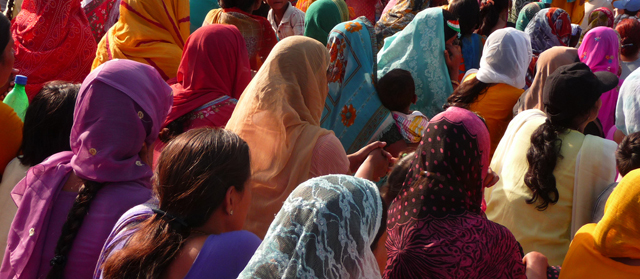
Excerpt from a First Take by Gayle Tzemach Lemmon at the Council on Foreign Relations:
Ten years after global leaders vowed to work toward eradicating extreme poverty, achieving universal primary education, reducing child mortality, and more, the eight Millennium Development Goals (MDGs) – particularly those relating to women – remain a distant hope. Though women were a focus of much discussion this week at the MDG summit in New York, the forward movement so far has been discouraging on the two MDGs directly relating to women: “promoting gender equality and empowering women” and “reducing by three-quarters the maternal mortality ratio.”
An MDG report released in June noted that when it comes to women, “progress has been sluggish on all fronts – from education to access to political decision-making.”While progress has been made on girls’ primary school enrollment, only three of ten regions are on track regarding women’s share of paid employment. The figure is even bleaker concerning women’s equal representation in national parliaments.
Data is still being collected, but early figures show the maternal mortality ratio reduction rate is “well short” of the 5.5 percent annual decline required to slash global maternal mortality by the MDGs’ stated 75 percent. Data from 1990 shows 430 maternal deaths per one hundred thousand live births. As of 2008, that figure had dropped only slightly to four hundred deaths per one hundred thousand live births, nowhere near the goal of below 150.
Continue reading at the Council on Foreign Relations.
Photo Credit: Adapted from “Untitled,” courtesy of flickr user :Bron:. -
Welcome Back, Roger-Mark: A Powerful Voice Returns to PHE
›October 13, 2010 // By Geoffrey D. Dabelko“I’m thrilled to be back.” That was the sentiment that Roger-Mark De Souza relayed to me, in his famous lilting baritone, about becoming the new vice president of research and director of the climate program at Population Action International (PAI). De Souza has long been a leading voice on integrated development programs that feature population, health, and environmental (PHE) dimensions. But three years as the Sierra Club’s director of foundations and corporate relations took him away from day-to-day work on these issues.
In his new posts, Roger-Mark will lead PAI’s research team in establishing a strong evidence base and engaging new allies in the effort to support healthier women and families, according to PAI. “Roger-Mark’s diverse research experience makes him an ideal fit for PAI as we undertake critical projects on reproductive health, population and environment issues,” said PAI President and CEO Suzanne Ehlers in a press release.PAI is a research-based advocacy NGO long known for innovative work connecting demographic considerations with other key development realms: mainly environment, security, and poverty. PAI’s policy-friendly briefs on population’s links with water, forests, and biodiversity provide practical meta-analysis of these complex and evolving connections. The organization’s more recent work on demographic security has been instrumental in advancing research and policy in that largely neglected arena.
De Souza captured his insights last year for our Focus series, in his brief, “The Integration Imperative – How to Improve Development Programs by Linking Population, Health, and Environment” (see also his follow-up interview on NSB). He combines lessons learned from community-based development efforts in Southeast Asia and East Africa with a savvy sense of the policy debates among donors and recipient countries alike.
This move reunites De Souza with Kathleen Mogelgaard, with whom he made key contributions to the PHE field as colleagues at Population Reference Bureau earlier this decade, and who is now Senior Advisor for Population, Gender, and Climate at PAI.
De Souza returns to his former focus on PHE issues at a time when the field is collectively searching for the best ways to respond to the challenges of climate mitigation and adaptation, as well as ongoing hurdles such as scaling up, sustainability, and labeling. -
The “Condom King” speaks at TEDxChange on Poverty Reduction and a “9th MDG”
›“We have now found the weapon of mass protection,” said Mechai Viravaidya (a.k.a. the “Condom King”) at the recent TEDxChange event in New York. Viravaidya is the founder and chairman of the Population and Community Development Association and a former senator of Thailand. He spoke about his innovative approaches to addressing Thailand’s once high rates of poverty, child mortality, and HIV through the promotion of family planning and condom use.
-
Rare Earths Wake-Up, Aid Shocks, and the “Securitization” Distraction
›October 8, 2010 // By Geoffrey D. DabelkoHere are some useful links to environment, population, and security work that recently crossed my desk.
• China’s willingness to cut exports of rare earth elements to Japan over its East China Sea dispute woke up the larger world to the heavy dependency on China for supplying these key inputs into the modern (and green, in particular) industrial economy. Chinese attempts to take back their shot across the bow are bound to fail, as illustrated by U.S. Commerce Secretary Gary Locke’s call for the G20 to guarantee rare earth access, Wednesday at the Wilson Center.
• The National Geographic headline, “Replacing Oil Addiction With Metals Dependence?” raises another key long-term question, explored in detail on NSB in several previous posts.• “Aid Shocks Likely Cause Armed Conflict,” is the provocative title on a post from the new blog AidData. The post summarizes a forthcoming scholarly piece in the American Political Science Review that suggests cutting-off foreign assistance (what the author team calls an “aid shock”) significantly increases the likelihood of violent conflict.
• Dan Smith, Secretary-General of the UK-based NGO International Alert, has multiple nuggets in his latest riff, “From the UK gov’t, a good message on development and peace.” Like the Global Dashboard post I mentioned last week, Smith uses the recent speech by UK Development Secretary Andrew Mitchell as his foil. The MDGs aren’t the sum total of development and a new narrative is needed. “Securitization” is a distraction that should be put to rest, and integration and focus on conflict-affected countries are the centerpiece of a welcome new narrative coming out of London.
• Finally, Wilson Center President and Director Lee Hamilton is stepping down this fall after twelve years heading the Center. His time at the Center comes after 34 years as a Congressman from Indiana. Lee’s departure has engendered numerous profiles; this one in Foreign Policy is one of the best. -
Google Data Maps Development Indicators
›If you have not had the (purely wonky) pleasure of playing with Google’s Public Data Explorer, do yourself a favor and direct your browser there now.
Born from Hans Rosling’s Gapminder, Google’s data explorer currently allows the user to choose from 24 different data sets, including information from the World Bank, U.S. Census Bureau, Eurostat, and Energy Information Agency. Users can then customize the dataset’s variables, save their work, and even embed the resulting chart, “unveiling the beauty of statistics for a fact-based world view,” as the Gapminder site puts it.
The example dataset above uses development indicators from the World Bank to show areas of the world where high fertility rate and heavy reliance on subsistence agriculture have persisted over time. It’s worth noting that many of the countries in the upper right of the graph are also where we find persistent conflict, and, if one accepts the predictions that Africa will see some of the most profound effects of climate change, they also face real risk of continuing instability as declining crop yields threaten livelihoods and population growth continues. -
India’s Threat From Within
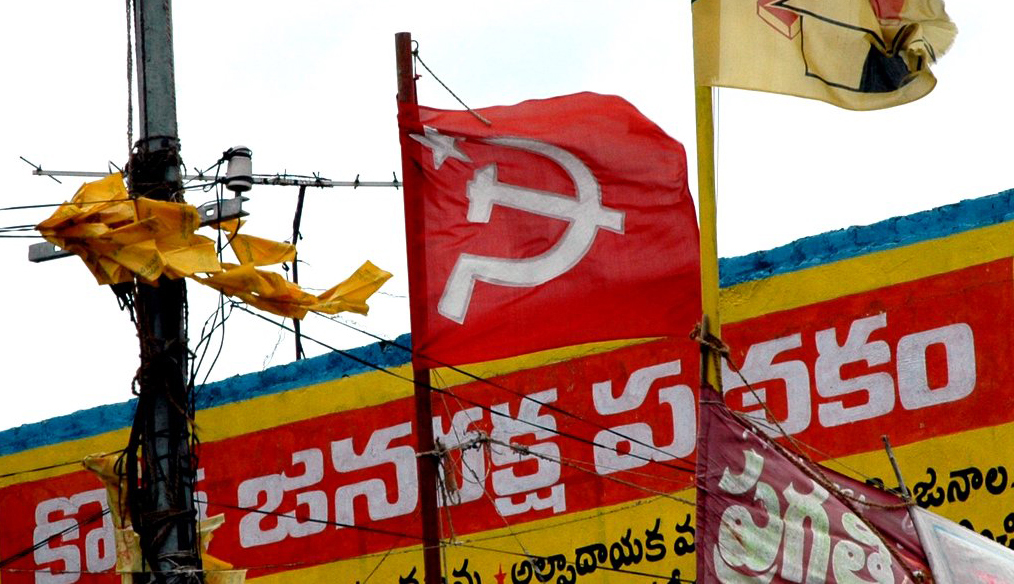
›Once a modest pro-peasant movement, India’s Maoist (or Naxalite) insurgency has become what New Delhi describes as the nation’s biggest internal security threat. The insurgency has spread to 20 of India’s 29 states, and across more than a third of the country’s 626 districts, most of them in the impoverished east. Earlier this summer, the Woodrow Wilson Center’s Asia Program, with assistance from the Environmental Change and Security Program, hosted, “The ‘Gravest Threat’ to Internal Security: India’s Maoist Insurgency,” to examine the insurgency’s main drivers, identify its prime tactics and strategies, and consider the best ways to respond.
Same Insurgency, Different Motivations
P.V. Ramana, a research fellow at the New Delhi-based Institute for Defense Studies and Analyses, discussed the motivations that draw people to the insurgency. Some people are aggrieved by the resource exploitations they witness in their villages. Others join the Maoist cause because of the “high-handedness” of Indian security forces. Still others do so because family members are already in the movement.
Ramana underscored a “serious disconnect” at play — people have such varied reasons for joining the insurgency, yet top Maoist leaders are inspired by one sole motivation: capturing political power. Ramana also highlighted the “increasing militarization” of the insurgency. Maoists have amassed an immense arsenal of weaponry, from “crude” tools to more sophisticated weapons such as rocket launchers and landmines. Their attacks increasingly target not only government security forces, but also national infrastructure such as power lines and railways.
Andhra Pradesh: Leading By Example
K. Srinivas Reddy, a Hyderabad-based deputy editor for The Hindu, offered a case study of the insurgency in his home state, Andhra Pradesh (AP), in southeastern India. He noted that New Delhi’s response to the insurgency in AP is often cited as a success story. This response, according to Reddy, can be attributed to an “attitudinal change” within the security ranks. From the 1970s through the mid-1990s — a period of mass Maoist recruitment and escalating insurgent violence — New Delhi’s counterinsurgency measures had been “panicky,” haphazard, and reactive, Reddy said. The “turning point” came in 1996, when a new “unity of thought” emerged within the government that emphasized better training of security forces, stronger intelligence, and greater attention to economic development. Later in the 1990s, security forces further softened their strategies and tactics, emphasizing “problem-solving rather than hunting Naxals.” As a result, in the early 2000s, popular support for Maoists in AP began to wane.
Is the Government Also to Blame?
Nandini Sundar, a professor of sociology at Delhi University, focused on the human impact of both the insurgency and the government’s response. Much of her presentation centered around Bastar, a sparsely populated, heavily forested, mineral-rich district of Chhattisgarh state — one of the areas hardest-hit by the insurgency. Maoist “entrenchment” is strong, she argued, because locals are treated so dreadfully by the government. “Very poor people are jailed” for committing minor forestry transgressions, Sundar explained, while “powerful people” get away with large-scale offenses. Additionally, the police are deeply unpopular and “a source of repression.” They also regularly rape women and extort money, she said.
Sundar identified and condemned a raft of repressive government policies — from throwing locals off their land to commandeering schools — and insisted that such repression constitutes the prime reason for recruitment to the insurgency. “Injustice more than inequality” explains why people join the Maoists, she said.
The panel was far from sanguine about the future. Ramana contended that immediate prospects for peace talks between the government and the Maoists are slim, and that civil society has been “quiet” and has offered little assistance. While he predicted that some sort of resolution could be reached in “7 to 10 years,” Sundar countered that the harsh nature of New Delhi’s response means that 7 to 10 years “could finish off” not just the Maoists, but also village populations.
Compounding the challenge is what Sundar described as “official contempt” toward the culture of the Adivasi, the tribal peoples of India whose homeland comprises the insurgency’s epicenter. Dehumanizing, anti-adivasi language from the government enables New Delhi to justify the waging of forceful counterinsurgency, Sundar argued.
Glimmers of Hope
Several speakers, however, gave reasons to be guardedly optimistic about the Maoist issue. Pointing to Maoist strategies in Andhra Pradesh, Reddy suggested that the insurgency’s poor policies could spell its demise. Maoists in this state chose to escalate violence, but their inability to spread their ideology along with this violence has cost them public support, particularly in urban areas. (A recent survey by The Times of India actually found that 58 percent of those in AP think Naxalism has been good for the area – a devastating poll for those in the government who thought they were winning there – Ed.)
Sundar, meanwhile, noted that much good would come out of simply implementing long-dormant constitutional protections for the rural poor in Maoist-affected areas. This, she concluded, would reflect rights-based development, which is necessary for success — as opposed to development based on “hand-outs” by the elite, which is destined to fail.
Michael Kugelman is a program associate with the Woodrow Wilson Center’s Asia Program.
For more on the resource conflict aspect of the insurgency see The New Security Beat’s, “India’s Maoists: South Asia’s ‘Other’ Insurgency.”
Sources: BBC, Foreign Policy, Times of India.
Photo Credit: Adapted from “CPI Flag (Andhra Pradesh),” courtesy of flickr user Shreyans Bhansali. -
Latin America’s Future: Emerging Trends in Economic Growth and Environmental Protection
›Economic development and environmental sustainability in Latin America and the Caribbean are intrinsically connected, as evidenced by a seminar this summer organized by the Woodrow Wilson Center’s Brazil Institute (on behalf of the Latin American Program), and co-sponsored by the U.S. Agency for International Development (USAID). The seminar — the culmination of six workshops and a regional meeting in Panama — presented the new Wilson Center report Emerging Trends in Environment and Economic Growth in Latin America and the Caribbean (also available in Portuguese and Spanish), which identifies key trends likely to shape the economy and natural environment in Latin America and the Caribbean over the next 10 years.
Janet Ballantyne, acting deputy assistant administrator of USAID’s Latin America and the Caribbean Bureau, stated that Latin America is “not our backyard, it’s our front yard.” It’s time that we “open the front door,” she claimed, and address the issues facing Latin America — issues that have long-term consequences for not only the region, but the United States and the world as well.
A Broad Range of Challenges
Christine Pendzich, principal author of the report and technical adviser on climate change and clean energy to USAID, covered the five interrelated economic and environmental trends that the report discusses: climate change, clean energy, indigenous and minority issues, challenges facing small economies, and urban issues. To capitalize on the Latin American demographic transition that will soon result in a large number of working age adults, Pendzich argued that the region needs to increase skilled job creation, educate workers to fill those positions, and maintain economic stability. She also declared that recent climate change trends are a “game changer,” which can fundamentally alter development paths.
While closer economic ties with China have contributed to Latin America’s above-average recovery from the global economic downturn, Pendzich argued that this economic relationship could add to the social and environmental problems facing the region. She added that insufficient innovation could lead to the continuation of the region’s dependence on commodity exports, while also noting that the inadequate economic integration and educational opportunities for indigenous and minority groups “drags everyone down.”
In terms of the regional economic trends, Eric Olson, co-author of the report and senior associate of the Mexico Institute, highlighted six challenges and opportunities for Latin America and the Caribbean. Olson claimed that the recovery of the global economy will hurt net importers of fossil fuels, especially in Central America and the Caribbean; have a negative impact on the environment; increase natural resource exploitation that may exacerbate inequality and social conflict; increase demand for primary products that will decrease the incentive to diversify Latin American economies; provide opportunities to promote environmentally friendly growth; and allow for increased utilization of existing trade benefits and intra- and sub-regional trade opportunities.
Recognizing the Need for an Integrated Response
Three of the 77 participants involved in the formation of the report explored in greater depth what Geoffrey Dabelko with the Environmental Change and Security Program described as the “integration and interconnectivity” of the five trends discussed in the report. Blair Ruble, chair of the Comparative Urban Studies Project, noted that with 78 percent of the Latin American population living in urban areas, “cities and urban life create a context in which there are opportunities for solutions to problems,” opportunities that can be used to further innovation, encourage social equality, and promote good governance.
Meanwhile, working with rural indigenous communities and minority groups can also provide valuable opportunities for change, specifically in the area of climate change, according to Judith Morrison, senior adviser at the Inter-American Development Bank’s Gender and Diversity Unit. Morrison argued that indigenous populations are the ones most affected by climate change, but also the most able to improve environmental stewardship as a result of their unique knowledge of the local geography.
Maria Carmen Lemos, associate professor at the University of Michigan, highlighted that vulnerability to climate change depends on two sets of factors: geographical location and socioeconomic factors. As a result, Lemos asserted that climate-change adaption measures must focus on poverty reduction as well as the vulnerability of specific geographic locations.
Julie L. Kunen, senior adviser to the Bureau of Policy, Planning, and Learning at USAID, applauded the report for its cross-trend analysis and called the development community to work together to address these trends in the Latin American and Caribbean region. The next step, Kunen claimed, must be to develop an ambitious strategy and “convene everyone who cares about the issues and rally them around the agenda.”
Elizabeth Pierson is an intern with the Brazil Institute at the Woodrow Wilson Center.
Photo Credit: “The River Runs Through the Andes,” courtesy of flickr user Stuck in Customs.