Showing posts from category development.
-
Climate-Proofing Development: An Interview With Karen Hardee
›November 29, 2010 // By Hannah Marqusee
While expectations are deflated for broad international consensus at the UN Climate Change Convention in Cancun, the need to “climate-proof” development efforts has been gaining ground in recent years as a necessary preventative measure to help developing countries adapt to the adverse effects of climate change.
-
PRB’s Jay Gribble at Kenya’s National Leaders Conference on Population and Development
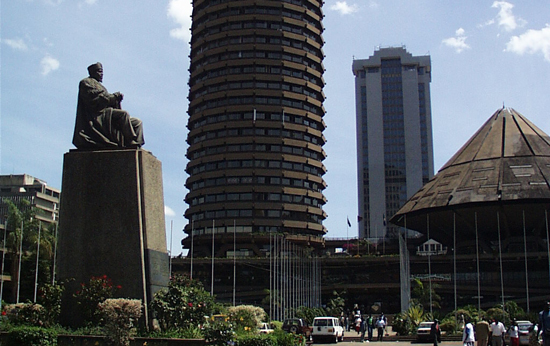
›November 29, 2010 // By Wilson Center StaffJay Gribble, vice president of International Programs at the Population Reference Bureau (PRB), recently attended the Kenya National Leaders Conference on Population and Development, November 15-17, at the Kenyatta International Conference Center in Nairobi. During the conference, he produced a series of posts for PRB’s Behind the Numbers on some of his impressions. Gribble focuses on Kenya’s resurgent interest in integrating population issues into the development agenda, the country’s ongoing HIV/AIDS epidemic, and the importance of family planning.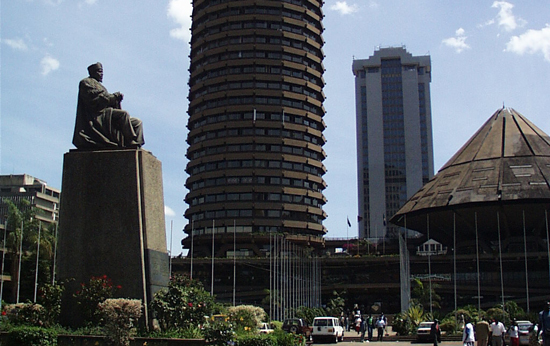
Below are the introductory excerpts from his posts; to read the full posts, please visit Behind the Numbers.
“Anticipating Change in Kenya”
Sitting in the hall where Kenya’s National Leaders Conference will be starting in a few minutes, I can’t help but feel that there is an opportunity to refocus national attention to development…to the goal that I have heard repeatedly of becoming a Middle Income country. And to achieve this goal, they must first recognize that population is an underpinning development issue that cannot be ignored.
In the 1980s and 1990s, Kenya was a leader in reproductive health and maternal health, really setting a pace for the continent. But during the 2000s, Kenya turned its attention to other pressing issues – namely HIV/AIDS – and began to give less attention to population issues. Though HIV continues to be a plague, it is now time to return to the importance of slowing population growth, for until this fundamental issues is addressed, there will be less opportunity for education, jobs, and better health. At the same time, as a predominantly rural country with agriculture representing a major part of the economy, smaller families will be critical to maintaining farms that are large enough to feed families and the country.
Continue on PRB.
“As the Rich Get Richer, the Poor Get Children”
The Kenya National Leaders Conference has begun, representing the first time since 1989 that Kenya’s national population policy has been discussed in a large, open forum. With a new national constitution, Kenya is poised to redress many of the social and economic inequalities that have stood in the way of its development. In fact, the current population policy expires in December, 2010, and one of the purposes of this conference is to gather the input from leaders throughout the country on how a new policy should be framed. I find it impressive that such a large conference is convened to ensure that a new policy reflects the needs of the nation. The conference is also a forum for reaching leaders with important information about the need to address population growth through family planning if Kenya is to achieve its Vision 2030 development plan.
Continue on PRB.
“In Kenya, Prioritizing Population…and Family Planning”
As Kenya’s National Leaders Conference on Population and Development winds down today, it offers leaders an opportunity not only to think and talk about how population growth is an issue that underlies the country’s development, but to act on it too. Whether thinking about business, agriculture, or the environment, it is impossible to be strategic about Kenya’s future without also considering how rapid population growth will affect it.
In talking with Kenyans who grew up in the 1970s and 1980s – back when family planning and population growth were a priority – they remember the messages that were at the tips of people’s tongues – smaller families live better. Before the HIV/AIDS epidemic, family planning and slowing population growth was a priority and a source of national pride because it put Kenya on track for prosperity and development.
Continue on PRB.
Photo Credit: Adapted from “King Kenyatta?” courtesy of flickr user rogiro. -
Watch: Blue Ventures PHE Program in Madagascar
›“All conservation efforts will be in vain if family planning issues aren’t addressed,” says Rebecca Hill, project manager for the Sexual and Reproductive Health Programme at Blue Ventures in a video highlighting their population, health, and environment (PHE) programming in Madagascar.
While primarily a marine conservation group, Blue Ventures also recognizes the need for integrating population into their efforts. They began a family planning program in southwestern Madagascar in 2008 as part of a “holistic approach to conservation.” The project aims to address the high unmet need for family planning, high fertility and maternal and infant mortality, and conserve the coastal environment. “We are directly saving lives,” Hill says.
Rapid population growth is creating an unsustainable strain on natural resources, as Matthew Erdman of Blue Ventures wrote in a previous post on The New Security Beat:The average total fertility rate in Velondriake is 6.7 children per woman, according to our data. On average women are only 15 years old when they first conceive. To compound this problem, a majority of the population is under the age of 15 – at or approaching reproductive age. At the current growth rate, the local population will double in only 10 to 15 years. The local food sources, already heavily depleted, barely feed the current population, let alone twice that amount. Without enabling these coastal communities to stabilize their population growth, efforts to improve the state of marine resources and the community’s food security are considerably hindered.
Hill describes the situation in the village when she joined the Blue Ventures in 2008 as “alarming,” with women “having up to 17 children despite not wanting children.” Many people in the town had never heard of condoms and had no idea how to use them, she said, and “they are desperate to have access to contraception.”
Today, the initial family planning program has been scaled up to the surrounding region and generated significant community involvement by peer educators teaching community members about sexual and reproductive health. It’s also become the first PHE project to receive support from the UNFPA within Madagascar.
There are currently 18 community-based distributors who give out two types of contraception in their villages. The fact that the community has so fully embraced the project shows that it can be replicated elsewhere, says Hill in the video. “Communities themselves have harnessed the ideas and consider that what we’re doing is vitally important.”
“Addressing family planning needs and issues is inextricably linked with conservation issues,” says Hill. “All conservation efforts will be in vain, if family planning issues are not addressed.”
Video Credit: Blue Ventures Family Planning Project from Alexander Goodman on Vimeo. -
Robert Walker on Family Planning Promotion and Global Population Growth
›“Expanding voluntary family planning access and ensuring that all women have access to reproductive health services is, to me at least, a no brainer,” said the Population Institute’s Robert Walker in this interview with ECSP. “I think it’s a win for women, for their health, for their welfare, the welfare of their families, for their communities, for the environment, and for the planet at large.”
While China and India dominate much of the global headlines about population growth, other parts of South Asia – namely Afghanistan and Pakistan – and sub-Saharan Africa receive comparatively little attention. For Walker, a renewed global effort to boost the quality and quantity of reproductive healthcare tools and services in these areas of the developing world is essential.
“This is very, very doable. We face a lot of really incredible challenges in the world today, particularly with respect to food, energy, water, and poverty. But if we can increase what we spend on international family planning assistance by three or four billion dollars a year, we can literally change the world,” Walker said. “And I think we desperately need to.”
The “Pop Audio” series is also available as podcasts on iTunes. -
Colin Kahl on Demography, Scarcity, and the “Intervening Variables” of Conflict
›“One of the major lessons of 9/11 is that even superpowers can be vulnerable to the grievances emanating from failed and failing states,” said Colin Kahl, now deputy assistant secretary of defense for the Middle East, at an ECSP event at the Wilson Center in October 2007. However, “if poverty and inequality were enough to lead to widespread civil strife, the entire world would be on fire.”
“I think any in-depth examination of particular cases shows that there’s a complex interaction between demographic pressures, environmental degradation and scarcity, and structural and economic scarcities – that they tend to interact and reinforce one another in a kind of vicious circle,” Kahl said.
“It’s really important to keep in mind that any attempt to address…environmental and demographic factors should focus not just on preventing environmental degradation, or slowing population growth, or increasing public health. They must also focus on those intervening variables in the middle that make certain societies and countries more resilient in the face of crisis.”
The “Pop Audio” series is also available as podcasts on iTunes. -
Disease in the Developing World
Poverty, Politics, and Pollution
›November 15, 2010 // By Ramona GodboleA look at the most common illnesses that kill people in the developing world reveals, for the most part, easily preventable and/or treatable diseases and conditions, highlighting the deep disparities between health systems in rich and poor countries. But many of the causes and solutions to these common diseases are also linked to political and environmental factors as well as economic.
Cholera: “A disease of poverty”
Ten months after the earthquake that killed more than 230,000 people, Haiti is facing yet another disaster – a cholera outbreak. The current health crisis highlights broader structural and political issues that have plagued Haiti for years.
Cholera, an intestinal infection caused by bacteria-contaminated food or water, causes severe diarrhea and dehydration, but with quick and effective treatment, less than one percent of symptomatic people die according to the World Health Organization. According to BBC, as of November 15, more than 14,000 people have been hospitalized and over 900 deaths have been attributed to cholera in Haiti thus far.
Even before the earthquake, conditions in Haiti, the poorest country in the Western hemisphere, were bleak. The country has very high maternal and child mortality rates (again, highest in the Western hemisphere), and is in the midst of an ongoing environmental crisis, due to deforestation, soil loss, and flooding.
Less than 40 percent of the Haitian population has access to appropriate sanitation facilities and clean water is scarce, according to UNICEF. Displacement, rapid population growth, and destroyed infrastructure in the wake of the earthquake exacerbated already poor conditions and public health officials warned of the increased risk of cholera and other diarrheal diseases after the disaster.
Today these fears have become reality. While public health messages urging Haitians to wash their hands, boil drinking water, and use oral rehydration salts are working to control the current outbreak, long-term solutions to prevent future outbreaks will require much more systematic changes.
As Partners in Health Chief Medical Officer Joia Mukherjee puts it, cholera is “a disease of poverty.” Citing a joint report from Partners in Health and the Robert Kennedy Center for Human Rights, Mukherjee notes that in 2000, loans from the Inter-American Development Bank to improve water, sanitation, and health (including the public water supply in the Artibonite Valley, where the cholera outbreak originated) were blocked for political reasons by the U.S. government, in an effort to destabilize former President Aristide.
The failure of the international community to assist Haiti in developing a safe water supply, writes Mukherjee, has been a violation of the basic human right to water. To halt the current cholera epidemic and prevent future outbreaks, providing water security must become a priority in the reconstruction efforts of the international community.
Politics and Polio
Recent reports have indicated that the global incidence of polio, a highly infectious, crippling, and potentially fatal virus, is significantly declining and a new vaccine is renewing hopes of eradication. Nigeria, one of the few countries where polio continues to be endemic, has also made major progress over the last few years.
But the situation was very different just a few years ago. In 2003 religious and political leaders in Northern Nigeria banned federally sponsored polio immunization campaigns, citing “evidence” that the polio vaccine was contaminated with anti-fertility drugs intended to sterilize Nigerian women. The boycott led to an outbreak of the disease that spread to 20 countries and caused 80 percent of the world’s cases of polio during the length of the ban, according to a study in Health Affairs.
While the boycott was eventually stopped through the combined efforts of local, national, and pressure, the boycott serves as a useful reminder that global health problems can have political, rather than biological or behavioral, origins.
Combating Climate Change and Pneumonia
Studies from the World Health Organization indicate that exposure to unprocessed solid fuels increases pneumonia risk in children by a factor of 1.8, but today more than three billion people globally continue to depend on coal and biomass fuels for their cooking and heating needs.
Cooking and heating with these fuels creates levels of indoor air pollution that are up to 20 times higher than accepted WHO guidelines, putting people at considerable risk for lower respiratory infections. Women, who are often responsible for collecting fuel and performing household tasks like cooking, and their children, are particularly at risk. Today, exposure to indoor air pollution is responsible for 1.6 million deaths globally including more than 900,000 of the two million annual deaths from pneumonia in children under five years old, representing the most important cause of death in this age group.
A recent study from The Lancet shows improved cooking stoves could simultaneously reduce greenhouse gas emissions and the global burden of disease caused by indoor air pollution in developing countries. Such an intervention, the authors argue, could have substantial benefits for acute lower respiratory infection in children, chronic obstructive pulmonary disease, and ischemic heart disease. The potential health benefits don’t stop there: fuel-efficient stoves can also improve the security of women and children in conflict zones and decrease the risk of burns while improving local air quality.
There would be significant environmental benefits as well. A World Wildlife Fund project in Nepal, which provided loans to purchase biogas units and build improved cookstoves, curbed deforestation for firewood and grazing as well as reduced the incidence of severe cases of acute respiratory infection among under-five children.
Overall, greater access to modern cooking fuels and improved cooking stoves in the developing world could both mitigate climate change and make significant contributions to MDGs 4 & 5, which focus on the reduction of child and maternal mortality.
Prescription for Change
The international community’s experience with cholera in Haiti, polio in Nigeria, and pneumonia around the world shows that health issues in developing countries rarely occur in a vacuum. As these three cases demonstrate, politics, environmental, and structural issues, for better or worse, play an important role in health affairs in the developing world. Yet efforts to combat these conditions often focus only on prevention and treatment.
Antibiotics and vaccines alone cannot provide solutions to these problems. Employing economic, diplomatic and policy tools to address health and development challenges can save lives. More specifically, public health efforts should not only focus on poverty reduction, but also target environmental, political, and structural issues that contribute to disease globally.
Sources: BBC, Bill and Melinda Gates Foundation, CIA World Factbook, Health Affairs, The Lancet, Scientific American, UNICEF, United Nations, USAID, World Health Organization, and World Wildlife Fund.
Photo Credit: “Lining up for vaccination,” courtesy of flickr user hdptcar. -
John Bongaarts on the Impacts of Demographic Change in the Developing World
›“The UN projects about 9.1 billion people by 2050, and then population growth will likely level off around 9.5 billion later in the century. Can the planet handle 9 billion? The answer is probably yes. Is it a desirable trajectory? The answer is no,” said John Bongaarts, vice president of the Policy Research Division at the Population Council, in this interview with ECSP.
Although family planning was largely brushed aside by international policymakers following the 1994 UN International Conference on Population and Development in Cairo, Bongaarts said he is hopeful because it is now enjoying a higher profile globally – and receiving greater funding.
“I am optimistic about the understanding now, both in developing and developed world, and in the donor community, that [family planning] is an important issue that should be getting more attention,” Bongaarts said. “And therefore I think the chances of ending up with a positive demographic outlook are now larger than they were a few years ago.”
The “Pop Audio” series is also available as podcasts on iTunes. -
The Ultimate Weapon Is No Weapon: Human Security and the New Rules of War and Peace
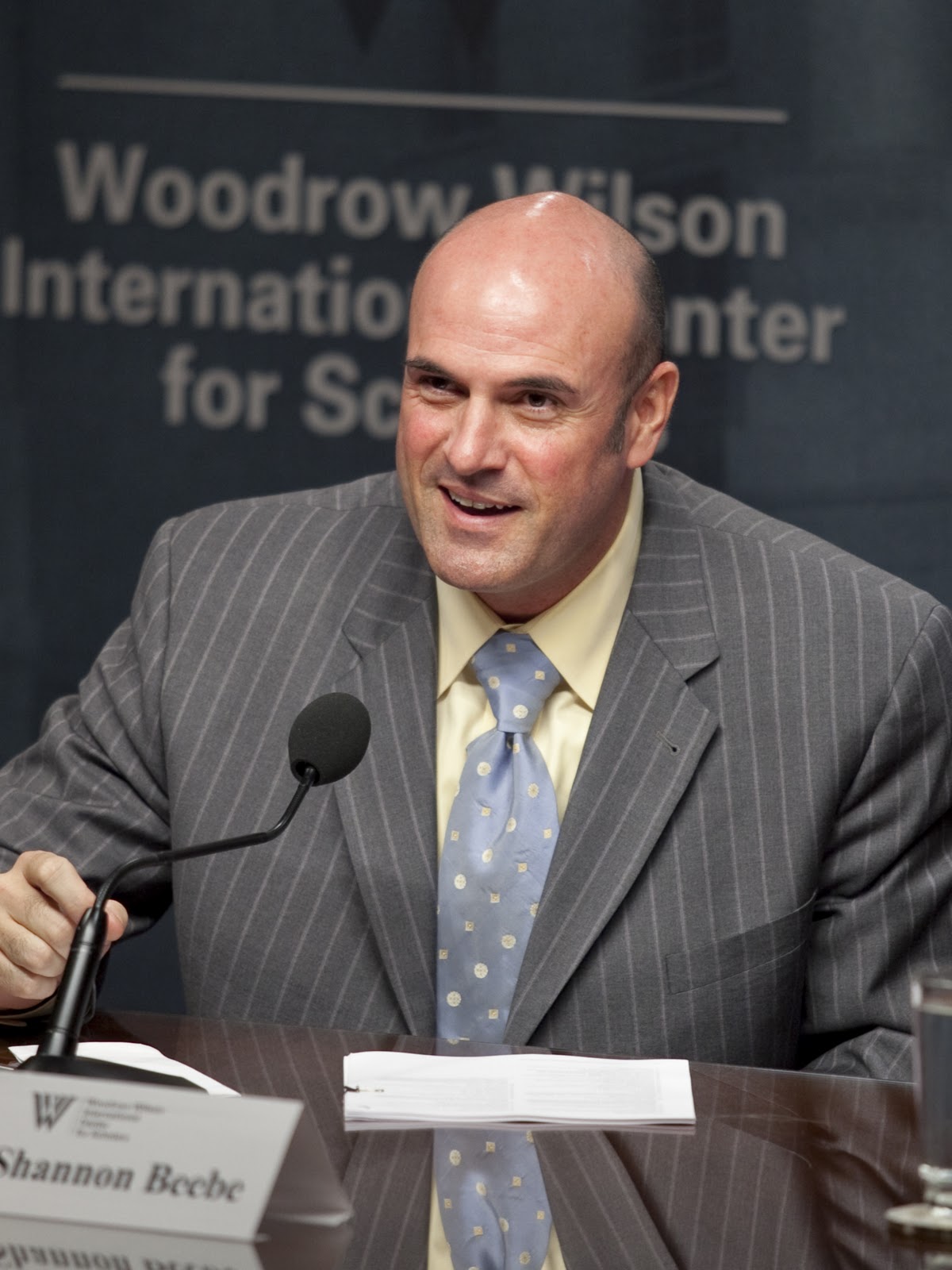
›To understand the security concerns of the developing world, we must understand that lack of institutional capacity has created a “house of cards,” said U.S. Army Lieutenant Colonel Shannon Beebe, speaking at the Wilson Center on October 19. “When that card gets pulled out, the house is going to fall.”
Beebe, a senior Africa analyst for the Department of Defense, and Mary Kaldor, professor at the London School of Economics and Political Science, discussed their new book, The Ultimate Weapon is No Weapon: Human Security and the New Rules of War and Peace, in which they argue for a broader conception of human security. “The world is suffering from a lack of a security narrative,” said Beebe.
“The ultimate weapon is not the F-22,” said Kaldor, “it is a change of mindset.”
Creating Pirates: Threats vs. Vulnerabilities
“What happens when a man is already a fisherman and you take all his fish away? You create a pirate,” said Beebe. The environmental and human security threat of overfishing in Somalia was not taken seriously as a security threat until it was left unchecked for 20 years and developed into a “real kinetic threat” of piracy, he said.Beebe spent a year interviewing 80 to 90 Africans in 13 countries, including military leaders, academics, NGO leaders, and even Somali cabdrivers in the United States, about how they view their security. “What came back was resounding, sobering, and confusing,” said Beebe. Amongst those interviewed, few expressed traditional “kinetic” security concerns stemming from physical threats. Instead it was the “conditions-based vulnerabilities” — such as poverty, health, water and sanitation, gender equality, and climate change — that were identified as primary security threats.
“Until we stop giving Africans and the developing world our definition of what is right for their security and start listening to what they are saying is relevant to their security, we are going to continue to marginalize ourselves,” Beebe said.
Filling The Security Gap
There is currently “a profound security gap,” Kaldor said, and a failure to meet the diverse needs and root causes of violence in much of the developing world. Filling the security void has been an array of both good and bad actors – NGOs, humanitarian agencies, militias, and warlords. If we do not adapt our own security strategies to fill this gap, “it will be filled by someone [else],” Beebe warned.
Human security must be incorporated into our security narrative, Beebe and Kaldor argue in their book, which means addressing the security needs of individuals and communities, not just the state. It also involves protection from violence, material deprivation, and natural disasters. They advocate for more robust global emergency forces that would act as a global national guard or police force.
Integrating Human SecurityPromoting the rule of law domestically and shifting interventions “from a war paradigm to a law paradigm” is crucial, said Kaldor. Furthermore, we must change our mindset so that we value the lives of those in foreign countries as highly as we value American or European lives. “You can’t bomb your own people,” she said.
Our greatest challenge, Beebe explained, is to shift our language from “siloed approaches” to create an interconnected, coherent security narrative. Beebe cited former General Anthony Zinni’s UMC (Ret.) incorporation of environmental security into U.S. Central Command (CENTCOM) strategy during his tenure in the late 1990s as evidence of the possible success of integrated approaches. More recently, the Belgian High Command adopted a human security policy, said Kaldor.
While human security is already being taken into account on the ground, “it is very much organic, rather than institutionalized…we understand that there is an imperative but again it is the security narrative that is lacking,” said Beebe. Only by engaging with individuals and taking their needs into account with a more comprehensive security narrative can we foster lasting and sustainable security, he said.
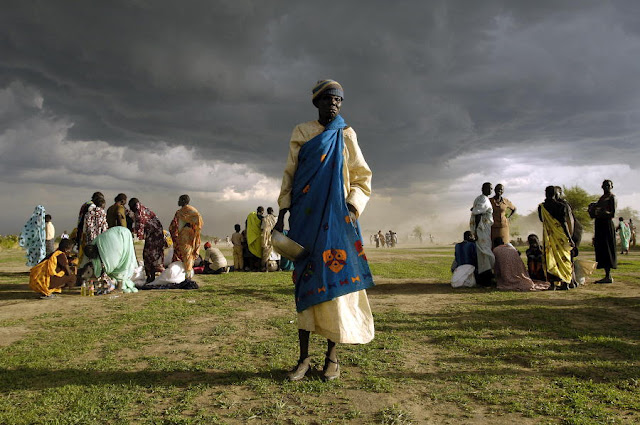
Photo Credit: “Elderly Woman Receives Emergency Food Aid,” courtesy of flickr user United Nations Photo.