Showing posts from category development.
-
Irene Kitzantides
In FOCUS Coffee and Community: Combining Agribusiness and Health in Rwanda
›June 29, 2011 // By Wilson Center StaffDownload FOCUS Issue 22: “Coffee and Community: Combining Agribusiness and Health in Rwanda,” from the Wilson Center.
Rwanda, “the land of a thousand hills,” is also the land of 10 million people, making it the most densely populated country in Africa. Rwandans depend on ever-smaller plots of land for their food and livelihoods, leading to poverty, soil infertility, and food insecurity. Could Rwanda’s burgeoning specialty coffee industry hold the key to the country’s rebirth, reconciliation, and sustainable development?
In the latest issue of ESCP’s FOCUS series, author Irene Kitzantides describes the SPREAD Project’s integration of agribusiness development with community health care and education, including family planning. She outlines the project’s successes and challenges in its efforts to simultaneously improve both the lives and livelihoods of coffee farmers and their families. -
Ecological Tourism and Development in Chi Phat, Cambodia
›Chi Phat is a single-dirt-road town nestled in the Cardamom Mountains of Southwestern Cambodia, one of the largest intact forests in Southeast Asia. The town is only accessible by two routes: a three-hour river boat trip up the Phipot River or, if the road isn’t flooded by the rainy season, an exhilarating 30-minute motorbike ride from Andoung Tuek, a blip on the one paved road that runs along Cambodia’s southwestern border. Since 2007, Wildlife Alliance has been running an ecotourism project in Chi Phat (full disclosure: I used to work for Wildlife Alliance in Washington, DC).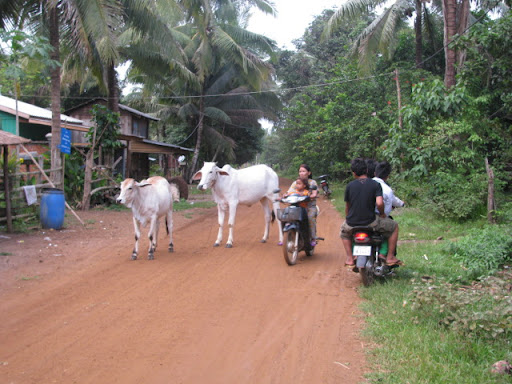
The project has been featured in The New York Times and since its inclusion in the Lonely Planet travel guide, has become a destination for backpackers looking to leave the beaten path. I recently visited the project after spending time in neighboring Vietnam and was struck by the contrast between the densely populated and urbanized Mekong Delta and the visibility of rural poverty in Cambodia.
“Cambodia’s contemporary poverty is largely a legacy of over twenty years of political conflict,” reads a 2006 World Bank Poverty Assessment. The Pol Pot regime’s agrarian collectivization forced millions into the countryside and as a result, even in today’s predominantly-urban world, Cambodia remains 78 percent rural. Today 93 percent of Cambodia’s poor live in rural areas, two thirds of rural people face food shortages, and maternal and reproductive health outcomes in the country lag far behind those in the cities. Chi Phat and the sparsely populated northeast have over ten or twenty times the rate of maternal deaths of Phnom Penh.
A Town Transformed
Before Wildlife Alliance began the Community-Based Ecotourism (CBET) project in Chi Phat, most villagers made a living by slash-and-burn farming, illegal logging, and poaching endangered wildlife. Wildlife Alliance Founder and CEO Suwanna Gauntlett described the ecological zone around the town as “a circle of death,” in an audio interview with New Security Beat last year.Now, Chi Phat is a rapidly growing tourism destination offering treks and bike tours. In 2010 they brought in 1,228 tourists – not huge by any means, but over twice the number from 2009. The town now boasts a micro-credit association, a school, and a health clinic that offers maternal and reproductive health services. The village is also visited by the Kouprey Express, an environmental education-mobile that provides children and teachers with lessons, trainings, and materials on habitat and wildlife protection, pollution prevention, sustainable livelihoods, water quality, waste and sanitation, energy use, climate change, and adaptation.
One villager, Moa Sarun, described to me how he went from poacher and slash-and-burn farmer, to tour guide, and finally, chief accountant:Since I have started working with CBET, I realize that the wildlife and forest can attract a lot of tourists and bring a lot of income to villagers in Chi Phat commune. I feel very regretful for what I have done in the past as the poacher…I know clearly the aim of CBET is to alleviate the poverty of local people in Chi Phat, so I am very happy to see people in Chi Phat have jobs and better livelihoods since the project has established.
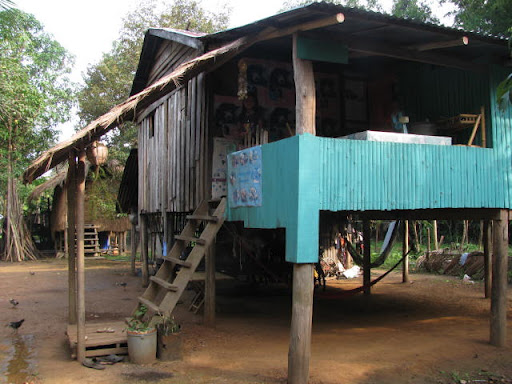
It’s hard to imagine what the town would have looked like before Wildlife Alliance arrived. The visitor center, restaurant, and “pub” (really, a concrete patio with plastic chairs and a cooler filled with beer), together make up nearly half of the town’s establishments. For two dollars a night, I stayed in a homestay and lived as the locals do on a thin mattress under mosquito netting, with a bucket of cold water by the outhouse for a shower, and a car battery if I wanted to use the fan or light (but not both). These amenities place Chi Phat above average for rural Cambodia. According to 2008 World Bank data, only 18 percent of rural areas had access to improved sanitation and only 56 percent had access to an improved water source.
Poaching Persists
Real change has certainly hit Chi Phat, but illegal activities persist, as a Wall Street Journal review of the project noted. In one Wildlife Alliance survey, 95 percent of members participating in the project made less than 80 percent of their previous income and 12 percent of people made less than 50 percent. “That, to me, is a red flag,” Director of U.S. Operations Michael Zwirn acknowledged to me. Nevertheless, he said “it is well documented that it’s the most lucrative community-based ecotourism project in Cambodia. That doesn’t mean that everyone is making money, or that they’re making enough money, but the community is clearly benefiting.”
Harold de Martimprey, Wildlife Alliance’s community-based ecotourism project manager, told me in an email interview:We monitor closely the impact of the CBET project on the diminution of poaching and deforestation. We estimate that since the beginning of the project, the illegal activities have decreased by almost 70 percent.
As Chi Phat ecotourism continues to scale up, de Martimprey expressed hope that more and more villagers would participate in the project and stop destructive livelihoods.
After four years, Chi Phat has already developed enough to operate financially on its own. Wildlife Alliance will stop funding the project later this year and transition it towards total self-sustainability. The plan is to then ramp up efforts at a neighboring project in Trapeang Ruong, due to open to the public next month.
A Land of Opportunity
So far Chi Phat lacks much of what do-gooder tourists are hoping to find when they come in search of ecotourism. There is little to no information about the work of Wildlife Alliance and how ecotourism benefits the town, or the health, education, and economic benefits the villagers have received. A little more obvious justification for ecotourism’s inflated prices might appease the average backpacker used to exploitatively lower prices elsewhere in the country. The guides, staff, and host families for the most part speak little English, which does not bode well for its tourism potential. “This is a work in progress,” said de Martimprey.
Most of my time in Chi Phat, I felt like the only foreigner to ever set foot in the town – refreshing after witnessing much of the rest of Southeast Asia’s crowded backpacker scene. As Chi Phat continues to grow, hopefully it will “bring in enough people to support the community without the adverse effects of tourism,” said Zwirn. “They don’t want it to turn into the Galapagos.” Thankfully, de Martimprey told me, “Chi Phat is far from reaching this limit and can be scaled up to much bigger operation,” without negatively impacting the environment.
Luckily, plans to build a highly destructive titanium mine near the town were recently nixed by Prime Minister Hun Sen in what was an unexpected victory over industrial interests. However, soon after, the town was again under threat – this time by a proposed banana plantation nearby.
“The Cardamom Mountains are still seen as a land of opportunity for economic land concessions for some not-so-green investors looking at buying land for different purposes, and often disregarding the interest of the local people,” said de Martimprey.
Eventually Zwirn hopes that as more tourists come to the Cardamoms, they will become “a constituency for conservation,” he said. “We need to build a worldwide awareness of the Cardamoms as a destination, and as a place worth saving.”
Sources: BBC, IFAD, Phnom Penh Post, New York Times, United Nations, Wall Street Journal, Wildlife Alliance, World Bank, World Wildlife Fund.
Photo Credit: Hannah Marqusee. -
Watch: Demographic Security 101 With Elizabeth Leahy Madsen
›June 27, 2011 // By Schuyler Null“Today we are in an era of unprecedented demographic divergence, with population trends moving simultaneously in different directions. Some countries are beginning to experience population decline, while others continue to grow rapidly,” says Elizabeth Leahy Madsen, formerly the senior research associate at Population Action International (PAI). In this primer video from ECSP, Madsen explains how global demographic trends affect economic development, national security, and foreign policy.
-
Tate Watkins, Short Sentences
Why Fund Both Farm Subsidies and Foreign Aid?
›June 27, 2011 // By Wilson Center StaffThe original version of this article, by Tate Watkins, appeared on the blog Short Sentences.
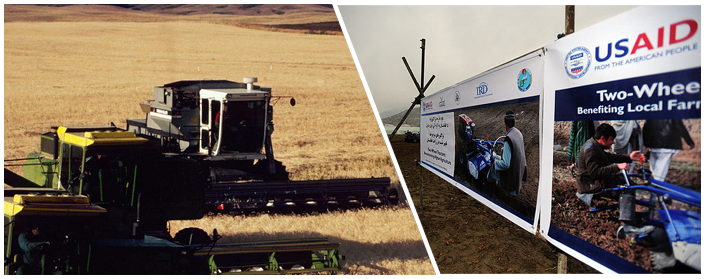
The USDA routinely disburses $10 billion to $30 billion a year in farm subsidies. President Obama has allocated $47 billion for the State Department and USAID for the next fiscal year (not including proposed expenditures for Afghanistan, Iraq, and Pakistan).*
Why does the U.S. simultaneously fund domestic agricultural subsidies and foreign aid? The policies oppose each other. When it comes to promoting development opportunities for farmers around the globe, one of USAID’s ostensible goals, the left hand of the U.S. binds its right.
The origin of agricultural subsidies goes back at least to the first Agricultural Adjustment Act, enacted in 1933 as an attempt to help Depression farmers cope. Today farm interests justify subsidies in name of food security or, since 9/11, national security. But it’s widely acknowledged that the pastoral American family farmer, the image that farm interests present to the American people when the merits of subsidies are debated, do not benefit most from agricultural subsidies. Large corporate farmers do.
Continue reading on Short Sentences.
Photo Credit: Adapted from “YM009180,” courtesy of flickr user tpmartins, and “Badam Bagh Farm,” courtesy of flickr user U.S. Embassy Kabul Afghanistan. -
Scott Wallace, National Geographic
A Death Foretold
›June 23, 2011 // By Wilson Center StaffThe original version of this article, by Scott Wallace, appeared on National Geographic News Watch.
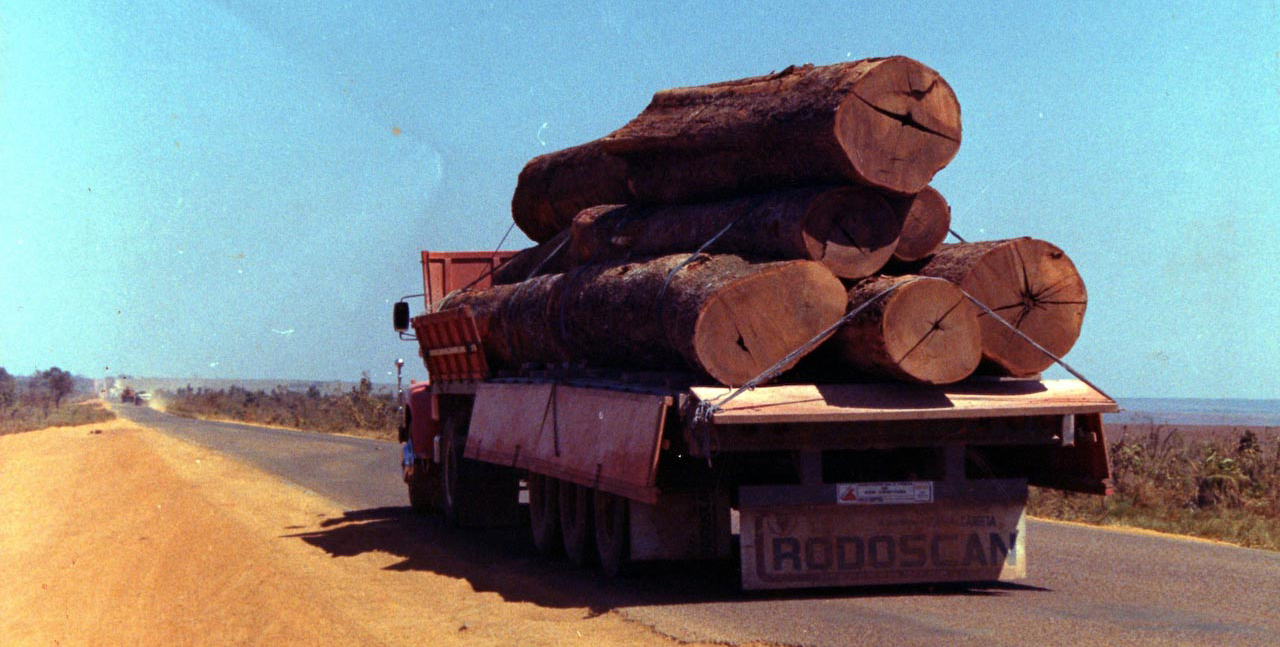
Late last month the Brazilian Congress passed a bill that if it becomes law would ease restrictions on rain-forest clearing and make it easier than ever to mow down the Amazon. That same day, 800 miles north of the parliamentary chamber in Brasilia, assailants ambushed and killed a married couple whose opposition to environmental crimes had placed them in the crosshairs of those who most stand to gain from the new legislation.
It’s a nauseatingly familiar story. Over the past 20 years, there have been more than 1,200 murders related to land conflict in Brazil’s Amazon region. Most of the victims, like the married activists Zé Claudio Ribeiro and Maria do Espírito Santo, were defenders of the rain forest – people seeking sustainable alternatives to the plunder-for-profit schemes that characterize much of what passes for “development” in the Amazon.
The state of Pará – where Zé Claudio and Maria were ambushed on their motorbike as they crossed a rickety bridge – holds an especially notorious reputation for environmental destruction and organized violence. Pará is the bloodiest state in Brazil, accounting for nearly half of all land-related deaths in recent decades. It sprawls across an area larger than the states of Texas, Oklahoma, and New Mexico combined. Picture a tropical version of the Wild West, stripped of the romance, where loggers and ranchers muscle their way onto public land as though they own the place and impose a law of the jungle with their hired thugs. Those who have the nerve to protest soon find themselves the targets of escalating threats. If they persist, they find themselves staring down the gun barrels of those come to make good on the threats.
Continue reading on National Geographic.
Photo Credit: “Toras,” courtesy of flickr user c.alberto. -
Tim Siegenbeek van Heukelom, State-of-Affairs
Food Security in Kenya’s Yala Swamp
›June 21, 2011 // By Wilson Center StaffThe original version of this article, by Tim Siegenbeek van Heukelom, appeared on State-of-Affairs.
In West Kenya on the Northeastern shore of Lake Victoria, the Yala swamp wetland is one of Kenya’s biodiversity hotspots. The Yala swamp also supports several communities that utilize the wetland’s natural resources to support their families and secure their livelihoods. Even more, many people recognize the swamp’s extraordinary potential as agricultural land to significantly boost Kenya’s food security. These are three widely diverse interests, which may seem to be difficult to reconcile. Yet, with proper management, sufficient investment and effective communication, a differentiated utilization of the Yala swamp can be realized through a system of multiple land use. This will be a difficult but certainly not unrealistic objective.
A Brief History
The most recent development of the Yala swamp was undertaken by Dominion Farms, a subsidiary of a privately held company from the United States investing in agricultural development. The reclamation and development of the swamp, however, is far from a new phenomenon.
The intention of the Kenyan government to transform parts of the Yala swamp into agricultural land for food production goes back as far as the early 1970s. Around that time, the Ministry of Foreign Affairs of the Netherlands was consulted extensively by the Kenyan government for technical assistance on reclamation of the swamp and the feasibility of agricultural production.
Throughout the 1980s numerous reports were commissioned by the Kenyan Ministry for Energy and Regional Development and the Lake Basin Development Authority to the Dutch Ministry of Foreign Affairs. Reports like the “Yala Integrated Development Plan” and the “Yala Swamp Reclamation and Development Project” focused in depth on the potential of the development of the swamp and made recommendations on practical matters, such as drainage and irrigation, soil analysis, agriculture, marketing, environmental aspects, employment opportunities, human settlement, management, and financial planning.
As a result, small-scale reclamation and development of the swamp land was undertaken throughout the 1980s and 1990s under the supervision of the Lake Basin Development Authority. The development of the swamp was partially successful, yet its scale was small and financial benefits were too marginal. Major investment was therefore required to extend the scale of the project.
Then, in 2003, an American investor expressed interest to make significant long-term investments into bringing parts of the swamp into agricultural production. Subsequently, a lease for 45 years was negotiated between Dominion Farms and the Siaya and Bondo County Councils to bring into agricultural production some 7,000 hectares of the Yala swamp. The whole Yala swamp wetland covers 17,500 hectares, which means that Dominion Farms is allowed to reclaim and develop roughly 40 percent of the swamp.
Protracted Conflict
Since the early days of the arrival of the foreign investor in 2004, there has been lingering tension and occasional flares of conflict between the communities surrounding the project site, third parties (i.e. government officials, politicians, NGOs, CBOs, environmentalists), and the investor.
The most commonly touted complaint is that Dominion Farms “grabbed” the communities’ land. While it is hard to trace back the exact procedures and individuals that were involved, there are clear contracts with the Siaya and Bondo County Councils that substantiate the transfer of land-use to Dominion Farms for a period of 45 years. Some claim, however, that the negotiation process for the lease was entrenched in bribery and corruption, yet no one has been able to show this author a single trace of evidence to substantiate these accusations. Similarly, there are complaints by local residents that they were never consulted in the negotiation process – where they should have been, as they rightly point out that the swamp is community trust land. However, the land is held in trust by the relevant county council for the community. The county council should therefore initiate consultations with the local communities and residents to get their approval to lease the land to third parties. So it appears that some of the resentment over the loss of parts of the swamp should not be directed at the foreign investor but rather target the local county council and their procedures.
Continue reading on State-of-Affairs. -
New Oxfam Report Tackles Broken Food System
›June 17, 2011 // By Ramona Godbole“The global food system is broken,” reads a new report from Oxfam International. While much of Growing a Better Future: Food Justice in a Resource-Constrained World essentially reviews the major factors that contribute to food insecurity, Oxfam’s call to transform the food system is certainly timely, given this year’s high food prices (blamed in part for inflaming popular revolts in the Middle East) and fears of another global food crisis.
Despite producing enough food for everyone, one in seven people globally face chronic under-nutrition and almost one billion people are food insecure. Hunger is concentrated within rural areas in developing countries, and within families, women are often disproportionally affected, having serious implications for maternal and child health.
“We face three interlinked challenges in an age of growing crisis: feeding nine billion without wrecking the planet; finding equitable solutions to end disempowerment and injustice; and increasing our collective resilience to shocks and volatility,” write the authors of the report.
A “Perfect Storm” for Hunger
If current trends continue, population growth, natural resource scarcity, and climate change will put increasing stress on the food system in the future and create a “perfect storm” for more hunger, says Oxfam.
In the short term, oil price hikes, extreme weather, and speculative trading in markets have caused food prices to rise. With global population slated to grow to 9.1 billion and the global economy projected to be three times as big, demand for food may increase by as much as 70 percent by 2050. Food scarcity will also be deeply affected by the depletion of other natural resources including water, oil, and land.
According to the report’s predictions, child malnutrition levels in sub-Saharan Africa are expected to grow by 8 million by 2030. This estimate is before taking into account the effects of climate change, which could reduce agricultural yields by 20 to 30 percent in sub-Saharan Africa by 2080. The latest UN Population Division projections over that same time period predict an additional two billion people will be living in the region.
The Broken Food System
Up until now, many governments in developed countries have either ignored rising food prices or made it worse by imposing trade restrictions or encouraging the production of biofuels, says Oxfam. Thirty to fifty percent of all food grown is wasted, at least in part, as the result of poor consumer and business practices in rich countries, write the authors, and national governments are not doing enough to address climate change and manage scarce resources, especially water.
Another major challenge that contributes to global hunger is equitable access to land, technology, and markets, says Oxfam. In Guatemala, for example, less than eight percent of agricultural producers hold almost 80 percent of the land, and in developing countries, despite sharing an equal or larger burden of the work, women account for only 10 to 20 percent of landowners. Large companies, rather than local farmers, make the majority of decisions regarding key resources such as land, water, seeds, and infrastructure, while ignoring the technological needs of small-scale farmers.
“Growing a Better Future”
The report concludes that “from the failing food system to wider social and ecological challenges, the dominant model of development is hitting its limits.” The authors recommend three ways to effectively reduce hunger and fix the broken food system:1) Make food security a top priority for national and international governing bodies;
To make this a reality, write the authors, governments must invest in climate adaptation, disaster risk reduction, and social protection, while international governance of trade, food aid, financial markets, and climate change must work to reduce risks of future shocks and respond quickly and effectively when shocks do occur. The policies and practices of both governments and businesses should support the needs and interests of small-scale farmers, ensuring access to natural resources, technology, and markets.
2) Support small-scale food producers in developing countries; and
3) Set clear global targets for the equitable distribution of scarce resources.
While not exactly novel or ground-breaking ideas, these reforms certainly are lofty and the report avoids sugarcoating issues of food security, directly calling out governments and the private sector for their role in supporting food injustice. But, some argue that simpler solutions, like promoting fertilizers and new technologies among poor farmers, might be more effective at fighting malnutrition. Others question the validity of the reports assertion that the average food prices will more than double in the next 20 years.
Despite criticisms, this report and the corresponding GROW campaign will hopefully help further highlight the importance of food security and the need to move towards a more sustainable future.
Image Credit: “Thriving in Africa,” courtesy of flickr user Gates Foundation. -
The Implications of Urbanization on Food Security and Child Mortality of the Urban Poor
›In the chapter, “Urban Agriculture and Climate Change Adaptation: Ensuring Food Security Through Adaptation,” of the edited volume, Resilient Cities: Cities and Adaptation to Climate Change – Proceedings of the Global Forum 2010, authors Marielle Debbeling and Henk de Zeeuw assess the viability of urban and peri-urban agriculture (UPA) as a method of climate change adaptation for the urban poor. Debbeling and de Zeeuw assert that UPA increases the resilience of cities by diversifying both food supply and income streams for the urban poor; decreasing the negative effects of “heat island effect,” air pollution, and urban flooding; conserving water and utilizing organic waste; and reducing energy use and greenhouse gas emissions. Given the scale and impact of modern urbanization, the authors write that “the integration of UPA into urban development and master plans, urban land use and zoning plans, as well as active maintenance of the protected agricultural zones…is crucial.”In “Urban Area Disadvantage and Under-5 Mortality in Nigeria: The Effect of Rapid Urbanization,” published by Environmental Health Perspectives, authors Diddy Antai and Tahereh Moradi found a significant link between the mortality rate of children under five years of age and a poor and disadvantaged urban environment; such an environment is characterized by poor sanitation, overcrowding, a lack of access to safe water, and high levels of disease-inducing air pollution and hazardous wastes. Although urban living may increase proximity to health care and other social amenities, low- and middle-income countries, such as Nigeria, have overstretched their adaptive capacities and the result is poor health indicators. Antai and Moradi predict that the rapid urbanization of Nigerian cities will bring increased infant mortality, unless individual- and community-based policy interventions are implemented to counter the adverse environmental conditions of deprived areas.