-
A Crucial Connection: India’s Natural Security
›January 5, 2011 // By Michael KugelmanExcerpted from the original op-ed, “A Crucial Connection,” by Michael Kugelman in The Times of India:
With India’s soaring growth and rising global clout hogging media headlines, it is easy to forget the nation is beset by security challenges. Naxalite insurgency rages across more than two-thirds of India’s states, while long-simmering tensions in Jammu and Kashmir exploded once again this summer. Meanwhile, two years post-Mumbai, Pakistan remains unwilling or unable to dismantle the anti-India militant groups on its soil. Finally, China’s military rise continues unabated. As Beijing increases its activities across the Himalayan and Indian Ocean regions, fears about Chinese encirclement are rife.
It is even easier to forget that these challenges are intertwined with natural resource issues. Policy makers in New Delhi often fail to make this connection, at their own peril. Twenty-five per cent of Indians lack access to clean drinking water; about 40 per cent have no electricity. These constraints intensify security problems.
India’s immense energy needs – household and commercial – have deepened its dependence on coal, its most heavily consumed energy source. But India’s main coal reserves are located in Naxalite bastions. With energy security at stake, New Delhi has a powerful incentive to flush out insurgents. It has done so with heavy-handed shows of force that often trigger civilian casualties. Additionally, intensive coal mining has displaced locals and created toxic living conditions for those who remain. All these outcomes boost support for the insurgency.
Meanwhile, the fruits of this heavy resource extraction elude local communities, fuelling grievances that Naxalites exploit. A similar dynamic plays out in Jammu and Kashmir, where electricity-deficient residents decry the paltry proportion of power they receive from central government-owned hydroelectric companies. In both cases, resource inequities are a spark for violent anti-government fervor.
Continue reading on The Times of India.
For more on India’s Naxalite rebellion and its natural resource drivers, see The New Security Beat’s “India’s Maoists: South Asia’s ‘Other’ Insurgency.”
Michael Kugelman is program associate with the Asia Program at the Woodrow Wilson International Center for Scholars.
Photo Credit: “Mysore Coal Man,” courtesy of flickr user AdamCohn. -
Paradise Beneath Her Feet: How Women Are Transforming the Middle East
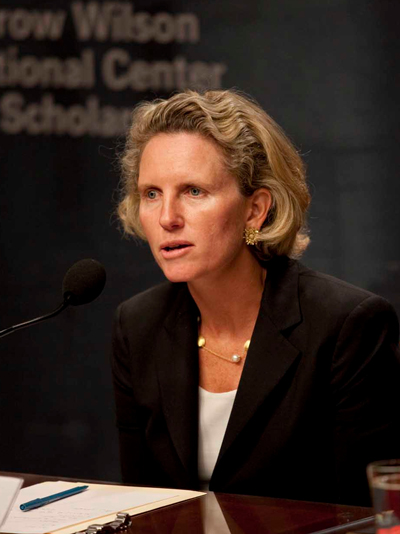
›Isobel Coleman, senior fellow for U.S. foreign policy at the Council on Foreign Relations, said she believes demographic changes are intensifying the notion that women’s empowerment is key to the growth and prosperity of the economies of Arab and Muslim-majority countries.
Coleman, author of the book Paradise Beneath Her Feet: How Women Are Transforming the Middle East, spoke at the Wilson Center in October, with Haleh Esfandiari moderating.
In addition to the Middle East’s demographics, Coleman also discussed how women in these traditional societies face challenges expanding their roles because women’s rights are often seen in a negative light. Coleman noted that things are changing, however, because women in the Muslim world are turning towards an Islamic discourse, which allows them to expand their rights within society’s religious framework. With this tactical shift and gradual gains in education, Coleman explained how women are slowly yet steadily transforming their societies.Coleman began her talk by focusing on the demographic changes in the region, noting that 50 percent of the Arab world’s population is under the age of 22. Furthermore, education was once the exclusive preserve of men in many Arab and Muslim states (in some cases, only decades ago). Today, however, women often constitute the majority of those enrolled in these countries’ educational institutions: Females outnumber males in Jordan’s secondary schools and constitute 70 percent of all university students in Iran. While the levels of educational attainment and achievement among women are increasing, normative and legal restrictions on their socioeconomic mobility remain. Coleman indicated that this contradictory scenario has led to greater opposition to impediments to women’s equality.
Coleman went on to address the tactics being used by the latest generation of reform-minded women in the Muslim world. She said today’s reformist women are more cognizant of the religious conservatism in their societies and are taking on religion in a way earlier feminists did not. By making feminist arguments from an Islamic perspective they avoid being “slandered” by conservatives and traditionalists as pro-Western or anti-Islamic. Coleman noted that some women adopt such a stance out of deep religious conviction, while others do it in the name of expediency. She indicated this new strategy of compromise has given more women influence in social affairs and led to significant engagement with governments.
With the advent of new social media and technology, women have become more visible and able to express their opinions about previously taboo gender-related issues. Female journalists and bloggers are more stridently supporting feminist discourses. Coleman mentioned Sweet Talk, the Arabic language equivalent of the American television show, The View, on which the female co-hosts have addressed topics such as polygamy, rape, incest, and the Saudi prohibition on women driving.
According to Coleman, these factors of change – demographic transitions, the role of media, and an awareness of growing extremism in society – are contributing to women making strides in the region and a “wearing away” of gender inequality in the Muslim world. Given the gains women have made so far, Coleman said she is “cautiously optimistic” for the future.
Luke Hagberg is an intern with the Middle East Program at the Wilson Center; Haleh Esfandiari is the director of the Middle East Program.
Photo Credit: Yemeni women in computer class, courtesy of flickr user World Bank Photo Collection, and David Hawxhurt/Wilson Center. -
The Role of Population Dynamics in Climate Adaptation
›December 21, 2010 // By Wilson Center StaffThis post is a synthesis of a panel discussion at the UNFPA Population Dynamics and Climate Change conference in Mexico City with Marcia Castro, of the Harvard School of Public Health; Heather D’Agnes, of USAID; and Lori Hunter, of the University of Colorado at Boulder.
It is well-known that environmental change — including climate change — has important impacts on human health. However, it is less well understood how health systems shape the responses of individuals and households to environmental change. Population dynamics — such as fertility, migration, and mortality and morbidity — influence community health and greatly affect community resilience in the face of environmental changes, including the capacity to adapt to climate change.
Mortality and Morbidity
Morbidity and mortality dramatically shape a household’s ability to adapt its livelihood strategies to a changing climate. For example, in areas of high HIV prevalence, such as sub-Saharan Africa, adult mortality seriously undermines livelihood options. In the face of such loss, the household’s reliance on local natural resources intensifies. If environmental change reduces the amount of available resources, the household has fewer options for energy and sustenance.
Morbidity also affects adaptive capacity, and morbidity itself can be shaped by environmental change. For example, environmental scarcity can increase poverty, which can lead to an increase in risky transactional sex, further fueling the HIV pandemic. Malnutrition resulting from drought and environmental shocks can suppress the immune systems of HIV-positive people, making them more vulnerable to illness and less able to adapt to other external changes.
Fertility and Family Planning
Healthier households are more resilient households, so increasing access to health services, including reproductive health services, is essential for building adaptive capacity. High fertility poses challenges to a family’s livelihood and has negative health effects on women and children. Providing reproductive health services is an effective way to improve the capacity of these vulnerable groups to adapt to climate change. For example, a recent study argues that lowering fertility rates in the Himalayan region could increase community resilience to the predicted fluctuations in water quantity.
However, there is a high level of unmet demand for contraception across the globe. How can community adaptation programs help meet this need? Importantly, research from the Philippines suggests that integrating population, health, and environment programs in a package approach to community development is more effective than single-sector interventions. Including family planning and reproductive health services in community-based climate adaptation programs could not only more effectively meet the community’s needs, but could also improve its adaptive capacity better than health or climate programs alone.
Migration
Another population process, migration, can both impact health and affect the capacity for adaptation. For example, internal migration in the Brazilian Amazon appears associated with the spread of malaria, which negatively impacts the adaptive capacity of households. To mitigate climate change’s health impacts, states should more effectively plan settlements and health systems, including health impact assessments for infrastructure and development projects. (Editor’s Note – northern Nigeria and Niger present another example of similar climate-related migratory patterns that significantly impact health and economic resilience.)
In summary, the scientific evidence is clear that population dynamics — such as mortality, fertility, and migration — and environmental trends are linked. Projects intended to improve a community’s ability to adapt to a changing climate should consider and address these linkages in their design and implementation.
Sources: Foundation for Environmental Conservation, UNFPA, USAID.
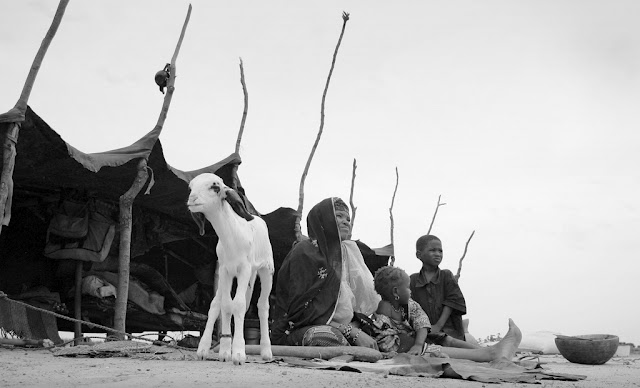
Photo Credit: “Toureg family in Niger,” courtesy of flickr user ILRI. -
Judith Bruce on Empowering Adolescent Girls in Post-Earthquake Haiti
›“The most striking thing about post-conflict and post-disaster environments is that what lurks there is also this extraordinary opportunity,” said Judith Bruce, a senior associate and policy analyst with the Population Council’s Poverty, Gender, and Youth program. Bruce has spent time this year working with the Haiti Adolescent Girls Network (HAGN), a coalition of humanitarian groups conducting workshops focused on the educational, health, and security needs of the country’s vulnerable female youth population.
Gender-based violence has long been an issue in Haiti, but the problem became even more pronounced in the wake of the January earthquake. HAGN has sought to address the problem by concentrating its community-based programming on “high priority” groups, including girls who are disabled, serve as de facto heads of households, or are aged 10-14.
Bruce asserted that protecting and empowering young girls is critical because upon reaching puberty, “their access to a safe world shrinks dramatically.” With the post-disaster environment adding another layer of challenge, she said “there could be no ambiguity in anyone’s mind that we have to create dedicated spaces for girls who, at least for a few hours a week, feel secure to be themselves and to plan for their long-term safety as well as their development.”
The “Pop Audio” series is also available as podcasts on iTunes. -
Whither the Demographic Arc of Instability?
›December 14, 2010 // By Richard CincottaAfter the Berlin Wall came down in 1989, the demand for geostrategic mapping went up. Pentagon geographers revised maps almost monthly in order to keep pace with the rapid sequence of events – the toppling of Eastern Europe’s communist regimes, the rise of pro-Western liberal democracies in their place, and the reunification of Germany. Then came more borders, and even more maps: the breakup of the Soviet Union and the withdrawal of forces from former Warsaw-Pact states, the splintering of Yugoslavia and Czechoslovakia, and requests for accession to NATO. When, in the late 1990s, it became apparent that the end of the Cold War would have little effect on the emergence of civil and ethnic conflicts in Africa, Asia, and Latin America, and that a network of militant Islamist organizations had coalesced across Muslim Asia and Africa, strategic mapmaking shifted focus to identifying conditions in the Global South.
-
Bringing Cambodia Back from the Brink: An Audio Interview with Suwanna Gauntlett
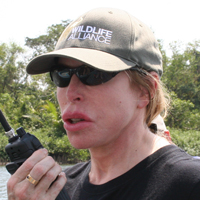
›December 10, 2010 // By Hannah MarquseeThree decades after the Khmer Rouge regime wiped out an estimated 1.7 million people – one fifth of Cambodia’s total population – the environment and Cambodian people are still feeling the effects.
The Pol Pot regime’s policy of agrarian collectivization dramatically reorganized land ownership and relocated millions from urban to rural areas. The ensuing decades of Vietnamese occupation and civil war further changed Cambodia’s workforce, dislocating millions.The “Khmer Rouge regime increased the destruction of natural resources exponentially,” Suwanna Gauntlett, founder and CEO of Wildlife Alliance, told ECSP in this interview. Today, 78 percent of Cambodia’s 14.5 million people live in rural areas, according to the World Bank, nearly all of whom work as subsistence farmers. These rural households account for almost 90 percent of Cambodia’s poor and 36 percent of the total population in 1997.
“These Forests Were Silent”
When Wildlife Alliance arrived in Cambodia in 2000, “these forests were silent,” Gauntlett said. “You couldn’t hear any birds, you couldn’t hear any wildlife and you could hardly see any signs of wildlife because of the destruction.”
In one village, Chi Phat, Gauntlett noted how years of slash-and-burn agriculture had left a “circle of death” around the village as farmers gradually encroached further into the forest.
Cambodians have compensated by turning from traditional subsistence farming to illegal logging, wildlife trafficking, slash-and-burn agriculture, mining, and other unsustainable development (with significant Chinese investment). This has contributed to food and water insecurity, rapid deforestation, habitat loss, and species extinctions. In 1990, 73 percent of Cambodia’s land was covered by forest. By 2007, that number had dropped to 57 percent. Cambodia’s 146 threatened plant and animal species have also felt the effects of this loss. The Indochinese tiger, native to Cambodia, is now thought to have less than 30 individuals remaining in the entire country.
Integrated Solutions
Focusing on the Cardamom mountain range – Cambodia’s largest remaining intact forest – Wildife Alliance established several community-based agriculture and ecotourism programs to help villagers escape the “vicious circle” of poverty and environmental destruction. Ten years later, “there’s been tremendous progress in the geographic areas of our projects,” said Gauntlett.
In another village, Sovanna Baitong, Wildlife Alliance’s community agriculture program has raised the incomes of some residents to over $200 a month when the national poverty level is $200 a year, Gauntlett said. Today this village has a school, a clinic that provides health care and family planning, and a micro-credit fund. This is all managed by the community leaders, 30 percent of whom are women.
Ten years ago, “it was a mess,” Gauntlett said. “It’s amazing to see the difference.”
However, in parts of the country where Wildlife Alliance does not operate, deforestation continues at an alarming pace, often fueled by Chinese and other foreign investment. In some parts of the country, “deforestation has led to very severe water shortages,” including villages where people have to walk up to 20 kilometers for water because “there is no more underground water,” said Gauntlett. This has troubling implications for Cambodian security, particularly with aggressive hydrological development of the Upper Mekong continuing in China and Laos.
“I’m afraid that’s what’s going to happen throughout Cambodia – that this water shortage will lead to food shortage [which] will lead to civil unrest,” Gauntlett said.
Sources: BBC, Cambodian Genocide Program, The Washington Post, Wildlife Alliance, World Bank, WWF, UNEP.
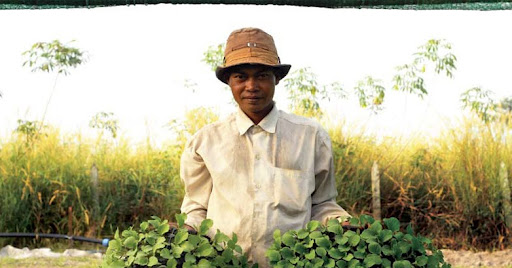
Photo Credit: “Farmer at Sovanna Baitong” and “Suwanna Gauntlett” Courtesy of Wildlife Alliance. -
Robert Engelman, Worldwatch Institute
The Number Left Out: Bringing Population Into the Climate Conversation
›December 9, 2010 // By Wilson Center StaffNumbers swirl around climate change.
So many parts per million of greenhouse gases in the atmosphere. So many gigatons of carbon dioxide emitted. So many degrees Celsius of temperature rise that we hope won’t happen. Yet one number rarely comes into play when experts or negotiators talk about the changing atmosphere and the warming of the planet: the number of humans putting heat-trapping gases into the air.
The original version of this article, by Robert Engelman, appeared on the Worldwatch Institute’s Transforming Cultures blog.The UK Met Office’s data set for September 2009 of more than 1,600,000 temperature readings from 1,700+ stations.
Numbers swirl around climate change.
So many parts per million of greenhouse gases in the atmosphere. So many gigatons of carbon dioxide emitted. So many degrees Celsius of temperature rise that we hope won’t happen. Yet one number rarely comes into play when experts or negotiators talk about the changing atmosphere and the warming of the planet: the number of humans putting heat-trapping gases into the air.
The relative silence isn’t hard to understand. Population is almost always awkward to talk about. It’s fraught with sensitivity about who has how many children and whether that is anyone else’s business. It’s freighted with sexuality, contraception, abortion, immigration, gender bias, and other buttons too hot to press into conversation. Yet two aspects of population’s connection to climate change cry out for greater attention – and conversation.
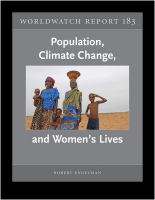
One is that population – especially its growth, but other changes as well – matters importantly to the future of climate change, a statement that as far as I can tell is not challenged scientifically. (The Intergovernmental Panel on Climate Change, for example, accepts the accuracy of the so-called Kaya identity, which names population among the four factors that determine emissions growth from decade to decade.) And, two, addressing population in climate-friendly ways is also fundamentally people-friendly, in that it involves no “population control,” but rather the giving up of control – especially control of women’s bodies by people other than themselves.A new Worldwatch Institute report, which I authored, offers details, findings, and recommendations on both the importance of population in climate change and how to address it. The report looks at some of the history of the population-climate link – in particular, interesting work by William Ruddiman, who hypothesizes that the agricultural revolution contributed to global warming thousands of years ago. And it addresses the common objection that population growth can’t be that important in greenhouse gas emissions growth because countries with high per capita emissions tend to have smaller families than low-emitting countries.
Equity in per capita emissions, I argue, is an essential goal – and without it, no global effort to shrink emissions can succeed. The imperative of an equal sharing of atmospheric carbon space is among the most powerful arguments for a smaller world population. When greenhouse gases other than carbon dioxide – such as methane and “black carbon” – are considered, per capita emissions gaps are not as wide as many writers believe. And the amount of all these gases that equal emitters can contribute without altering the atmosphere shrinks in direct proportion to population’s growth.
Arguments about population’s role in climate change are unnecessarily heated, however. Even if the growth of human numbers played only a minor role in emissions growth, it would be worth discussing – not because addressing population will somehow resolve our climate predicament, but because ultimately no other strategy on its own will either. We need the widest possible range of strategies – economic, political, technological, and behavioral – that are both feasible and consistent with shared human values.
On population, the most effective way to slow growth is to support women’s aspirations. Almost all women aspire to gain an education, to stand in equality with men, and to make decisions for themselves – including whether and when to give birth. Policies and programs to help women achieve these aspirations exist in many places. But they don’t get the attention, support and funding they deserve. And they are rarely seen as climate-change strategies.
As societies, we have the ability to end the ongoing growth of human numbers – soon, and based on human rights and women’s intentions. This makes it easy to speak of women, population, and climate change in a single breath.
Robert Engelman is vice president for programs at the Worldwatch Institute and the author of “Population, Climate Change, and Women’s Lives.” Please contact him if you are interested in a copy of the report.
Sources: UK Met Office, World Resources Institute.
Image Credit: Adapted from “Met Office Climate Data – Month by Month (September),” courtesy of flickr user blprnt_van, and report cover, courtesy of the Worldwatch Institute. -
David Lawson, Wildlife Conservation Society
Afghanistan’s Non-Confrontational Conservation
›December 7, 2010 // By Wilson Center Staff
Excerpt from the Center for a Better Life:
Afghanistan is more than war and turmoil; it has a long and colorful history, strong cultures and a stunning landscape. It has enormous biodiversity, as it sits at the crossroads of what biologists call “biological realms.” The country, therefore, has plants and animals that also occur in Europe, northern Asia, India, south Asia and Africa. It has nine species of wild cats, which is the same as the whole of sub-Saharan Africa, as well as an estimated 800 plant species that occur nowhere else in the world. In other words, Afghanistan is worth attention in terms of its biodiversity alone.These natural resources are also critically important from the people’s perspective. After 30 years of conflict, more than 80 percent of Afghanistan’s population relies directly on natural resources for their livelihood. Most of the inhabitants are rural and desperately poor by world standards. Child mortality is the highest in the world, and their infrastructure is mostly broken down and inoperable. The economy is donor-dependent, and the Afghan government is still in its infancy. Outside the capital of Kabul, governance sometimes seems non-existent. As a result, movement away from the major population centers can be very risky due to the presence of various insurgent groups.
And yet, what is seldom mentioned in newscasts and media is that the Afghans are proud and resilient. They want what everyone else wants: education for their children, healthcare for the young and elderly, and reliable livelihoods to support their families. Then they want to get on with their lives in their own unique, culturally diverse way, free of violence and conflict.
Understanding Cultures
Understanding these things is one reason why the Wildlife Conservation Society (WCS) has been successful in Afghanistan. When hearing of the Society’s field work in this war-torn country, most people are surprised. They wonder how, with its pressing problems, Afghanistan can afford the time, let alone the resources, to conserve its remaining wildlife and wild places. But this is one of the core strengths of WCS – to offer assistance in conserving natural resources at a practical level within a country in need, like Afghanistan. As one of the oldest conservation organizations in the world, with more than 100 years of field conservation experience, the Society has extensive seasoning under extreme circumstances. Currently, WCS has more than 600 projects in place with 3,000 staff; and, many of these projects are in the most remote areas of the world.
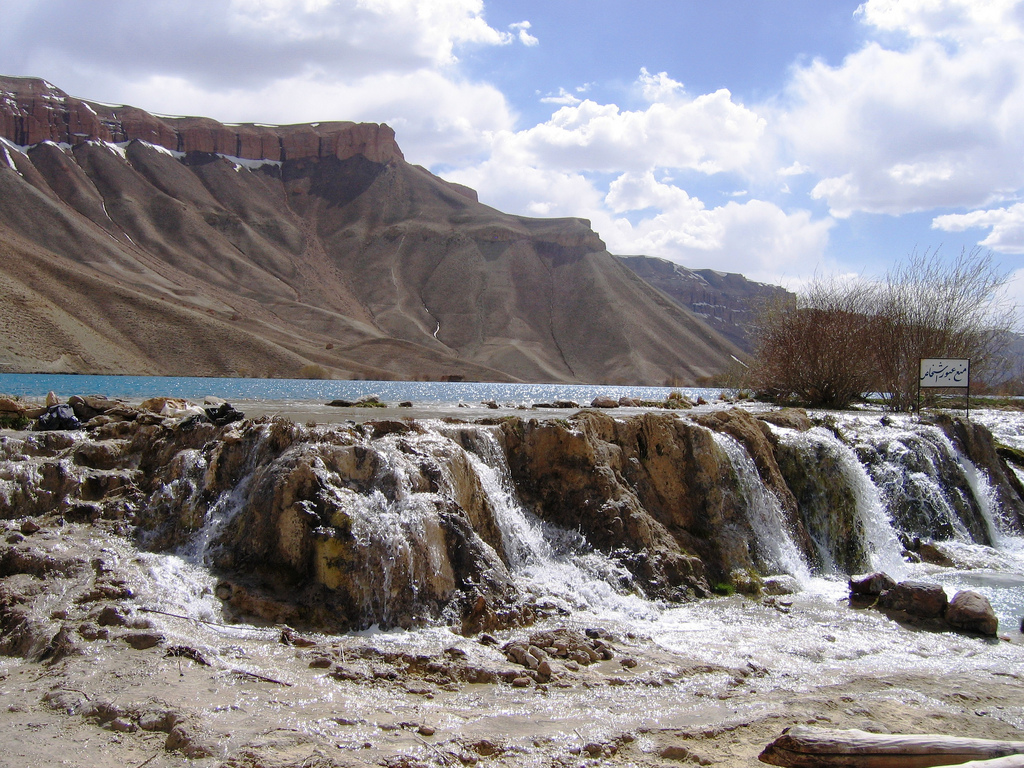
Since 2006, USAID has supported WCS’s work in Afghanistan within three geographical areas – the northeast in Badakhshan Province’s Wakhan District, Bamiyan’s central province and the eastern, forested Nuristan province. Experts chose these areas because they believed they held the largest numbers of untouched remaining wildlife; this presumption generally proved correct. Through the years, WCS has created trust by having conservation teams on the ground and working year-round with local communities. Similar trust has been established with the relevant ministries by WCS’ central office, located in Kabul, through continuous presence and assistance.
Results are impressive. More than seven pieces of environmental legislation were enacted; 10,000 Afghans received conservation training; the first biological surveys in 30 years were completed (which doubled as crucial skills development exercises for Afghan scientists); the first wildlife/domestic stock disease assessments were accomplished, with corresponding human health effects, plus many more exemplary achievements. One of the more intriguing results was WCS’ ability to build local governance in the most remote communities, thus connecting communities that had seen no real government representatives for years. This link extended to district authorities then to provincial authorities, and finally to the Kabul central government. This extension of Afghanistan’s rule-of-law is paramount because it improves governance, which is one of the more crucial strategic needs in the country today.
How was a non-governmental conservation organization able to contribute to governance and rule-of-law? It is simple. Wildlife conservation is usually a non-confrontational issue, and most people, when exposed to the process, take an active interest and express opinions. Rural people have grown up with and are surrounded by wildlife everyday; they have local knowledge and feel comfortable discussing how things have changed. They want to be empowered to make natural resource decisions in the areas in which they live. WCS staff encourages local people to discuss species protection with their local and provincial governments. In some instances, WCS workers have taken government officers into communities that cannot recall ever seeing a government official. These processes and contacts evolve and can be used as basis for non-conservation related discussion. These processes and relationships become the building blocks for extending governance and empowering local communities. And, the process works.
Continue reading on the Center for a Better Life.
David Lawson is the Wildlife Conservation Society Afghanistan country director.
Photo Credit: “Bamiyan Band-e-Emir,” courtesy of flickr user USAID Afghanistan. USAID and WCS have been working in the Band-e-Amir lakes region since 2006 to create a national park.
Showing posts from category livelihoods.