• woodrow wilson center
  • ecsp

New Security Beat

Subscribe:
  • rss
  • mail-to
  • Who We Are
  • Topics
    • Population
    • Environment
    • Security
    • Health
    • Development
  • Columns
    • China Environment Forum
    • Choke Point
    • Dot-Mom
    • Friday Podcasts
    • Navigating the Poles
    • Reading Radar
  • Multimedia
    • Water Stories (Podcast Series)
    • Backdraft (Podcast Series)
    • Tracking the Energy Titans (Interactive)
  • Films
    • Water, Conflict, and Peacebuilding (Animated Short)
    • Paving the Way (Ethiopia)
    • Broken Landscape (India)
    • Scaling the Mountain (Nepal)
    • Healthy People, Healthy Environment (Tanzania)
  • Publications
  • Events
  • Contact Us

NewSecurityBeat

The blog of the Wilson Center's Environmental Change and Security Program
Showing posts from category livelihoods.

  • Complicated Causality: Edward Carr on Food Security and Conflict

    ›
    Friday Podcasts  //  September 20, 2013  //  By Jacob Glass
    Edward-Carr-Podcast2

    “It seems to me the food security linkage suffers from the same problem that an awful lot of the environment and conflict literature suffers from: There are more negative cases than positive cases,” says Edward Carr in this week’s podcast. “In other words, you have a lot of cases where there is a [food] price spike and no violence or no conflict.”

    MORE
  • To Build Peace, Confront Afghanistan’s Natural Resource Paradox

    ›
    Guest Contributor  //  September 16, 2013  //  By Shamim Niazi
    UNEP_Afghanistan_NRM_guidan

    There’s a popular saying in Afghanistan reflecting the value of water: “Let Kabul be without gold, but not without snow.”

    Living in a refugee camp across the border in Pakistan during the Soviet occupation, my father, who worked as a doctor in Samangan, Bamyan, Kunar, and Balkh provinces, used to tell me about the importance of our country’s natural wealth. He was optimistic that it was Afghanistan’s land, water, forests, and minerals that would help the country re-emerge as a strong nation. However, he also knew that the mismanagement of our natural resources is partly to blame for the instability, insecurity, and vulnerability that have gripped our country for so many years. This is the paradox of the natural resource wealth in Afghanistan.

    MORE
  • Susan Moran, Ensia

    Beans May Be Key to Feeding the Future

    ›
    September 11, 2013  //  By Wilson Center Staff

    The original version of this article, by Susan Moran, appeared on Ensia.

    Lean and towering at 6 feet 5 inches, Ken Giller blends right into the rows of climbing beanstalks he is examining on this blisteringly hot spring day in Buhoro, a village in northern Rwanda. Local farmers who have been growing various varieties of beans bred for high yields and other desirable traits proudly show him their plots on the terraced hillside.

    MORE
  • Harvesting Peace: Food Security, Conflict, and Cooperation

    ›
    From the Wilson Center  //  Guest Contributor  //  September 3, 2013  //  By Emmy Simmons

    ‘Harvesting Peace: Food Security, Conflict, and Cooperation’ is Issue 3 of ECSP Report 14.

    Since 2008 – a year in which rapid increases in the global prices for major grains helped to trigger outbreaks of civil unrest in more than 40 countries – scholars and policymakers have paid increased attention to the potential influence of global food prices on social and political instability. Since that time, spiking prices have periodically sparked public protests and governments have struggled to respond.

    MORE
  • Coastal Resource Management, Family Planning Integration Build Resilience in Madagascar and The Gambia

    ›
    From the Wilson Center  //  August 26, 2013  //  By Jacob Glass
    Oyster Harvesters in The Gambia

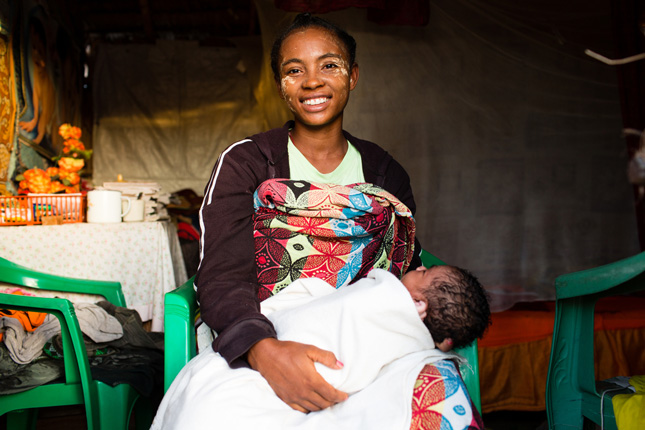
    Growing awareness of the connected challenges of natural resource management, economic growth, and human health has encouraged more integrated models of international development. The experience of two organizations – TRY Oyster Women’s Association, based in The Gambia, and Blue Ventures, based in Madagascar – demonstrates the success of a community-based approach to building resilience, enabling communities to bounce back from adversity and establish a long-term basis for development. [Video Below]

    MORE
  • Flooding and Food Security in Trinidad and Tobago: Roger-Mark Interviewed for ‘A Sea Change’

    ›
    August 21, 2013  //  By Schuyler Null

    “Climate change is one of the greatest challenges that we are facing in today’s world; it is particularly important for us in the Caribbean and for a country like Trinidad and Tobago,” says ECSP Director and Trinidad-native Roger-Mark De Souza in an upcoming documentary by Sustain T&T, a non-profit based in the islands.

    MORE
  • India’s Assam Shows Second-Order, Dangerous Effects of Climate Change in South Asia

    ›
    August 13, 2013  //  By Ashley Ziegler
    India Climate & Migration Map

    To use the military parlance, climate change is often considered a “threat multiplier,” challenging stability and development around the world by exacerbating underlying conditions of vulnerability. South Asia is one region that faces multiple stressors that have the potential to feedback off each other.

    Higher temperatures, more extreme weather, rising sea levels, flooding, and increased cyclonic activity in the Bay of Bengal and the Arabian Sea are reshaping the environment, warns the Center for American Progress (CAP) in a report.

    MORE
  • Mark Montgomery: More Data on Urban-to-Urban Migration Needed

    ›
    Friday Podcasts  //  August 2, 2013  //  By Jacob Glass
    Mark Montgomery podcast

    “If I ask you to consider the image in your mind of a migrant girl, probably you – like me – have a vision of a girl embarking from a rural village on a trek to the city,” says Mark Montgomery of the Population Council in this week’s podcast. But, “Is that what the empirical realities show?”

    Perhaps not: “It is far more common for urban and migrant girls to come from other cities and towns than it is for them to come from rural villages,” he explains.

    MORE
Newer Posts   Older Posts
View full site

Join the Conversation

  • RSS
  • subscribe
  • facebook
  • G+
  • twitter
  • iTunes
  • podomatic
  • youtube
Tweets by NewSecurityBeat

Trending Stories

  • unfccclogo1
  • Pop at COP: Population and Family Planning at the UN Climate Negotiations

Featured Media

Backdraft Podcast

play Backdraft
Podcasts

More »

What You're Saying

  • Volunteers,At,The,Lagos,Food,Bank,Initiative,Outreach,To,Ikotun, Pan-African Response to COVID-19: New Forms of Environmental Peacebuilding Emerge
    Rashida Salifu: Great piece 👍🏾 Africa as a continent has suffered this unfortunate pandemic.But it has also...
  • A desert road near Kuqa An Unholy Trinity: Xinjiang’s Unhealthy Relationship With Coal, Water, and the Quest for Development
    Ismail: It is more historically accurate to refer to Xinjiang as East Turkistan.
  • shutterstock_1779654803 Leverage COVID-19 Data Collection Networks for Environmental Peacebuilding
    Carsten Pran: Thanks for reading! It will be interesting to see how society adapts to droves of new information in...

What We’re Reading

  • Rising rates of food instability in Latin America threaten women and Venezuelan migrants
  • Treetop sensors help Indonesia eavesdrop on forests to cut logging
  • 'Seat at the table': Women's land rights seen as key to climate fight
  • A Surprise in Africa: Air Pollution Falls as Economies Rise
  • Himalayan glacier disaster highlights climate change risks
More »
  • woodrow
  • ecsp
  • RSS Feed
  • YouTube
  • Twitter
  • Facebook
  • Home
  • Who We Are
  • Publications
  • Events
  • Wilson Center
  • Contact Us
  • Print Friendly Page

© Copyright 2007-2021. Environmental Change and Security Program.

Woodrow Wilson International Center for Scholars. All rights reserved.

Developed by Vico Rock Media

Environmental Change and Security Program

Woodrow Wilson International Center for Scholars

Ronald Reagan Building and International Trade Center

  • One Woodrow Wilson Plaza
  • 1300 Pennsylvania Ave., NW
  • Washington, DC 20004-3027

T 202-691-4000