-
Kagondu Njagi, AlertNet
In Kenya, Water Stress Also Breeds Cooperation Between Competing Groups
›January 29, 2013 // By Wilson Center Staff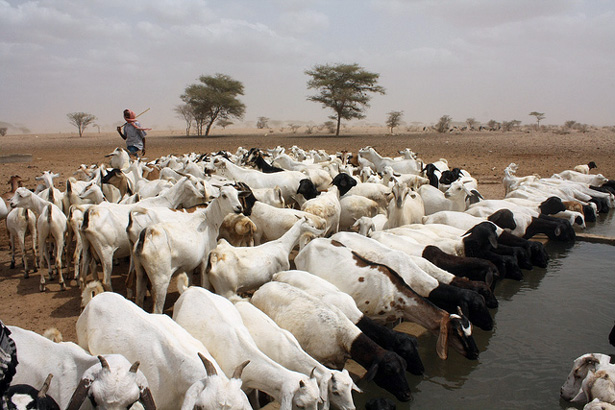
The original version of this article, by Kagondu Njagi, appeared on Thomson Reuters’ AlertNet.
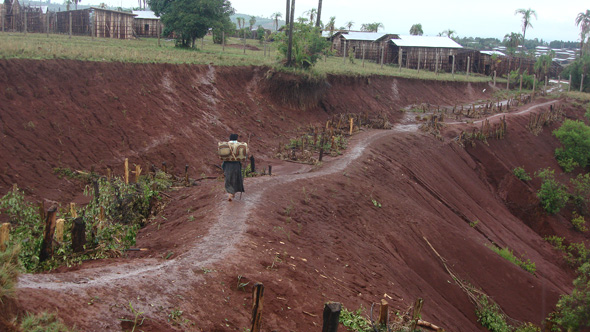
By the time the violence had died down, more than 80 people lay dead and hundreds were left homeless.
Yet there was scarcely enough water – the resource the Maasai and Kikuyu tribes were fighting over – to wash away the blood that had stained this part of Kenya’s Rift Valley.
-
Seven Ways Seven Billion People Affect the Environment and Security (Policy Brief)
›The Wilson Center Policy Briefs are a series of short analyses of critical global issues facing the next administration that will run until inauguration day.
Seven billion people now live on Earth, only a dozen years after the global population hit six billion. But this milestone is not about sheer numbers. Demographic trends will significantly affect the planet’s resources and people’s security.
-
Measuring Sustainable Development in Ethiopia’s Guraghe Zone
›
Despite progress over the years, Ethiopia’s Guraghe zone, located in the Southern Nations, Nationalities, and People’s Region, faces many development challenges. As senior monitoring and evaluation officer in the Guraghe People’s Self-help Development Organization (GPSDO), I have been working in this region for more than five years trying to reduce poverty and improve socio-economic development. The organization as a whole has been here for more than 50.
-
Elisabeth Rosenthal, The New York Times
As Biofuel Demand Grows, So Do Guatemala’s Hunger Pangs
›January 8, 2013 // By Wilson Center StaffThe original version of this article, by Elisabeth Rosenthal, appeared in The New York Times.
In the tiny tortillerias of this city, people complain ceaselessly about the high price of corn. Just three years ago, one quetzal – about 15 cents – bought eight tortillas; today it buys only four. And eggs have tripled in price because chickens eat corn feed.
-
The Land Matrix Visualizes Ebbs and Flows of Global “Land Grabs”
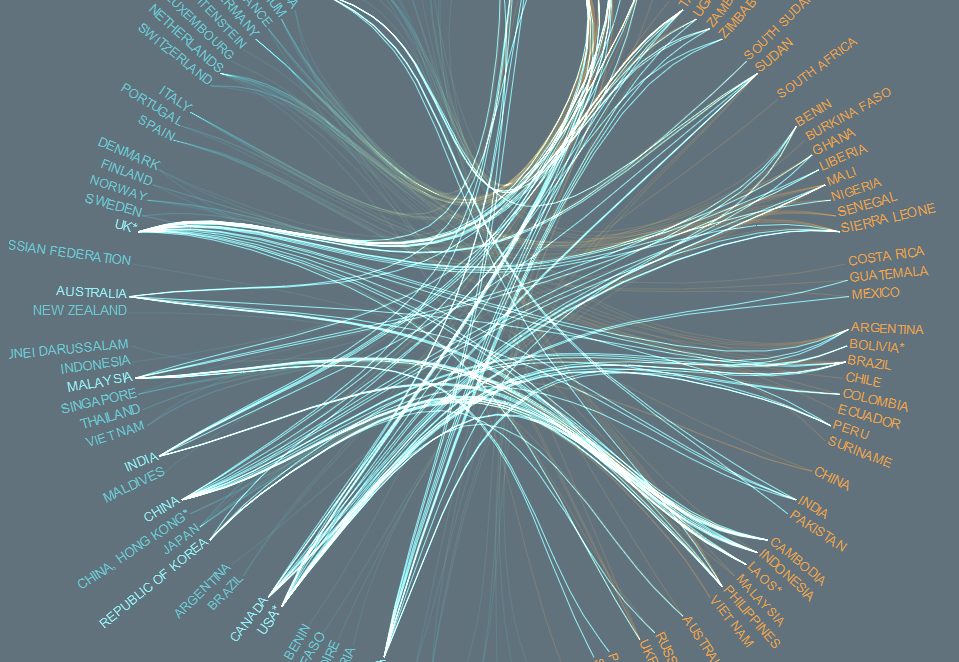
›Over the past few years, large-scale acquisition of land by foreign or domestic firms, be they public or private, have been making headlines. But although these “land grabs” have received a great deal of attention, their details remain largely unknown. Which countries are the primary investors? Which are the main targets? What is the land used for?
-
‘The Global Farms Race’: Comprehensive Study of Large-Scale Land Acquisitions Launches at Wilson Center
›Last month, Oxfam made an extraordinary request. It asked the World Bank to freeze its investments in agricultural land.
At a time when urbanization and growing service industries are bringing great neglect to agricultural sectors across much of the developing world, why would Oxfam want the World Bank to suspend its generous levels of agricultural funding?
-
Edna Wangui on East Africa’s Changing Pastoralists
›November 20, 2012 // By Carolyn LamereThe fault line between nomadic pastoralists and sedentary agriculturalists in sub-Saharan Africa has emerged as one of the most dominant stories of climate-related conflict. But according to Edna Wangui, a professor at Ohio University who studies communities in Kenya and Tanzania, pastoralism is different from many people’s perceptions.
-
Linking Academia With Policy: Youth and Land Markets in Urban Development
›“It’s always important when working in policy to consider what we can do beyond conception and look at more implementation,” said Valerie Stahl of New York University at the Wilson Center last month.
Stahl was one of three graduate students presenting their winning papers for an annual academic paper competition, “Reducing Urban Poverty,” co-sponsored by the Wilson Center, USAID, International Housing Coalition, Cities Alliance, and the World Bank. This year’s competition was the third in an effort to better link new academic work on urban issues to actual policymaking. [Video Below]
Showing posts from category land.