-
From Basket Case to Test Case: Bangladesh as a “Weak Power” Climate Leader
›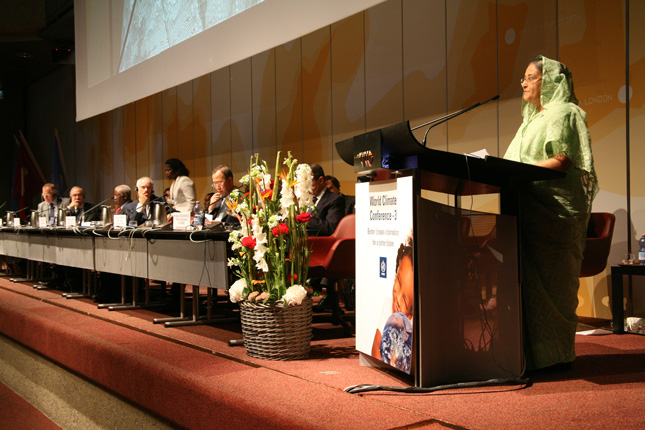
In 2015, Bangladesh’s Prime Minister Sheikh Hasina received the United Nations Champion of the Earth award for her “outstanding leadership on the frontline of climate change.” One of the world’s most populated countries, Bangladesh is also one of the least developed and most vulnerable to climate change. While Bangladesh is well-known for the natural calamities that regularly leave millions of people homeless and displaced, far fewer know that it is also one of the most proactive countries in the fields of disaster risk reduction (DRR) and climate adaptation, as well as a leading voice among the poorest countries in climate negotiations.
-
Global Climate Cooperation, Post-Paris: Can Subnational Agreements Pick Up the Slack?
›
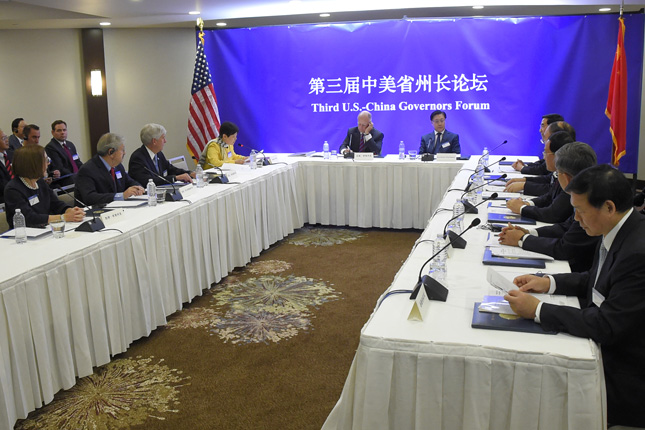
At the G20 Summit in Hamburg early July 2017, leaders of the world’s strongest economies issued a joint statement reaffirming their commitment to the Paris Climate Accord. President Trump—the lone outsider—had announced in early June he would withdraw the United States from the agreement. As China doubles down on meeting its Paris targets, the chasm between the world’s two largest emitters and energy consumers continues to widen as previous joint efforts to curb carbon emissions fade away. Post-summit headlines focusing on the “G19” nations suggest America has abandoned international cooperation against climate change. But some U.S. cities and states are continuing the climate fight with their Chinese counterparts.
-
Backdraft #8: Simon Nicholson on Climate Engineering
›When the Paris Agreement set an ambitious goal of limiting the global temperature rise to 1.5 degrees Celsius above pre-industrial levels, the negotiators put climate engineering on the table, says Simon Nicholson, professor at American University, in this week’s episode of Backdraft. Once the purview of science fiction, a majority of the models run by the Intergovernmental Panel on Climate Change (IPCC) required large-scale use of climate engineering technologies to keep additional warming below 2 degrees. -
Understanding Loss and Damage from Climate Change
›The idea of an insurance pool to address damage from rising sea levels started in 1991 as mere whispers, but by 2015 it grew to become Article 8 of the Paris Agreement. In Climate Change Loss and Damage, Julia Kreienkamp and Lisa Vanhala explore the history of loss and damage in international negotiations and the prospect of its future. One of the more contentious topics in climate negotiations, loss and damage confronts the culpability of wealthy states for the unavoidable consequences of climate change in more vulnerable, non-Western countries. According to Kreienkamp and Vanhala, “the urgency of the issue for developing countries will rise in inverse proportion to how much action is undertaken to mitigate and adapt to climate change.” -
Patrick D. Nunn, The Conversation
Sidelining God: Why Secular Climate Projects in the Pacific Islands are Failing
›July 7, 2017 // By Wilson Center StaffUnless you are cocooned in a tourist bubble, it is hardly possible to miss God when you visit the Pacific Islands. In every village and on every main street there seems to be a church or temple, packed to bursting point on holy days. It is testament to the considerable influence of spirituality on the way people live in the Pacific.
-
Lessons From International Water Sharing Agreements for Dealing With Climate Change
›Scientists agree that many countries in tropical, subtropical, and arid regions should expect changes to water availability and supply from climate change. The U.S. intelligence community has likewise warned of water-driven challenges not only for countries directly affected by water changes, but indirectly to various U.S. national security interests. Perhaps not surprisingly then, the popular literature has been quite clear about prophesizing wars over water.
-
Tamil Nadu Leads India’s Historic Turn to the Sun and Wind
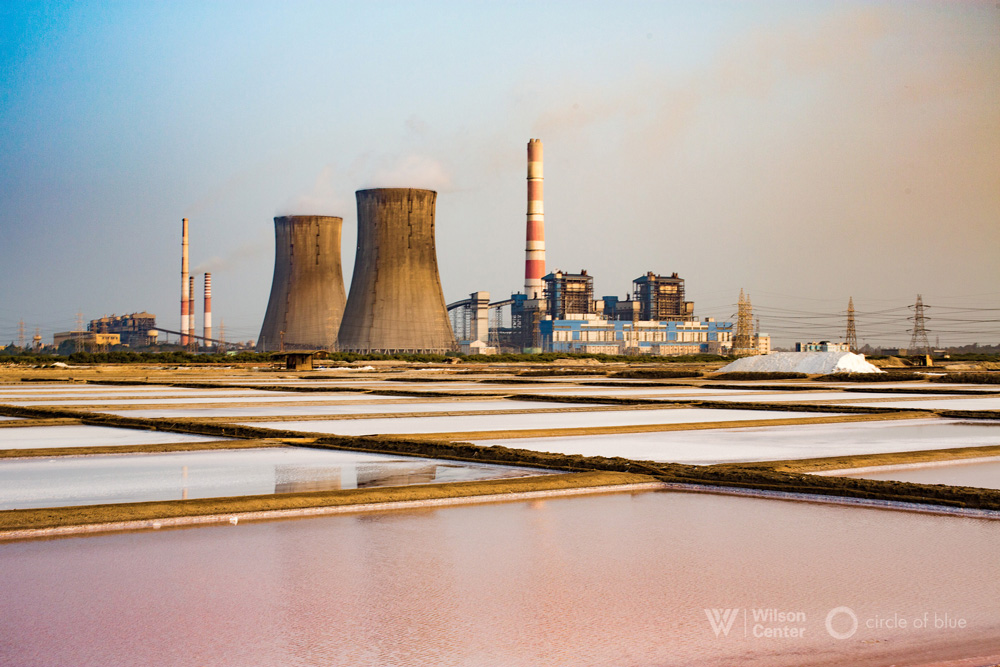
›MADURAI, India – Before he agreed to serve as minister of state and take command of his country’s mammoth energy production and distribution sector, Piyush Goyal developed one of India’s most spirited political careers. “A man of ideas and competence,” according to First Post, a prominent news organization, Goyal is an accountant and lawyer who rose to the peak of Indian economic and political culture as an investment banker, member of parliament, and treasurer of the ruling Bharatiya Janata Party.
-
ND-GAIN Updates Climate Adaptation Index: Good News for Myanmar, Bad News for Brazil
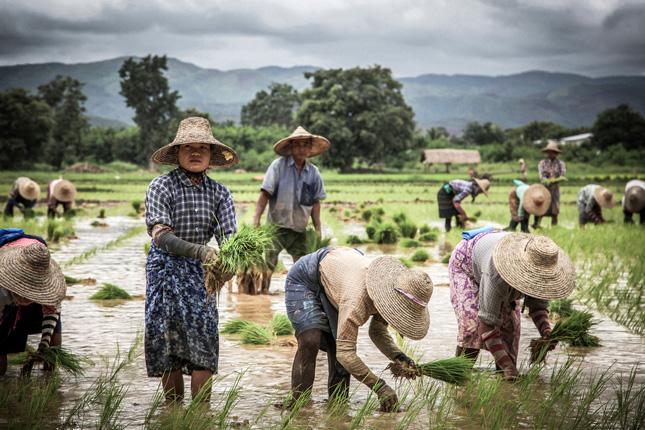
›As climate change leads to more weather variability and natural disasters, the need for adaptation is more urgent than ever. The Notre Dame Global Adaptation Initiative (ND-GAIN) aims to enhance understanding of adaptation and inform the public and private sectors on actions and investments.
Showing posts from category international environmental governance.
 When the Paris Agreement set an ambitious goal of limiting the global temperature rise to 1.5 degrees Celsius above pre-industrial levels, the negotiators put climate engineering on the table, says Simon Nicholson, professor at American University, in this week’s episode of Backdraft. Once the purview of science fiction, a majority of the models run by the Intergovernmental Panel on Climate Change (IPCC) required large-scale use of climate engineering technologies to keep additional warming below 2 degrees.
 The idea of an insurance pool to address damage from rising sea levels started in 1991 as mere whispers, but by 2015 it grew to become Article 8 of the