

Showing posts from category humanitarian.
-
Somalia Battered by Drought, Food Shortages, Worsening Violence
›September 5, 2008 // By Will Rogers “The humanitarian nightmare in Somalia is the result of a lethal cocktail of factors,” writes Ken Menkhaus in a recent ENOUGH strategy paper, Somalia: A Country in Peril, a Policy Nightmare,” launched this week at the Wilson Center (video). Menkhaus was joined by Chris Albin-Lackey, a senior researcher at Human Rights Watch, and Harun M. Hassan, a Somali journalist and writer based in Washington, DC, for a discussion of the political and humanitarian situation in Somalia, which is ranked first on the 2008 Failed States Index.
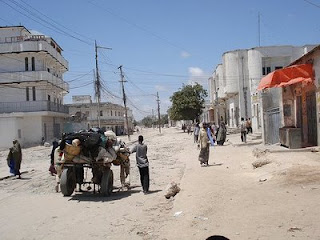
The country has been plagued by “18 years of state collapse, failed peace talks, violent lawlessness and warlordism, internal displacement and refugee flows, chronic underdevelopment, intermittent famine, piracy, regional proxy wars, and Islamic extremism,” writes Menkhaus. Over the past 18 months, severe drought and increased attacks against relief agencies have left 3.2 million Somalis in dire need of humanitarian assistance. Two-thirds of Mogadishu’s population—700,000 people—has fled the city for Somalia’s harsh countryside, where they lack access to food, clean water, basic health care, livelihoods, and support networks.
Fighting between the Transitional Federal Government (TFG), Ethiopian troops, and regional militias has exacerbated food shortages, as TFG and Ethiopian troops target local markets, including the Bakaara market in Mogadishu, in retaliation for militia attacks. With drought “killing off livestock and reducing harvests in farming areas” and the economy crippled by violence and an outbreak of counterfeiting, food prices have skyrocketed.
Although Menkhaus rightly mentions a few of the situation’s environmental aspects, such as the drought’s role in the food crisis, he neglects the role population growth has played. The 2008 Failed States Index ranked Somalia as the state with the most demographic pressure – a significant indicator of state instability – (tied with Bangladesh). According to the Population Reference Bureau, Somalia has a total fertility rate of 6.7 children per woman and an annual rate of natural increase of 2.7 percent. With 45 percent of the population under 15, Somalia’s youth bulge increases the likelihood of continued violence; in addition, if Somalia ever does find peace and stability, its government will be hard-pressed to meet the needs of all its citizens for jobs, health care, and education.
Humanitarian agencies in Somalia have attempted to provide relief, but they face rampant extortion, corruption, and intimidation. According to Menkhaus, “uncontrolled and predatory TFG security forces, along with opportunistic criminal gangs, have erected over 400 militia roadblocks (each of which demands as much as $500 per truck to pass).” In addition, since May 2008, jihadist cells in Mogadishu operating under al-Shabaab, “a hardline military faction of the Islamist movement,” have stepped up attacks against relief workers and are assassinating “any and all Somalis working for western aid agencies or collaborating with U.N. and Western NGOs.”
Somali piracy has made humanitarian shipments to sea ports a treacherous task. According to Albin-Lackey, Somalia’s second-largest port, Kismaayo, fell to al-Shabaab militants last week after weeks of fighting between the Islamic group and TFG security forces, cutting off a crucial delivery point for humanitarian shipments. According to Menkhaus, with human insecurity worsening, Somalis who would not otherwise support fundamentalism will become more vulnerable to recruitment from criminal gangs and terrorist cells, including al-Qaeda. And although the Djibouti Accord was signed last month between the TFG and a faction of the opposition Alliance for the Re-liberation of Somalia, experts are pessimistic that it will do anything to end the violence.
Photo: Internally displaced people (IDPs) flee the escalating violence in Mogadishu for IDP camps on the outskirts of the city, where newcomers build their own makeshift shelters. Courtesy of Abdurrahman Warsameh and ISN Security Watch. -
“Adapt we must”: Joshua Busby on the Climate-Security Connection
›August 29, 2008 // By Sonia SchmanskiIn “The Climate Security Connection: What it Means for the Poor,” Joshua Busby (listen to ECSP podcast with Busby) discusses the security implications of climate change for the developing world. In this paper, written for “Development in the Balance: How Will the World’s Poor Cope With Climate Change?,” the fifth annual Brookings Blum Round Table, held earlier this month, Busby explains that “[d]eveloping countries are most vulnerable, partly as an accident of geography, but also because vulnerability is made worse by poverty, bad governance, and past conflict.”
Busby compares the aftermath of Cyclone Nargis, which pounded Burma in May 2008, to that of an armed attack, describing both as causing “widespread suffering, destruction of infrastructure, mobilization of the military, and the movement of refugees.” In fact, between 1991 and 2005, natural disasters led to as many deaths as armed conflict, as Busby notes. The subsequent political battles around outside efforts to deliver aid “gave people around the world a visual image of the potential future,” says Busby, and offered a glimpse of “the security risks when affected countries lack the capacity or will to respond.”
The economic consequences of natural disasters can also be crippling. In absolute terms, the developed world suffers larger financial losses, but as a share of GDP, the damage to developing countries is far greater. Additionally, though the death toll of natural disasters continues to fall, the total number of affected people is on the rise, which means that many more people are relying on government services to regain their footing in the wake of natural disasters.
These consequences have long-term security implications for a world in which natural disasters are becoming more frequent and severe. “Post-disaster environments are going to be dangerous moments,” Busby predicts, “when mishandled or inadequate disaster response can give way to the kinds of lingering grievances that can motivate people to take up arms.” To prevent this, he advocates an international focus on adaptation and risk-reduction strategies, and cautions against narrowly focusing on the causal relationship linking climate change to violent conflict. By doing so, policymakers and practitioners overlook what Busby says is the more likely outcome, in which large-scale disasters sap government resources by creating humanitarian emergencies that require military mobilization in response. In “Gathering Storm – the humanitarian impact of climate change,” the UN’s Integrated Regional News Networks (IRIN) explores how climate change has altered the face of global humanitarian crises.
Offering a sharp critique of the reactive strategy of many governments, Busby suggests that a modest investment in prevention would be more efficient and more effective. A joint assessment by the World Bank and the U.S. Geological Survey, for example, found that a $40 billion investment in natural-disaster prevention could have prevented $280 billion in damages worldwide during the 1990s. The reactive approach also threatens to politicize the carefully guarded neutrality of aid workers and organizations; engender international friction where inadequate government response leads to international intervention; and sap government resources through costly responses to humanitarian crises.
Busby envisions a system where “the poor bear less of the brunt of half-hearted and partial reactive measures” in response to climate change. Noting Paul Collier’s finding in The Bottom Billion that past conflict is an accurate predictor of future poverty, Busby argues that reducing the potential for violence in post-disaster situations will improve development prospects for countries worldwide. An enlightened approach, emphasizing prevention over reaction, will not only insulate vulnerable regions from the immediate dangers of natural disasters, but will also protect them from more indirect, long-term threats to their prosperity and security.
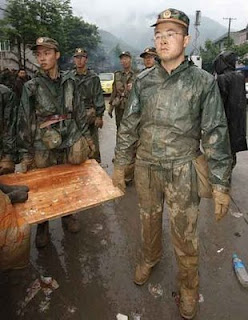
Photo: Tens of thousands of Chinese soldiers were mobilized in response to the May 12th earthquake. As climate change makes natural disasters more frequent and more severe, this will likely become an increasingly common sight. Photo courtesy of Flickr user Alex and Jerry.
-
Center for American Progress Report Criticizes U.S. Foreign Assistance Approach as Short-Term, Reactive
›August 5, 2008 // By Sonia SchmanskiIn the third installment of its series of reports addressing national security issues (see New Security Beat coverage of the first and second reports), the Center for American Progress offers a blistering critique of America’s foreign assistance approach, arguing that American foreign policy during the second half of the 20th century helped create some of today’s security concerns. For instance, the authors maintain that if the United States had used more foresight while dispensing $24 billion in aid to Pakistan over the last 25 years, “[w]e might not be talking today about the extremism taught in many madrassas, or debating the best course of action for defeating the Taliban.” The United States leads the world in humanitarian assistance, write authors Natalie Ondiak and Andrew Sweet, and they argue that the United States need not contribute more, only more wisely.
According to Ondiak and Sweet, one of the major problems is that the United States spends “more on treating the symptoms of a crisis…than on the development programs that support crisis prevention.” This failure to prevent crises has resulted in dramatically higher long-term costs for the United States, they say. Pakistan and Afghanistan provide particularly striking examples of the shortcomings in America’s foreign aid strategy.
U.S. assistance to Pakistan has run hot and cold over the past 40 years, spiking early in the Cold War, during the Soviet occupation of Afghanistan, and rising to its highest level immediately following September 11, 2001. Ondiak and Sweet characterize the relationship as “consistently inconsistent.” Since 2001, Pakistan has been the recipient of $10.5 billion in assistance (excluding covert funds), but just 2 percent of this has been dedicated to development assistance. As a result, half of the population remains illiterate, job growth cannot keep pace with population growth, and extremist groups operating in the country’s Federally Administered Tribal Areas have become increasingly attractive to the one-third of Pakistanis still living in poverty.
In a major foreign policy speech attended by several New Security Beat contributors, Senator Barack Obama noted that he is sponsoring a bill, along with Senators Joe Biden and Richard Lugar, to triple non-military aid to Pakistan for 10 years. “We must move beyond a purely military alliance built on convenience,” he said.
Closely linked with the fortunes of Pakistan is Afghanistan, a country Ondiak and Sweet describe as “a good illustration of what happens when our ‘aid reaction’ is driven by geopolitical interests shaped by the ebb and flow of foreign policy priorities.” U.S. assistance to Afghanistan dropped off sharply following its conflict with Russia during the 1980s, leaving the country struggling to rebuild itself after fully one-third of its citizens had left the country as refugees. This disengagement cost us “the opportunity to consolidate the gains borne of the end of occupation,” argue the authors, instead allowing Afghanistan to lapse into state failure. Today, Afghanistan is the poorest country outside of sub-Saharan Africa. Half of its citizens live in absolute poverty, 70 percent are illiterate, and life expectancy is 43 years.
Ondiak and Sweet call it a “tragic irony” that the lack of public support for peacetime capacity-building assistance leads to a much greater need for emergency aid down the road. “Turning the aid spigot on and off,” they write, “rarely yields long-term, sustainable results.” Their recommendation is simple: The United States must prioritize development and crisis prevention and provide long-term aid packages. This will only be possible if the mindsets of politicians, policymakers, and the public shift to recognize that “what is true in our own lives is true on the international stage—an ounce of prevention is worth a pound of cure.”
-
Defense, Development, Diplomacy Experts Debate DoD’s Role in Development
›July 18, 2008 // By Rachel Weisshaar“The U.S. military recognizes that the use of conventional military force is of limited use” in advancing U.S. national security, said Reuben Brigety II, director of the Sustainable Security Program at the Center for American Progress (CAP), at a July 18 launch of his report Humanity as a Weapon of War: Sustainable Security and the Role of the U.S. Military. The tragedy of 9/11, as well as the setbacks experienced in the wars in Afghanistan and Iraq, emphasized to the U.S. defense community that although combat operations remain critical to its mission, the military must also strive to “prevent conflict from emerging in the first place” through activities that stabilize societies, economies, and governments.
Brigety cited efforts by the Combined Joint Task Force for the Horn of Africa (CJTF-HOA), the nascent U.S. Africa Command (AFRICOM), and the U.S. Southern Command (SOUTHCOM) as examples of the U.S. military’s growing appreciation of how development assistance can help stabilize countries, build goodwill toward the United States, and increase U.S. understanding of local socio-political and economic conditions. In recent years, CJTF-HOA has dug wells, vaccinated livestock, and provided health services, while SOUTHCOM has a long track record of providing humanitarian assistance in Central and South America, particularly in the wake of natural disasters.
Although Brigety asserted that it is nothing “new for the military to be involved in addressing basic human needs,” he and his fellow presenters—Elisabeth Kvitashvili of the U.S. Agency for International Development (USAID), James Schear of the Institute for National Security Studies, and Stewart Patrick of the Council on Foreign Relations—agreed that the Department of Defense (DoD) has been undertaking an increasing share of the U.S. government’s development activities in recent years. As Brigety’s report notes, the “share of the U.S. government’s official development assistance, or ODA, spent by the Defense Department increased to 22 percent in 2005, the last year for which complete data is available, from 3.5 percent in 1998. Over the same time period, USAID’s share of ODA fell to less than 40 percent from 65 percent.”
Earlier this week, Secretary of Defense Robert Gates made waves when he said that “the United States military has become more involved in a range of activities that in the past were perceived to be the exclusive province of civilian agencies and organizations. This has led to concern among many organizations…about what’s seen as a creeping ‘militarization’ of some aspects of America’s foreign policy. This is not an entirely unreasonable sentiment.”
At the CAP launch, Patrick asserted that one reason why the DoD has become increasingly involved in development activities—in peaceful regions as well as violent ones—is the “massive budgetary asymmetry” between the DoD and the State Department and USAID. Gates made a similar point: “America’s civilian institutions of diplomacy and development have been chronically undermanned and underfunded for far too long—relative to what we spend on the military, and more important, relative to the responsibilities and challenges our nation has around the world.”
Kvitashvili agreed that USAID is underfunded and understaffed, but said the solution was not having the military take the lead in development activities. She argued that the military—which, unlike USAID, is not staffed by development professionals—tends to engage in “feel-good, short-term, one-off” projects that do not lead to sustainable gains for local populations. Instead, she welcomed a stepped-up supporting role for the military in development activities. -
Former HHS Secretary Tommy Thompson Links Global Health, U.S. Security
›July 18, 2008 // By Daniel Gleick“They say good fences make good neighbors, and maybe they do. But what I’ve learned is that good medicine makes good neighbors, and it makes good foreign policy too,” said Tommy Thompson, former secretary of the U.S. Department of Health and Human Services, in a press release received by the New Security Beat. In an appearance at the National Press Club on Wednesday, Thompson announced his new position as global ambassador for the Global Network for Neglected Tropical Diseases (NTDs). “It is a tragedy,” he said, “that the world’s poorest citizens are suffering from diseases that have been neglected for too long, particularly when we can treat many of them for less than 50 cents a year.”
Thompson’s announcement came amid news of a $3.8 million grant from the Bill & Melinda Gates Foundation to raise awareness about the diseases and advocate for increased funding for NTDs, which include leprosy, river blindness, hookworm, and elephantiasis and affect one billion of the world’s poor. Thompson, who will travel to Rwanda next months as part of his new position, was quick to articulate the broader impacts of global humanitarian aid for health. “Through medical diplomacy, we can win the hearts and minds of people in less fortunate areas of the world by exporting medical care, expertise, and personnel to those who need it most,” he said. “America has the best chance to beat the war on terror and defeat the terrorists by enhancing our medical and humanitarian assistance to vulnerable countries.”
-
Public Health in the Wake of Disasters: An Overlooked Security Issue
›June 16, 2008 // By Kai Carter“Public health and public health infrastructure and systems in developed and developing countries must be seen as strategic and security issues that deserve international public health resource monitoring attention from disaster managers, urban planners, the global humanitarian community, World Health Organization authorities, and participating parties to war and conflict,” argue Frederick Burkle and P. Gregg Greenough of the Harvard Humanitarian Initiative in a new article in Disaster Medicine and Public Health Preparedness. Burkle, who is currently a public policy scholar at the Wilson Center, will discuss public health management after natural disasters at the Center on June 17th.
In their article, “Impact of Public Health Emergencies on Modern Disaster Taxonomy, Planning, and Response,” Burkle and Greenough discuss the public health consequences of disasters, which they classify as natural; failures of human or technological systems; or conflict-based. The authors contend that disasters’ indirect effects are often overlooked, despite the fact that they continue months and even years after the event. Disaster severity is typically measured by direct morbidity and mortality; however, Burkle and Greenough highlight the need to account for the indirect deaths and illnesses caused by the devastation of public health and other infrastructure, poor and overcrowded living conditions, displacement, food insecurity, and disrupted livelihoods. Furthermore, as acute deaths decrease, humanitarian aid wanes—at a time when it is desperately needed to rebuild public health infrastructure.
In the case of conflict-based disasters,“health care and other essential services . . . may not return to baseline for more than a decade.” The authors note that in 2004, the Iraqi Ministry of Health announced that more lives had been lost to insufficient health services than to violence. Yet the former fails to garner the same attention and condemnation as the latter.
The devastation wrought by Hurricane Katrina demonstrated that the safety, health, and infrastructure of even the wealthiest nations are at risk. No nation can afford to overlook the challenges highlighted by Burkle and Greenough. -
A Weekly Roundup
›“Climate change is potentially the greatest challenge to global stability and security, and therefore to national security. Tackling its causes, mitigating its risks and preparing for and dealing with its consequences are critical to our future security, as well as protecting global prosperity and avoiding humanitarian disaster,” says the UK’s first National Security Strategy report.
A water-sharing deal will be essential to achieving Israeli-Palestinian peace, reports National Geographic magazine.
In the BBC’s Green Room, Gonzalo Oveido, a senior social policy adviser with IUCN, argues that the global food crisis will only be ameliorated if policymakers put greater emphasis on biodiversity and overall ecosystem health.
USAID has released The United States Commitment to the Millennium Development Goals, which outlines the U.S. government’s contribution toward meeting the eight goals by 2015. Fragile states face some of the steepest challenges to achieving the MDGs.
An article in Nature Conservancy magazine asks five conservation experts whether—and if so, how—conservation organizations should contribute to poverty alleviation. -
“Development in Reverse”: ‘International Studies Quarterly’ Article Links Natural Disasters, Violence
›May 20, 2008 // By Sonia SchmanskiAlthough numerous research projects have found that environmental change can contribute to conflict “through its impact on social variables such as migration, agricultural and economic decline, and through the weakening of institutions, in particular the state,” very few analysts have systematically addressed the relationship between natural disasters and violent civil conflict, write Philip Nel and Marjolein Rightarts in “Natural Disasters and the Risk of Violent Conflict,” published in the March 2008 issue of International Studies Quarterly (subscription required). Criticizing political scientists’ tendency to diminish the importance of geography and environmental factors in assessing violence, they argue that it has become critically important to “correct this oversight.”
Recent events indicate that this attention is overdue. On May 2, Cyclone Nargis began its devastating journey through Myanmar. The latest UN estimates put the death toll at somewhere between 70,000 and 100,000. On May 12, a 7.9-magnitude earthquake struck China’s Sichuan Province (incidentally, volcanic eruptions and earthquakes top Nel and Rightarts’ list of the disasters most likely to lead to violence). Official death toll estimates currently stand at 40,000, but are likely to continue to increase. While the Chinese government has been praised both at home and abroad for the speed and scale of its response, Burma’s ruling military junta has been roundly condemned for delaying the arrival of international humanitarian assistance. It remains to be seen whether the junta’s controversial response will lead to popular rebellion among the Burmese people.
Low- and middle-income countries with high levels of inequality are most susceptible to the violence caused by natural disasters, write Nels and Rightarts. Natural disasters create openings for violent civil conflict by reducing state capacity while simultaneously increasing demands upon the state. The scramble for limited resources in the wake of a natural disaster can easily devolve into widespread violence.
“Given the dire predictions that natural disasters are set to become more frequent in the near future” due to climate change, Nel and Rightarts conclude, “conflict reduction and management strategies in the twenty-first century simply have to be more attuned to the effects of natural disasters than they have been up to now.”
 “The humanitarian nightmare in Somalia is the result of a
  In “
In “

