-
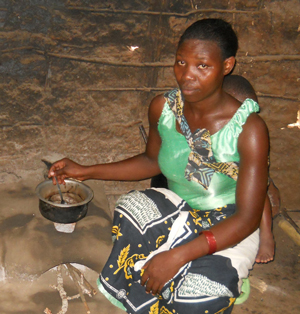
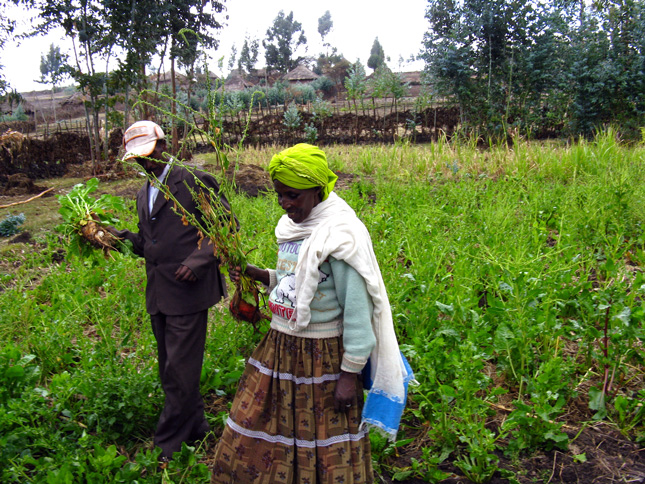
Rukia Seif, PHE Champion
Making Life Easier in Rural Tanzania
›This PHE Champion profile was produced by the BALANCED Project.
Rukia Seif is a population, health, environment (PHE) peer educator who promotes simple economic, environmental, and health behaviors that make sense. In many ways, the Mkalamo village where Rukia lives is a typical rural Tanzanian agricultural village. In another important way it is very different. Mkalamo abuts the biodiversity rich Saadani National Park – the only wildlife park in Tanzania that borders the sea. Ironically, this park does not make life easier for people living in Mkalamo but more difficult. In the park, there is a ban on the cutting of wood, making it difficult to find enough to fuel villagers’ cooking stoves. Also, increasing numbers of the park’s wild animals often destroy the villagers’ precious crops.
As a PHE peer educator, Rukia talks with her fellow community members about simple things they can do to improve their lives. Her messages are clear:- By planning their families, women can ensure their own and their children’s health and can decide the optimal number of children that they can provide for.
- By using fuel efficient stoves, women can spend less time collecting fire wood, freeing up time for other chores or livelihood activities and reducing the amount of needed fuel, thus helping sustain the forests for future generations.
- By joining community-led savings and credit associations, women and men gain access to capital, allowing them to scale-up current livelihoods or diversify to new sources of income.
Rukia sets a good example of how doing these simple things can improve a family’s life and protect the environment. At age 36, she is a mother of three girls, ages 14, 12, and one and a half. Rukia and her husband, Seif Ramadhani, are taking measures to plan their family. Rukia used pills before they decided to have their last daughter. Now they are using condoms as a back-up while Rukia is breastfeeding the baby. Through her work, Rukia meets and talks to many people every day. She discusses family planning and if someone is interested, she refers them to community-based distributors and the dispensary for family planning services.
“I talk to my peers about planning their families so we have enough natural resources to meet the needs of the villagers who depend on these resources,” she said. “Also, when you plan your family, you will get more time to perform other activities.”
An active member of the savings and credit association, where she also acts as the accountant, Rukia is living proof of this last statement. Through savings and loans, Rukia has diversified her income by buying a sewing machine and a fuel-efficient oven. Today, she generates income from cow and poultry husbandry, tailoring, bread-making, selling soft drinks, and constructing fuel-efficient stoves. With this increased income, Rukia and her husband have been able to put an iron sheet roof on their house and send their first-born daughter to secondary school – a great achievement in a country where only five percent of women stay in school beyond the primary level.
Rukia demonstrated her two fuel-efficient stoves: one is a metal oven that she uses for baking breads and cakes, the other is a simple mud stove that she uses for cooking. The mud stove, which costs less than $2 to build, is getting increasingly popular in the community. It saves fuel wood, prevents fires, produces less smoke (a serious health hazard), and cooks the food faster!
“I can even wear my best clothes and put on some lip shine when I use this stove, because it does not foul up the air,” Rukia explains with a laugh. Seeing the benefits of the fuel efficient stoves, she has inspired ten community-based distributors and five village leaders to join the team of individuals showcasing the fuel efficient technologies.
Rukia is a perfect example of practicing what one preaches. She is improving her own life, helping others learn to do the same, and protecting the very natural resources upon which almost everyone in Mkalamo depends.
This PHE Champion profile was produced by the BALANCED Project. A PDF version can be downloaded from the PHE Toolkit. PHE Champion profiles highlight people working on the ground to improve health and conservation in areas where biodiversity is critically endangered. -
Is Universal Access to Family Planning a Realistic Goal for Sub-Saharan Africa?
›“What do we require to ensure universal access to family planning services that are appropriate, affordable, accessible, and of good quality?” asked Michael Mbizvo, director of the Department of Reproductive Health and Research at the World Health Organization at the Wilson Center last month. [Video Below]
To talk about this difficult question and present research and programmatic evidence for sub-Saharan Africa, Mbizvo was joined by panelists Fred Makumbi, senior lecturer and head of the Department of Epidemiology and Biostatistics at Makerere University, Uganda; Oladosu Ojengbede, director of the Center for Population and Reproductive Health, University of Ibadan, Nigeria; and Frank Taulo, director of the Center for Reproductive Health and senior lecturer of obstetrics and gynecology at the University of Malawi.
Integrating Family Planning and HIV Services
Makumbi shared a number of findings on fertility preferences, behaviors, and contraceptive uptake in the context of HIV infection and care in Uganda. “Integrating family planning services into HIV services could help address the family planning needs of both HIV infected and uninfected,” he said.
According to new research conducted as part of the Rakai Community Cohort Study, despite significant gains in family planning use over time, there is still a high unmet need for contraception, irrespective of HIV status, in the Rakai district of central Uganda, said Makumbi. Male partner’s fertility desires were found to play an important role in pregnancy rates, and compared with previous studies conducted in the Rakai district, researchers saw an increase in pregnancy incidence and prevalence among HIV positive women, especially those on anti-retroviral therapy. HIV care that included voluntary counseling and testing was associated with significant increases in the use of family planning, and in particular, the use of condoms.
To effectively promote universal family planning in sub-Saharan Africa, “there is a need to strengthen family planning services in HIV care programs, with promotion of modern contraceptive methods, and with particular attention to women on anti-retroviral therapy,” said Makumbi. “Strategies to address desire for high fertility need to be developed, especially with regard to male involvement,” he added.
Multi-Pronged Approach to Universal Family Planning
“Family planning success in sub-Saharan Africa is a must for the region’s sustainable development,” said Ojengbede. “Poor commitment to women’s health in sub-Saharan Africa” has not only resulted in high fertility rates and poor maternal health indices but has also negatively impacted economic and human development in the region, said Ojenbede.
To increase access to and use of family planning, Ojengbede stressed the need to generate and sustain government commitment, promote legislation to support women’s autonomy, and implement policies to improve access to quality reproductive health services.
At the community level, Ojengbede said, the public health community must work to integrate family planning services into all reproductive health programs, including prevention of mother to child transmission; accelerate female empowerment programs; actively engage males in family planning access and uptake; and address social and cultural barriers that prevent widespread adoption of family planning.
“Traditional rulers can occupy a critical position to enact positive change in their communities and at the national level,” said Ojengbede. In Nigeria, for example, providing education about the health and economic benefits of family planning has helped traditional leaders embrace family planning and develop their own strategies to promote birth spacing in their communities.
“Universal family planning access must be achieved through a multi-pronged approach that should be colored with socio-cultural sensitivity, solid evidence, and sustainability,” concluded Ojengbede.
Eliminating Unmet Need: “Yes, We Can”
“It is time to prioritize issues that are affecting women and family planning is a very critical area,” said Taulo.
There are still many challenges to overcome before Malawi can achieve universal family planning access, including poverty, misconceptions and myths about family planning, lack of availability of reproductive health supplies, poor infrastructure, shortage of trained professionals, and religious and cultural barriers.
“Commodities are also very much dependent on the donor,” said Taulo, pointing to the challenges of insufficient funding and political will. “Failure to connect family planning to economic development and political stability is one of the main areas that we are struggling with,” he added.
“We have lots of challenges, but also many achievements,” said Taulo. Malawi has made important strides in expanding access to family planning by implementing community-based strategies and youth-friendly programs, developing public-private partnerships, engaging policymakers and traditional leaders, and encouraging media coverage of family planning issues.
“Education is another family planning product,” said Taulo. Moving forward, a “deliberate focus on girl child education” and promotion of women’s welfare can have a major impact on fertility reduction, he said.
“We can eliminate unmet need for family planning in Malawi, if we put our heads together, our thoughts together, and our energy together,” concluded Taulo.
Source: World Health Organization.
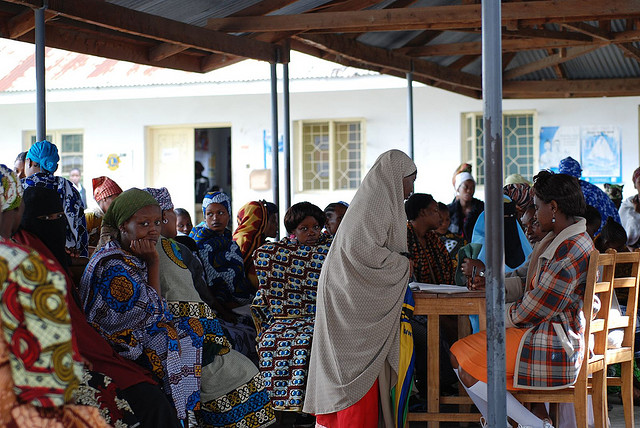
Image Credit: “Women’s Health Clinic” courtesy of flickr user advencap. -
Watch: Frederick Burkle on Lessons from Haiti and Professionalizing Humanitarian Assistance
›April 20, 2011 // By Schuyler Null“Haiti – in terms of coordination – was a debacle,” said Frederick Burkle, senior fellow with the Harvard Humanitarian Initiative and a visiting scientist at the Harvard School of Public Health. Burkle, who is also a senior public policy scholar at the Wilson Center, said that after the 2010 earthquake, “the large majority of people who showed up were under the age of 30 and this was their first disaster event.”
As a result, “best practices did not necessarily occur,” Burkle said. “Ninety-five percent of the work is probably done by 45 of the major NGOs,” but, he said, the number of “mom-and-pop shows” and other small NGOs in “The Republic of NGOs” is in the thousands.
Non-healthcare providers ended up providing services that they were not trained to provide – even amputations, Burkle said. “We certainly relish the humanitarian spirit of those who show up, but we have to have some coordination to ensure that best practices occur and that it goes in the right direction.”
“The professionalization blueprint really calls for courses, curriculum, and best practice standards,” said Burkle. The Harvard Humanitarian Initiative is working with the UN Office for the Coordination of Humanitarian Affairs, World Health Organization, and others to provide these resources.
“There’s a movement afoot within the humanitarian community itself to finally professionalize the humanitarian profession,” Burkle said, spurred on, in part, by the poorly coordinated responses to events like the Haiti earthquake. -
Integrating Development: A Livelihood Approach to Population, Health, and Environment Programs
›
Rural communities in developing countries understand that high population growth rates, poor health, and environmental degradation are connected, said Population Action International’s Roger-Mark De Souza at a recent Wilson Center event. An integrated approach to development – one that combines population, health, and environment (PHE) programs – is a “cost-effective intervention that we can do very easily, that responds to community needs, that will have a huge impact that’s felt within a short period of time,” said De Souza. “This is how we live our lives, this makes sense to us – it’s completely logical,” community participants in PHE projects told him.
-
In Search of a New Security Narrative: National Conversation Series Launches at the Wilson Center
›The United States needs a new national security narrative, agreed a diverse panel of high-level discussants last week during a new Wilson Center initiative, “The National Conversation at the Woodrow Wilson Center.”
Hosted by new Wilson Center President and CEO Jane Harman and moderated by The New York Times’ Thomas Friedman, the inaugural event was based on a white paper by two active military officers writing under the pseudonym “Mr. Y” (echoing George Kennan’s “X” article). In A National Strategic Narrative, Captain Wayne Porter (USN) and Colonel Mark Mykleby (USMC) argue that the United States needs to move away from an outmoded 20th century model of containment, deterrence, and control towards a “strategy of sustainability.” [Video Below]
Anne-Marie Slaughter of Princeton University, who wrote the white paper’s preface, summarized it for the panel, which included Brent Scowcroft, national security adviser to President Ford and President H.W. Bush; Representative Keith Ellison (D-Minn.); Steve Clemons, founder of the American Strategy Program at the New America Foundation; and Robert Kagan, senior fellow for foreign policy at the Brookings Institution.Framing a 21st Century Vision
We can no longer expect to control events, but we can influence them, Slaughter said. “In an interconnected world, the United States should be the strongest competitor and the greatest source of credible influence – the nation that is most able to influence what happens in the international sphere – while standing for security, prosperity, and justice at home and abroad.”
“My generation has had our whole foreign policy world defined as national security,” said Slaughter, “but ‘national security’ only entered the national lexicon in the late 1940s; it was a way of combining defense and foreign affairs, in the context of a post-World War II rising Soviet Union.”
As opposed to a strategy document, their intention, write Porter and Mykleby, was to create a narrative through which to frame U.S. national policy decisions and discussions well into this century.
“America emerged from the Twentieth Century as the most powerful nation on earth,” the “Mr. Y” authors write. “But we failed to recognize that dominance, like fossil fuel, is not a sustainable source of energy.”It is time for America to re-focus our national interests and principles through a long lens on the global environment of tomorrow. It is time to move beyond a strategy of containment to a strategy of sustainment (sustainability); from an emphasis on power and control to an emphasis on strength and influence; from a defensive posture of exclusion, to a proactive posture of engagement. We must recognize that security means more than defense, and sustaining security requires adaptation and evolution, the leverage of converging interests and interdependencies. [italics original]
Prosperity and Security a Matter of Sustainability
The “Mr. Y” paper is similar in some respects to other strategic documents that have promoted a more holistic understanding of security, such as the State Department’s Quadrennial Diplomacy and Development Review, which was partially authored by Slaughter during her time in State’s Policy Planning Office. But there’s a markedly heavy focus on economics and moving beyond the “national security” framework in Porter and Mykleby’s white paper. They outline three “sustainable” investment priorities:
“These issues have come in and out of the security debates since the end of the Cold War, but they have not been incorporated well into a single national security narrative,” Geoff Dabelko, director of the Wilson Center’s Environmental Change and Security Program, told The New Security Beat. “This piece is a positive step toward achieving a coherent and inclusive national security narrative for the United States.”- Human capital: refocus on education, health, and social infrastructure;
- Sustainable security: use a more holistic, whole-of-government approach to security; essentially, expand the roles of civilian agencies and promote stability as much as ensuring defense; and,
- Natural resources: invest in long-range, sustainable management of natural resources, in the context of expanding global demand (via population growth and consumption).
To provide a “blueprint” for this transition, Porter and Mykleby call for the drafting of a “National Prosperity and Security Act” to replace the national security framework laid by the National Security Act of 1947 (NSA 47) and followed by subsequent NSAs.A New Geostrategic Model?
The panel unanimously praised the white paper’s intentions, if not its exact method of analysis and proposed solutions. All agreed that globalization and technology have helped create a more interconnected and complex world than current foreign policy and national security institutions are designed to deal with. Scowcroft called the 20th century “the epitome of the nation-state system” and said he expects an erosion of nation-state power, especially in light of integrated challenges like climate change and global health.
Kagan disagreed, saying he’s less convinced that the nation-state is fading away. “If anything, I would say since the 1990s, the nation-state has made a kind of comeback,” he said, adding that the paper lacks “a description of how the world works, in the sense of ‘do we still believe in a core realist point that power interaction among nation states is still important?’” In that sense, he said, “I’m not at all convinced we’ve left either the 20th century or the 19th century, in terms of some fundamental issues having to do with power.”
“I think there are three things that really are new,” said Slaughter. “The first [is the] super-empowered individual…the ability of individuals to do things that only states could.” We saw that with 9/11, with individuals attacking a nation, and we’re seeing that with communications as well, she said. “I can tell you, Twitter and the State Department’s reporting system, they’re pretty comparable and Twitter’s probably ahead, in terms of how much information you can get.”
Second, there is a “whole other dimension of power that simply did not exist before and that is how connected you are,” Slaughter said. “The person who is the most connected has the most power, because they’re the person who can mobilize, like Wael Ghonim in Egypt.”
Third, there are a greater number of responsible stakeholders. “What President Obama keeps telling other nations is ‘you want to be a great power? It’s not enough to have a big economy and a big army and a big territory, you have to take responsibility for enforcing the norms of a global order,’” Slaughter said. Qatar’s willingness to participate in the international community’s intervention in Libya, she said, was in part an example of a country responding to that challenge and stepping up into a role it had not previously played.
These new dimensions to power and security don’t entirely replace the old model but do make it more complex. “It’s on top of what was,” Slaughter said, and “we have to adapt to it.”
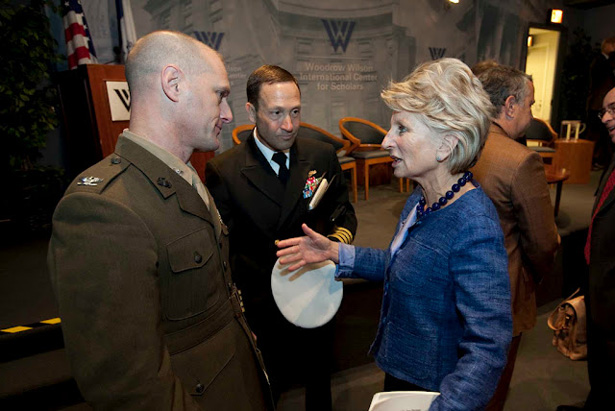
Photo Credit: Colonel Mark Mykleby (USMC), Captain Wayne Porter (USN), and Wilson Center President and CEO Jane Harman, courtesy of David Hawxhurst/Wilson Center. -
Working With the Private Sector to Improve Maternal, Newborn, and Child Health
Innovations From Development to Delivery
›“Challenging and dynamic partnerships [with the private sector] are difficult to pull together, but when you look at sustainability, impact, and effectiveness, they can also be great levers of change,” said Kari Stoever, senior advisor for global advocacy at the Global Alliance for Improved Nutrition (GAIN) at the Wilson Center on March 22. [Video Below]
Stoever was joined by panelists Laura McLaughlin, environmental engineer at Cascade Designs, Inc., Hugh Chang, director of special initiatives at the NGO PATH, and Laura Birx, senior food security and nutrition specialist at the U.S. Agency for International Development (USAID) for a discussion of the private sector’s role in developing innovative health technologies to increase access to safe water, prevent infectious diseases, and improve maternal health nutrition.
Collaborating to Provide Safe Water
“NGOs have different strengths and different perspectives from the private sector, and we’ve found an area where we can really complement each other,” said McLaughlin. Cascade Designs, Inc., collaborated with PATH to create a smart electrochlorinator, which produces a chlorine solution to purify water using just salt water and a simple battery, because “we wanted to make a bigger difference than we could do with philanthropy alone,” said McLaughlin.
“Products need to be designed specifically for the end user, particularly for women and children, who are often times left out of the design process,” said McLaughlin. Cascade’s smart electrochlorinator was designed with this in mind. One charged battery can treat up to 40,000 liters of water, 200 liters at a time. The device is easy to use, requires simple resources, is significantly more affordable than existing solutions, and lends itself to an entrepreneurial business model that can deliver safe water to small community households. The current prototype is being field-tested in 10 countries globally, with the aim of providing safe water in resource-poor communities while generating income for local entrepreneurs.
The PATH-Cascade partnership was successful in part because it combined “private-sector expertise in efficiency, cost-effectiveness, and meeting market demands” with knowledge about the health needs in developing countries, said McLaughlin. By “pushing each other to a common end goal, this partnership really multiplied our strengths.”
Engaging the Private Sector
“One of the reasons we work closely with the private sector…is because we recognize an efficiency of resource usage that comes with building bridges between the public sector and the private sector,” said Chang of PATH’s work with Cascade and others. Engaging the private sector to advance health technologies can complement PATH’s goals, like encouraging healthy behaviors and strengthening health systems, he said. “But, we are not averse to profits,” he added, stressing that partnerships with NGOs can be mutually beneficial. “We understand for this to be sustainable, these companies need to make a profit.”
PATH is working with the private sector to develop injection and vaccine technologies that “produce a product that not only benefits the recipient of the vaccine but also produces a revenue stream,” said Chang. The SoloShot, for example, is a low-cost, disposable syringe that locks after a single injection, preventing needle reuse and contamination that can increase the risk of HIV, hepatitis B, and other infections. To address the challenge of maintaining the proper refrigeration of vaccines in low-resource settings, private sector collaboration has helped to develop the vaccine vial monitor (a sticker that changes color when a vaccine has been exposed to too much heat) and to create more stable vaccine formulas that are less vulnerable to extreme temperatures. “By combining innovation with on-the-ground presence,” concluded Chang, “private sector engagement can be a powerful tool for global health.”
A “Win-Win Partnership”
“There is a tremendous role for the private sector to play in the intersection of agriculture and health as they relate to nutrition,” said Birx. Engaging the private sector can be a “win-win partnership,” she said. The Obama Administration’s hunger initiative, Feed the Future, for example, uses the resources, expertise, and innovation of the private sector to encourage sustainable, market-driven approaches to reducing poverty and food insecurity, said Birx.
USAID sees innovation as a “research-to-use continuum,” said Birx. “When we look at innovation, it’s not just about the development of a specific product, but about the entire system that goes around that product,” she added. New technologies must not only respond to a major development challenge in poor and rural communities but need to be affordable, culturally appropriate, gender sensitive, easy to use, and durable.
But solutions don’t have to be complicated. “Often times it’s about a really simple technology that can improve accessibility,” said Birx. The nevirapine pouch, for example, a simple foil packet that allows health care workers to give women single doses of nevirapine syrup, can reduce the risk of mother-to-child transmission of HIV by more than half.
“There’s a lot of excitement, but we need to do some serious work to capitalize on [it],” said Birx. Moving forward, health, development, and private-sector organizations must work together to create innovative financing mechanisms, build institutions in developing countries, and encourage enabling policy environments.
Sources: PATH.
Photo Credit: “Mission to Ouanda Djallé,” courtesy of flickr user hdptcar. -
Integrated Approach Helps “Model Farmers” Increase Productivity in Ethiopia
›March 24, 2011 // By Schuyler NullTo reach the village of Grar Gaber from Addis Ababa, you drive up over the Entoto Mountains overlooking the capital then motor down two hours of new Japanese-built highway to the town of Fiche. From there it’s 20 minutes on a broken dirt road across rocky hills. I was joined there by about 20 others from the PHE Ethiopia Consortium’s general assembly (see day one and day two coverage here) and Population Action International, to visit an integrated population, health, and environment (PHE) development program run by LEM Ethiopia.
-
USAID: Maternal Deaths in Bangladesh Decline by 40 Percent in Less Than 10 Years
›The original version of this article, by the USAID Global Health Bureau, appeared on the USAID Impact blog.
Bangladesh is on track to meet the 2015 deadline for UN Millennium Development Goal 5 (50 percent reduction in maternal deaths). The Bangladesh Maternal Mortality and Health Service Survey, jointly funded by the Government of Bangladesh, USAID, Australian Aid (AusAID) and the United Nations Population Fund (UNFPA), found that maternal deaths in Bangladesh fell from 322 per 100,000 in 2001 to 194 in 2010, a 40 percent decline in 9 years.
The decline in direct obstetric deaths is most likely the consequence of better care seeking practices and improved access to and use of higher-level referral care. The decline in total fertility rate due to the successful family planning program has reduced exposure to high risk pregnancies and has thus prevented a large number of maternal deaths.
Continue reading on USAID’s Impact blog.
Sources: Directorate General of Health Services – Bangladesh, UN.
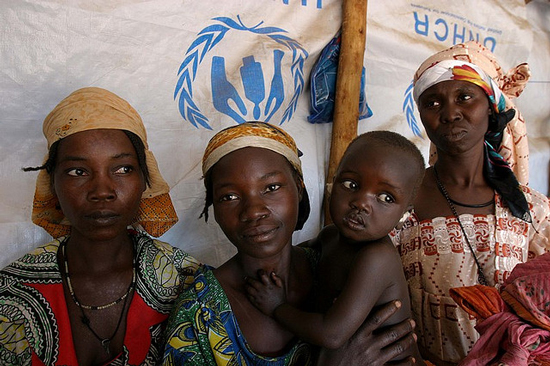
Photo Credit: Adapted from “Mother & Son,” courtesy of flickr user Anduze traveller.
Showing posts from category global health.