Showing posts from category funding.
-
Gates Foundation Spearheads London Summit on Family Planning
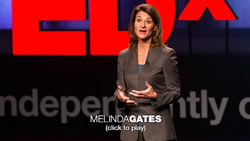
›July 12, 2012 // By Carolyn Lamere “Given the option, [women in developing countries] will have fewer children,” said Melinda Gates in a TEDxChange talk in April. “The question is: are we going to commit to helping them get what they want now? Or are we going to condemn them to some century-long struggle, as if this were still revolutionary France and the best method was still coitus interruptus?”
Wednesday, The Bill and Melinda Gates Foundation followed through on Gates’ pledge, helping to raise more than $2.6 billion at the London Summit on Family Planning as part of an ambitious goal of helping 120 million additional women in developing countries gain access to contraception by 2020. The summit was co-hosted by the UK Department for International Development and garnered support from other foundations and governments, including the United States, France, Germany, the Netherlands, South Korea, Norway, Sweden, and Australia.
To quote the Population Institute’s Robert Walker on Dot Earth, this is a big deal:Many of the challenges that we face (hunger, severe poverty, energy, food, carbon emissions) are seemingly intractable. Population growth, which is a challenge multiplier, is not intractable. Far from it. There are proven highly cost-effective means of lowering fertility rates: providing access to contraceptives, keeping girls in school, ending child marriage practices, and changing social norms (including attitudes toward women and desired family size) through entertainment media.
The focus on family planning for the Gates Foundation – one of the largest philanthropic organizations in the world – is relatively new (though their commitment to global health and development is not). Melinda Gates announced a commitment to maternal health in 2010, and the foundation first issued a family planning strategy in April of this year.
The move has been unwelcome by some, particularly some Catholic institutions who object to family planning. But Gates has been adamant that contraceptives “should be a completely non-controversial topic.” She argues that 90 percent of Americans find contraceptives “morally acceptable,” including herself and many other Catholics, so there is no reason for the taboo around international aid for family planning to continue.
“We’re not going to agree about everything, but that’s OK,” said Gates in a recent interview with CNN.
In the TEDxChange talk, which helped launch this year’s push, she credits her upbringing for instilling a strong sense of social justice. During her travels with the Gates Foundation, one woman from a slum in Nairobi told her, “I want to bring every good thing to this child before I have another.” That statement resonated with Gates: “We all want to bring every good thing to our children,” she said. “But what’s not universal is our ability to provide every good thing for our children.” Gates pointed to contraception as a way for families to plan for their future and manage their resources. She recognized the controversial history of family planning as population control, but argued that this new initiative is about providing choices to individuals, not imposing values.
Gates remains confident that as long as the foundation makes its mission clear, people will rally behind the cause.
“We’re not talking about abortion. We’re not talking about population control. What I’m talking about is giving women the power to save their own lives, to save their children’s lives, and to give their families the best possible future.”
Sources: BBC, The Bill and Melinda Gates Foundation, CNN, Catholic Family and Humans Rights Institute, Catholics For Choice, Dot Earth.
Video Credit: TEDxChange. -
Nabeela Ali on How PAIMAN Is Improving Maternal Health in Pakistan
›“Maternal mortality is a very complex thing – it’s not just patient-doctor relationships, it has so much to do with behaviors, with communities, with the household, with family members,” said Nabeela Ali, chief of party for the Pakistan Initiative for Mothers and Newborns (PAIMAN), which received USAID maternal and child health funding from 2004 to 2010.
Pakistan is the world’s sixth most populous country, yet has long held one of the world’s highest maternal mortality rates. Ali spoke at the Wilson Center last fall about strategies to better engage faith-based organizations on maternal and child health issues. In this interview with ECSP, she stressed that despite Pakistan’s very religious society, these interventions are possible with the right messaging.
PAIMAN aims to reach vulnerable and isolated groups, including poor, rural, or conservative women. “The areas where no one can reach [are] where we targeted,” Ali said.
In these areas, ulama – influential religious leaders and scholars – are highly trusted. “It was not a one-size-fits-all strategy,” Ali emphasized. “Religious leaders are not technical people, but they are experts in their own field. You have to approach them with trust and respect.”
“The first step is establishing rapport with them; then they listen to you,” said Ali. This is best done through another alim, not a technical person. Those ulama that were approachable proved to be valuable allies in the promotion of maternal health. PAIMAN has reached over 35 million people in Pakistan over its now eight-year run.
Projects like PAIMAN are necessary in areas of the world where religious leaders are the most respected community authorities. In Pakistan, Ali believes that now that this strategy has been demonstrated to be viable, the government should help bring it to scale. An NGO-funded project ends, but a government-funded program has much more continuity, which in turn helps build trust with local leaders, she said.
Sources: UN Population Division. -
Karen Newman: Rio+20 Should Re-Identify Family Planning As a Core Development Priority
›April 25, 2012 // By Kate DiamondEnergizing people around family planning can be difficult, “because donors, like everyone else, like something that’s new,” said Karen Newman, coordinator for the UK-based Population and Sustainability Network. “There’s nothing new about family planning. The technology is safe, effective, it’s acceptable, and it works. We just need a lot more of it out there to be accessible to a lot more people.”
Newman spoke to ECSP at the 2012 Planet Under Pressure conference about her hopes for the upcoming Rio+20 sustainable development conference, which marks the 20-year anniversary of the UN Earth Summit.
“What we want is increased investment in voluntary family planning services that respect and protect rights,” Newman said, “and I think that Rio represents a fabulous opportunity for us to re-identify family planning as a core development priority.”
Newman also hopes the Rio conference will lead to “an integrated look at sustainable development, so that… it isn’t just about the green economy and institutional framework, it’s looking at sustainable development in the round.”
Government development programs and policymakers need to adapt their bureaucratic processes to the kinds of integrated programming being carried out on the ground, she said. In Madagascar, for example, conservation group Blue Ventures leads an integrated PHE program that cuts across marine conservation, family planning, and healthcare sectors. “Now I defy you to find an EU budget line that would be broad enough to embrace marine conservation and family planning in the same project line,” said Newman.
“The first thing we need is that level of integrated thinking – not just in Rio, but also in the way that we conceptualize the work that needs to be done and we facilitate the availability of funding streams that can fund that kind of integrated program.”
Lastly, Newman hopes that the summit in and of itself is successful because of its implications for future development work. As the world gears up to create the next big framework for global development to follow the Millennium Development Goals, Rio is uniquely positioned to set a baseline for what matters and for what the development community is capable of accomplishing.
“What I want to see is a really sophisticated look at sustainable development, coming up with sustainable development goals in a world that makes sense of seven billion, where there are still millions of women without access to the family planning services that we take for granted,” said Newman, “and taking that concept to the job of developing the post-MDG framework that will frame development for the next 20 years.” -
Kavita Ramdas: Why Educating Girls Is Not Enough
›“I’m a big proponent of girl’s education. I believe that it’s a very important and a very valuable human rights obligation that all countries should be meeting,” said Kavita Ramdas, executive director for programs on social entrepreneurship at Stanford University, at the Wilson Center. However, “in the past seven to eight years we have found ourselves in a situation where there’s kind of an enchantment with girl’s education, as though it were the new microenterprise magic bullet to solve everything from poverty, to malnourishment, to inequality.”
“The outcomes that we ascribe to girl’s education…are not anything that I would argue with,” she said, yet, this enchantment “has happened simultaneously with a significant drop in both funding and support for strategies that give girls and women access to reproductive health and choices, particularly family planning.”
This is a problem, said Ramdas, because we cannot rely on education alone to do all the heavy lifting required to empower women.
“I think it’s important for us to recognize that there are societies where girls and women have achieved significantly high levels of education in which gender inequality remains,” she said, “for example, places like Japan and Saudi Arabia, where you have high per capita income, high levels of education, and yet…where women and girls are still marginalized and on the edges in terms of decision making.”
“I don’t think we have to wait for one to be able to do the other,” she said. “As we support programs for girls’ education, we also need to demand that those programs be buttressed by strong programs in adolescent health, strong programs in sex education, strong programs that actually provide girls and women with access to family planning and contraception.” -
USAID’s New Climate Strategy Outlines Adaptation, Mitigation Priorities, Places Heavy Emphasis on Integration
›February 29, 2012 // By Kathleen MogelgaardIn January, the U.S. Agency for International Development released its long-awaited climate change strategy. Climate Change & Development: Clean Resilient Growth provides a blueprint for addressing climate change through development assistance programs and operations. In addition to objectives around mitigation and adaptation, the strategy also outlines a third objective: improving overall operational integration.
The five-year strategy has a clear, succinct goal: “to enable countries to accelerate their transition to climate-resilient low emission sustainable economic development.” Developed by a USAID task force with input from multiple U.S. agencies and NGOs, the document paints a picture of the threats climate change poses for development – calling it “among the greatest global challenges of our generation” – and commits the agency to addressing both the causes of climate change and the impacts it will have on communities in countries around the world.
These statements are noteworthy in a fiscal climate that has put development assistance under renewed scrutiny and in a political environment where progress on climate change legislation seems unlikely.
Not Just Challenges, But Opportunities
To make the case for prioritizing action on climate change, the strategy cites climate change’s likely impact on agricultural productivity and fisheries, which will threaten USAID’s food security goals. It also illustrates the ways in which climate change could exacerbate humanitarian crises and notes work done by the U.S. military and intelligence community in identifying climate change as a “threat multiplier” (or “accelerant of instability” as the Quadrennial Defense Review puts it) with implications for national security.
Targeted efforts to address climate change, though, could consolidate development gains and result in technology “leap-frogging” that will support broader development goals. And, noting that aggregate emissions from developing countries are now larger than those from developed countries, the strategy asserts that assisting the development and deployment of clean technologies “greatly expands opportunities to export U.S. technology and creates ‘green jobs.’”
In addition to providing a rationale for action, the strategy provides new insights on how USAID will prioritize its efforts on climate change mitigation and adaptation. It provides a clear directive for the integration of climate change into the agency’s broader development work in areas such as food security, good governance, and global health– a strong and encouraging signal for those interested in cross-sectoral planning and programs.
Priorities Outlined, Tough Choices Ahead
President Obama’s Global Climate Change Initiative, revealed in 2010, focuses efforts around three pillars: clean energy, sustainable landscapes, and adaptation. USAID’s climate strategy fleshes out these three areas, identifying “intermediate results” and indicators of success – such as the development of Low Emission Development Strategies in 20 partner countries, greenhouse gas sequestration through improved ecosystem management, and increasing the number of institutions capable of adaptation planning and response.
In laying out ambitious objectives, however, the authors of the strategy acknowledge constrained fiscal realities. The strategy stops short of identifying an ideal budget to support the activities it describes, though it does refer to the U.S. pledge to join other developed countries in providing $30 billion in “fast start financing” in the period of 2010 to 2012 and, for those USAID country missions that will be receiving adaptation and mitigation funding, establishes “floors” of $3 million and $5 million, respectively.
The final section of the strategy lists over thirty countries and regions that have already been prioritized for programs, including Bangladesh, India, Kenya, Malawi, and Peru. But “we are unable to work in every country at risk from climate change impacts or with the potential for low carbon sustainable growth,” the strategy asserts. An annex includes selection criteria to guide further funding decisions, including emission reduction potential, high exposure to physical climate change impacts, a suitable enabling environment, coordination with other donors, and diplomatic and geographic considerations.
“Integration” Central to Strategy
The concept of integration figures prominently throughout the 27-page document. For those of us working in the large and growing space where the global challenges of climate change, food security, health, livelihoods, and governance overlap, this attention is heartening. While it may sometimes seem simply fashionable to pay lip service to the idea of “breaking out of stovepipes,” the strategy identifies concrete ways to incentivize integration.
“Integration of climate change into USAID’s development portfolio will not happen organically,” the strategy says. “Rather, it requires leadership, knowledge and incentives to encourage agency employees to seek innovative ways to integrate climate change into programs with other goals and to become more flexible in use of funding streams and administrative processes.”
To this end, USAID plans to launch a group of pilot activities. USAID missions must submit pilot program proposals, and selected programs will emphasize integration of top priorities within the agency’s development portfolio (including Feed the Future and the Global Health Initiative). Among other criteria, pilots must demonstrate buy-in from multiple levels of leadership, and will be selected based on their potential to generate integration lessons and tools over the next several years.
This kind of integration – the blending of key priorities from multiple sectors, the value of documented lessons and tools, the important role of champions in fostering an enabling environment – mirrors work carried out by USAID’s own population, health, and environment (PHE) portfolio. To date, USAID’s PHE programs have not been designed to address climate challenges specifically, and perhaps not surprisingly they aren’t named specifically in the strategy. But those preparing and evaluating integration pilot proposals may gain useful insights on cross-sectoral integration from a closer look at the accumulated knowledge of more than 10 years of PHE experience.
Population Dynamics Recognized, But Opportunities Not Considered
Though not a focus of the strategy, population growth is acknowledged as a stressor – alongside unplanned urbanization, environmental degradation, resource depletion, and poverty – that exacerbates growing challenges in disaster risk reduction and efforts to secure a safe and sufficient water supply.
Research has shown that different global population growth scenarios will have significant implications for emissions growth. New analysis indicates that the fastest growing populations are among the most vulnerable to climate change and that in these areas, there is frequently high unmet need for family planning. And we have also clearly seen that in many parts of the world, women’s health and well-being are increasingly intertwined with the effects of changing climate and access to reproductive health services.
In its limited mention of population as a challenge, however, the strategy misses the chance to identify it also as an opportunity. Addressing the linked challenges of population growth and climate change offers an opportunity to recommit the resources required to assist of the hundreds of millions of women around the world with ongoing unmet need for family planning.
The strategy’s emphasis on integration would seem to be an open door to such opportunities.
Integrated, cross-sectoral collaboration that truly fosters a transition to climate-resilient, low-emission sustainable economic development will acknowledge both the challenge presented by rapid population growth and the opportunities that can emerge from expanding family planning access to women worldwide. But for this to happen, cross-sectoral communication will need to become more commonplace. Demographers and reproductive health specialists will need to engage in dialogues on climate change, and climate specialists will need both opportunities and incentives to listen. USAID’s new climate change integration pilots could provide a new platform for this rare but powerful cross-sectoral action.
Kathleen Mogelgaard is a writer and analyst on population and the environment, and a consultant for the Environmental Change and Security Program.
Sources: FastStartFinance.org, International Energy Agency, Maplecroft, Population Action International, The White House, U.S. Department of Defense, USAID.
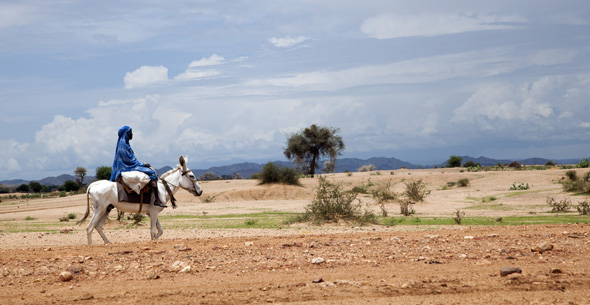
Photo Credit: “Displaced Darfuris Farm in Rainy Season,” courtesy of United Nations Photo. -
Is Foreign Aid Worth the Cost?
›“Is foreign aid worth the cost? That’s not really the question unless you’re Ron Paul,” quipped Carol J. Lancaster, dean of the School of Foreign Service at Georgetown University, at the Wilson Center on January 23. “The real questions are: What do we want to accomplish with our foreign aid? Where should it go? And in what form?” [Video Below]
Lancaster noted that following World War II, foreign aid became “a two-pronged instrument – one as an instrument of the Cold War and the other as an extension of American values.” It has been a very “intense marriage” between the two, he said, “with one side up and the other side down at different times, as any marriage tends to be.” Truman convinced Congress to provide aid to Greece and Turkey in 1948 to combat communism, and he was able to gain approval for the Marshall Plan by “scaring the wits out of Congress” about the communist threat.
Aid Under Fire
Congressman Donald Payne (N.J.), who is the ranking Democrat on the House Foreign Affairs Committee’s Subcommittee on Africa, agreed that the Cold War was the principal reason for our foreign aid programs after World War II, as we provided hundreds of billions of dollars in aid to our supporters around the world. But, “It’s different today,” he added. “Since the end of the Cold War, more funds are going for humanitarian and development assistance, but it is still directly linked to our national interests. One in five American jobs are tied to U.S. trade, and the growth of our trading partners is our growth as well.”
Payne cautioned that there is “a new group in the House of Representatives who think we should step out of the world. They’ve told their constituents they are going to cut the budget, and foreign aid is an easy target.” Payne noted that polls show the American people think one-quarter or more of the federal budget goes to foreign aid when it is little more than one percent.
Nevertheless, there has been bipartisan support for former President Bush’s HIV/AIDS initiative in Africa which is showing remarkable results in reducing deaths from the disease. Payne added that aid to Africa is showing results in the number of economies that are doing well despite the global economic downturn.
Payne expressed frustration with the inability to enact a foreign aid authorization bill in the last several Congresses because the measures became weighted down with all manner of policy riders that were both partisan and controversial. Consequently, our foreign relations operations are solely dependent on the annual appropriations bills which tend to become encumbered as well with troublesome riders.
The Dangers of “Nation Building”
Charles O. Flickner, Jr., a 28-year Republican staff member on the Senate Budget Committee and then the Foreign Operations Appropriations Subcommittee in the House, presented a more skeptical view, saying foreign aid is not worth the $35 billion it is costing us each year, even though some of the programs have been successful and should be continued. The biggest problem in recent years, he said, has been the amount of money wasted on projects in Iraq and Afghanistan without adequate planning or execution. Money was being virtually shoveled out the door in amounts the host countries did not have the capacity to absorb, said Flickner, and as a consequence we have witnessed a lot of failed projects and corruption.
Smaller projects, which the U.S. government and private aid donors are better at, have a greater chance for success because they do not overwhelm the capacities of host countries. He cited some of the scholarships and technical training programs available for foreign nationals as being among the most worthwhile in building internal leadership capacity for the future in developing countries.
Rajiv Chandrasekaran agreed on the amount of wasted aid dollars being spent in Iraq and Afghanistan, which he has covered as a foreign correspondent for The Washington Post. He told the story of a small, dirt-poor town in Afghanistan he visited in where the bazaar was bustling with new shops and goods, and people were freely spending money on modern electronics, motor bikes, and clothes. The town was the beneficiary of a massive U.S. aid program that provided seed money for farmers to grow crops and created day labor jobs for the residents of the area. A contractor was authorized to spend $30 million on the economic development of the town during the U.S. counterinsurgency surge and that came to roughly $300 per person. It was clear to the USAID official on the ground and to the reporter that the experiment would not be sustainable over the long-term, even though there was a temporary sense of economic activity and prosperity.
Future Vulnerabilities
The panel seemed to agree that it was unfair to blame USAID for these failures since they were thrown into situations overnight they were not prepared to manage in countries that were not capable of absorbing the assistance being directed at them – all in the midst of ongoing conflict. The real test of whether the new directions being charted by the Obama Administration will work will be on the smaller, more manageable projects in which the host countries have a greater role in shaping and implementing.
Lancaster listed four vulnerabilities in the future course of U.S. foreign aid that should be avoided, including trying to merge our various interests through the State and Defense Departments with our aid programs in countries like Pakistan, where the institutions are weak and corrupt; the danger of creating an entitlement dependency through funding of HIV/AIDS drugs, where we will be guilty of causing deaths if we reduce funding; the danger of attempting to undertake too many initiatives at once, such as food aid, global health, climate change, and science and technology innovations, while simultaneously trying to reform the infrastructure of USAID; and trying too hard to demonstrate results from aid given the difficulty of disentangling causes and effects and gauging success over too short a time frame.
Event Resources:
Don Wolfensberger is director of the Congress Project at the Wilson Center. -
Delivering Solutions: Advancing Dialogue to Improve Maternal Health
›“Throughout the 2009-2011 Advancing Dialogue on Maternal Health lecture series, we always heard the same good news: we know how to save the lives of women and girls. But more political will is needed,” said Calyn Ostrowksi, program associate for the Wilson Center’s Global Health Initiative on December 15 for the launch of the series’ culminating report, Delivering Solutions: Advancing Dialogue To Improve Maternal Health.
Joining Ostrowski were co-author Margaret Greene, director of GreeneWorks; Luc de Bernis, senior advisor on maternal health at the UN Population Fund; Tim Thomas, interim director for the Maternal Health Task Force; and Chaacha Mwita, director of communications at the African Population and Health Research Center.
One of the few forums dedicated to maternal health, the series brought together senior-level policymakers, academic researchers, members of the media, and NGO workers from the United States and abroad. The series consisted of 21 separate events, with hundreds of experts sharing their experiences and thousands of participants and stakeholders providing their expertise. The final report captures, analyzes, and synthesizes the strategies and recommendations that emerged from the series.
Promoting Social Change
Unlike other health issues, said Green during her presentation on the findings of Delivering Solutions, the field of maternal health requires a holistic and multi-faceted approach; that is, an approach that looks not only at health systems, but also at underlying social factors. The report divides maternal health into three broad categories: social, economic, and cultural factors; health systems factors; and research/data demands.
Looking first at the social, cultural, and economic issues, Greene highlighted the need to improve nutrition and educational opportunities for young women in developing countries. Policymakers must be convinced that investing in women is not just good for women but good for families and children, she said. The participation of male partners and other male family members is also needed to increase access to maternal health services, such as family planning, and promote gender equality. The report pointed to a number of recommendations to promote male engagement:- Target interventions that educate men about danger signs and pregnancy complications.
- Address pressures that many young married men feel to prove their fertility.
- Inform men about sexual rights and how they relate to the health and wellbeing of their partners.
Health systems and medical resources play an equally pivotal role in reducing maternal mortality as social factors. The report highlights several key areas for strengthening the health system including the expansion of healthcare workers, health finance schemes, technology, and commodity distribution.
One key recommendation is to integrate reproductive health and maternal health supply chains. Four key medicines, oxytocin misoprostol, magnesium sulfate, and manual vacuum aspirators, target the three leading causes of maternal mortality (post-partum hemorrhage, obstructed labor, and unsafe abortion). Efforts to improve the distribution of these commodities should be more widely dispersed in developing countries and supported by community-based interventions. Women in urban slums, for example, face unique challenges that are not being adequately addressed.
Additionally, new technologies should be more creatively and effectively used, in particular the use of mobile phones in rural communities.
Many of the policy recommendations offered by the report, as Greene pointed out, are low-cost and highly effective. Yet three significant challenges remain for the field in general:- Six countries – Afghanistan, Democratic Republic of Congo, Ethiopia, India, Nigeria, and Pakistan – account for over half of the maternal deaths worldwide. The unique problems of each of these countries must be addressed and solved.
- Integration of maternal health with existing health services along with an over-reliance on community health workers can overburden weak infrastructure.
- Unnecessary cesarean births are on the rise as more women deliver in private sector facilities. These births cost 2 to 18 times as much as vaginal births and create unnecessary risks for mothers.
Chaacha Mwita of the African Population and Health Research Center (APHRC), located in Nairobi has seen firsthand the result of an overburdened and inadequate maternal health system in both his personal and professional life. Mwita endorsed the findings of the series report, emphasizing in particular the focus on transportation systems, male involvement, stakeholder dialogue, and education.
Mwita said that collaboration at all levels is the key to improving maternal health. Policymakers must communicate with researchers, who, in turn, must communicate with doctors, nurses, and hospital administrators in the field. The collaborative in-country dialogue series between the Wilson Center and APHRC, he believes, was a highly useful and easily replicable way of encouraging dialogue among relevant stakeholders in the field.
The Big Picture
”Our hope is that we’ve been able to seed discussions,” said Tim Thomas of the Maternal Health Task Force, one of the co-sponsors of the maternal health series. “We hope those seeds will take root and flourish.” Luc de Bernis, senior maternal health advisor of UNFPA, echoed Thomas’ sentiments, emphasizing the need for continued dialogue.
While maternal health has drawn increased international attention, creating political agreement among policymakers is a complex and often difficult process. There has been marked, though uneven, progress in improving maternal health across the globe, but more must be done. The Delivering Solutions report provides a state of the field assessment as well recommendations for existing, easy-to-implement solutions.
Event Resources: -
From Dakar: Explaining Population Growth and Family Planning to Environmentalists
›December 19, 2011 // By Sandeep Bathala“There is a growing recognition that population is a key driver of environmental, development, governance, and security challenges; however, family planning is not a traditional tool, nor is it often considered an ‘appropriate’ one, for responding to food, water, climate, or conflict,” said Roger-Mark De Souza at a November 30 panel discussion at the 2011 International Conference on Family Planning in Dakar, Senegal. “This presents a challenge for us: How can we change perceptions of family planning so that it becomes part of the solution to wider problems, including natural resource scarcity, lack of economic development, gender inequity, and instability?”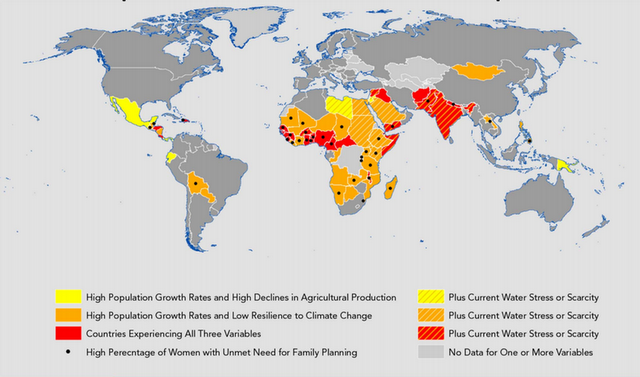
De Souza, vice president of research and director of the climate program at Population Action International (PAI), was joined by Sandeep Bathala, program associate with the Wilson Center’s Environmental Change and Security Program; Robert Engelman, president of Worldwatch Institute; and Daisy Magaña, fellow with the GoJoven Program, for a session on “Reaching Out at Rio: Explaining Population Growth and Family Planning to Environmentalists.”
Population Dynamics Part of Climate Vulnerability
“Advocates…need to communicate that empowering women to make their own reproductive choices will improve both their individual well-being and our collective environment,” said Engelman. According to research conducted on behalf of Americans for UNFPA, messages that focus on women – their health or empowerment – resonate well with American environmentalists, as they do with broader audiences.
PAI’s interactive mapping website shows that high levels of unmet need for family planning and rapid population growth rates are common in countries with low levels of resilience to climate change and high levels of projected decline in agricultural production, said De Souza. “Family planning services can be one element of a multi-pronged strategy to reduce especially women’s vulnerability to these interlocking vulnerabilities,” he said.
“Currently, population growth is viewed as a challenge to addressing climate change-related vulnerabilities, but family planning services are commonly left out of conversations about ways to reduce these vulnerabilities.” This is a lost opportunity, said De Souza: “We can integrate family planning into wider environmental, development, and peace-building efforts.”
At the recent UN Climate Change Conference in Durban, a side event on reproductive health and climate was well-attended. However, as panelist Esther Agbarakwe of the Africa Youth Initiative on Climate Change noted, population was not part of the conference‘s official discussion, due to lack of knowledge and fears of population control. PAI is currently working with UNFPA to produce a series of training modules on population and climate change that will help environmentalists, climate change activists, and researchers better understand and explore these connections.
Tapping the Youth Base
Bathala, formerly the Sierra Club’s Global Population and Environment Program director, discussed how the Sierra Club, one of the only major grassroots conservation organizations with a population program, uses youth outreach to raise awareness on the links between the environment, reproductive health, and women’s rights.
Because young people constitute over half of the world’s population, the Sierra Club focuses on empowering youth leaders to make the connection between environmental issues and sexual and reproductive health and rights. The Population and Environment Program reaches youth directly by organizing summits and multi-state campus tours featuring young people from around the world sharing compelling stories with their peers.
“The program provides youth and adult activists with materials, communication strategies, and leadership training,” Bathala said. “With these tools, the activists then educate their community members, campus, and decision-makers about the need for measures that increase access to family planning while addressing poverty, women’s empowerment, and environmental protection.”
In April, fellow panel member and Belize-native Daisy Magaña joined one of the Sierra Club’s U.S. tours to discuss the GoJoven program, which convenes and support youth reproductive health champions throughout Latin America. Through GoJoven, Magaña has worked to expand adolescent reproductive and sexual health choices, services, policies, and programs in Belize.
In a blog post, Magaña discussed how her message was simple: Don’t give up. “If you think being active on environmental and sexual rights issues is hard to do here, imagine doing it in a deeply conservative [Catholic] country like mine,” she told U.S. students.
Sierra Club also leads story tours to functioning population, health, and environment programs in the field, including a 2009 trip to Guatemala and Belize in conjunction with GoJoven. Through visits to 10 project sites, two U.S.-based youth advocates witnessed first-hand the challenges and opportunities associated with community-based sexual and reproductive health programs, significantly enhancing their ability to be pro-active messengers in their own communities. The tour helped the Sierra Club build an international network of young people committed to social and policy change in their countries.
Looking Forward: Finding Ways To Highlight Integration
While recognition of the connections between population growth and environmental impacts is growing, the experience of the panelists shows that it takes innovative methods to reach both the environmental and family planning communities. A similar panel later this winter at the Wilson Center will include representatives of Americans for UNFPA discussing their research on talking to environmentalists about reproductive health and population growth.
With the UN Conference on Sustainable Development (Rio+20) coming in June of next year, highlighting successful strategies is crucial in order to pave the way for better integration in the future.
Event ResourcesImage Credit: Roger-Mark De Souza/Population Action International.