Showing posts from category food security.
-
Russell Sticklor, World Politics Review
The Hungry Planet: Global Food Scarcity in the 21st Century
›August 16, 2011 // By Wilson Center StaffThe original version of this article, by Russell Sticklor, appeared on World Politics Review.
At the dawn of the 20th century, the world population was inching toward a modest two billion. In the 111 years since, notwithstanding the impact of war, genocide, disease, and famine, the global population has soared, reaching three billion around 1960 and now quickly approaching the neighborhood of seven billion. By 2050, the planet will likely be home to two billion more.
We may not be witnessing the detonation of the “population bomb” that Paul Ehrlich warned of in his seminal 1968 book, but such rapid demographic change is clearly pushing the international community into uncharted territory. With a limited amount of arable land and a finite supply of fresh water for irrigation, figuring out how to feed a planet adding upward of 70 million people each year looms as one of the 21st century’s most pressing challenges.
The push to ensure global food security transcends the desire to avoid repeating the famines that devastated the Soviet Union, China, North Korea, Ethiopia, and so many other corners of the world during the past century. Instead, aid and development organizations today rightly view food insecurity problems as deeply intertwined with issues of economic development, public health, and political stability, particularly in the developing world. To maintain order in the international community and prevent the emergence of new failed states in the decades ahead, it will be critical to find innovative means of feeding the rapidly growing populations of sub-Saharan Africa, the Middle East, and South and East Asia.
Continue reading on World Politics Review.
Note: World Politics Review has graciously white-listed all entrances from NSB for this article, so as long as you use the above link, you should be able to read the full article for free.
Russell Sticklor is a consultant for the Environmental Change and Security Program.
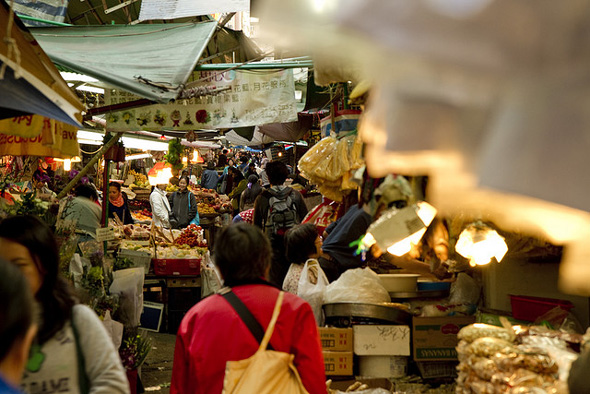
Photo Credit: “Crowded market street,” courtesy of flickr user – yt –. -
Population, Health, and Environment Approaches in Tanzania
›“Quality of life, human health, food security, and biodiversity are all connected,” said Elin Torell, research associate for the BALANCED Project and the University of Rhode Island Coastal Resource Center. Torell was joined at the Wilson Center on July 19 by Patrick Kajubili from the Tanzania Coastal Management Partnership, and Alice Macharia, director of the East Africa Program at the Jane Goodall Institute to discuss the importance of integrated population, health, and environment (PHE) initiatives that work to simultaneously improve health and livelihoods, manage natural resources, and conserve ecosystems in Tanzania.
Building Resilient Coastal Communities
The Coastal Resources Center’s work in Tanzania’s Saadani National Park provides an example of an integrated PHE approach that sustains the flows of environmental goods and services, maintains biological diversity, and empowers and improves the wellbeing of local residents, said Torell. Since 1996, the CRC has focused on protecting sea turtles, promoting energy-saving stoves, and tracking elephants, while at the same time improving livelihoods through savings and credit associations, eco-tourism, and beekeeping.
“Adding family planning makes a whole lot of sense,” said Torell. There is a high unmet need for family planning in Tanzania and the population is growing rapidly with an average number of 5.6 children per woman. Family planning not only helps families limit and space births but indirectly works to improve food security and human health, reduce demand for scarce natural resources, and empower women, she said.
“Integration is key,” concluded Torell: A coordinated and synergistic approach that meets the varied needs of local communities will be more effective and sustainable than if interventions were delivered independently.
Effective Integration in the Field
“Conceptual linking is not enough,” said Kajubili. “Integration also needs to happen at the organizational and field levels.”
On the ground, the Tanzania Coastal Management Partnership integrates family planning education and services into conservation work, said Kajubili. Peer educators deliver information about family planning, health, and coastal resources management; and community-based distributors deliver family planning services and supplies.
“Now people easily access reproductive health services,” said Kajubili. To date, the program has increased referrals to health centers, promoted contraceptive use, and reduced the distance that women need to travel to receive family planning services.
“Integration makes sense and cents,” said Kajubili. By combining resources, health and natural resource management organizations can potentially reach a broader population while sharing costs.
But “reinforcing the linkages between PHE of course takes time and education,” said Kajubili, highlighting a major challenge to implementing integrated approaches. “Advocacy is needed to overcome cultural and institutional barriers.”
“What About Our Needs?”
“Socio-economic development; family planning and AIDS education; sustainable forestry and agriculture practices; and water and sanitation all underpin and support sustainable natural resource management,” said Macharia.
The Lake Tanganyika Catchment Reforestation and Education Project (TACARE) led by the Jane Goodall Institute was initiated in 1994 to arrest the rapid degradation of land through tree planting and forest degradation, said Macharia. “But at some point, the communities raised the question: What about our own needs?” she said.
Community members prioritized the need for health services, education, clean water, and financial capital. But environmental degradation was not seen as a major issue, suggesting a need for a more integrated approach to TACARE’s conservation efforts.
“Integrated programs including population, health, and environment activities are cost-efficient and add value to conservation goals,” said Macharia. By responding to the needs of the community, the integrated approach adopted by TACARE has gained more credibility among local people, while a strong focus on building local capacity has helped to ensure sustainability of the program.
While there are many challenges to implementing and maintaining integrated PHE programs, “partnerships at the local, district, and national level are key to making this a success,” concluded Macharia.
Sources: Population Reference Bureau.
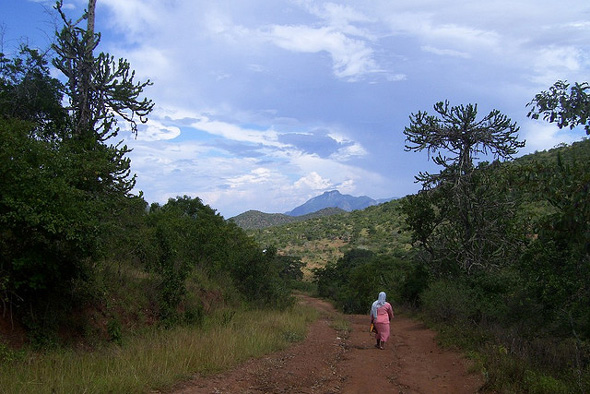
Photo Credit: “Environment near Vumari Village,” courtesy of flickr user treesftf. -
Second Generation Biofuels and Revitalizing African Agriculture
›In “A New Hope for Africa,” published in last month’s issue of Nature, authors Lee R. Lynd and Jeremy Woods assert that the international development community should “cut with the beneficial edge of bioenergy’s double-edged sword” to enhance food security in Africa. According to Lynd and Woods, Africa’s severe food insecurity is a “legacy of three decades of neglect for agricultural development.” Left out of the Green Revolution in the 1960s, the region was flooded with cheap food imports from developed nations while local agricultural sectors remained underdeveloped. With thoughtful management, bioenergy production on marginal lands unfit for edible crops may yield several food security benefits, such as increased employment, improved agricultural infrastructure, energy democratization, land regeneration, and reduced conflict, write the authors.The technological advancements of second-generation biofuels may ease the zero-sum tension between food production and bioenergy in the future, writes Duncan Graham-Rowe in his article “Beyond Food Versus Fuel,” also appearing last month in Nature. Graham-Rowe notes that current first-generation biofuel technologies, such as corn and sugar cane, contribute to rising food prices, require intensive water and nitrogen inputs, and divert land from food production by way of profitability and physical space. There is some division between second-generation biofuel proponents: some advocate utilizing inedible parts of plants already produced, while others consider fast-growing, dedicated energy crops (possibly grown on polluted soil otherwise unfit for human use) a more viable solution – either has the potential to reduce demand for arable land, says Graham-Rowe. “Advanced generations of biofuels are on their way,” he writes, it is just a matter of time before their kinks are worked out “through technology, careful land management, and considered use of resources.” -
Edward Carr, Open the Echo Chamber
Drought Does Not Equal Famine
›July 27, 2011 // By Wilson Center StaffThe original version of this article, by Edward Carr, appeared on Open the Echo Chamber.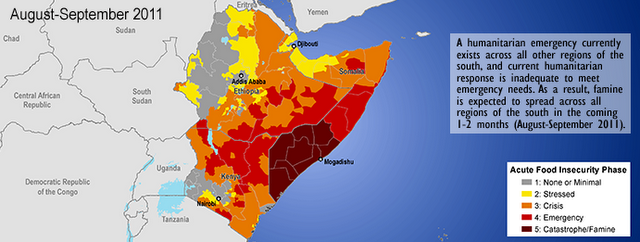
After reading a lot of news and blog posts on the situation in the Horn of Africa, I feel the need to make something clear: The drought in the Horn of Africa is not the cause of the famine we are seeing take shape in southern Somalia. We are being pounded by a narrative of this famine that more or less points to the failure of seasonal rains as its cause…which I see as a horrible abdication of responsibility for the human causes of this tragedy.
First, I recommend that anyone interested in this situation – or indeed in food security and famine more generally, to read Mike Davis’ book Late Victorian Holocausts. It is a very readable account of massive famines in the Victorian era that lays out the necessary intersection of weather, markets, and politics to create tragedy – and also makes clear the point that rainfall alone is poorly correlated to famine. For those who want a deeper dive, have a look at the lit review (pages 15-18) of my article “Postmodern Conceptualizations, Modernist Applications: Rethinking the Role of Society in Food Security” to get a sense of where we are in contemporary thinking on food security. The long and short of it is that food insecurity is rarely about absolute supplies of food – mostly it is about access and entitlements to existing food supplies. The Horn of Africa situation does actually invoke outright scarcity, but that scarcity can be traced not just to weather – it is also about access to local and regional markets (weak at best) and politics/the state (Somalia lacks a sovereign state, and the patchy, ad hoc governance provided by Al Shabaab does little to ensure either access or entitlement to food and livelihoods for the population).
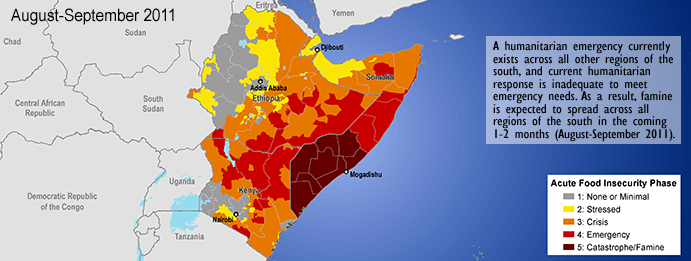
For those who doubt this, look at the Famine Early Warning System Network (FEWS NET) maps I put in previous posts here and here (Editor: also above). Famine stops at the Somali border. I assure you this is not a political manipulation of the data – it is the data we have. Basically, the people without a functional state and collapsing markets are being hit much harder than their counterparts in Ethiopia and Kenya, even though everyone is affected by the same bad rains, and the livelihoods of those in Somalia are not all that different than those across the borders in Ethiopia and Kenya. Rainfall is not the controlling variable for this differential outcome, because rainfall is not really variable across these borders where Ethiopia, Kenya, and Somalia meet.
Continue reading on Open the Echo Chamber.
Image Credit: FEWS NET and Edward Carr. -
In Rush for Land, Is it All About Water?
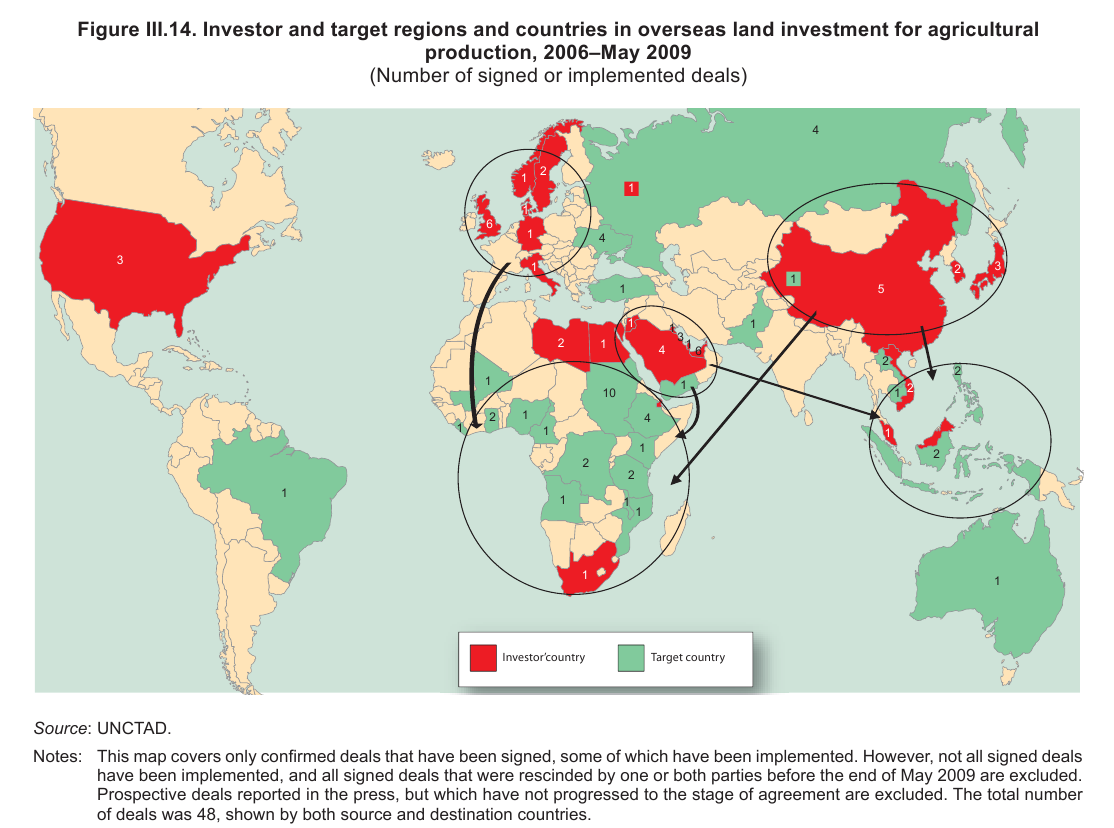
›July 26, 2011 // By Christina DaggettOver the past few years, wealthy countries with shrinking stores of natural resources and relatively large populations (such as China, India, South Korea, and the Gulf states) have quietly purchased huge parcels of fertile farmland in Africa, South America, and South Asia to grow food for export to the parent country. With staple food prices shooting up and food security projected to worsen in the decades ahead, it is little wonder that countries are looking abroad to secure future resources. But the question arises: Are these “land grabs” really about the food — or, more accurately, are they “water grabs”?
The Great Water Grab
With growing urban populations, an expanding middle class, and increasingly scarce arable land resources, some governments and investors are snapping up the world’s farmland. Some observers, however, have pointed out that these dealmakers might be more interested in the water than the land.
In an article from The Economist in 2009, Peter Brabeck-Letmathe, the chairman of Nestlé, claimed that “the purchases weren’t about land, but water. For with the land comes the right to withdraw the water linked to it, in most countries essentially a freebie that increasingly could be the most valuable part of the deal.”
Consider some of the largest investors in foreign land: China has a history of severe droughts (and recently, increasingly poor water quality); the Gulf nations of Saudi Arabia, Kuwait, Qatar, and Bahrain are among the world’s most water-stressed countries; and India’s groundwater stocks are rapidly depleting.
A recent report from the World Bank on global land deals highlighted the effect water scarcity is having on food production in China, South Asia, the Middle East, and North Africa, stating that “in contrast, Sub-Saharan Africa and Latin America have large untapped water resources for agriculture.”
Keeping Engaged and Informed
“The water impacts of any investment in any land deal should be made explicit,” said Phil Woodhouse of the University of Manchester during the recent International Conference on Global Land Grabbing, as reported by the New Agriculturist. “Some kind of mechanism is needed to bring existing water users into an engagement on any deals done on water use.”
At the same conference, Shalmali Guttal of Focus on the Global South cautioned, “Those who are taking the land will also take the water resources, the forests, wetlands, all the wild indigenous plants and biodiversity. Many communities want investments but none of them sign up for losing their ecosystems.”
With demand for water expected to outstrip supply by 40 percent within the next 20 years, water as the primary motivation behind the rush for foreign farmland is a factor worth further exploration.
Global Farming
According to a report from the Oakland Institute, nearly 60 million hectares (ha) of African farmland – roughly the size of France – were purchased or leased in 2009. With these massive land deals come promises of jobs, technology, infrastructure, and increased tax revenue.
In 2008 South Korean industrial giant Daewoo Logistics negotiated one of the biggest African farmland deals with a 99-year lease on 1.3 million ha of farmland in Madagascar for palm oil and corn production. The deal amounted to nearly half of Madagascar’s arable land – an especially staggering figure given that nearly a third of Madagascar’s GDP comes from agriculture and more than 70 percent of its population lives below the poverty line. When details of the deal came to light, massive protests ensued and it was eventually scrapped after president Marc Ravalomanana was ousted from power in a 2009 coup.
While perhaps an extreme example, the Daewoo/Madagascar deal nonetheless demonstrates the conflict potential of these massive land deals, which are taking place in some of the poorest and hungriest countries in the world. In 2009, while Saudi Arabia was receiving its first shipment of rice grown on farmland it owned in Ethiopia, the World Food Program provided food aid to five million Ethiopians.
Other notable deals include China’s recent acquisition of 320,000 ha in Argentina for soybean and corn cultivation – a project which is expected to bring in $20 million in irrigation infrastructure, the Guardian reports – and a Saudi Arabian company which has plans to invest $2.5 billion and employ 10,000 people in Ethiopia by 2020, according to Gambella Star News.
But governments in search of cheap food aren’t the only ones interested in obtaining a piece of the world’s breadbasket: Individual investors are also heavily involved, and the Guardian reports that U.S. universities and European pension funds are buying and leasing land in Africa as well.
The Future of Land and Water
Whatever the benefits or pitfalls, large-scale land deals around the world look set to continue. The world is projected to have 7 billion mouths to feed by the end of this year and possibly 10 billion plus by the end of the century.
Currently, agriculture uses 11 percent of the world’s land surface and 70 percent of the world’s freshwater resources, according to UNESCO. If and when the going gets tough, how will the global agricultural system respond? Whose needs come first – the host countries’ or the investing nations’?
Christina Daggett is a program associate with the Population Institute and a former ECSP intern.
Photo Credit: Number of signed or implemented overseas land investment deals for agricultural production 2006-May 2009, courtesy of GRAIN and the UN Conference on Trade and Development (UNCTAD).
Sources: BBC News, Canadian Water Network, Christian Science Monitor, Circle of Blue, The Economist, Gambella Star News, Guardian, Maplecroft, New Agriculturalist, Oakland Institute, State Department, Time, UNFPA, UNESCO, World Bank, World Food Program. -
Eddie Walsh, The Diplomat
Indonesia’s Military and Climate Change
›July 22, 2011 // By Wilson Center StaffThe original version of this article, by Eddie Walsh, appeared on The Diplomat’s ASEAN Beat blog.
With more than 17,000 islands and 80,000 kilometers of coastline, Indonesia is extremely vulnerable to climate change. Analysts believe that rising temperatures will almost certainly have a negative impact on human security in Indonesia, which in turn will increase the probability of domestic instability and introduce new regional security concerns. With this in mind, it’s important that Indonesia’s armed forces take a range of measures to prioritize environmental security, including procuring new equipment, strengthening bilateral and multilateral relations, and undertaking training for new roles and missions.
Indonesians are expected to experience warmer temperatures, increased precipitation (in the northern islands), decreased precipitation (in the southern islands), and changes in the seasonality of precipitation and the timing of monsoons. These phenomena could increase the risk of either droughts or flooding, depending on the location, and could also reduce biodiversity, lead to more frequent forest fires and other natural disasters, and increase diseases such as malaria and dengue, as well incidences of diarrhea.
The political, economic, and social impact of this will be significant for an archipelago-based country with decentralized governance, poor infrastructure, and a history of separatist and radical conflict. According to a World Bank report, the greatest concern for Indonesia will be decreased food security, with some estimates projecting variance in crop yields of between -22 percent and +28 percent by the end of the century. Rising sea levels also threaten key Indonesian cities, including Jakarta and Surabaya, which could stimulate ‘disruptive internal migration’ and result in serious economic losses. Unsurprisingly, the poor likely will be disproportionately impacted by all of this.
Continue reading on The Diplomat.
Sources: World Bank.
Photo Credit: “Post tsunami wreckage Banda Aceh, Sumatra, Indonesia,” courtesy of flickr user simminch. -
Leona D’Agnes on Evaluating PHE Service Delivery in the Philippines
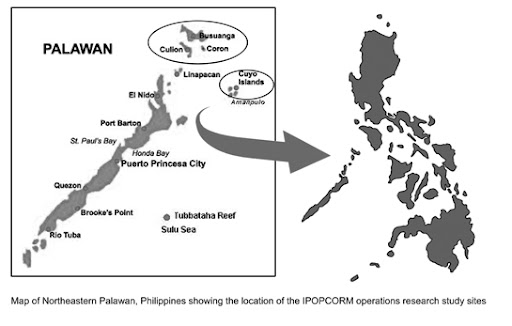
›“By reducing population growth, we are going to have a better chance of sustaining the gains of an environmental conservation project,” said Leona D’Agnes in this interview with ECSP. D’Agnes, a technical advisor to PATH Foundation Philippines, served as lead author on a research article published late last year in Environmental Conservation titled, “Integrated Management of Coastal Resources and Human Health Yields Added Value: A Comparative Study in Palawan (Philippines).” The study provided concrete statistical evidence that integrated development programming incorporating population, health, and the environment (PHE) can be more effective in lowering population growth rates and preserving critical coastal ecosystems than single-sector development interventions.
“What set this research apart from earlier work on integrated programming was the rigorous evaluation design that was applied,” said D’Agnes. “What this design aimed to do is to evaluate the integrated approach itself. Most of the previous evaluations that have been done on integrated programming were impact evaluations — they set out to evaluate the impact of the project.” This most recent research project, on the other hand, sought to evaluate the effectiveness of cross-sectoral interventions based on “whether or not synergies were produced,” said D’Agnes.Although it took her team six years to generate statistically significant findings in Palawan, D’Agnes reports that the synergies of PATH Foundation Philippines’ PHE intervention took the form of reduced income poverty, a decreased average number of children born to women of reproductive age, and the preservation of coastal resources, which helped bolster the region’s food security.
Going forward, D’Agnes said, an integrated approach to environmental conservation should also prove appealing because of its cost effectiveness. “This has huge implications for local governments in the Philippines, where they are struggling to meet the basic needs of their constituents in the face of very small internal revenue allotments that they get from the central government,” she said. “They can really pick up on this example to see that at the local level, if somehow they can do this integrated service delivery that was done in the Integrated Population and Coastal Resource Management (IPOPCORM) model, that they’ll be able to achieve the objectives of both their conservation and their health programs in a much more cost-effective way, and, in the process, generate some other [positive] outcomes that perhaps they didn’t anticipate.”
D’Agnes expects the study’s results will prompt a fresh look at cross-sectoral PHE programming. “I hope that this evidence from this study will help to change the thinking in the conservation community about integrated approaches to conservation and development,” she said.
The “Pop Audio” series is also available as podcasts on iTunes. -
Preparing for the Impact of a Changing Climate on U.S. Humanitarian and Disaster Response
›Climate-related disasters could significantly impact military and civilian humanitarian response systems, so “an ounce of prevention now is worth a pound of cure in the future,” said CNA analyst E.D. McGrady at the Wilson Center launch of An Ounce of Preparation: Preparing for the Impact of a Changing Climate on U.S. Humanitarian and Disaster Response. The report, jointly published by CNA and Oxfam America, examines how climate change could affect the risk of natural disasters and U.S. government’s response to humanitarian emergencies. [Video Below]
Connecting the Dots Between Climate Change, Disaster Relief, and Security
The frequency of – and costs associated with – natural disasters are rising in part due to climate change, said McGrady, particularly for complex emergencies with underlying social, economic, or political problems, an overwhelming percentage of which occur in the developing world. In addition to the prospect of more intense storms and changing weather patterns, “economic and social stresses from agricultural disruption and [human] migration” will place an additional burden on already marginalized communities, he said.
Paul O’Brien, vice president for policy and campaigns at Oxfam America said the humanitarian assistance community needs to galvanize the American public and help them “connect the dots” between climate change, disaster relief, and security.
As a “threat multiplier,” climate change will likely exacerbate existing threats to natural and human systems, such as water scarcity, food insecurity, and global health deterioration, said Vice Admiral Lee Gunn, USN (ret.), president of CNA’s Institute for Public Research. Major General Richard Engel, USAF (ret.), of the National Intelligence Council identified shifting disease patterns and infrastructural damage as other potential security threats that could be exacerbated by climate change.
“We must fight disease, fight hunger, and help people overcome the environments which they face,” said Gunn. “Desperation and hopelessness are…the breeding ground for fanaticism.”
U.S. Response: Civilian and Military Efforts
The United States plays a very significant role in global humanitarian assistance, “typically providing 40 to 50 percent of resources in a given year,” said Marc Cohen, senior researcher on humanitarian policy and climate change at Oxfam America.
The civilian sector provides the majority of U.S. humanitarian assistance, said Cohen, including the USAID Office of Foreign Disaster Assistance (OFDA) and the State Department’s Bureau of Population, Refugees, and Migration. These organizations provide leadership, funding, and food aid to developing countries in times of crisis, but also beforehand: “The internal rationale [of the Office of Foreign Disaster Assistance] is to reduce risk and increase the resilience of people to reduce the need for humanitarian assistance in the future,” said Edward Carr, climate change coordinator at USAID’s Bureau for Democracy, Conflict, and Humanitarian Assistance.
The U.S. military complements and strengthens civilian humanitarian assistance efforts by accessing areas that civilian teams cannot reach. The military can utilize its heavy lift capability, in-theater logistics, and command and control functions when transportation and communications infrastructures are impaired, said McGrady, and if the situation calls for it, they can also provide security. In addition, the military could share lessons learned from its considerable experience planning for complex, unanticipated contingencies with civilian agencies preparing for natural disasters.
“Forgotten Emergencies”
Already under enormous stress, humanitarian assistance and disaster response systems have persistent weaknesses, such as shortfalls in the amount and structure of funding, poor coordination, and lack of political gravitas, said Cohen.
Food-related aid is over-emphasized, said Cohen: “If we break down the shortfalls, we see that appeals for food aid get a better response than the type of response that would build assets and resilience…such as agricultural bolstering and public health measures.” Food aid often does not draw on local resources in developing countries, he said, which does little to improve long-term resilience.
“Assistance is not always based on need…but on short-term political considerations,” said Cohen, asserting that too much aid is supplied to areas such as Afghanistan and Iraq, while “forgotten emergencies,” such as the Niger food crisis, receive far too little. Furthermore, aid distribution needs to be carried out more carefully at the local scale as well: During complex emergencies in fragile states, any perception of unequal assistance has the potential to create “blowback” if the United States is identified with only one side of a conflict.
Engel added that many of the problems associated with humanitarian assistance will be further compounded by increasing urbanization, which concentrates people in areas that do not have adequate or resilient infrastructure for agriculture, water, or energy.
Preparing for Unknown Unknowns
A “whole of government approach” that utilizes the strengths of both the military and civilian humanitarian sectors is necessary to ensure that the United States is prepared for the future effects of climate change on complex emergencies in developing countries, said Engel.
In order to “cut long-term costs and avoid some of the worst outcomes,” the report recommends that the United States:
Cohen singled out “structural budget issues” that pit appropriations for protracted emergencies in places like Iraq, Afghanistan, and Darfur against unanticipated emergencies, like the 2010 earthquake in Haiti. Disaster-risk reduction investments are not a “budgetary trick” to repackage disaster appropriations but a practical way to make more efficient use of current resources, he said: “Studies show that the return on disaster-risk reduction is about seven to one – a pretty good cost-benefit ratio.”- Increase the efficiency of aid delivery by changing the budgetary process;
- Reduce the demand by increasing the resilience of marginal (or close-to-marginal) societies now;
- Be given the legal authority to purchase food aid from local producers in developing countries to bolster delivery efficiency, support economic development, and build agricultural resilience;
- Establish OFDA as the single lead federal agency for disaster preparedness and response, in practice as well as theory;
- Hold an OFDA-led biannual humanitarian planning exercise that is focused in addressing key drivers of climate-related emergencies; and,
- Develop a policy framework on military involvement in humanitarian response.
Edward Carr said that OFDA is already integrating disaster-risk reduction into its other strengths, such as early warning systems, conflict management and mitigation, democracy and governance, and food aid. However, to build truly effective resilience, these efforts must be tied to larger issues, such as economic development and general climate adaptation, he said.
“What worries me most are not actually the things I do know, but the things we cannot predict right now,” said Carr. “These are the biggest challenges we face.”
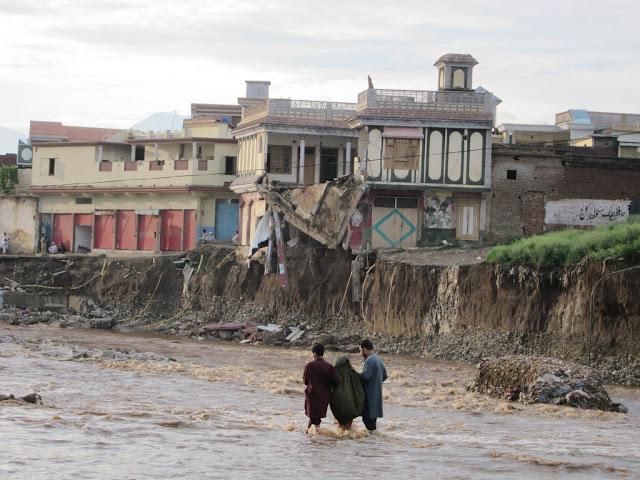
“Pakistan Floods: thousands of houses destroyed, roads are submerged,” courtesy of flickr user Oxfam International.