• woodrow wilson center
  • ecsp

New Security Beat

Subscribe:
  • rss
  • mail-to
  • Who We Are
  • Topics
    • Population
    • Environment
    • Security
    • Health
    • Development
  • Columns
    • China Environment Forum
    • Choke Point
    • Dot-Mom
    • Friday Podcasts
    • Navigating the Poles
    • Reading Radar
  • Multimedia
    • Water Stories (Podcast Series)
    • Backdraft (Podcast Series)
    • Tracking the Energy Titans (Interactive)
  • Films
    • Water, Conflict, and Peacebuilding (Animated Short)
    • Paving the Way (Ethiopia)
    • Broken Landscape (India)
    • Scaling the Mountain (Nepal)
    • Healthy People, Healthy Environment (Tanzania)
  • Publications
  • Events
  • Contact Us

NewSecurityBeat

The blog of the Wilson Center's Environmental Change and Security Program
Showing posts from category food security.
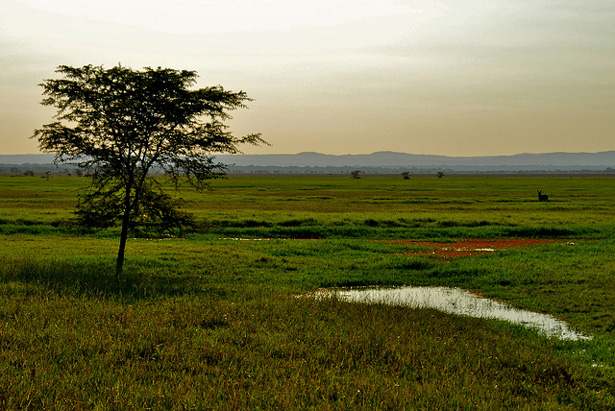
  • A New Land Security Agenda to Enable Sustainable, Equitable Development

    ›
    Guest Contributor  //  April 9, 2012  //  By Alejandro Litovsky
    The recent news that overseas investors have acquired over 10 percent of Australia’s farmland and 9 percent of water entitlements in its agriculture sector has struck a political chord in the country. Large grain-producing nations like Brazil and Argentina have passed laws to restrict the foreign ownership of land. In other global grain hubs, like Ukraine and Russia, compromised harvests due to droughts could result in export restrictions. In a globalized economy, the combination of scarcity, market and population pressures, and weather volatility will make fertile land an increasingly precious resource.

    A shift is underway in global financial markets, where global investors perceive that owning what grows on the land – or better still, owning the land itself – may be a hedge against the risks of more volatile financial markets. A surge in farmland investments is expected to grow over the next decade is due to a number of combined pressures: a growing global demand for commodities, rising commodity prices, ecological limits, and the fact that farmland is a “real asset” that offers diversification to the portfolios of investors at a time of market volatility.

    The need to increase food production against the backdrop of resource limits, social vulnerability, and population growth, puts the question of land at the center of a new security agenda.

    In sub-Saharan Africa large-scale acquisitions of land that neglect local livelihoods and resource scarcity, commonly referred to as “land grabs,” put the region’s future in the balance. Not all land investments have negative consequences, but given the lower levels of land tenure by communities and the fragility of human security in sub-Saharan Africa, regulating land investments with foresight is an urgent issue. Population growth and climate change underpin this agenda. A worse-than-average drought, exacerbated by climate change, may be all that is needed in certain places to realize the political, humanitarian, and ecological risks that are slowly building momentum.

    From Land Grabs to Land Stewardship

    Progress now depends on moving from a land grabs debate to land stewardship solutions. This shift, which the Earth Security Initiative summarized in a report published this month, The Land Security Agenda: How Investor Risks in Farmland Create Opportunities for Sustainability, requires an improved understanding by investors and political leaders of three priorities: managing land degradation, protecting human rights by focusing on food security and land ownership, and keeping economies within ecological – especially water – limits.

    The agenda we have developed discusses why these issues form part of a new risk management agenda for investors as well as for countries seeking to attract foreign capital, whose economic competitiveness and political stability may be compromised by these trends. But managing these risks, we argue, will require making human rights and ecological limits a central feature of a new investment paradigm.

    A range of international investors is already searching for solutions to engage practically with this debate. Among those with whom we have engaged throughout the study are individual investment funds, people seeking change within the financial sector, and investor networks such as the UN-backed Principles of Responsible Investment. Recently, governments, international organizations and civil society groups have also agreed on a set of voluntary guidelines for land governance under the auspices of the Committee on World Food Security. These developments are positive steps, but their voluntary nature remains problematic. The focus must now be placed on operationalizing their recommendations to ensure real accountability and creating political incentives in host countries to regulate their land to ensure long-term and equitable prosperity.

    A Call to Action

    In The Land Security Agenda we call on investors to turn their attention to their land and commodities portfolios, as well as the investments currently under due diligence, and begin to ask how soil resilience, the prosperity of local people, and freshwater limits are being considered. We recommend beginning to assess the risks of countries according to how well their governments are managing these issues.

    We similarly call on heads of state in countries seeking to attract large investments in land to become more aware that these risks may undermine their country’s wealth, their stability, and economic competitiveness. Political leadership is needed to champion and enforce regulations that will encourage investments and modernization while protecting a country’s social and natural capital.

    Some of the recommendations we have developed, which would help set the tone for investors and governments to move from voluntary principles to action, include:
    1. Define land security parameters: Establish a set of verifiable measures that allows stakeholders to distinguish those land investments that advance equitable and sustainable prosperity from those that do not. Based on these criteria, which we suggest must consider people, water, and soil, it is possible to advance their integration into three important areas of the investment cycle: the identification of investment opportunities that build positive value, the due diligence process, and the performance reviews of fund managers.
    2. Build better country risk profiles: If the population of a given country is dependent on agriculture for livelihoods, shouldn’t issues like soil erosion, water availability and lack of recognition for people’s land rights increase that country’s sovereign risk? We think so and now seek to develop a “land security index” to help investors and host country governments assimilate these trends into their decisions as well as increase the advocacy capacity of local civil society.
    3. Advance the formal recognition of land rights on a large scale: The universal call for the prior and informed consent of communities must be supported, but will be of little practical value if communities do not hold the legal rights to their land or are not well informed about their rights and the commercial opportunities available to them. Civil society groups working to advance good governance, land titling, and capacity building – many of whom we have spoken to during this study – are in a position to help create a “land security partnership” that builds technical and political momentum for the formal recognition of land rights on a large scale, as well as the resourcing and oversight that government agencies will require to implement them.
    The global competition to access scarcer resources will increasingly define our age. Land investments by companies, private investors, and governments are likely to be at the forefront of this trend. Today we are at a critical inflection point. Either these investments will bring much needed benefits to host countries by lifting people out of poverty, modernizing economies, and keeping development within ecological limits, or they will be a driver of a new colonialism, leaving locals landless and worse off, and putting greater and unchecked pressure on freshwater. The Land Security Agenda argues that all stakeholders involved, whether they know it or not, have a stake in trying to make the land agenda work for the long term.

    Alejandro Litovsky is the founder and director of the Earth Security Initiative and lead author of the report. The Land Security Agenda can be downloaded here.

    Sources: DGC Asset Management, Land Commodities Asset Management, Telegraph.

    Image Credit:
    Cover of the The Land Security Agenda.
    MORE
  • Responses to JPR Climate and Conflict Special Issue: François Gemenne (Sciences Po)

    ›
    Guest Contributor  //  April 2, 2012  //  By François Gemenne

    The Journal of Peace Research recently devoted a special issue to the work of researchers studying the linkages between climate change and conflict. Special guest editor Nils Petter Gleditsch introduces the issue here.

    If you want a government to address something, make it a defense issue. No need to hold a PhD in political science to know that governments tend to give the highest priority to issues that involve national security interests – one can complain and whine about it, but that’s the way it is.

    MORE
  • Much Ado About Conflict? Climate’s Links to Violence Reexamined

    ›
    Guest Contributor  //  March 28, 2012  //  By Nils Petter Gleditsch

    Nils Petter Gleditsch, former long-time editor of the Journal of Peace Research, recently returned to guest edit a special issue on climate change and conflict (Jan. 2012). This article is based on his introduction to that issue.

    Violence is on the wane in human affairs, even if slowly and irregularly. Could climate change reverse this trend? Pundits and politicians have raised the specter of havoc caused by rising temperature, erratic patterns of rainfall, and rising sea levels. In this way, so the story goes, climate change will produce famine and mass migration that threatens political stability and provokes violence. However, to date there is little evidence that the meteorological or agricultural conditions associated with climate change are actually a major source of violence.

    MORE
  • Demography, Climate in the Spotlight at Planet Under Pressure

    ›
    March 27, 2012  //  By Kayly Ober
    London’s 2012 Planet Under Pressure conference, on all things global change – including climate, population, global risks, and food security – kicked off with a bang on March 26 and ECSP was there to cover it. We’ll be here throughout the week following all of the most pertinent population, health, and security events – we invite you to visit our booth if you happen to be in London, join the conversation on Twitter (#Planet2012), and/or watch the livestream.

    During the opening plenaries, UK Scientific Advisor and all-around environmental all-star Sir John Beddington was the first to introduce population into the discussion.

    Speaking on “The Planet in 2050” panel, Beddington immediately noted that really 2050 is too far out and instead we should focus on the next two decades. Within these 20 years the trajectory of greenhouse gas emissions and climate change will be determined by the extent and manner of urbanization and demographic changes, particularly in Africa.

    “How are we going to generate an infrastructure to feed 500 million Africans in the next 13 years?” Beddington asked.

    Beddington’s talk could be considered a rejoinder to his famous “perfect storm” analogy, outlined in The Guardian in 2009:
    Our food reserves are at a 50-year low, but by 2030 we need to be producing 50 percent more food. At the same time, we will need 50 percent more energy, and 30 percent more freshwater.

    There are dramatic problems out there, particularly with water and food, but energy also, and they are all intimately connected. You can’t think about dealing with one without considering the others. We must deal with all of these together.
    In a later session, “Securing Global Biodiversity,” Simon Stuart, chair of the species survival commission of the International Union for Conservation of Nature (IUCN), expanded on this “perfect storm” analogy.

    He agreed that the global challenge of our day hinged on how human needs add pressures to the natural environment. Rising demand for energy, food, and freshwater not only influences climate change but also exerts unprecedented pressure on soil quality and biodiversity.

    But although we’re impeded by major challenges, including “unsustainable economic models,” a lack of public support, and a massive need for investment in conservation, we have made some strides, Stuart said. The Convention on Biological Diversity’s strategic plan for biodiversity, established in 2010, sets 20 targets for biodiversity conservation by 2020. Stuart believes this is the beginning of acknowledging the urgency of addressing the threat to biodiversity.

    Tim Coulson, professor of population biology at Imperial College London, compared the efficiency of either reducing fertility rates or per capita consumption to determine the best way to reduce humanity’s impact on the planet.

    Coulson ran two simple simulations using India and the United States as case studies. In one model, he changed fertility rates by one percent per year for 50 years. In the other, he decreased per capita consumption by one percent per year for 50 years. What he found in both cases was that decreasing per capita consumption achieved the most rapid change in human impact on the environment. Nevertheless, he acknowledged that a longer-term course of action of declining fertility rates was needed to keep impact stable.

    Readers beware, however – this type of experiment is an incredibly simplified exercise in the intersection of people and the environment. A more varied set of scenarios would produce more useful results. As Beddington mentioned, populations in sub-Saharan Africa have both the highest growth rates and the most direct impact on the environment due to their higher reliance on natural resources for livelihoods.

    And, perhaps most importantly, as one commentator noted, these scenarios do not take into account cost factors. For instance, in order to reduce greenhouse gas emissions through more energy efficient buildings and transport, the United States would need to invest $1.1 trillion through 2030. Alternatively, the cost to provide for the 215 million women in developing countries who want to avoid pregnancy but are not using an effective means of contraception is estimated at $3.6 billion. Using the “wedge” climate model, meeting unmet family planning needs would be equivalent to the amount of greenhouse gas emissions saved by converting entirely to electric vehicles – at a fraction (about five percent) of the cost.

    Stay tuned for more updates from ECSP at the Planet Under Pressure Conference. We’ll also be posting pictures from the conference to our Facebook and Flickr pages.

    Video Credit: “Welcome to the Anthropocene,” commissioned by the Planet Under Pressure Conference.
    MORE
  • First Impressions: Four Takeaways from the Global Water Security Intelligence Assessment

    ›
    March 27, 2012  //  By Geoffrey D. Dabelko

    The just-released unclassified National Intelligence Council report on water and security is a very positive contribution to understanding very complex and interconnected ecological, social, economic, and political issues.

    MORE
  • Global Water Security Calls for U.S. Leadership, Says Intelligence Assessment

    ›
    March 26, 2012  //  By Schuyler Null

    Alongside and in support of Secretary Clinton’s announcement of a new State Department-led water security initiative last week was the release of a global water security assessment by the National Intelligence Council and Director of National Intelligence. The aim of the report? Answer the question: “How will water problems (shortages, poor water quality, or floods) impact U.S. national security interests over the next 30 years?”

    MORE
  • Fourth World Water Development Report Released by UN

    ›
    Reading Radar  //  March 22, 2012  //  By Schuyler Null
    The beginning of last week’s World Water Forum in Marseille also marked the release of UNESCO’s fourth edition of the World Water Development Report. Chief amongst the challenges outlined in the new report are meeting demand from growing population and consumption. Agriculture accounts for 70 percent of water usage, according to the report, and globally we will require 70 percent more food over the next 40 years, introducing the possibility of overtaxing already-stressed water resources – all while adapting to climate change. There are substantial gains to be had in increasing farm-to-table efficiency, especially in developing countries, the authors sagely point out, but the supply challenge remains a huge one.

    This year’s edition also adds several new sections, including on women and water. “The crisis of scarcity, deteriorating water quality, the linkages between water and food security, and the need for improved governance are the most significant in the context of gender differences in access to and control over water resources,” write the authors. “These challenges are expected to become more intense in the future.”

    The integrated nature of today’s water issues is a highlight throughout the report. “Accelerated change” will create new threats and “interconnected forces” create uncertainty and risk, but UNESCO emphasizes that if policymakers are made aware of these issues, ultimately “these forces can be managed effectively and can even generate vital opportunities and benefits through innovative approaches to allocation, use, and management of water.”

    Image Credit: Water Management Institute, via figure 15.5 from UNESCO World Water Development Report.
    MORE
  • Food Security in a Climate-Altered Future, Part Two: Population Projections Are Not Destiny

    ›
    March 20, 2012  //  By Kathleen Mogelgaard
    Read part one, on the food-population-climate vulnerability dynamics of Malawi and other “hotspots,” here.

    Too often, discussions about future food security make only a passing reference to population growth. It is frequently framed as an inevitable force, a foregone conclusion – and a single future number is reported as gospel: nine billion people in 2050. But adhering to a single path of future population growth misses the opportunity to think more holistically about food security challenges and solutions. Several recent food security reports illustrate this oft-overlooked issue.

    Accounting for Population a Challenge

    Oxfam International’s Growing a Better Future: Food Justice in a Resource-Constrained World is a thorough and fascinating examination of failures in our current food system and future challenges related to production, equity, and resilience. It reports newly-commissioned research, carried out by modelers at the Institute of Development Studies, to assess future agricultural productivity and food prices given the anticipated impacts of climate change.

    But both the modeling work and the report text utilize a single projection for population growth: the UN’s 2008 medium variant projection of 9.1 billion by 2050 (which has since been revised by the UN up to 9.3 billion). Early on, the report does recognize some degree of uncertainty about this number: “Greater investment in solutions that increase women’s empowerment and security – by improving access to education and health care in particular – will slow population growth and achieve stabilization at a lower level.” But such investments do not appear in the report’s overall recommendations or Oxfam’s food security agenda. This is perhaps a missed opportunity, since the range of possibilities for future population growth is wide: the UN’s low variant for 2050 is 8.1 billion, and the high variant is 10.6 billion.

    Food Security, Farming, and Climate Change to 2050: Scenarios, Results, and Policy Options is another frequently-cited report published by the International Food Policy Research Institute in 2010. In recognizing that economic growth and demographic change have important implications for future food security, IFPRI researchers modeled multiple scenarios for the future: an “optimistic” scenario which embodies high GDP growth and low population growth, a “pessimistic” scenario with low GDP growth and high population growth, and a “baseline” scenario which incorporates moderate GDP growth and the UN’s medium population projection. Each of these scenarios was then combined with five different climate change scenarios to better understand a range of possible futures.

    Using different socioeconomic scenarios enabled researchers to better understand the significance of socioeconomic variables for future food security outcomes. The first key message from the report is that “broad-based economic development is central to improvements in human well-being, including sustainable food security and resilience to climate change.” This focus on economic development is based in part on the “optimistic scenario,” which counts on high GDP and low population growth (translating to high rates of per capita GDP growth).

    Unfortunately, the socioeconomic scenario construction for this analysis doesn’t allow for an independent assessment of the significance of slower population growth, since high population growth is paired only with low GDP and lower population growth is paired only with high GDP. Therefore, none of the report’s recommendations includes reference to reproductive health, women’s empowerment, or other interventions that would contribute directly to a slower population growth path.

    Expanding the Conversation to Better Inform Policy

    Without a more nuanced treatment of population projections in technical analysis and popular reporting on food security, decision-makers in the realm of food security may not be exposed to the idea that population growth, a factor so critical in many areas where food security is already a challenge, is a phenomenon that is responsive to policy and programmatic interventions – interventions that are based on human rights and connected to well-established and accepted development goals.

    There are some positive signs that this conversation is evolving. A new climate change, food security, and population model developed by the Futures Group enables policymakers and program managers to quickly and easily assess the impact of slower population growth on a country’s future food requirements and rates of childhood malnutrition. In the case of Ethiopia, for example, the model demonstrates that by 2050, a slower population growth path would make up for the caloric shortfall that is likely to arise from the impact of climate change on agriculture and would cut in half the number of underweight children.

    And recently, we’ve begun to see some of this more nuanced treatment of population, family planning, and food security linkages in a riveting, year-long reporting series (though perhaps unfortunately named), Food for 9 Billion, a collaboration between American Public Media’s Marketplace, Homelands Productions, the Center for Investigative Reporting, and PBS NewsHour.


    In January, reporter Sam Eaton highlighted the success of integrated population-health-environment programs in the Philippines, such as those initiated by PATH Foundation Philippines, that are seeing great success in delivering community-based programs that promote food security through a combination of fisheries management and family planning service delivery. Reporting from the Philippines in an in-depth piece for PBS NewsHour, Eaton concluded:
    So maybe solving the world’s food problem isn’t just about solving the world’s food problem. It’s also about giving women the tools they want, so they can make the decisions they want – here in the world’s poorest places.
    Making clear connections of this nature between population issues and the most pressing challenges of our day may be the missing link that will help to mobilize the political will and financial resources to finally fully meet women’s needs for family planning around the world – an effort that, if started today, can have ongoing benefits that will become only more significant over time. Integrating reproductive health services into food security programs and strategies is an important start.

    Back in Malawi, just before we turned off the highway to the Lilongwe airport, I asked the taxi driver to pull over in front of a big billboard. We both smiled as we looked at the huge government-sponsored image of a woman embracing an infant. The billboard proclaimed: “No woman should die while giving life. Everyone has a role to play.” Exactly. The reproductive health services that save women’s lives are the same services that can slow population growth and bring food security within closer reach.
    MORE
Newer Posts   Older Posts
View full site

Join the Conversation

  • RSS
  • subscribe
  • facebook
  • G+
  • twitter
  • iTunes
  • podomatic
  • youtube
Tweets by NewSecurityBeat

Trending Stories

  • unfccclogo1
  • Pop at COP: Population and Family Planning at the UN Climate Negotiations

Featured Media

Backdraft Podcast

play Backdraft
Podcasts

More »

What You're Saying

  • Volunteers,At,The,Lagos,Food,Bank,Initiative,Outreach,To,Ikotun, Pan-African Response to COVID-19: New Forms of Environmental Peacebuilding Emerge
    Rashida Salifu: Great piece 👍🏾 Africa as a continent has suffered this unfortunate pandemic.But it has also...
  • A desert road near Kuqa An Unholy Trinity: Xinjiang’s Unhealthy Relationship With Coal, Water, and the Quest for Development
    Ismail: It is more historically accurate to refer to Xinjiang as East Turkistan.
  • shutterstock_1779654803 Leverage COVID-19 Data Collection Networks for Environmental Peacebuilding
    Carsten Pran: Thanks for reading! It will be interesting to see how society adapts to droves of new information in...

What We’re Reading

  • Rising rates of food instability in Latin America threaten women and Venezuelan migrants
  • Treetop sensors help Indonesia eavesdrop on forests to cut logging
  • 'Seat at the table': Women's land rights seen as key to climate fight
  • A Surprise in Africa: Air Pollution Falls as Economies Rise
  • Himalayan glacier disaster highlights climate change risks
More »
  • woodrow
  • ecsp
  • RSS Feed
  • YouTube
  • Twitter
  • Facebook
  • Home
  • Who We Are
  • Publications
  • Events
  • Wilson Center
  • Contact Us
  • Print Friendly Page

© Copyright 2007-2021. Environmental Change and Security Program.

Woodrow Wilson International Center for Scholars. All rights reserved.

Developed by Vico Rock Media

Environmental Change and Security Program

Woodrow Wilson International Center for Scholars

Ronald Reagan Building and International Trade Center

  • One Woodrow Wilson Plaza
  • 1300 Pennsylvania Ave., NW
  • Washington, DC 20004-3027

T 202-691-4000