Showing posts from category family planning.
-
Sajeda Amin on Population Growth, Urbanization, and Gender Rights in Bangladesh
› “One of the reasons why population grows very rapidly in Bangladesh is women get married very early and have children very early,” the Population Council’s Sajeda Amin told ECSP in a recent interview. “So even though they are only having two children, they are having them at an average age of around 20. As demographers would say, women ‘replace’ themselves very rapidly.”
Largely through the promotion of contraceptive use, family planning programs implemented over the past 35 years by the Bangladeshi government and a variety of NGOs have helped lower the country’s total fertility rate to 2.7 from 6.5 in the mid-1970s. To build on this progress, the Population Council has joined a consortium of other organizations – including the Bangladesh Legal Aid and Services Trust, Marie Stopes International, and We Can End All Violence Against Women – to launch the Growing Up Safe and Healthy (SAFE) project in Amin’s native Dhaka and other Bangladeshi cities.
Currently nearing the completion of its first year, the four-year initiative has several aims, among them increasing access to reproductive healthcare services for adolescent girls and young women and bolstering social services to protect those populations from (and offer treatment for) gender-based violence. The project also looks to strengthen laws designed to reduce the prevalence of child marriage – a long-standing Bangladeshi institution that keeps population growth rates high while denying many young women the opportunity to pursue economic and educational advancement.
A Focus on Gender and Climate
Amin says the SAFE project boasts several qualities that collectively set the initiative apart from similar-minded programs in Bangladesh dealing with gender and poverty. These include a strong research component incorporating quantitative and qualitative analysis; the holistic nature of the program, which incorporates educational outreach, livelihood development, and legal empowerment; a commitment to working with both male and female populations; and an emphasis on interventions targeting young people, with the hope that such efforts will allow adolescents to make better-informed decisions about future relationships and reproductive health, thus reducing the likelihood of gender-based violence.
Finally, while many existing gender-based programs focus exclusively on rural communities, Amin points out that the SAFE project also stands apart because of its focus on the country’s rapidly expanding urban areas. To date, the initiative is focusing many of its early interventions in a Dhaka slum that has seen an influx of rural migrants in recent years due to climate-change impacts in the country’s low-lying coastal areas.
“A lot of the big problems in Bangladesh now are climate-driven in the sense of creating mass movements out of areas that are particularly vulnerable or have been hit by a major storm,” Amin said. “Usually these are people who, once they lose their homes and their livelihoods, will have no choice but to move to urban areas, and that’s a process that is kind of a big outstanding issue in Bangladesh now.”
By building programming around girls and young women in such communities, the SAFE project is looking to spark change from the bottom up, prioritizing the unmet health and social needs of some of Bangladesh’s most vulnerable populations.
The “Pop Audio” series is also available as podcasts on iTunes.
Sources: Global Post, Ministry of Health and Family Welfare (Bangladesh), Shaikh and Becker (1985). -
What’s the Impact of Family Planning in the Developing World? ‘Science’ Magazine’s Population Issue
›“Does Family Planning Bring Down Fertility” in Science’s special July issue on population, author Jocelyn Kaiser engages various experts to explore whether family planning programs actually help to reduce high fertility. Social demographer Amy Tsui of Johns Hopkins University argues that surveys indicating “unmet need” in family planning “don’t tell us anything about causation.” On the other hand, Martha Campbell, a lecturer at the University of California, stressed that in countries such as Niger where the population could soar from 16 million today to 58 million by 2050, “You can’t expand [schools] fast enough.” Thus, focusing on family planning is indispensable and “the benefits [will] far outweigh the costs.”In “Population Policy in Transition in the Developing World,” also published in the population issue of Science, authors John Bongaarts and Steven Sinding explain why there has been renewed interest on family planning in developing countries. Since rapid population growth in the poorest countries is hampering development, “economists, once notably skeptical, increasingly acknowledge that fertility decline has beneficial economic effects for nations and families,” they write. Moving forward, Bongaarts and Sinding suggest family planning needs to be at the forefront of population and development discussions. Not only is family planning “cost effective,” they write, but it is responsible for “relieving population pressures, stimulating economic development, improving health, and enhancing human freedom.”
See the full line-up of articles from Science’s population edition here. -
Population, Health, and Environment Approaches in Tanzania
›“Quality of life, human health, food security, and biodiversity are all connected,” said Elin Torell, research associate for the BALANCED Project and the University of Rhode Island Coastal Resource Center. Torell was joined at the Wilson Center on July 19 by Patrick Kajubili from the Tanzania Coastal Management Partnership, and Alice Macharia, director of the East Africa Program at the Jane Goodall Institute to discuss the importance of integrated population, health, and environment (PHE) initiatives that work to simultaneously improve health and livelihoods, manage natural resources, and conserve ecosystems in Tanzania.
Building Resilient Coastal Communities
The Coastal Resources Center’s work in Tanzania’s Saadani National Park provides an example of an integrated PHE approach that sustains the flows of environmental goods and services, maintains biological diversity, and empowers and improves the wellbeing of local residents, said Torell. Since 1996, the CRC has focused on protecting sea turtles, promoting energy-saving stoves, and tracking elephants, while at the same time improving livelihoods through savings and credit associations, eco-tourism, and beekeeping.
“Adding family planning makes a whole lot of sense,” said Torell. There is a high unmet need for family planning in Tanzania and the population is growing rapidly with an average number of 5.6 children per woman. Family planning not only helps families limit and space births but indirectly works to improve food security and human health, reduce demand for scarce natural resources, and empower women, she said.
“Integration is key,” concluded Torell: A coordinated and synergistic approach that meets the varied needs of local communities will be more effective and sustainable than if interventions were delivered independently.
Effective Integration in the Field
“Conceptual linking is not enough,” said Kajubili. “Integration also needs to happen at the organizational and field levels.”
On the ground, the Tanzania Coastal Management Partnership integrates family planning education and services into conservation work, said Kajubili. Peer educators deliver information about family planning, health, and coastal resources management; and community-based distributors deliver family planning services and supplies.
“Now people easily access reproductive health services,” said Kajubili. To date, the program has increased referrals to health centers, promoted contraceptive use, and reduced the distance that women need to travel to receive family planning services.
“Integration makes sense and cents,” said Kajubili. By combining resources, health and natural resource management organizations can potentially reach a broader population while sharing costs.
But “reinforcing the linkages between PHE of course takes time and education,” said Kajubili, highlighting a major challenge to implementing integrated approaches. “Advocacy is needed to overcome cultural and institutional barriers.”
“What About Our Needs?”
“Socio-economic development; family planning and AIDS education; sustainable forestry and agriculture practices; and water and sanitation all underpin and support sustainable natural resource management,” said Macharia.
The Lake Tanganyika Catchment Reforestation and Education Project (TACARE) led by the Jane Goodall Institute was initiated in 1994 to arrest the rapid degradation of land through tree planting and forest degradation, said Macharia. “But at some point, the communities raised the question: What about our own needs?” she said.
Community members prioritized the need for health services, education, clean water, and financial capital. But environmental degradation was not seen as a major issue, suggesting a need for a more integrated approach to TACARE’s conservation efforts.
“Integrated programs including population, health, and environment activities are cost-efficient and add value to conservation goals,” said Macharia. By responding to the needs of the community, the integrated approach adopted by TACARE has gained more credibility among local people, while a strong focus on building local capacity has helped to ensure sustainability of the program.
While there are many challenges to implementing and maintaining integrated PHE programs, “partnerships at the local, district, and national level are key to making this a success,” concluded Macharia.
Sources: Population Reference Bureau.
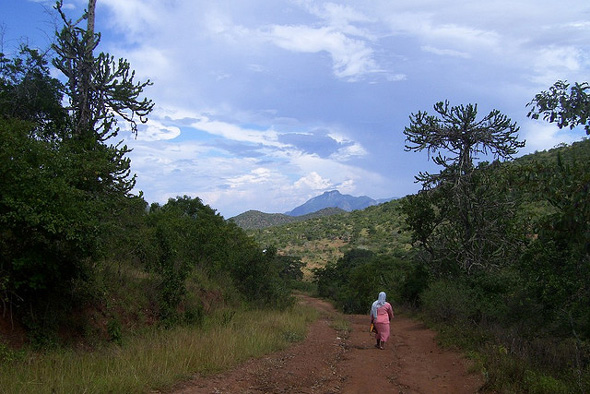
Photo Credit: “Environment near Vumari Village,” courtesy of flickr user treesftf. -
Maternal Health Challenges in Kenya: What New Research Evidence Shows
›“Although there have been improvements in the recent past, the status of maternal health care has not met the required international standards,” said Professor at the University of Nairobi Geoffrey Mumia Osaaji during a live video-conference from Nairobi on July 12.
As part of the 2011 Maternal Health Dialogue Series the Woodrow Wilson Center’s Global Health Initiative is partnering with the African Population and Health Research Center to convene a series of technical meetings on improving maternal health in Kenya. The 20 Kenyan experts attending the workshop in Nairobi also shared their strategies and action points with a live audience in Washington, DC during a video conference discussion. [Video Below]
Osaaji was joined by panelists Lawrence Ikamari, director of Population Studies and Research Institute (PSRI), and Catherine Kyobutungi, director of Health Systems and Challenges at the African Population and Research Center to discuss new maternal health research in Kenya. Panelists also shared recommendations for moving the maternal health agenda forward that came out of discussions during the two-day, in-country workshop with Kenyan policymakers, community health workers, program managers, media, and donors. Following the panelists’ presentations, Dr. Nahed Mattta, senior maternal and newborn health advisor at U.S. Agency for International Development (USAID) and John Townsend, vice-president of reproductive health program for Population Council provided reflecting remarks from the Woodrow Wilson Center during the live webcast.
Maternal Health Challenges in Rural Kenya
“Maternal mortality in rural Kenya is still very high,” said Ikamari. “Rural women in Kenya need to have increased access to maternal health services.” Ikamari discussed a number of factors that contribute to high rates of maternal mortality in rural Kenya, including lack of access to quality care and skilled birth attendants, the high burden of HIV/AIDS, and an unmet need for family planning.
Though nearly 90 percent of women in rural Kenya seek antenatal care, according to the UNFPA, many wait until the second or third trimester, limiting the benefits. Additionally, a majority of women in rural Kenya give birth outside of health facilities, oftentimes without the care of a skilled birth attendant, said Ikamari. In a recent survey, many rural women indicated that transportation to often distant health facilities prevented them from seeking adequate maternal health care, he added.
Additionally, “the burden of HIV is really felt in rural Kenya,” said Ikamari. Survey results show that HIV/AIDS prevalence is about seven percent in rural Kenya and because the majority of the Kenyan population lives in rural areas, this adds yet another layer of complications.
“Family planning saves lives,” said Ikamari, stressing the importance of contraception on maternal health outcomes. Only 35 to 40 percent of currently married Kenyan women use family planning, according to the last demographic and health surveys, and unmet need remains particularly high in rural areas. Promoting institutional delivery systems, improving antenatal and postnatal care, and finding other ways to increase access to family planning can help to improve maternal health outcomes and reduce preventable deaths in rural Kenya, concluded Ikamari.
Comparison of Urban and Rural Areas
“The interventions to address maternal health are well known: family planning, increased access to safe abortion services, skilled health workers, health facilities that are accessible, as well as referral systems that work,” said Kyobutungi. “Yet urban averages [of maternal mortality] are becoming either close or worse than rural averages.”
“As much as we appreciate the rural-urban divide that exists for most health indicators, the urban-urban divide (the fact that there are huge intra-urban differences) needs attention”
“Teenage pregnancy is a failure of family planning,” said Kyobutungi. Studies indicate that there are three times more teenagers that are pregnant among the urban poor, compared to the urban rich.
As in rural Kenya, access to quality health facilities and care is also limited in cities. “Health facilities are few and far between and the referral systems are weak,” said Kyobutungi, and “when you remove Nairobi from the numerator, the number of skilled physicians per population is in the decimals.”
Moving forward, there is a need to promote effective integration and improvement of health worker training and monitoring but also development of performance-based incentives to ensure successful programs are properly funded. “It’s not all gloom and doom in urban areas,” concluded Kyobutungi.
Innovative Ideas for Better Results
“By year 2025 there will be 25 percent more people [in Kenya],” said Townsend. “What that means is, when we are planning…we have to think about the scale of solutions that we are proposing in 2025 and 2050.” Therefore, it is essential to acquire new models of data and evidence to better predict future population growth and maternal needs, he suggested.
In addition to expanding services to meet the needs of a growing population, the panelists in Washington emphasized the need to support integration at all levels. Trends are moving in the right direction: Within the Obama administration’s Global Health Initiative, “there is a strong push and recommendation for integration among the health sectors,” said Matta.
But integration is not a magic bullet to improve maternal health, warned the panelists. “Integration is a terrific issue, but when the health sectors are weak, putting more burden on a local community health worker does not usually make sense; we have to think about smart integration,” said Townsend.
Focusing on Kenya’s health sector from all aspects, both at the private and public level, and improving family planning, institutional delivery care, as well as antennal care will help Kenya overcome its maternal health barriers. Additionally, thinking of ways to utilize new models of data and integrating the various sectors will yield substantial benefits, concluded Matta and Townsend.
Following the technical meeting, a public dialogue was held on July 13 in Nairobi to share the recommendations and knowledge gaps identified with members of Kenya’s Parliament, including Hon. Sofia Abdi, parliamentary health committee member; Hon. Ekwee Ethuro, chair of the parliamentary network for population and development; and Hon. Jackson Kiptanui. They joined a group of more than 50 maternal health experts, program managers, members of the media, and donors – such as the UK Department for International Development (DFID) – to identify real solutions and action points for improving maternal health in Kenya.
The formal report from the in-country technical meeting will be available in the near future.
See also the Maternal Health Task Force’s coverage of the event, here and here.
Sources: Kenya National Bureau of Statistics, UNFPA.
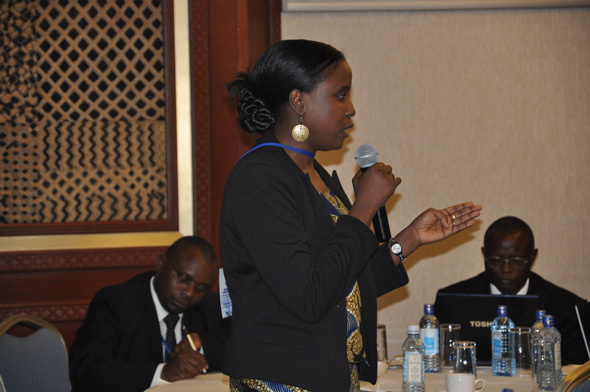
Photo Credit: Jonathan Odhong, African Population and Health Research Center. -
Leona D’Agnes on Evaluating PHE Service Delivery in the Philippines
›“By reducing population growth, we are going to have a better chance of sustaining the gains of an environmental conservation project,” said Leona D’Agnes in this interview with ECSP. D’Agnes, a technical advisor to PATH Foundation Philippines, served as lead author on a research article published late last year in Environmental Conservation titled, “Integrated Management of Coastal Resources and Human Health Yields Added Value: A Comparative Study in Palawan (Philippines).” The study provided concrete statistical evidence that integrated development programming incorporating population, health, and the environment (PHE) can be more effective in lowering population growth rates and preserving critical coastal ecosystems than single-sector development interventions.
“What set this research apart from earlier work on integrated programming was the rigorous evaluation design that was applied,” said D’Agnes. “What this design aimed to do is to evaluate the integrated approach itself. Most of the previous evaluations that have been done on integrated programming were impact evaluations — they set out to evaluate the impact of the project.” This most recent research project, on the other hand, sought to evaluate the effectiveness of cross-sectoral interventions based on “whether or not synergies were produced,” said D’Agnes.Although it took her team six years to generate statistically significant findings in Palawan, D’Agnes reports that the synergies of PATH Foundation Philippines’ PHE intervention took the form of reduced income poverty, a decreased average number of children born to women of reproductive age, and the preservation of coastal resources, which helped bolster the region’s food security.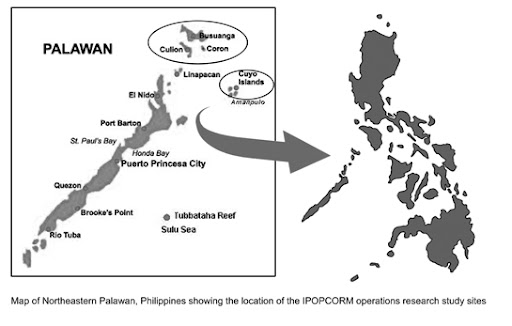
Going forward, D’Agnes said, an integrated approach to environmental conservation should also prove appealing because of its cost effectiveness. “This has huge implications for local governments in the Philippines, where they are struggling to meet the basic needs of their constituents in the face of very small internal revenue allotments that they get from the central government,” she said. “They can really pick up on this example to see that at the local level, if somehow they can do this integrated service delivery that was done in the Integrated Population and Coastal Resource Management (IPOPCORM) model, that they’ll be able to achieve the objectives of both their conservation and their health programs in a much more cost-effective way, and, in the process, generate some other [positive] outcomes that perhaps they didn’t anticipate.”
D’Agnes expects the study’s results will prompt a fresh look at cross-sectoral PHE programming. “I hope that this evidence from this study will help to change the thinking in the conservation community about integrated approaches to conservation and development,” she said.
The “Pop Audio” series is also available as podcasts on iTunes. -
Life on the Edge: Climate Change and Reproductive Health in the Philippines
›July 18, 2011 // By Hannah MarquseeHigh population growth and population density have placed serious stress on natural resources in the Philippines. No one lives far from the coast in the 7,150-island archipelago, making the population extremely dependent on marine resources and vulnerable to sea-level rise, flooding, and other effects of climate change. The coastal megacity of Manila – one of the most densely populated in the world – is beset by poor urban planning, lack of infrastructure, and a large population living in lowland slums, making it particularly vulnerable to increased flooding and natural disasters. [Video Below]
The Philippines is now home to 93 million people and by 2050 is expected to reach 155 million, according to the UN’s medium fertility variant projections. Development programs in the country have made great strides towards increasing access to family planning and reproductive health services as well as improving management of marine resources, but the underlying trends remain troubling.
The Battle Over Reproductive Health
Since 1970, the government’s Commission on Population has been addressing population growth, reproductive health, and family planning. “The impact of the high rate of population growth is intricately linked to the welfare and sustainable development for a country like the Philippines, where poverty drives millions of people to overexploit their resource base,” wrote the commission. As a result of these efforts and others, total fertility rate has dropped from 6.0 children per woman in 1970, to the present 3.2.
The Philippines has also made great gains towards achieving Millennium Development Goal targets, “particularly in the alleviation of extreme poverty; child mortality; incidences of HIV/AIDS, tuberculosis, and malaria; gender equality in education; household dietary intake; and access to safe drinking water,” according to the United Nations Development Program (UNDP). Yet, “glaring disparities across regions persist,” UNDP states.
One of the poorest regions in the country, the Autonomous Region of Muslim Mindanao, is also home to a violent separatist movement. With limited access to health services, fertility and population growth rates are the highest in the country. Women in Mindanao average 4.2 children per woman; one in four married women has an unmet need for contraception; and 45 percent of households live in poverty (compared to 24 percent nationally).
Nationally, “serious challenges and threats remain with regard to targets on maternal health, access to reproductive health services, nutrition, primary education, and environmental sustainability,” according to UNDP–in particular, indicators on maternal health are “disturbing” and of all the MDGs, are labeled “least likely to be achieved.”
Out of three million pregnancies that occur every year, half were unplanned and one-third of these end in abortions, according to a 2006 report of the Allan Guttmacher Institute conducted in the Philippines. Induced abortion was the fourth leading cause of maternal deaths, and young women accounted for 17 percent of induced abortions. Over half of births occurred at home and one-third of them were assisted by traditional birth attendants. Around 75 percent of the poorest quintile did not have access to skilled birth attendants compared to only 20 percent of the richest quintile.
The politically influential Catholic Church recently blocked passage of a reproductive health bill, despite support by President Benigno Aquino and a majority of Filipinos. The bill seeks to provide universal access to contraception and would make sex education required from fifth grade onwards, a provision that has angered Church officials.
Manila Under Water
The Philippines’ combination of high population growth and limited land area (nearly all of which is near the coast) makes the country extremely vulnerable to the effects of climate change. Sixty-five percent of Filipinos live in coastal areas and 49 percent live in urban areas. Paul Hutchcroft, in Climate Change and Natural Security, writes that “even in the best of times, the frequency of typhoons, floods, earthquakes, and volcanic eruptions makes the Philippines one of the most disaster-prone countries in the world” (p. 45).
Population growth, climate change, and deforestation will only increase the severity of these disasters, he concludes. Hutchcroft points out that by 2080, projected temperature increases of between 1.2 to 3.9 degrees Celsius could raise sea levels by an estimated 0.19 to 1.04 meters – a scary thought for the 15 million living within a one-meter elevation zone (p. 46).
In 2009, metropolitan Manila, currently home to 11 million people (18,650 per square kilometer) and projected to grow to 19 million by 2050, was hit by tropical storms that caused devastating flooding – at their peak, waters reached nearly seven meters, according to a World Bank report. “More than 80 percent of the city was underwater,” write the authors, “causing immense damage to housing and infrastructure and displacing around 280,000-300,000 people.”
“Even if current flood infrastructure plans are implemented, the area flooded in 2050 will increase by 42 percent in the event of a 1-in-100-year flood,” says the World Bank report. Climate change could also increase the cost of flooding as much as $650 million, or 6 percent of GDP. Only by considering climate-related risks in urban planning can the Philippines hope to mitigate the effects of climate change, the report concludes.
Integrated Development: One Piece of the Puzzle?
Population, health, and environment (PHE) programs that integrate family planning and natural resource management are one way to help the majority of Filipinos that live in densely populated and resource-stressed coastal areas.
In ECSP’s FOCUS Issue 15, “Fishing for Families: Reproductive Health and Integrated Coastal Management in the Philippines,” Joan Castro and Leona D’Agnes explain how Path Foundation Philippines, Inc.’s IPOPCORM project – which ran from 2000 to 2006 – helped “improve reproductive health and coastal resource management more than programs that focused exclusively on reproductive health or the environment – and at a lower total cost.” A recent peer-reviewed study, co-authored by Castro and D’Agnes and published in Environmental Conservation, proved the same point with rigorous analysis.
“When we started IPOPCORM, there was really nothing about integrating population, health, and environment,” said Castro in an interview with ECSP. IPOPCORM provided some of the first evidenced-based results showing there is value added to implementing coastal resource management and family planning in tandem rather than separately. In part due to the success of the IPOPCORM, the Philippines have become one of the major PHE development implementers in the world.
Creating sustainably managed marine sanctuaries while improving access to family planning provides a way forward for many coastal communities. However, the Philippines’ urban woes – 44 percent of urban dwellers live in slums, according to the Population Reference Bureau – internal divisions, and natural vulnerability will likely make it difficult to dodge considerable climate-related effects in the near future. Already the archipelago’s vast biodiversity is in crisis, according to studies over two thirds of native plant and animal species are endemic to the islands and nearly half of them are threatened; only seven percent of its original old-growth less than 10 percent of the islands’ original vegetation remains; and 70 percent of nearly 27,000 square kilometers of coral reefs are in poor condition.
Sources: CIA, Conservation International, Field Museum, The Guardian, The Huffington Post, Philippines National Statistics Office, Population Reference Bureau, United Nations, U.S. Census Bureau, World Bank, World Wildlife Fund.
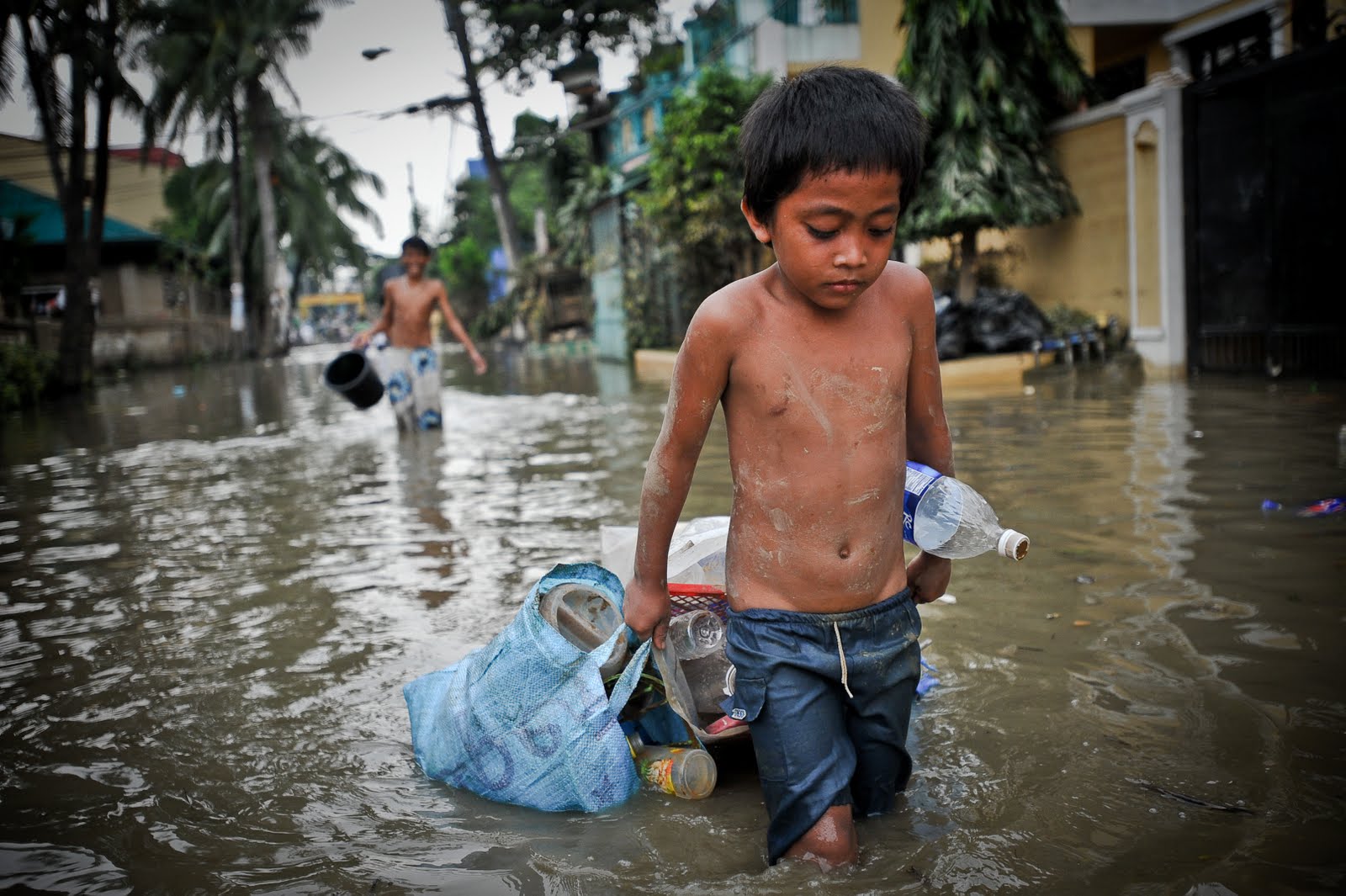
Photo Credit: “Climate Risk and Resilience: Securing the Region’s Future” courtesy of Flickr user Asian Development Bank. -
Vik Mohan, Rebecca Hill, and Alasdair Harris
In FOCUS: To Live With the Sea: Reproductive Health Care and Marine Conservation in Madagascar
›July 12, 2011 // By Wilson Center StaffDownload FOCUS Issue 23: “To Live With the Sea: Reproductive Health Care and Marine Conservation in Madagascar,” from the Wilson Center.
Christine does not know how old she is. She has 16 children and lives on a remote island off the southwestern coast of Madagascar. She and her children, like other members of the Vezo ethnic group, depend entirely on the ocean for their survival. Her husband, a fisherman, struggles to catch enough to feed his family.
In this isolated area, most girls have their first child before the age of 18, and families with 10 children or more are commonplace. But since the marine conservation NGO Blue Ventures launched a family planning program in 2007, couples and women like Christine are able to make their own reproductive health choices.
Blue Ventures’ Vik Mohan, Rebecca Hill, and Alasdair Harris argue that their integrated approach, which combines reproductive health care and education with conservation and alternative livelihoods, offers these communities – and the marine environment on which they depend – the best possible chances of survival. -
Nepal to East Africa: Population, Health, and Environment Programs Compared
›“Practice, Harvest and Exchange: Exploring and Mapping the Global, Health, Environment (PHE) Network of Practice,” by the University of Rhode Island’s Coastal Resources Institute and the USAID-supported BALANCED Project, explores the successes and challenges of their global population, health, and environment (PHE) network (with a heavy presence in East Africa). In order to increase support of the nascent PHE approach, the network seeks to shorten the “collaborative distance” between “PHE champions,” so they can develop a stronger body of evidence for the links between population, health, and the environment. In their analysis, the authors write that the network has facilitated the development of independent, information-sharing relationships between “champions.” However, they also observed shortfalls in the network, such as its limited reach into less technologically advanced yet more biodiverse regions, its bias toward BALANCED meet-up event participants, and its exclusion of those experts unlikely to be included in published works.In “Linking Population, Health, and the Environment: An Overview of Integrated Programs and a Case Study in Nepal” from the Mount Sinai Journal of Medicine, Sigrid Hahn, Natasha Anandaraja, and Leona D’Agnes provide both a broad survey of the structure and content of programs using the PHE method and an in-depth case study of a successful initiative in Nepal. Hahn et al. praise the Nepalese program for simultaneously addressing deforestation from fuel-wood harvesting, indoor air pollution from wood fires, acute respiratory infections related to smoke inhalation, as well as family planning in Nepal’s densely populated forest corridors. “The population, health, and environment approach can be an effective method for achieving sustainable development and meeting both conservation and health objectives,” the authors conclude. In particular, one benefit of cross-sectoral natural resource and development programs is the inclusion of men and adolescent boys typically overlooked by strictly family planning programs.