-
Food Security in a Climate-Altered Future, Part One: “Hotspots” Suggest Food Insecurity More Than a Supply Problem
›March 20, 2012 // By Kathleen MogelgaardSmall talk about the weather with my Malawian taxi driver became serious very quickly. “We no longer know when the rains are coming,” he said as we bumped along the road toward the Lilongwe airport last November. “It is very difficult, because we don’t know when to plant.”
These days, he is grateful for his job driving a taxi. His extended family and friends are among the 85 percent of Malawians employed in agriculture, much of which is small-holder, rain-fed subsistence farming. Weather-related farming challenges contribute to ongoing food insecurity in Malawi, where one in five children is undernourished.
His observations of the recent changes in climate match forecasts for the region: In East Africa, climate change is expected to reduce the productivity of maize – Malawi’s main subsistence crop – by more than 20 percent by 2030, according to a recent analysis by Oxfam International.
I looked out the window at dusty fields and tried to imagine what Malawi might look like in 2030. For one thing, it will be more crowded. A lot more crowded. According to UN population projections, by 2030, Malawi’s population will have grown from about 15 million today to somewhere between 26.9 and 28.4 million. With climate change dampening agricultural productivity and population growth increasing food demand, how will Malawians – many of whom don’t have enough to eat now – have enough to eat in the future?
It gets quiet in the taxi as the driver and I both ponder this question. Malawi is not alone in being a climate-vulnerable country with a rapidly growing population dependent on rain-fed agriculture. Population Action International’s Mapping Population and Climate Change tool shows us that many “hotspot” countries – scattered across Latin America, Africa, and Asia – face the triple challenge of low climate change resilience, projected decline in agricultural productivity, and rapid population growth.
Agricultural trade, government safety net programs, and foreign assistance will no doubt continue to play an important role in the quest for food security in Malawi and other “hotspot” countries in the future. And climate change adaptation projects will, hopefully, reshape agricultural practices and technologies in ways that can boost yields and enable crops to better withstand temperature and precipitation fluctuations.
These interventions will be critical in addressing the supply side of future food security challenges. But what about growing demand?
Malthus Revisited?
Juxtaposing population growth with food production does, of course, bring us back to Thomas Robert Malthus’ original (and by now somewhat infamous) dire warning: that population growth would eventually outrun food supply. But seeing the scale of the challenges in Malawi firsthand, I must admit that my inner Malthus sat up and took notice.
It is true that technological advances have enabled astounding growth in agricultural yields that have enabled us to feed the world in ways the doom-filled Malthus could never have imagined in the early 19th century. But it is also true that the agricultural productivity gains that helped us keep pace with population growth for so long are beginning to slow: According to the U.S. Department of Agriculture, aggregate agricultural yields averaged 2.0 percent growth annually between 1970 and 1990, but that growth in yields declined to 1.1 percent between 1990 and 2007, and is projected to decline to less than 1.0 percent in the years to come.
This comes at a time when the Food and Agriculture Organization reports that food production will need to increase by 70 percent by 2050 in order to adequately feed a larger, wealthier, and more urbanized population.
To dismiss any talk of population growth as outmoded Malthusian hand-wringing misses an opportunity to embrace interventions that can contribute significantly to prospects for future food security – namely, empowering women with information and services that enable them to determine the timing and spacing of their children.
In Malawi and many of the “hotspot” countries around the world, high proportions of women remain disempowered in this regard. Meaningful access to family planning and reproductive health services results in smaller, healthier families that will be better equipped to cope with the food security challenges that are headed their way.
Not only does a smaller family mean that limited household resources go further, but access to family planning and reproductive health services is connected to other important education and economic outcomes.
A new Population Reference Bureau policy brief, for example, highlights how improving women’s reproductive health will not only lead to declining fertility and slower population growth in sub-Saharan Africa, but can also contribute to balancing a woman’s many roles (agricultural producer, worker, mother, caregiver, etc.) in ways that support greater food security for her family. And research by the International Food Policy Research Institute shows that in developing countries, women’s education and per capita food availability are the most important underlying determinants of child malnutrition – with women’s education having the strongest beneficial impact. Access to family planning paves the way for these outcomes – and by slowing population growth, can help to slow the growth in food demand.
Women’s Needs and Future Food Demand
The scale of potential benefits of meeting women’s family planning needs is significant when thinking about future food demand, both globally and especially in food insecure, climate-vulnerable countries. As we have seen in Malawi, there is a range of possible future population sizes and that range grows even wider when the projections are extended to 2050: According to the UN, Malawi’s 15 million today will grow to somewhere between 45 million and 55 million by 2050.
That span of 10 million people embodies assumptions about declining fertility in Malawi. To reach 55 million, the average number of children per woman would need to drop from 5.7 today to 4.5 by 2050. If fertility drops further, to 3.5 children per woman, Malawi’s population would grow to (only) 45 million. Where Malawi ends up in that 10-million-person population spread will have deep implications for per capita food availability, not to mention other important development outcomes.
Fertility declines of this kind do not require coercion or “population control.” As we have seen time and again, when women are empowered with information and services that enable them to determine the timing and spacing of their children, smaller, healthier families are the inevitable result.
Meeting women’s needs for reproductive health and family planning services is not – and never should be – about reducing population size. Universal access to reproductive health is recognized as a basic human right and central development goal (embodied in Millennium Development Goal 5) because of its vital connections to women’s and children’s health, education and employment opportunities, and poverty alleviation. And yet, too many women remain without the ability to effectively plan their families. In Malawi, one in four married women would like to delay their next birth or end child-bearing all together but aren’t using contraception; globally, 215 million have this unmet need.
As global efforts ramp up to address interlinked challenges of food security and climate change adaptation, assessing the role of population growth is more important than ever. And in designing strategies to address these challenges – strategies like the U.S. Government’s Feed the Future Initiative and UN-supported National Adaptation Plans – we should not pass over opportunities to incorporate interventions to close the remaining gap in universal access to family planning, especially in places like Malawi and other “hotspot” countries (such as Haiti, Nigeria, and Nepal), where women’s unmet family planning needs are high and population growth is rapid.
Continue reading with part two on the often under-examined role of population projections in food security assessments here.
Sources: Food and Agriculture Organization, Guttmacher Institute, International Food Policy Research Institute, International Institute for Environment and Development, MEASURE DHS, Oxfam International, Population Action International, Population Reference Bureau, The Lancet, U.S. Department of Agriculture, UN Population Division.
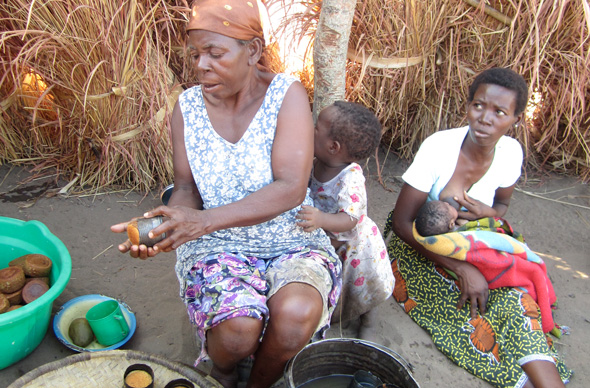
Photo Credit: Women in a village near Lake Malawi make cornbread while caring for small children, used with permission courtesy of Jessica Brunacini. -
John Williams: Helping People and Preserving Biodiversity Hotspots
›March 16, 2012 // By Schuyler Null“Both humans and the number of species in the world are not evenly distributed across the globe,” said John Williams of the University of California, Davis, who recently spoke at the Wilson Center about his contribution to Biodiversity Hotspots: Distribution and Protection of Conservation Priority Areas. “In particular we find that species diversity is concentrated in what’s called the biodiversity ‘hotspots.’”
Largely in the tropics, Mediterranean climates, and along mountain chains, biodiversity hotspots are “where there’s a real concentration in number of species and also unique species – plants and animals that exist nowhere else on Earth,” he said.
“It’s a very complex relationship between biodiversity and human population, because it’s not necessarily [true] that places of high human population are a threat to biodiversity,” said Williams. Many different factors play a role, “like education, like consumption, like economic development, different cultures – how people interface with the natural world – all these things create nuances as far as what that relationship is between biodiversity and where people live.”
“There are some basic things we can do that are going to be good for human welfare, as well as biodiversity,” he continued. A few are addressing lack of education, especially among girls, in areas of high biodiversity; providing basic health services, including family planning, where rural growth rates are highest; and improving physical access to rural areas to promote economic development.
“We see there’s a direct correlation between each additional year of schooling a girl has and their fertility during their lifetime,” Williams said. “As people climb out of poverty, they also choose to have smaller, healthier families.” -
Kavita Ramdas: Why Educating Girls Is Not Enough
›“I’m a big proponent of girl’s education. I believe that it’s a very important and a very valuable human rights obligation that all countries should be meeting,” said Kavita Ramdas, executive director for programs on social entrepreneurship at Stanford University, at the Wilson Center. However, “in the past seven to eight years we have found ourselves in a situation where there’s kind of an enchantment with girl’s education, as though it were the new microenterprise magic bullet to solve everything from poverty, to malnourishment, to inequality.”
“The outcomes that we ascribe to girl’s education…are not anything that I would argue with,” she said, yet, this enchantment “has happened simultaneously with a significant drop in both funding and support for strategies that give girls and women access to reproductive health and choices, particularly family planning.”
This is a problem, said Ramdas, because we cannot rely on education alone to do all the heavy lifting required to empower women.
“I think it’s important for us to recognize that there are societies where girls and women have achieved significantly high levels of education in which gender inequality remains,” she said, “for example, places like Japan and Saudi Arabia, where you have high per capita income, high levels of education, and yet…where women and girls are still marginalized and on the edges in terms of decision making.”
“I don’t think we have to wait for one to be able to do the other,” she said. “As we support programs for girls’ education, we also need to demand that those programs be buttressed by strong programs in adolescent health, strong programs in sex education, strong programs that actually provide girls and women with access to family planning and contraception.” -
Africa’s Demographic Challenges, Genderizing Food Security and Climate Responses
›Gender and Climate Change Research in Agriculture and Food Security for Rural Development is a detailed training guide produced by the CGIAR Research Program on Climate Change, Agriculture and Food Security and the Food and Agricultural Organization of the United Nations (FAO). The guide’s purpose is to support “work to investigate the gender dimensions of responding to climate change in the agriculture and food sectors…to improve food production, livelihood security and gender equality.” The authors write that “the number of hungry people in the world could be reduced by more than 100 million if women in rural areas were given equal access to the same resources as men.” The guide focuses on sensitizing researchers and practitioners “to the links between socio-economic and gender issues” and provides a suite of tools for gathering data about the gender and climate change aspects of agricultural development. Along with concrete tools to understand and address gender inequities in agricultural development, the report adopts a nuanced social definition of gender in which “people are born female or male, but learn to be women and men,” keeping the focus squarely on the socio-economic and political barriers to full equality.A report from the Berlin Institute for Population and Development, Africa’s Demographic Challenges: How A Young Population Can Make Development Possible, argues that “if mortality and fertility decrease” across the African continent, there will be a “demographic bonus.” If nurtured through ample investment in human capital, this bonus may become a “demographic dividend,” as growing numbers of working-age people participate in the economy. The report argues that taking advantage of this demographic window, however, requires policy actions that both encourage fertility reductions and foster economic development throughout the continent, declaring boldly that “high birth rates and development are mutually exclusive.” Thus, according to the authors, the pathway to development is supporting the empowerment and education of women and girls, strengthening reproductive health services, and ensuring that both young women and young men are able to engage socio-economically within their societies. Though the report’s argument that demographic change can be critical for development is convincing, the form, strength, and causal direction of these linkages at times becomes confused. -
Women’s Health: Key to Climate Adaptation Strategies
›The discussion about family planning and reproductive rights “needs to be in a place where we can talk thoughtfully about the fact that yes, more people on this planet – and we’ve just crossed seven billion – does actually put pressure on the planet. And no, it is not just black women or brown women or Chinese women who create that problem,” said Kavita Ramdas, executive director for programs on social entrepreneurship at Stanford University. [Video Below]
-
The Missing Links in the Demographic Dividend
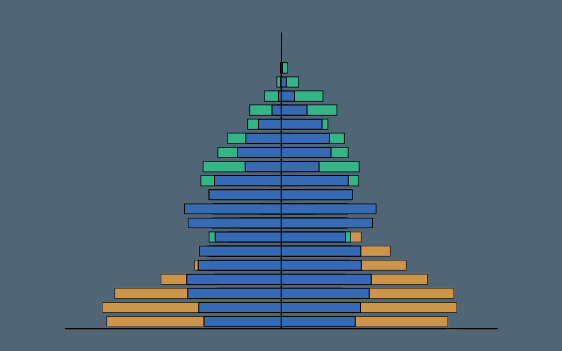
›March 9, 2012 // By Elizabeth Leahy MadsenThe “demographic dividend,” a concept that marries population dynamics and development economics, is on the rise in policy circles – Rajiv Shah, Melinda Gates, and African government ministers have all discussed it recently in high-level forums. Most notably for demographers, World Bank Chief Economist Justin Yifu Lin wrote a blog post that focuses on the demographic dividend’s potential to give developing countries a powerful economic boost through declining dependency ratios and a proportionately large working-age population.
-
Reaching Out to Environmentalists About Population Growth and Family Planning
›“Promoting women’s empowerment is an effective strategy for looking at climate and the environment but also is important in its own right,” said the Sierra Club’s Kim Lovell at the Wilson Center on February 22. “Increasing access to family planning for women around the world is a climate adaptation and climate mitigation solution.” [Video Below]Drawing on research by Brian O’Neill (National Center for Atmospheric Research) and others Lovell explained that meeting the unmet need for family planning around the world could provide up to 16 to 29 percent of the emissions reductions required by 2050 in order to avoid more than two degrees of warming (the target set by nations to prevent the most damaging effects of climate change).
For environmentalists and those concerned with climate change, “sometimes the idea has been that population is toxic, that we can’t talk about population growth,” said Nancy Belden of Belden Russonello and Stewart Consulting, but the results of a recent survey and several focus groups conducted in association with Americans for UNFPA demonstrate that there is great potential for engaging the environmental community in such a discussion.
Belden and Lovell were joined by Kate Sheppard from Mother Jones to discuss how the population and environment communities can come together in the lead-up to the Rio+20 UN sustainable development conference.
Besides providing a basic health commodity, empowering women through access to family planning also improves adaptation outcomes, said Lovell. “Climate change is already happening and women and families around the world are suffering from the effects of water scarcity [and] of erratic weather patterns,” she said. But “when women have the ability to plan their family size and have more choices about their families and about their reproductive health and rights, that makes it easier to adapt to those climate change effects that are already taking place.”
Resonating With Environmental Priorities
“The people who really care about the environment are generally the same people who care about access to contraception and birth control and family planning…they’re a ready audience to hear about these connections and they’re a ready audience to take action about them,” said Kate Sheppard. Reproductive rights issues are something that people can really connect with, she said; “most women, most men too…understand why it’s an important issue and they’ve understood it in their own life and they have [a] very strong response to it.”
When we approach the linkages between environment and population, said Sheppard, it is important to recognize the role of empowering language – language about access to services, education, and resources for women.
The aim of the Americans for UNFPA survey was to find out whether environmentalists can be engaged in discussions of population issues such as family planning and international voluntary contraception, and if so, how?
The results show that “environmentalists are ready to talk about population, they’re ready to listen – it’s not toxic,” said Belden. She outlined three key findings:
First, environmentalists prioritize the environment but they also give a high priority to empowering women, said Belden. “Population pressures are seen as an environmental problem…they don’t dismiss it,” yet the “strongest framework that we could come up with…for engaging people on the issues around voluntary family planning and contraception focuses on women.”
Second, the environmental community is relatively optimistic about the potential outcomes of family planning programs and of foreign aid in general. When queried, half of the environmentalists strongly supported the idea of U.S. contributions to UN programs that provide voluntary access to contraception in developing countries, said Belden.
When asked to mark their top priority among a list of possible outcomes of providing voluntary access to contraception, 47 percent of the environmentalists selected either “improving living conditions for women and their families” or “ensuring women have options and can make reproductive decisions” as their top priority. While a significant number are also concerned about stalling population growth, this integrative focus on improving the lives of women and their families is heartening, said Belden.
In the Run-Up to Rio+20, More Than Pop
One point that all three speakers stressed is the need to integrate consumption into the integrated population message. In her survey work, Belden found that “if you don’t talk about consumption in the same breath, [environmentalists] start wanting to put it in there because otherwise…this is someone blaming others.”
Lovell similarly highlighted that “if we’re working to ensure a sustainable planet for future generations to come, we have to think about consumption and population.” For instance, “the United States makes up five percent of the world’s population but consumes 25 percent of the world’s resources,” she said.
Said Sheppard: “It’s not simply a problem that the numbers of people here on the Earth are going up, it’s a problem of how people, especially here in the U.S., live.”
It is imperative – especially from a sustainable development standpoint – that while working towards integrating environment and population we remain focused on a message that includes “using less but still having a high quality of life” here at home, said Sheppard.
Event ResourcesSources: Proceedings of the National Academy of Sciences.
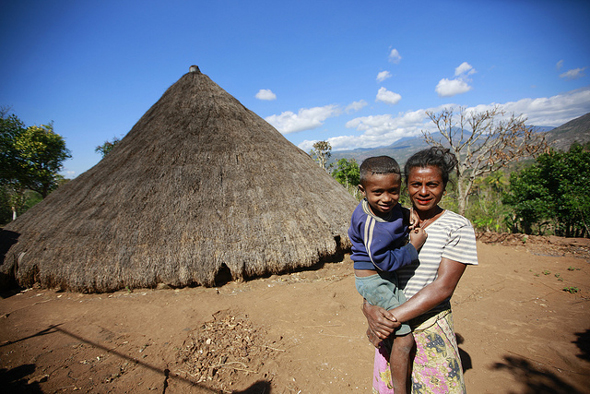
Photo Credit: “Timorese Traditional Home,” courtesy of United Nations Photo. -
Programming to Address the Health and Livelihood Needs of Adolescent Girls
›“There are 750 million adolescent girls in the world today, and this is by far one of the world’s most marginalized and vulnerable demographics,” said Denise Dunning, the Public Health Institute’s program director for emergency contraception in Latin America during a February 2 panel at the Wilson Center. Dunning, who also leads the Adolescent Girls’ Advocacy and Leadership Initiative (AGALI), was joined by Margaret Greene, director of Greeneworks, and Jennifer Pope, the deputy director of sexual and reproductive health at Population Services International, to discuss how to better reach underserved adolescent girls in developing countries with health and livelihood programs.
Showing posts from category family planning.