• woodrow wilson center
  • ecsp

New Security Beat

Subscribe:
  • rss
  • mail-to
  • Who We Are
  • Topics
    • Population
    • Environment
    • Security
    • Health
    • Development
  • Columns
    • China Environment Forum
    • Choke Point
    • Dot-Mom
    • Friday Podcasts
    • Navigating the Poles
    • Reading Radar
  • Multimedia
    • Water Stories (Podcast Series)
    • Backdraft (Podcast Series)
    • Tracking the Energy Titans (Interactive)
  • Films
    • Water, Conflict, and Peacebuilding (Animated Short)
    • Paving the Way (Ethiopia)
    • Broken Landscape (India)
    • Scaling the Mountain (Nepal)
    • Healthy People, Healthy Environment (Tanzania)
  • Publications
  • Events
  • Contact Us

NewSecurityBeat

The blog of the Wilson Center's Environmental Change and Security Program
Showing posts from category family planning.
  • Family Planning Saves Lives, Can Help Mitigate Effects of Climate Change

    ›
    Reading Radar  //  August 14, 2012  //  By Graham Norwood

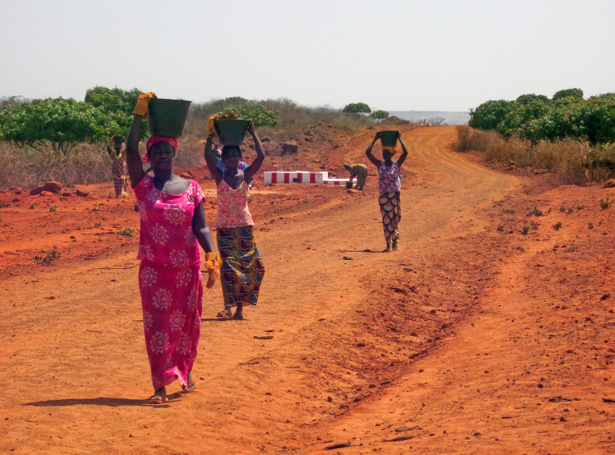
    Contraceptives prevented an estimated 272,040 maternal deaths in 2008, reducing worldwide maternal mortality by 44 percent, according to a recent paper by Saifuddin Ahmed, Qingfeng Li, Li Liu, and Amy O. Tsui, published in The Lancet. But the prevention of maternal deaths could have been even higher. The study, “Maternal Deaths Averted by Contraceptive Use: An Analysis of 172 Countries,” estimates that an additional 104,000 maternal deaths – many occurring in developing parts of Africa and South Asia – could have been averted simply by satisfying existing unmet need for contraception. In sub-Saharan Africa, for example, only 22 percent of women who are married or sexually active use contraception – a far cry from the 65 percent which the study suggests is the point at which maternal deaths avoided by contraceptive use begin to plateau. Not surprisingly, this has also yielded some of the highest regional fertility rates in the world.

    Such high fertility rates are driving growing concerns about scarcity and capacity in the region, and how climate change might exacerbate already-difficult development hurdles. This nexus of issues was the subject of a recent policy brief by Population Action International and the African Institute for Development Policy, titled Population, Climate Change, and Sustainable Development in Africa. The brief points out that “a large share of Africa’s population lives in areas susceptible to climate variation and extreme weather events,” and that there is an inherent tension the continent faces as it seeks to balance high population growth with climate change-induced reductions in the availability of natural resources, like water and arable land.  The authors urge policymakers, rather than focusing on environment, population, and health individually, to “connect population dynamics and climate change” to address their interlinked challenges together.

    MORE
  • Population and Sustainability in an Unequal World

    ›
    August 13, 2012  //  By Laurie Mazur

    June’s Rio + 20 Conference on Sustainable Development left environmentalists little to cheer about. Kumi Naidoo, executive director of Greenpeace International, called the meeting “a failure of epic proportions.” And Washington Post reporter Juliet Eilperin said the conference “may produce one lasting legacy: convincing people it’s not worth holding global summits.”

    MORE
  • PRB’s 2012 World Population Data Sheet

    ›
    Eye On  //  August 9, 2012  //  By Carolyn Lamere
    “The most rapid population growth in many ways [occurs in] the countries that can least afford it,” said Carl Haub in a webinar on July 19 to launch the Population Reference Bureau’s (PRB) 50th annual World Population Data Sheet. This year, the report explores aging populations in more developed countries, rapid population growth in less developed countries, and the increased global prevalence of non-communicable diseases in an interactive map, which concisely illustrates global trends. PRB estimates that the world’s population is 7,057,075,000 as of mid-2012; the global population crossed the seven billion threshold in October 2011.
    “The most rapid population growth in many ways [occurs in] the countries that can least afford it,” said Carl Haub in a webinar on July 19 to launch the Population Reference Bureau’s (PRB) 50th annual World Population Data Sheet. This year, the report explores aging populations in more developed countries, rapid population growth in less developed countries, and the increased global prevalence of non-communicable diseases in an interactive map, which concisely illustrates global trends. PRB estimates that the world’s population is 7,057,075,000 as of mid-2012; the global population crossed the seven billion threshold in October 2011.

    Aging Europe and East Asia

    Haub explained that population growth in Europe has been declining since the 1970s and is more or less a “pre-programmed destiny” for these countries. People of child-bearing ages make up a smaller percent of the population in many more developed countries, so unless there is an “enormous increase” in total fertility rates, these populations will continue to decline for the foreseeable future.

    Haub noted that these aging populations are unprecedented. In Germany and Italy, for example, 21 percent are over the age of 65; many other European countries have similar figures, as do other developed countries like Japan and South Korea. PRB expects these percentages to increase throughout the next century and for European countries to struggle to support greater numbers of retirees.

    Many such states have already found it difficult to raise the retirement age, even though medical advances allow people to work until later ages. PRB projects that in Japan, 42 percent of their population will be over the age of 60 in 2050; if such a large percentage of the population is no longer in the labor force, it will be difficult for to find the resources to support them.

    The report shows that the United States, on the other hand, is still experiencing modest population growth. The higher birthrate is in part due to immigration, as recent immigrants to the United States tend to have more children. Haub noted that European states have been reluctant to accept greater numbers of migrants to try to reverse their declining population.

    Youthful Developing Countries

    While the demographic destiny of aging countries is somewhat determined, the future for less developed countries is more uncertain. Many countries in sub-Saharan Africa, the Middle East, and South Asia have large and growing youth populations, and how many children these “future parents” will have is uncertain. That uncertainty is underscored by the variety of scenarios for future population growth. The UN has four variants – high, medium, low, and constant fertility – which vary considerably in their projections for future populations, and PRB’s global projections for 2050 are some 600 million people more than the commonly-used medium variant UN projection.

    Rapid growth in the least developed countries is hardly a new phenomenon, but PRB breaks down the numbers to an impressive degree. The 2012 Data Sheet provides updated net migration rates, projected population as a multiple of today’s, infant mortality rates, rate of natural increase, and other basic statistics. PRB also provides population pyramids from the wealthiest and poorest quintiles of the population of Malawi, as an example of the utility of desegregating data to better allocate resources to the underserved. They found that while birthrates have begun to decline for the wealthiest one-fifth of Malawians, the poorest citizens still have a total fertility rate of over seven children per woman.

    Measuring Health Systems

    Devastating infectious diseases – malaria, tuberculosis, and HIV/AIDS – have long been entrenched in some of the least developed and most rapidly growing parts of the world. But this year, PRB began to assess health on a broader level by tracking deaths attributed to non-communicable diseases as well. Diseases like cardiovascular disease, diabetes, respiratory illness, and cancer are leading causes of death in developed countries, but they have also increased in prevalence in developing countries at an alarming rate.

    PRB is not the only organization to take note of the change in disease predominance. The World Health Organization has issued guidelines targeting four factors which increase the risk of these illnesses: tobacco use, alcohol abuse, poor diet/obesity, and physical inactivity. The UN also called a special session last September to discuss non-communicable diseases. President of PRB Wendy Baldwin noted that the last such discussion on a health issue was 10 years ago about HIV/AIDS.

    Baldwin also pointed out that non-communicable diseases can increase the burden on the health systems of developing countries even more so than in developed states. She reported that in south Asia, for example, people have heart attacks on average six years earlier than people in developed countries, meaning more families lose their primary breadwinners.

    The risk factors for these non-communicable diseases are difficult to target, especially with increasing urbanization in developing countries. But in a video accompanying the report, Baldwin mentioned that raising the price of cigarettes is an effective way to reduce tobacco consumption, especially for youth. Some countries have also made progress in increasing physical activity through sports programs and making urban areas safer for pedestrians. “The low and middle income countries have a real opportunity to take really positive steps to confront that rise in non-communicable diseases and to address the risk factors that drive them,” she said.

    The Data Sheet Over Time

    The World Population Data Sheet has long been a vital resource for those in the population, health, and environment fields and has grown to include far more data than its first iteration in 1962. At first, the sheet had only four indicators: a population estimate for the year, annual rate of increase, crude birth rate, and crude death rate. Over time, PRB began measuring a greater number of key figures like infant mortality and life expectancy at birth. Population projections, a staple of the current version, were not added until 1978, perhaps in response to the inception of the United Nations World Population Projections in 1974.

    Over the past five decades, the data sheet has been witness to some major shifts in global population trends. While PRB discourages researchers from comparing past data to current figures because the measures and methods of gathering information have likely changed over time, it is still possible to see the rise of importance in several trends based on the indicators PRB chose to focus on each year. For example, extremely young populations have been found to have profound effects on a country’s stability and prosperity, as have aging populations. The 1966 data sheet was the first to measure the percentage of the population under the age of 15, and it didn’t become a consistent data point until 1977.

    The number of people living in cities in the developing world surpassed those in the developed in 1970, according to the UN, and in 1972, PRB began tracking the percentage of populations living in urban areas. HIV/AIDS indicators were added in 2000, as global awareness and a commitment to fighting the disease was rising.

    PRB’s demonstrated commitment to continually adding more data and refining existing projections makes the data sheet is a valuable resource to those studying the problems of today and the future. Fifty years on, the amount of information collected is staggering. The data sheet provides a glimpse at not just how many people there are in the world, but also where and how they live.

    For more information, take a look at the full data sheet!

    Sources: Population Reference Bureau, UN Population Division.

    Image Credit: PRB; Video: Noncommunicable Diseases and Youth in Developing Countries.
    MORE
  • Iran’s Surprising and Shortsighted Shift on Family Planning

    ›
    August 8, 2012  //  By Elizabeth Leahy Madsen

    In late July, Iran’s government announced that it would no longer fund family planning programs, a dramatic reversal following 20 years of support. The change is especially abrupt for a country that has been lauded as a family planning success story, with thorough rural health services and an educated female population contributing to one of the swiftest demographic transitions in history.

    MORE
  • From Youth Bulge to Food and Family Planning, Los Angeles Times’ ‘Beyond 7 Billion’ Series Synthesizes Population Challenges

    ›
    On the Beat  //  August 3, 2012  //  By Kate Diamond
    Over the next 40 years, the world is set to add 2.3 billion people. Millions more will join the middle class, pushing consumption upwards and further straining the world’s natural resources. Variables like climate change and political instability will exacerbate that strain and complicate efforts to bolster peaceful and stable development. Los Angeles Times correspondent Kenneth Weiss and photographer Rick Loomis examine these numerous and interconnected challenges in a five-part series on population growth and consumption dynamics.

    Speaking to demographic and health experts (including a number of New Security Beat regulars, like Richard Cincotta, Jon Foley, and Dr. Joan Castro), Weiss provides a thorough, astute, and compelling assessment of population dynamics in a rapidly changing world. The series starts with a basic introduction to population, climate, and consumption dynamics and progresses through to discuss political demography, global food security, and detailed looks at two important case studies, China and the Philippines.

    Part One: A Population Primer

    Population growth alone poses a number of challenges as cities become more crowded and demand for basic resources like water and food outpaces supply. Climate change and the unpredictable and sometimes extreme weather that is its hallmark “will make all of these challenges more daunting,” writes Weiss. And “population will rise most rapidly in places least able to handle it.” Africa, the Middle East, and South Asia, already expected to bear the brunt of climate change with rising sea levels, shorter growing seasons, and increasingly variable weather patterns, will also have to support the bulk of the world’s population growth by mid-century. Populations in Europe, North America, and East Asia are expected to stay stable or decline in numbers.


    The magnitude of growth in Africa, the Middle East, and South Asia, however, is uncertain. What happens from here “hinges on the cumulative decisions of hundreds of millions of young people around the globe,” Weiss writes. And yet, “population growth has all but vanished from public discourse.” Family planning in particular remains hamstrung by “erratic funding and unpredictable crosscurrents.” The result, he writes, is that even “under the best conditions, it’s hard to get contraceptives into the hands of impoverished women who want them.”

    Part Two: The Arc of Instability

    Drawing on work from demographer Richard Cincotta, George Mason University’s Jack Goldstone, Population Action International, and others, part two of Weiss’ series examines youth bulges and the so-called “arc of instability,” stretching across the disproportionately youthful countries of Africa, the Middle East, and South Asia.

    When a large youth population is mixed with other societal conditions, like “religious and ethnic friction, political rivalries, economic disparities, or food shortages,” youth can be “the kindling” for a spark that ignites simmering tensions, writes Weiss. Afghanistan is a case in point, where unemployed young men are often turning to the Taliban not out of extremist fervor, but out of a desperate need to support themselves and their families. “It’s too hard to employ this many people and too easy to recruit them into violence,” Cincotta told Weiss.

    And Afghanistan is just the beginning, according to Goldstone. “We are literally going to see one billion young people come into the populations in the arc of instability over the next two decades,” he said. “We can’t fight them. We have to figure a better way to help them.”

    Part Three: Feeding a Growing Population

    Jon Foley on how to feed nine billion and keep the planet
    As the world’s population continues to grow, and as more families join the middle class, world food production will have to double by mid-century in order to meet future demand. “What that actually means,” says World Wildlife Fund’s Jason Clay, an agriculture specialist, “is that in the next 40 years we need to produce as much food as we have in the last 8,000.”

    Weiss presents the Horn of Africa and Punjab as microcosms of the problems facing global food production in the 21st century. Desertification and urbanization are eating away at potential cropland, while harmful farming techniques leech essential nutrients from soil, rendering it useless for future use. Insufficient infrastructure means that food spoils as it’s shipped from where it’s produced to where it’s needed, while extreme and widespread poverty means that those most in need can’t afford enough to feed their families.

    Stuck between growing demand and restricted supply, the University of Minnesota’s Jonathan Foley said the challenge of the century is straightforward: “How will we feed nine billion people without destroying the planet?”

    Part Four: Population and Consumption in China

    China has “a greater collective appetite – and a greater ecological impact – than any other country,” writes Weiss, making it a prime example of “how rising consumption and even modest rates of population growth magnify each other’s impact on the planet.”

    The country’s one-child policy slowed population growth rapidly, cutting fertility almost in half in less than a decade. Over time, a large working-age cohort with few dependents emerged, and helped China reap a demographic dividend. The resulting economic prosperity has come at a cost, however, as rising incomes and increasing consumption, spread across 1.3 billion people, have wreaked havoc on the country’s environment on a scale not seen anywhere else in the world.

    Because of that scale, what happens in China will have global repercussions. Climate scientists “say that in order to avoid a potentially catastrophic rise in global temperatures, worldwide carbon dioxide emissions must be cut in half by 2050,” Weiss writes. “For that to happen, China’s emissions would have to peak by 2020” – 15 years earlier than official government projections. The government remains opposed to further limits on emissions, arguing that such limits would “cripple” economic growth – an unfair impediment considering that developed countries were able to “pollute their way to prosperity, their argument goes.”

    Part Five: Family Planning in the Philippines

    Weiss ends the series with an in-depth look at family planning in the Philippines – a country at the forefront of the global debate over access to contraception. Lawmakers in the 80-percent-Catholic country have steadfastly refused to fund family planning services, while support from the international community all but vanished when USAID, “the major donor of contraceptives to the Philippines,” said in 2008 that it would end its contraceptive program.

    Joan Castro on population-environment programing in the Philippines
    Today, half of all pregnancies in the Philippines are unintended. Lawmakers are considering a “reproductive health bill…call[ing] for public education about contraceptives and government subsidies to make them available to everyone,” but a powerful opposition, including Church leadership, has stalled the bill for 14 years, Weiss writes.

    Public officials, including the former Manila mayor who ended the city’s contraceptive program 12 years ago, portray unbridled population growth as an economic asset, saying that “when you have more people, you have a bigger labor force.” For the millions of Filipinos who live in poverty, however, the lack of affordable family planning services leaves them with little control over family size and puts the Philippines on track to grow from 96.4 million people today to 154.9 million by mid-century. At that rate, the Philippines would be Asia’s third fastest growing country, behind Timor Leste and Afghanistan.


    Not everything in the series is dire – there are side columns highlighting population, health, and environment programming in Uganda, Iran’s successful family planning program, and Dr. Joan Castro’s family planning and marine conservation work in the Philippines. But Weiss is not naïve about the challenges ahead. Under any of the United Nation’s population projections, “living conditions are likely to be bleak for much of humanity,” he writes. “Water, food, and arable land will be more scarce, cities more crowded, and hunger more widespread.”

    “Even under optimistic assumptions, the toll on people and the planet will be severe.”

    But while the population challenges facing the world are many, Weiss, like many before him, makes one argument clear: providing family planning services to the 222 million women who want to control the number of children they have but cannot would go a long way towards minimizing future strain.

    Be sure to check out the photo and video features accompanying the “Beyond 7 Billion” series on the feature site.

    Note: The sentence beginning with “When a large youth population…” was corrected.

    Sources: Los Angeles Times, UN Population Division.

    Video Credit: “The Challenge Ahead,” used with permission courtesy of the Los Angeles Times; Photo: “Dharavi,” used with permission courtesy of Rick Loomis/Los Angeles Times; Jon Foley video: TEDx.
    MORE
  • Nine Strategies to Stop Short of Nine Billion

    ›
    Guest Contributor  //  July 16, 2012  //  By Robert Engelman
    Although most analysts assume that the world’s population will rise from today’s seven billion to nine billion by 2050, it is quite possible that humanity will never reach this population size.

    My chapter in this year’s State of the World 2012: Moving Toward Sustainable Prosperity, “Nine Population Strategies to Stop Short of 9 Billion,” outlines a series of strategies that would prompt significant declines in birth rates. Based purely on the intention of women around the world to have small families or no children at all, these initiatives, policies, and changes in attitude could end population growth before mid-century at fewer than nine billion people.

    Examples from around the world demonstrate effective policies that not only reduce birth rates, but also respect the reproductive aspirations of parents and support an educated and economically active society that promotes the health of women and girls. Most of these reproduction policies are relatively inexpensive to implement, yet in many places they are opposed on the basis of cultural resistance and political infeasibility.

    In creating this list, I sought to eschew the language and approaches of “population control” or the idea that anyone should pressure women and their partner on reproduction. Instead, I hoped to highlight strategies that could put human population on an environmentally sustainable path:
    • Provide universal access to safe and effective contraceptive options for both sexes. With two in five pregnancies reported as mistimed or never wanted, lack of access to good family planning services is among the biggest gaps in assuring that each baby will be wanted and welcomed in advance by its parents.
    • Guarantee education through secondary school for all, especially girls. In every culture surveyed to date, women who have completed at least some secondary school have fewer children on average, and have children later in life, than do women who have less education.
    • Eradicate gender bias from law, economic opportunity, health, and culture. Women who can own, inherit, and manage property; divorce; obtain credit; and participate in civic and political affairs on equal terms with men are more likely to postpone childbearing and to have fewer children compared to women who are deprived of these rights.
    • Offer age-appropriate sexuality education for all students. Data from the United States indicates that exposure to comprehensive programs that detail puberty, intercourse, options of abstinence and birth control, and respecting the sexual rights and decisions of individuals can help prevent unwanted pregnancies and hence reduce birth rates.
    • End all policies that reward parents financially based on the number of children they have. Governments can preserve and even increase tax and other financial benefits aimed at helping parents by linking these not to the number of children they have, but to parenthood status itself.
    • Integrate lessons on population, environment, and development into school curricula at multiple levels. Refraining from advocacy or propaganda, schools should educate students to make well-informed choices about the impacts of their behavior, including childbearing, on the environment.
    • Put prices on environmental costs and impacts. In quantifying the cost of an additional family member by calculating taxes and increased food costs, couples may decide that the cost of having an additional child is too high. Such decisions, freely made by women and couples, can decrease birth rates without any involvement by non-parents in reproduction.
    • Adjust to an aging population instead of boosting childbearing through government incentives and programs. Population aging must be met with the needed societal adjustments, such as increased labor participation, rather than by offering incentives to women to have more children.
    • Convince leaders to commit to stabilizing population through the exercise of human rights and human development. By educating themselves on rights-based population policies, policymakers can ethically and effectively address population-related challenges by empowering women to make their own reproductive choices.
    If most or all of these strategies were put into effect, global population likely would peak and subsequently begin a gradual decline before 2050, thereby ensuring sustainable development of natural resources and global stability into the future. By implementing policies that defend human rights, promote education, and reflect the true economic and environmental costs of childbearing, the world can halt population short of the nine billion that so many analysts expect.

    Kathleen Mogelgaard assisted with research for this piece.

    Robert Engelman is the president of the Worldwatch Institute and contributing author to
    State of the World 2012: Moving Toward Sustainable Prosperity.

    Sources: Bloom et al. (2011), Guttmacher Institute, Kohler et al. (2008), Population Reference Bureau, UN, UNFPA, The Wall Street Journal, Yadava and Yadava (1999).

    Image Credit: Worldwatch Institute,
    State of the World 2012: Moving Toward Sustainable Prosperity.
    MORE
  • Pop at Rio+20: Despite Failure Narrative, Progress Made at Rio on Gender, Health, Environment Links

    ›
    July 13, 2012  //  By Sandeep Bathala
    A month ago this weekend I boarded a plane to Rio de Janeiro for the UN Conference on Sustainable Development. Over the past few weeks, I have had some time to reflect on the amazing (and exhausting) experience afforded to me. Unfortunately, the final Rio+20 outcome document (considered by some to be misnamed as “The Future We Want”) failed to recognize the connections between reproductive rights and sustainability. However, since I returned I’ve also found myself in conversations with colleagues eager to celebrate the successes of the conference.

    Jason Bremner, program director at Population Reference Bureau, reminds me that the initial “zero draft document” that was circulated prior to Rio had absolutely no mention of reproductive health, family planning, or population. “Though the ultimate conference document wasn’t a success by many measures, I commend the efforts of the many advocacy organizations that resulted in the inclusion of reproductive health and family planning as a key aspect of sustainable development,” he said.

    Other wins were recognized at Rio as well. On a panel organized by the International Planned Parenthood Federation, Brazilian Minister of Policies for Women Eleonora Menicucci de Oliveira pointed out that the presence of women this year was much stronger than at the 1992 conference. And she stressed that the overall importance placed on the reduction of poverty will have a big impact for women.

    Though the official language was weakened in the final outcome document, there was much more support expressed at side events and off the record conversations. Speaking at the same event as Oliveira, Christian Friis Bach, Minister for Development Cooperation in Denmark, said that “one leader after another has stood up for reproductive rights, and we’ve started a campaign which will go on until ICPD+20.”

    In fact, as the Wilson Center’s Brazil Institute Director Paulo Sotero points out, there was a great deal of progress made by non-government representatives alongside the main conference:
    I left Rio more hopeful about the future than the official part of Rio+20 would allow. As governments clearly fumbled in the face of the complex challenges of imagining and building a more equitable and sustainable economic growth model in the decades ahead, I saw senior business executives and leaders of civil society engaged in intelligent and productive dialogue about difficult issues at hundreds of thematic panels held at the Corporate Sustainability Forum and other sessions held in Rio.
    I felt the same energy. And many groups there seemed to already be planning for next steps.


    Joan Castro on PATH Foundation’s work in the Philippines
    On the first day of side events I attended, members of the Population and Climate Change Alliance discussed strategies to ensure that in the post-2015 (i.e. post-Millennium Development Goals) international development agenda sexual and reproductive health and rights are explicitly recognized as core to sustainable development. The panel included Mialy Andriamahefazafy of Blue Ventures Madagascar, Joan Castro of PATH Foundation Philippines, Inc., and Negash Teklu of PHE Ethiopia Consortium, who all shared examples of efforts in their countries to integrate reproductive health with other sustainable development programs.

    The Rio+20 conference was, at the very least, a re-affirmation of the tenets set down by the ‘92 Earth Summit – that is, that there is middle ground between full-tilt economic development and uncompromising environmentalism, called “sustainable development,” and we ought to be moving towards it. It was also a fantastic gathering place for disparate groups of people to come together on to similar issues and to build momentum and networks on their issues.

    For those hoping to see a stronger link recognized between reproductive rights, population, and the environment, the good news is that elsewhere, awareness and momentum seems to be growing. Just this week, The Bill and Melinda Gates Foundation joined the United Kingdom, United States, France, Germany, the Netherlands, South Korea, Norway, Sweden, and Australia to pledge more than $2.6 billion towards meeting global unmet for contraceptives. And the connection to development was explicit: “Contraceptives are one of the best investments a country can make in its future,” reads the summit website.

    Coincidence to have followed so closely behind a “disappointing” Rio outcome? Perhaps not.

    Sources: The Bill and Melinda Gates Foundation, Estado, UN Conference on Sustainable Development.

    Photo Credit: “UN Women Leaders Forum at Rio+20,” courtesy of UN Women.
    MORE
  • Gates Foundation Spearheads London Summit on Family Planning

    ›
    July 12, 2012  //  By Carolyn Lamere
    “Given the option, [women in developing countries] will have fewer children,” said Melinda Gates in a TEDxChange talk in April. “The question is: are we going to commit to helping them get what they want now? Or are we going to condemn them to some century-long struggle, as if this were still revolutionary France and the best method was still coitus interruptus?”

    Wednesday, The Bill and Melinda Gates Foundation followed through on Gates’ pledge, helping to raise more than $2.6 billion at the London Summit on Family Planning as part of an ambitious goal of helping 120 million additional women in developing countries gain access to contraception by 2020. The summit was co-hosted by the UK Department for International Development and garnered support from other foundations and governments, including the United States, France, Germany, the Netherlands, South Korea, Norway, Sweden, and Australia.

    To quote the Population Institute’s Robert Walker on Dot Earth, this is a big deal:
    Many of the challenges that we face (hunger, severe poverty, energy, food, carbon emissions) are seemingly intractable. Population growth, which is a challenge multiplier, is not intractable. Far from it. There are proven highly cost-effective means of lowering fertility rates: providing access to contraceptives, keeping girls in school, ending child marriage practices, and changing social norms (including attitudes toward women and desired family size) through entertainment media.
    The focus on family planning for the Gates Foundation – one of the largest philanthropic organizations in the world – is relatively new (though their commitment to global health and development is not). Melinda Gates announced a commitment to maternal health in 2010, and the foundation first issued a family planning strategy in April of this year.

    The move has been unwelcome by some, particularly some Catholic institutions who object to family planning. But Gates has been adamant that contraceptives “should be a completely non-controversial topic.” She argues that 90 percent of Americans find contraceptives “morally acceptable,” including herself and many other Catholics, so there is no reason for the taboo around international aid for family planning to continue.

    “We’re not going to agree about everything, but that’s OK,” said Gates in a recent interview with CNN.

    In the TEDxChange talk, which helped launch this year’s push, she credits her upbringing for instilling a strong sense of social justice. During her travels with the Gates Foundation, one woman from a slum in Nairobi told her, “I want to bring every good thing to this child before I have another.” That statement resonated with Gates: “We all want to bring every good thing to our children,” she said. “But what’s not universal is our ability to provide every good thing for our children.” Gates pointed to contraception as a way for families to plan for their future and manage their resources. She recognized the controversial history of family planning as population control, but argued that this new initiative is about providing choices to individuals, not imposing values.

    Gates remains confident that as long as the foundation makes its mission clear, people will rally behind the cause.

    “We’re not talking about abortion. We’re not talking about population control. What I’m talking about is giving women the power to save their own lives, to save their children’s lives, and to give their families the best possible future.”

    Sources: BBC, The Bill and Melinda Gates Foundation, CNN, Catholic Family and Humans Rights Institute, Catholics For Choice, Dot Earth.

    Video Credit: TEDxChange.
    MORE
Newer Posts   Older Posts
View full site

Join the Conversation

  • RSS
  • subscribe
  • facebook
  • G+
  • twitter
  • iTunes
  • podomatic
  • youtube
Tweets by NewSecurityBeat

Trending Stories

  • unfccclogo1
  • Pop at COP: Population and Family Planning at the UN Climate Negotiations

Featured Media

Backdraft Podcast

play Backdraft
Podcasts

More »

What You're Saying

  • Volunteers,At,The,Lagos,Food,Bank,Initiative,Outreach,To,Ikotun, Pan-African Response to COVID-19: New Forms of Environmental Peacebuilding Emerge
    Rashida Salifu: Great piece 👍🏾 Africa as a continent has suffered this unfortunate pandemic.But it has also...
  • A desert road near Kuqa An Unholy Trinity: Xinjiang’s Unhealthy Relationship With Coal, Water, and the Quest for Development
    Ismail: It is more historically accurate to refer to Xinjiang as East Turkistan.
  • shutterstock_1779654803 Leverage COVID-19 Data Collection Networks for Environmental Peacebuilding
    Carsten Pran: Thanks for reading! It will be interesting to see how society adapts to droves of new information in...

What We’re Reading

  • Rising rates of food instability in Latin America threaten women and Venezuelan migrants
  • Treetop sensors help Indonesia eavesdrop on forests to cut logging
  • 'Seat at the table': Women's land rights seen as key to climate fight
  • A Surprise in Africa: Air Pollution Falls as Economies Rise
  • Himalayan glacier disaster highlights climate change risks
More »
  • woodrow
  • ecsp
  • RSS Feed
  • YouTube
  • Twitter
  • Facebook
  • Home
  • Who We Are
  • Publications
  • Events
  • Wilson Center
  • Contact Us
  • Print Friendly Page

© Copyright 2007-2021. Environmental Change and Security Program.

Woodrow Wilson International Center for Scholars. All rights reserved.

Developed by Vico Rock Media

Environmental Change and Security Program

Woodrow Wilson International Center for Scholars

Ronald Reagan Building and International Trade Center

  • One Woodrow Wilson Plaza
  • 1300 Pennsylvania Ave., NW
  • Washington, DC 20004-3027

T 202-691-4000