-
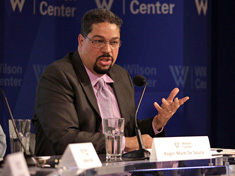
Kathleen Mogelgaard, Aspen Institute
Hungry, Hot, and Crowded: The Importance of Multi-Dimensional Strategies for Resilience
›May 6, 2014 // By Wilson Center StaffIn a world faced with rising temperatures, increasingly severe droughts and floods, and a rapidly growing population, how can people adapt to this new way of life – and even thrive? Leading experts discussed this question in-depth during an Aspen Institute Global Health and Development Program event titled, “Building Resiliency: The Importance of Food Security and Population.” The panel took place as part of the Civil Society Policy Forum at the 2014 IMF/World Bank Spring Meetings in Washington, DC.
-
Roger-Mark De Souza: Integrated Development Shows Health, Population Dynamics Crucial for Resilience
›
Resilience means different things to different people. For many in the international development and humanitarian communities, building resilience means responding to growing climate risks through disaster mitigation and planning. But for people like Birhani Fakadi, a 39-year old mother of 11 in rural Ethiopia, it also means access to reproductive health and family planning services, says ECSP’s Roger-Mark De Souza in this week’s podcast.
-
Why They Care: Reproductive Health Champions Spotlight Personal Connections to Development, Environment, More
›“Saving the planet depends on women achieving full human rights, and that begins with reproductive rights,” writes the Natural Resources Defense Council’s Frances Beinecke in a new set of essays on reproductive health published by the United Nations Foundation and the Aspen Institute.
-
Solidarity and Stigma: The Challenge of Improving Maternal Health for Women Living With HIV
›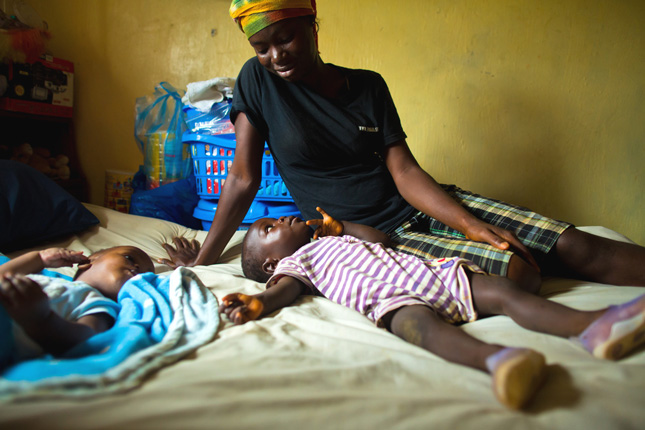
Despite the fact that with proper interventions, the likelihood of mother-to-child transmission of HIV is less than five percent, expectant mothers with HIV or AIDS often face intense stigma and marginalization from health care providers around the world. As a result, in some areas, the mortality rate for mothers with HIV is seven to eight times greater than the rate for non-infected women, said Dr. Isabella Danel of the U.S. Centers for Disease Control. [Video Below]
-
Earth Day 2014: Women at the Center of Sustainable Cities
›April 22, 2014 // By Roger-Mark De SouzaWhen I first came on board the Wilson Center last Earth Day, I wrote that I wanted to forge new paths and identify ways that reproductive health, environmental conservation, and women’s empowerment affect our lives today and in the future.
-
Lisa Palmer, Slate
Famine Is a Feminist Issue
›April 17, 2014 // By Wilson Center StaffIn 2013 the United Nations Population Division revised its population projections to show that population could grow even faster than previously anticipated, especially in Africa. Planning ahead for feeding a hot, hungry, teeming planet is both a numbers game and social venture. Calories, climate change, and acres of land are some of the factors on one side of the equation. The 7 billion people in the world, projected to grow to 9.6 billion by 2050, are on the other.
-
Forests on Film: New Stories From Nepal and the Congo Basin
›Given growing awareness about environmental change and how it affects human life, it is perhaps not surprising there is also a growing audience for environmental filmmaking. At the 2014 Environmental Film Festival in the Nation’s Capital on March 25, the Wilson Center premiered ECSP’s latest documentary, Scaling the Mountain: Protecting Forests for Families in Nepal. Together with Heart of Iron, a recent film on mining in the Congo Basin, the event took viewers into some of the world’s most remote forests to see how their inhabitants are adapting to rapid changes in the natural resources on which they depend.
-
Double Dividends: Population Dynamics and Climate Adaptation
›If current projections hold, Africa’s population will more than double in 40 years, putting more people at risk of food, water, health, and economic insecurity as the climate changes, as well as negating progress made in reducing carbon emissions per person. But what if it didn’t? [Video Below]
Showing posts from category family planning.