

Showing posts from category environmental peacemaking.
-
Deirdre LaPin, Niger Delta Working Group
Next Step, Clean Up the Niger Delta: The UNEP Ogoni Environmental Report
›August 12, 2011 // By Wilson Center StaffThe original version of this article, by Deirdre LaPin, appeared on the Niger Delta Working Group and AllAfrica.
The long-awaited report from the United National Environmental Program (UNEP) on oil damage in the Ogoni area was presented to President Goodluck Jonathan on August 4 in Abuja. This important study, the first of its kind in the Niger Delta, was conceived well before 2006 by the Federal Government as part of the Ogoni reconciliation and peace process led by Father Matthew Kukah (recently named Bishop of Sokoto). Intended as a major assessment of the impacts of oil production in the Ogoni region, UNEP in an early statement described the aim as to “clarify and de-mystify concerns expressed by local communities.” [Audio Below]
Shell Petroleum Development Company (SPDC) suspended active production in Ogoniland in late 1993 as a response to growing resistance to industry presence led by the martyred freedom fighter and writer Ken Saro-Wiwa. However, the company remained responsible during its withdrawal for monitoring and maintaining its installations, and especially the critical Trans-Niger pipeline serving Bonny Terminal. It also left behind a number of spill sites.
Deirdre LaPin on the History of Inequality in the Niger Delta [Excerpted Version] by ECSP WWC
Over the years the company had mixed success in negotiating with local communities access to spills sites or achieving their complete remediation. The impoverished local population also pursued informal oil production that centered on bunkering (oil pipeline tapping) and bush refining – increasing opportunities for further spills and pollution. In keeping with the “polluter pays” principle, the operator SPDC joint venture funded the U.S. $9.5 million UNEP study.
Last week the press had a field day with the freshly unveiled report.
Journalists whisked together highlights and added spice from the region’s contested history. Some articles cooked in the press kitchen missed key ingredients or simply got them mixed up. The best among them focused on the findings from the study’s careful scientific analysis, which led UNEP to the conclusion that “pollution has perhaps gone further and penetrated deeper than many may have previously supposed.”
This forceful opinion stated in the foreword by UNEP’s executive director Achim Steiner represents a long step beyond the study’s original technical terms of reference or the limited policy aims supporting reconciliation and “de-mystification.”
Now in 2011, UNEP’s thoughtful recommendations, while not assigning blame, point clearly to the need for a genuine shift in the priorities and practices of the oil industry and governmental regulatory agencies operating throughout the Niger Delta. The muscular sub-text rippling throughout the report makes clear that nothing less than ending pollution and full remediation of Ogoniland (and indeed the whole Niger Delta region) should be accepted as an end point.
Continue reading on the Niger Delta Working Group.
For more on the Niger Delta, be sure to also read “Nigeria’s Future Clouded by Oil, Climate Change, and Scarcity,” which includes the full audio interview with Deidre LaPin (excerpted above) on the history of the Niger Delta.
Sources: UNEP.
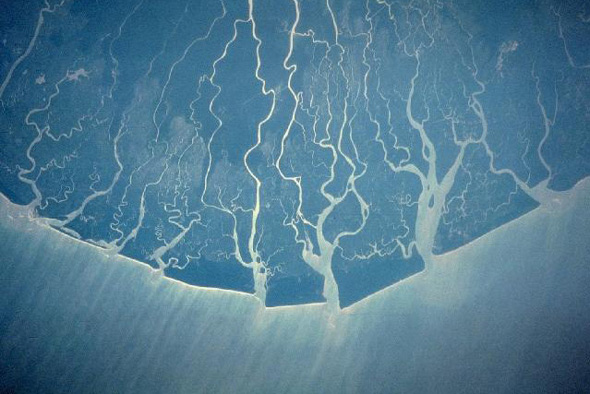
Photo Credit: NASA Space Shuttle Overflight photo of the Niger Delta, courtesy of NASA. -
Environmental Cooperation for Peacebuilding in Sierra Leone
›Sierra Leone’s decade-long civil war led to a complete collapse of environmental management in the country, according to Oli Brown, an environmental affairs officer with the UN Environment Programme (UNEP). Speaking at the Wilson Center last month, Brown highlighted the country’s current environmental conditions and how they have evolved since the war ended in 2002, while also outlining UNEP’s support for rebuilding the country’s natural resource governance.
Despite its wealth of natural resources, Sierra Leone is plagued by high unemployment, a massive gap between the poor and wealthy, and extreme poverty – 70 percent of the population lives on $1.00 a day. The country is still “very fragile,” said Brown; the poor distribution of resources is partly responsible for the current problems facing the country.
Sierra Leone’s environmental future and prospects for improving its natural resource governance depend on the answers to three key questions, said Brown:
The first 5 to 10 years after a civil war are a critical time for peacebuilding efforts, Brown emphasized. Natural resources can help in this peace building process, but countries must recognize the value of their natural resources, and establish policies that are sustainable – environmentally, economically, and socially.- How can the countries bountiful natural resources be shared more equitably?
- How can the countries natural resources improve local livelihoods and provide jobs?
- How can the war’s legacies be properly addressed while minimizing their negative impact?
Potential in Abundance: Agriculture, Minerals, Fisheries, and Tourism
Today, agriculture – including rice, palm oil, and sugar cane – accounts for 50 percent of Sierra Leone’s GDP, but current production methods are extremely inefficient, said Brown. Farmers use slash-and-burn clearing techniques to grow crops with zero consideration for the environmental effects, a practice which has led to a high level of deforestation. Only four percent of the country’s original forest cover remains, he said.
As part of its plan, Sierra Leone’s government is actively seeking large-scale investment in agricultural products for export. However, access to land development is complicated by the fact that more than 100 different chiefs control land and leasing rights around the country.
Additionally, some fear that companies investing in Sierra Leone may be exploiting the situation to achieve maximum profit without providing local development benefits, such as employment.
Water is also crucial to agriculture development, but Sierra Leone’s government does not know how much they have, said Brown, so they cannot properly plan for addressing the needs of their people. Reforming the sector is critical, as palm oil and sugar cane in particular have great potential for increasing the country’s GDP.
Sierra Leone also has an abundant supply of minerals: Diamonds, iron, rutile, gold, and oil currently account for about 20 percent of GDP and approximately 250,000 jobs, said Brown.
The planned Tonkolili iron mine will be the largest of its type built over the past 20 years anywhere in the world. If successful, the mine could double Sierra Leone’s GDP, he said. But the government must monitor these mining operations to ensure that the environmental damage does not undermine the economic benefits, said Brown. For example, rutile mining without proper safety precautions has produced acid lakes, he said, some of which have been measure with a PH level of 3.7 or greater.
While fishing operations in Sierra Leone make up only 10 percent of GDP, fish provide 80 percent of the animal protein consumed in the country’s households. However, lack of regulation and enforcement has left the door open for rampant illegal and unregulated fishing, said Brown, which has depleted local fish stocks and reduced the size of fish that are caught threatening the country’s food security.
On a more positive note, environmental tourism could be a potential source of sustainable revenue. The large chimpanzee population and the national parks could be strong tourist draws. However, the country must overcome its “blood diamonds” stigma in order to take advantage of its potential.
UNEP is seeking to help Sierra Leone’s government develop its environmental regulations and planning, said Brown, such as ways to measure and regulate water usage. The regulation of agriculture, minerals, fisheries, and tourism industries will be vital steps toward helping Sierra Leone build a sustainable economy and a sustainable peace.
Sources: Awoko Newspaper, Delegation of the European Union to Sierra Leone, Infinity Business Media, The Oakland Institute, UNDP, USAID.
Photo Credit: “mining57,” courtesy of flickr user thehunter1184. -
Watch: Aaron Wolf on the Himalayan and Other Transboundary Water Basins, Climate Change, and Institutional Resilience
›When Aaron Wolf, professor in the Department of Geoscience at Oregon State University, and his colleagues first looked at the dynamics behind water conflict in their Basins at Risk study, they found that a lot of the issues they’d assumed would lead to conflict, like scarcity or economic growth, didn’t necessarily. Instead they found that “there is a relationship between change in a [water] basin and the institutional capacity to absorb that change,” said Wolf in this interview with ECSP. “The change can be hydrologic: you’ve got floods, droughts, agricultural production growing…or institutions also change: countries kind of disintegrate, or there are new nations along basins.”
However, these changes happen independently. “Whether there is going to be conflict or not depends in a large part to what kind of institutions there are to help mitigate for the impacts of that change,” explained Wolf.
“If you have a drought or economic boom within a basin and you have two friendly countries with a long history of treaties and working together, the likelihood of that spiraling into conflict is fairly low. On the other hand, the same droughts or same economic growth between two countries that don’t have treaties, or there is hostility or concern about the motives of the other, that then could lead to settings that are more conflictive.”
Wolf stressed the importance of understanding hydrologic variability in relation to existing treaties around the world. After carefully examining hundreds of treaties, he and his colleagues created a way of measuring their variability to try to find potential hotspots.
“We know how variable basins are around the world; we know how well treaties can deal with variability. You put them together and you have some areas of concern: You may want to look a little closely to see what is happening as people try to mitigate these impacts,” said Wolf.
“We know that one of the overwhelming impacts of climate change is that the world is going to get more variable: Highs are going to be higher, and lows are going to be lower,” Wolf said.
Wolf used the Himalayan basins to illustrate the importance of overseeing the potential effects of climate change and institutional capacity. “There are a billion and half people who rely on the waters that originate in the Himalayas,” he pointed out. Because of climate change, the Himalayas may experience tremendous flooding, and conversely, extreme drought.
Unfortunately, Wolf said, “the Himalayan basins…do not have any treaty coverage to deal with that variability.” Without treaties, it is difficult for countries to cooperate and setup a framework for mitigating the variability that might arise. -
Cynthia Brady, USAID
The Specter of “Climate Wars”
›July 29, 2011 // By Wilson Center StaffThe original version of this article, by Cynthia Brady, appeared in the June/July 2011 edition of USAID’s Frontlines.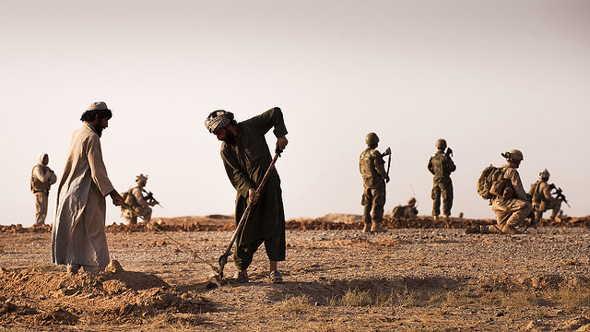
In 2007, many in the advocacy community rushed to categorize the conflict in the Darfur region of Sudan as a “climate war” in the wake of a compelling United Nations report that emphasized the ways climate change and environmental degradation can drive conflict.
In 2009, international media focused significant attention on an academic study that analyzed historical linkages between civil war and temperatures in sub-Saharan Africa and suggested there would be a 54-percent increase in armed conflicts by 2030. [Video Below]
In both cases, subsequent research and analyses conducted by prominent scholars countered those original claims of such direct climate and conflict connections, at least based on existing evidence. Those studies are two examples of the recent spate of analyses on the subject and serve as cautionary tales against alarmism and overly simplistic assumptions about specific connections between climate change and stability.
The reality is far more complicated.
The science and practice of analyzing the interaction of climate change risk and conflict risk is new and still evolving. As a result, there is little certainty over exactly how climatic change will manifest in specific locations and what the consequences will be for economic development, political stability, and peace and security.
Around the world, climate change likely will create both risks and opportunities, making it critical that development and relief organizations like USAID consider climate change not as a monolithic threat but rather as an important influence within a complex web of environmental and social factors.
Responding to climate change effectively means taking action to reduce the threats. It also means harnessing opportunities by helping people and institutions to effectively cope with and adapt to change – environmental or otherwise. Climate-focused interventions, if conducted strategically and with sensitivity to local context, can produce outcomes for conflict prevention and sustainable development as well.
For example, recent USAID-funded research in the conflict-prone Karamoja region of northeastern Uganda found that engaging local communities in the design and implementation of climate change adaptation activities – for example, promoting shared grazing areas and creating small-scale irrigation systems – holds considerable potential to reduce conflict by building social cohesion and addressing feelings of marginalization and disempowerment among local community members.
Since 2008, USAID has invested in research to better understand how specific climate factors contribute to the risk of conflict and affect the resilience of social structures and institutions. The goal is to build a deeper understanding that will enable the agency and its partners to respond most effectively to climate-related stress, reduce the risk of violent outcomes, and maximize the potential for U.S. foreign assistance to prevent conflict and promote stability.
This knowledge also will help USAID make wise investments as part of meeting U.S. Government commitments under the Global Climate Change Initiative as described in President Barack Obama’s September 2010 Presidential Policy Directive on Global Development.
Climate Change and Conflict Prevention
The research thus far points to climate change as an exacerbating factor in situations where political, economic, and social stresses already exist. The risk of conflict is greatest where there is poor governance and low institutional capacity.
The agency, through its Office of Conflict Management and Mitigation (CMM), has identified two basic scenarios under which climate change could combine with other variables and potentially lead to conflict.
First, climate change could intensify existing environmental or resource problems. For example, a series of droughts could reduce the available local water supply, aggravating competition between farmers and pastoralists in already arid regions. Second, climate change could create new environmental or resource problems that contribute to instability. Changing rainfall patterns, for instance, could damage agricultural production in formerly fertile areas, decimating local livelihoods and causing food insecurity.
There is a third area of potential risk for USAID and other donors as well: namely, that climate-related financing, policies, and programs which have not adequately considered local conflict dynamics and context could produce serious unintended negative consequences.
Climate change-related interventions such as incentive payments to stop deforestation – particularly in fragile states and conflict-affected areas – must recognize that both the money and the power to allocate benefits may inadvertently reinforce the social status quo, shift local power balances, or expose governance failures.
In her field work in Nepal, Janani Vivekananda, a researcher with USAID partner International Alert, recently illustrated how certain types of assistance might inadvertently do harm. She explained how a now-defunct village water tap installed in an effort to mitigate the effects of climate variability, did not appropriately consider the local social, political, and conflict context or even basic environmental parameters. In the end, it contributed to local grievance.
The community had requested the tap to be installed during a period of water stress and three consecutive years of drought. The Government of Nepal sponsored the project just before the elections.
Vivekananda explained: “These people are hand-to-mouth farmers. They didn’t know and they wouldn’t know that ground water levels were falling. They wouldn’t know the negative impacts of uncontrolled surface water extraction and so they chased about this tap, and within three months it ran dry. That was the only cash that was injected into the community for development purposes, and it had no impact whatsoever apart from being a stark reminder that the government itself isn’t doing what it ought to.”
This story highlights the reality that local context will define the outcome of peace or conflict and, thus, as CMM’s discussion paper “Climate Change, Adaptation, and Conflict: A Preliminary Review of the Issues” noted, there remains a pressing need for a more robust, fine-grained understanding of the interaction between climate change and the political, social, and economic realities of conflict-prone areas.
To help fill this information gap, USAID is supporting field-based climate change and conflict research in Peru, Uganda, Ethiopia, and the Niger River Basin in West Africa. At the global level, the agency is improving its ability to integrate climate change considerations into conflict early warning models. It is also establishing academic and practitioner partnerships that explore a wide range of environment and security issues.
Today, close to 60 percent of the State Department’s and USAID’s foreign assistance goes to 50 countries that are in the midst of, recovering from, or trying to prevent conflict or state failure. A significant amount of that assistance is slated for Global Climate Change mitigation and adaptation programming. Yet, as CMM’s conflict early warning specialist, Kirby Reiling, observed, “much of that money could be a lost investment if those countries fall into armed conflict.”
With conflict-sensitive development assistance and with smart climate change policies and programs, vulnerable countries will have enhanced opportunities to build stronger societies and more resilient institutions for sustainable development, peace, and security.
Cynthia Brady is a senior conflict advisor in USAID’s Office of Conflict Management and Mitigation.
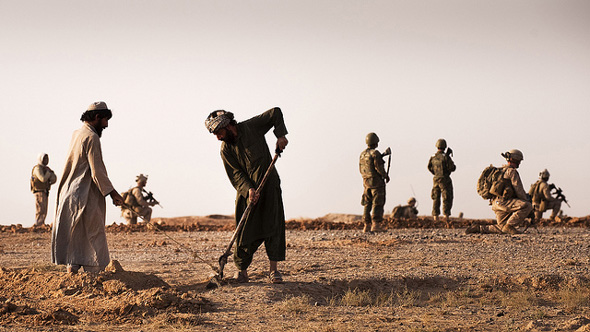
Photo Credit: Afghan farmers plow a field guarded by U.S. Marines, courtesy of flickr user isafmedia. -
Watch: Michael Renner on Creating Peacebuilding Opportunities From Disasters
›Michael Renner is a senior researcher at the Worldwatch Institute working on the intersection between environmental degradation, natural resource issues, and peace and conflict. Recently, Renner has focused on water use and its effects on the Himalayan region. In particular he’s working to find positive opportunities that can turn “what is a tremendous problem, into perhaps an opportunity for collaboration among different communities, among different regions, and perhaps…ultimately across the borders of the region,” he said during this interview with ECSP.
-
Scott Wallace, National Geographic
A Death Foretold
›June 23, 2011 // By Wilson Center StaffThe original version of this article, by Scott Wallace, appeared on National Geographic News Watch.
Late last month the Brazilian Congress passed a bill that if it becomes law would ease restrictions on rain-forest clearing and make it easier than ever to mow down the Amazon. That same day, 800 miles north of the parliamentary chamber in Brasilia, assailants ambushed and killed a married couple whose opposition to environmental crimes had placed them in the crosshairs of those who most stand to gain from the new legislation.
It’s a nauseatingly familiar story. Over the past 20 years, there have been more than 1,200 murders related to land conflict in Brazil’s Amazon region. Most of the victims, like the married activists Zé Claudio Ribeiro and Maria do Espírito Santo, were defenders of the rain forest – people seeking sustainable alternatives to the plunder-for-profit schemes that characterize much of what passes for “development” in the Amazon.
The state of Pará – where Zé Claudio and Maria were ambushed on their motorbike as they crossed a rickety bridge – holds an especially notorious reputation for environmental destruction and organized violence. Pará is the bloodiest state in Brazil, accounting for nearly half of all land-related deaths in recent decades. It sprawls across an area larger than the states of Texas, Oklahoma, and New Mexico combined. Picture a tropical version of the Wild West, stripped of the romance, where loggers and ranchers muscle their way onto public land as though they own the place and impose a law of the jungle with their hired thugs. Those who have the nerve to protest soon find themselves the targets of escalating threats. If they persist, they find themselves staring down the gun barrels of those come to make good on the threats.
Continue reading on National Geographic.
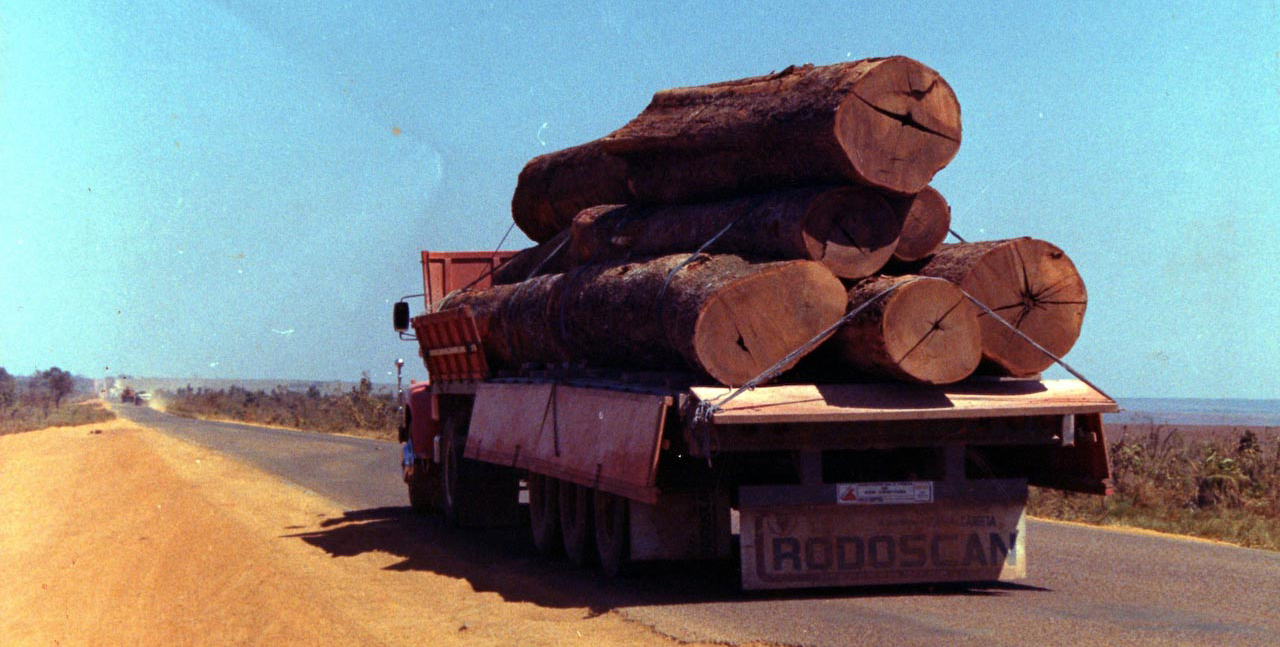
Photo Credit: “Toras,” courtesy of flickr user c.alberto. -
Watch: Richard Matthew at TEDxChange on Natural Resources, Conflict, and Environmental Peacemaking
›“It’s not surprising that about half the time, efforts to try to stabilize countries as they come out of war fail,” said Richard Matthew, associate professor at the University of California at Irvine and founding director of the Center for Unconventional Security Affairs, at a recent TEDxChange event. “Wars today are very destructive. They may not be as big as the wars of the last century, but they do a lot of damage.”
Matthew’s work focuses on the environmental dimensions of conflict and peacebuilding. Conflict can be spurred by competition over natural resources but it also contributes to further scarcity in many cases, creating a feedback loop. The natural resource aspect of conflict is particularly important in areas where livelihoods depend directly on access to land, water, and forests, he said.
In addition to discussing the benefits of including the environment in peacemaking efforts, Matthew also touched on the need for an increased proportion of national security spending to be spent on peace and development rather than defense. “It is in our interest to grow people out of the conditions that foster terrorism and extremism and infectious disease and crisis,” he said.
In particular, Matthew remains confident that an emerging group of leaders will find new and creative ways to support peacebuilding, natural resource management, and adaptation activities in the future: “Social entrepreneurs – people willing to combine their passion to make a better world with sound business tools – are developing truly innovative ways of taking daunting social problems and making them manageable.” -
Rosemarie Calvert, Center for a Better Life
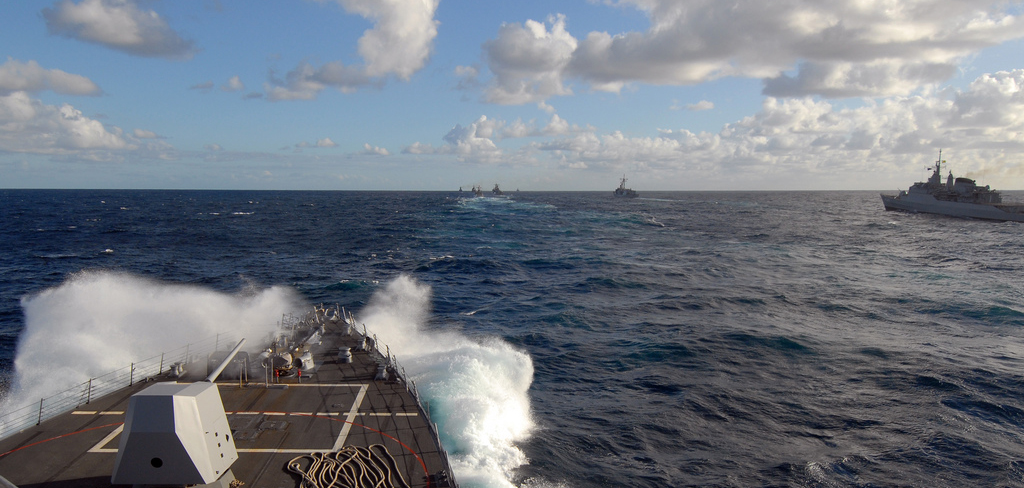
Winning Hearts and Minds: An Interview with Chief Naval Officer Admiral Gary Roughead
›May 23, 2011 // By Wilson Center StaffThe original version of this article, by Rosemarie Calvert, appeared in the Center for a Better Life’s livebetter magazine.
Few people understand “smart” power as well as Chief Naval Officer (CNO) Admiral Gary Roughead. To this ingenious, adept leader of the world’s largest and most powerful navy, it’s not just about military strategy or political science; it’s about heart. It’s about the measure of a man with regard to honor, courage and commitment. And, it’s about appreciation and respect for the natural world. As one of the U.S. Defense Department’s most powerful decision-makers, Roughead has helped mold a new breed of sailor who understands that preventing war is just as important as winning war – that creating partners is more important than creating opponents. Add mission mandates such as humanitarian assistance, disaster relief, and environmental stewardship, and it’s clear why Roughead and his brand of smart power are having a profound impact on international peace, national security, and natural security.
Engendering Environmental Advocacy
“You don’t live on the ocean and not love it. My appreciation for the environment came from a very early age – from just loving to be on the water. It’s something that’s had a very strong impact on me,” explains Roughead, who grew up in North Africa where his father worked in the oil business. He and his family lived along an uninhabited area of coastline where his father’s company built a power plant and refinery to process and transport Libya’s huge oil field finds to offshore tankers.
“We were the first people to move there; I was still in grammar school. The beauty in being the first was that the coastline was absolutely pristine. Even before school, I would get up and go skin diving. There were beautiful reefs, and fish were everywhere. The vegetation was just incredible. The company built an offshore loading area a few miles off the beach with 36-inch pipes pumping crude oil out to where these big supertankers would come in. Back then, there wasn’t a high regard for the environment, so when storms would kick-up and ships got underway in a hurry, they would just cast them off and all that oil would go into the ocean.
“Fast forward about five years, and the last time I went skin diving I didn’t see a living thing. The vegetation was dead. At that time I was visiting my folks on summer leave from the Naval Academy. There were periods when I would skin dive and then surface after being down about 35-40 feet, and my lungs would be ready to burst. I’d look up, having moved from my original location, and see this massive oil slick. And, I’d go, ‘Oh gosh…no!’ But, you didn’t have any choice. I would come home and actually have to clean the oil off with kerosene because it was caked on me.
“I saw and experienced environmental devastation, and it had an effect on me. Being at sea all the time – I love going to sea and seeing everything about it – drove me to the views I have. I really do think there’s compatibility between the Navy and the environment. We have things we must accomplish, but we can do them cleanly and responsibly. That’s what we’ve tried to demonstrate to those who have different views – that there has to be compatibility between the two.”
Continue reading on the Center for a Better Life.
Rosemarie Calvert is the publisher and editorial director of livebetter magazine and director of the Center for a Better Life.
Photo Credit: Adapted from “USS Nitze underway with ships from U.S. Navy, Coast Guard and foreign navies,” courtesy of flickr user Official U.S. Navy Imagery.




.jpg)