Showing posts from category environmental health.
-
New Population, Health, and Environment Program for Lake Victoria
›With some of Africa’s highest population densities, ethnic diversity, and biodiversity, the Great Lakes region is one of the most volatile intersections of human development and the environment. A new population, health, and environment (PHE) initiative from Pathfinder International, announced Monday at the International Conference on Family Planning in Senegal, aims to help address these issues by supporting sustainable resource management and women’s right to choose when and how often they have children.
Jointly funded by the David and Lucile Packard Foundation and the John D. and Catherine T. MacArthur Foundation, with additional support from USAID’s Office of Population and Reproductive Health, the project will focus on Ugandan and Kenyan sections of the Lake Victoria basin.
Lake Victoria is the second largest freshwater source in the world, a biodiversity hotspot, and an important regional waterway, but regional population growth among the highest in Africa and economic development have led to declining water quality, reduced fish stocks, and industrial pollution. The basin as a whole supports upwards of 35 million people.
“This new project is a welcome development for many reasons,” said ECSP Director Geoff Dabelko. “It brings the integrated PHE approach to one of the world’s greatest lakes, it enables respected health NGO Pathfinder to pursue PHE efforts, and marks the return of a leading private donor, the MacArthur Foundation, to a group of foundations willing to support this innovative approach.”
Sono Aibe, senior advisor for strategic initiatives at Pathfinder emphasized the integrated challenges facing the region. “In these remote, resource dependent areas of the world, the interconnectedness between the health of people and the health of the environment is undeniable,” she said in a press release. “When women are empowered to participate in the sustainable management of natural resources alongside men and youth, as well as have access to sexual and reproductive health care services, their lives will improve and so will the condition of the ecosystems that they depend on.”
The project’s objective, according to Pathfinder, is to reduce threats to biodiversity, conservation, and ecosystem degradation by increasing access to family planning and sexual/reproductive health services. The project plans to develop scalable approaches that can be adopted by communities, local governments, and national governments. Technical support is to be provided by the BALANCED Project, ExpandNet, and the Population Reference Bureau.
“Lessons learned from this new project will help us better develop and design projects for vulnerable communities in fragile ecosystems, while simultaneously advocating for increased government support for integrated programs throughout the Lake Victoria Basin,” said Lucy Shillingi, Pathfinder’s country representative for Uganda.
The Lake Victoria effort will build upon the experiences of other integrated PHE efforts in the region, such as Rwanda’s SPREAD Project, Uganda’s Conservation Through Public Health, and Tanzania’s TACARE and Coastal Management Partnership.
Sources: Lake Victoria Basin Commission, Pathfinder International, UNEP. -
Jeanne Nyirakamana, PHE Champion
Reaching Rural Rwandans With Integrated Health and Livelihood Messages
›This PHE Champion profile was produced by the BALANCED Project.
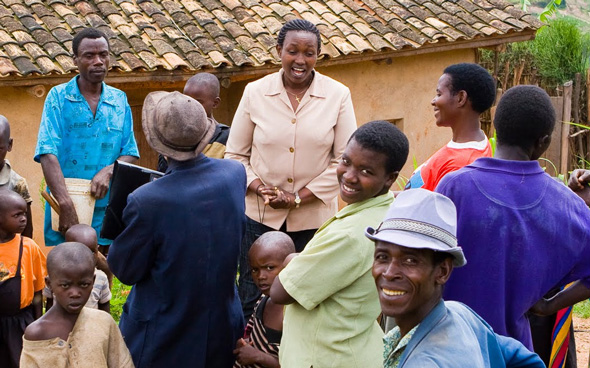
Rwanda is one of the most densely populated countries on the planet, with more than 11 million people in one of Africa’s smallest countries, most of whom depend on the land as subsistence farmers. The country has diverse mountain, lake, and savannah landscapes, and the Virunga Mountain chain in the northwest part of the country is home to one-third of the world’s threatened mountain gorilla population. At the same time, the population throughout the country suffers from high rates of unmet need for contraception, and three percent of the adult population lives with HIV/AIDS. In a land under such intense pressure on natural resources, rural livelihood initiatives are critical to ensuring people have options for meeting their daily health and well-being needs.
For the past three years, Jeanne Nyirakamana has served as head of the health program for the Sustaining Partnerships to Enhance Rural Enterprise and Agribusiness Development (SPREAD) Project. Supported by the U.S. Agency for International Development through Texas A&M; University, the SPREAD Project is integrating a dynamic coffee production and quality improvement program in Rwanda with health outreach to improve community well-being. The health component works to improve the lives of coffee farmers and cooperative members by providing them with health information and services related to family planning, maternal and child health, prevention of sexually-transmitted infections (including HIV), and water and sanitation.
Training Peer Educators
Working closely with the coffee program, Nyirakamana’s team has trained more than 540 men, women, and youth peer educators who have reached more than 95,000 coffee farmers with education and services. Key communication messages highlight the links between sound decision-making and health-seeking behaviors, productive farms and agribusinesses, and strong and healthy families.
The program also leverages and supports local health resources through referrals to existing public health services, organization of mobile clinics, and community-based distribution of a socially marketed water purification solution (Sur Eau) and condoms (Prudence). According to Nyirakamana, one of the project’s greatest successes is the increased acceptance of family planning by farmers and their families and the more than 7,500 farmers who have been tested for HIV. In order to draw in as many coffee farmers as possible, many of the health and livelihood activities take place at the stations where the coffee beans are washed, at other buildings used by the coffee farmer cooperative, or during combined community meetings or home visits. At the washing stations, Nyirakamana’s team supports local health center staff to provide voluntary counseling and testing (VCT) and de-worming services while at the same time SPREAD-trained peer educators and coffee/health extension agents disseminate family planning information.
The cooperatives’ buildings have clean water, hand-washing stations, and small kiosks where condoms and Sur Eau are sold. These community health agents work with SPREAD to ensure that the greater community, not just the coffee farmers, has access to health knowledge and services. They learn how to teach the community about a range of health issues and each month they submit reports showing how many people they reached and with what kinds of messages. They are also becoming increasingly engaged in coffee and agribusiness activities. Through the success of their health activities, these agents are seen as vital community resources.
Integrated Results
By implementing this integrated population, health and environment (PHE) approach, the SPREAD Project staff is ensuring the health of the people and environment and success of the agribusiness. “You cannot care for the environment without first caring for the people who live and use that environment, so when you transmit dual messages [agriculture and health] you are able to hit two birds with one stone,” said Nyirakamana.
According to a 2010 evaluation of the project, farmers and their families reported improvements in personal and household hygiene; an increase in understanding and acceptance of family planning; uptake of HIV and VCT services; and use of condoms and other local health services. As well, they noted shifts in gender norms affecting household revenue use, alcohol, and reproductive health. The agribusiness stakeholders value the integrated approach as a means to more holistically meet farmers’ goals of increased incomes and improved lives and livelihoods.
This PHE Champion profile was produced by the BALANCED Project. A PDF version can be downloaded from the PHE Toolkit. PHE Champion profiles highlight people working on the ground to improve health and conservation in areas where biodiversity is critically endangered.
Photo Credit: BALANCED Project. -
Healthy People, Healthy Ecosystems: Results From a Public-Private Partnership
›“A lot of people probably don’t think that an organization with a name like ‘World Wildlife Fund’ would have a program on population, health, and the environment,” said WWF’s Tom Dillon at the Wilson Center, but actually it is very natural. “Most of the people we work with are in rural areas, and they depend on their natural resources for their own livelihoods and for their own well-being. Of course, if you are in that situation, in order to be a steward of the environment, you’ve got to have the basics. You have got to have your own health.”
Dillon was joined by staff from WWF, as well as Scott Radloff, director of USAID’s Office of Population and Reproductive Health, and Conrad Person, director of corporate contributions at Johnson & Johnson, to talk about the results of a three-year partnership between USAID, WWF, and Johnson & Johnson. The joint effort, a formal Global Development Alliance, provided health and family planning services, clean water, and sanitation to communities in three of WWF’s priority conservation landscapes: The Salonga National Park in the Democratic Republic of Congo (DRC), the Lamu Archipelago in Kenya, and the Terai Arch Landscape in Nepal.
By creating an innovative public-private partnership that linked health objectives, particularly related to family planning and maternal and child health, to environmental and conservation activities, “this alliance was ahead of its time,” said Radloff.
Human Health Linked to Environmental Health
The project had four objectives, said Terri Lukas, WWF’s population, health, and environment (PHE) program manager: improve family health; reduce barriers to family planning and reproductive health services; improve community management of natural resources and habitat conservation; and document and promote successful approaches.
“Human health cannot be separated from environmental health anywhere,” Lukas said, “but most especially when we are working with very poor people who live very close to nature.”
Projects Provide Integrated Services
The Salonga National Park in the DRC is home to many endangered species, including the bonobo, one of the four great apes. Local communities are very isolated, and lack access to safe drinking water and sustainable livelihoods, as well as basic health and family planning services, according to Lukas. The PHE project was able to train 135 voluntary community health workers in family planning and maternal and child health care, including 55 women. One year after the training, health workers were distributing contraception to more than 300 new users per month, Lukas said.
The alliance has also integrated health and family planning services into conservation programs in Kenya’s Kiunga Marine National Reserve, in part, “to demonstrate to the people that we care about them as well as the environment, and also to show them the synergies that exist between the health issue and the environment issue,” said WWF Program Coordinator Bahati Mburah. The region has been suffering through a year-and-a-half-long drought, and has one of the highest population growth rates in east Africa, placing considerable pressure on natural resources.
“We talk to [the fisher folk] about health and family planning, and how they are related to the management of fisheries,” said Mburah. With improved transportation and mobile outreach services provided by the project, 97 percent of women are now able to access family planning services within two hours of their home, she said.
The third site is in the Terai region along the southern border of Nepal. In this lowland region, the alliance is attempting to safeguard and restore forest areas in order to allow wildlife to move and breed more freely, while at the same time improving the health and economic prospects of the people. By linking these goals, support for conservation efforts increased from 59 percent to 94 percent of households, with 85 percent attributing positive attitude changes to increased access to health services and safe drinking water, according to Bhaskar Bhattarai, project coordinator for WWF-Nepal.
Documenting and Promoting Successful Approaches
Cara Honzak, WWF’s senior technical advisor on population, health, and environment, said the global objective of the alliance was to document and promote successful PHE approaches. Comprehensive baseline and endline surveys provided critical evidence that integrated PHE programming increases family planning use in remote areas, improves conservation buy-in within communities, and leads to increased participation of women in community leadership and decision-making.
“We have played a key role in producing some of the evidence that has been used throughout Washington [D.C.], especially to provide information to government bodies that are making decisions about bringing more money into family planning, health, and particularly in the environmental sector,” said Honzak.
“After two decades in the field, and working in this area, I wasn’t expecting many surprises. I couldn’t have been more wrong,” Lukas said. “These three years have changed almost everything about the way I now view health development…I have long called myself a conservationist, but now I say to my international health colleagues: we are all conservationists, and if we aren’t, we should be.”
Event Resources- Bhaskar Bhattarai presentation
- Cara Honzak presentation
- Terri Lukas presentation
- Bahati Mburah presentation
- Photo gallery
- Video
-
New Report Launched: ‘The World’s Water’, Volume Seven
›“The water problem is real and it is bad,” said MacArthur “Genius” Fellow and founder of the Pacific Institute Peter Gleick at the October 18 launch of the seventh volume the institute’s biennial report on freshwater resources. “It’s not bad everywhere, and it’s not bad in the same way from place to place, but we are not doing what we need to do to address all of the different challenges around water.”
“The World’s Biggest Problem”
Worldwide, more than a billion people lack access to safe drinking water, while two and a half billion lack access to adequate sanitation services. “This is the world’s biggest water problem,” said Gleick, “the failure to meet basic human needs for water – it’s inexcusable.”
Gleick predicts that the world will fail to meet the Millennium Development Goals for water and sanitation by 2015, and noted that measures of illness for water-related diseases are rising, rather than falling.The World’s Water series provides an integrated way of thinking about water by exploring major concepts, important data trends, and case studies that point to policies and strategies for sustainable use of water. Volume seven includes chapters on climate change and transboundary waters, corporate water management, water quality challenges, Australia’s drought, and Chinese and U.S. water policy. The new volume also includes a set of side briefs on the Great Lakes water agreement, the energy required to produce bottled water, and water in the movies, as well as 19 new and updated data tables. An updated water conflict chronology looks at conflicts over access to water, attacks on water, and water used as a weapon during conflict.Peter Gleick on climate change and the water cycle.
Despite the added data, Gleick said that vast gaps remain in our knowledge and understanding about water. We lack accurate information on how much water the world has, where it is, how much humans use, and how much ecosystems need, he said. “So right off the bat, we are at a disadvantage.”
Focus on Efficiency, Infrastructure to Better Manage Water
One of the major concepts that has connected various volumes of The World’s Water is the concept of a “soft path for water” – a strategy for moving towards a more sustainable future for water through several key focus points: improved efficiency, decentralized infrastructure, and broadly rethinking water usage and supply.
Other cross-cutting themes include climate and water, peak water, environmental security, and the human right to water (formally recognized in a 2010 UN General Assembly resolution). “I would argue that all of these combined offer to some degree a different way of thinking about water, an integrated way of thinking about water,” Gleick said.
The China Issue
The role of China has been one of the most significant changes over the course of the series, said Gleick. The growth in the Chinese economy has led to a massive growth in demand for water (see the Wilson Center/Circle of Blue project, Choke Point: China), as well as massive contamination problems. The newest volume addresses these issues as well as China’s dam policies – internally, with neighboring countries, and around the world.
Gleick pointed out that China is one of the only nations (maybe the only) that still has a massive dam construction policy, and their installed capacity is already much larger than the United States, Brazil, or Canada. In addition, Chinese companies and financial interests are involved in at least 220 major dam projects in 50 countries around world. These projects have become increasingly controversial, for both environmental and political reasons, he said.
“My lens is typically a water lens,” Gleick said, but “none of us can think about the problems we really care about, unless we think about a more integrated approach.” Gleick emphasized the need for new thinking about sustainable, scalable, and socially responsible solutions. “We have to do more than we are doing, in every aspect of water,” he concluded.
Event Resources
Photo Credit: “Water,” courtesy of flickr user cheesy42. -
Watch: Gidon Bromberg Gives an Update on Jordan River Rehabilitation Efforts
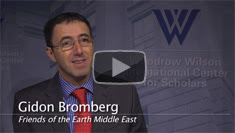
›October 27, 2011 // By Kate DiamondGidon Bromberg, co-director of Friends of the Earth Middle East (FOEME), says in this short interview with ECSP that his outlook on rehabilitating the Jordan River has changed completely over the last five years. We had been “laughed at” for trying to restore the waterway, he said; now though, “we are very confident that the Jordan River south of the Galilee down to the Dead Sea will be rehabilitated.”
By building a cross-border peace park and encouraging collaboration between Israelis, Palestinians, and Jordanians on water scarcity and quality issues, FOEME aims to improve environmental and security problems that bind the three groups together.
The Jordan River has become so polluted that visitors, many of whom are devout Christians making a pilgrimage to one of the religion’s most sacred sites, have been barred from its waters due to health concerns. Furthermore, more than 98 percent of its fresh water is diverted for agricultural work, meaning that the pollutants that end up in the river are highly concentrated.
But today, Bromberg said, sewerage is being removed on both the Israeli and Jordanian sides and there is a commitment to do the same from the Palestinians. For the first time in 60 years, there are concrete plans to return fresh water to a river that is “so holy to half of humanity.”
Sources: The Age, Friends of the Earth Middle East, The Guardian, U.S. Environmental Protection Agency -
Health and Harmony: Population, Health, and Environment in Indonesia
›Borneo’s Gunung Palung National Park is a microcosm of both the island’s ecological wealth and vulnerability. More than half of the park is undisturbed forest; the remainder, however, “is being torn down day after day” at an alarming rate, said Health in Harmony’s Nichol Simpson at an event on integrated approaches to population, health, and environment (PHE) programs in Indonesia. Alene Gelbard of the Public Health Institute’s Company-Community Partnerships for Health Indonesia (CCPHI) program joined Simpson on September 29 at the Wilson Center. Both speakers emphasized that no matter what issue a group works on, engaging local communities is essential for success.
The Destructive Cycle: Poor Health, Poor Environment
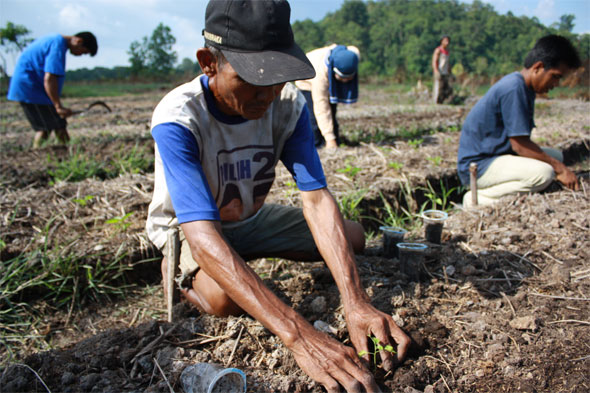
For Simpson, “the intersection between human and environmental health” is at the heart of Health in Harmony’s work. Health in Harmony opened Clinic ASRI in 2007, aiming to provide improved healthcare to villagers throughout Gunung Palung National Park while ending their dependence on illegal logging as a means of financial survival.
The area’s inhabitants were all too easily trapped in what Simpson called “the destructive cycle.” When faced by an unexpected medical emergency, families would go into debt to pay their medical bills. Health in Harmony found that of 232 local households surveyed, 13 percent had recently experienced a major medical emergency, at an average cost of $360. Most households in the area only hold around $260 in emergency savings, so to make up the difference, about a third turned to illegal logging to pay down their debt.
By deforesting the park, illegal logging worsens the health of nearby communities. For example, Simpson said that Clinic ASRI has seen a rise in cases of malaria and tuberculosis in the surrounding communities, in part because deforestation has increased the level of mosquito activity. The link between human and environmental health is clear, said Simpson: the people ASRI serves are “living it every day. They know the cause of this. And…they want it to stop.”
Protecting Natural Resources By Improving Health
The Health in Harmony clinic located in Sukadana, a small village sandwiched between Borneo’s coast and Gunung Palung Park, helps break the destructive cycle by treating patients regardless of their ability to pay. If patients do not have cash, they can barter for their care. In one case, a girl named Yani came to ASRI after her family incurred $500 over two months of visiting hospitals and traditional healers, none of whom could treat her condition. ASRI diagnosed and treated Yani for scabies. In exchange, her mother signed a pledge to protect Gunung Palung from logging and made the clinic a floor mat to cover the $1.50 bill.
By providing affordable, high-quality healthcare that is contingent upon pledging to protect the environment, Clinic ASRI improves human and environmental health in one fell swoop, said Simpson. “Because the infant mortality rate has decreased and you’re not overcompensating,” said Simpson, families can choose to have fewer children, using free birth control provided by ASRI.
“When you have fewer and healthier children, you’re investing in your education,” said Simpson. “When you’re investing in your education, you’re investing in your country and your community. This is the virtuous cycle. I didn’t invent it, but we are proving it in Sukadana.”
The communities around the clinic have embraced ASRI’s work, partnering with them to expand their services to address additional community needs, like training farmers in more productive organic methods and providing mated pairs of goats for widows, who pay ASRI back with kid goats and manure for fertilizer.
All but one of the 23 villages that ASRI services have been consistently free of illegal logging, according to monitors who visit them on a regular basis. “We’re proving the theory that we can protect natural resources by improving health,” Simpson said.
“Health Is Key to Sustainable Development”
Gelbard took a step back to talk about CCPHI’s experience establishing multi-sector partnerships among NGOs and corporations by building trust and enabling dialogue between the communities.
With corporate responsibility becoming more popular, “everyone’s talking about partnerships these days, and everybody’s partnering with everyone,” said Gelbard. “I don’t care what they call it – I care what they’re doing” and what results they achieve, she said. A successful partnership involves “all partners doing something more than just giving money.”
Gelbard said the 2004 tsunami reinforced the notion of corporate responsibility for a lot of companies operating in Indonesia. They saw that unless they branched out beyond their own walls and “did things to help strengthen communities,” efforts at corporate responsibility simply “would not benefit them in the long-run,” she said.
Through CCPHI, companies and NGOs have partnered on a wide range of efforts, including improving access to and funding for reproductive health services, improving sanitation by increasing access to water, and combating human trafficking by empowering girls and women.
Achieving the Millennium Development Goals will require increasing access to health care in a manner that reflects the needs of communities, she said. At its core, CCPHI’s work and the partnerships it facilitates are “based on the knowledge that health is key to sustainable development,” said Gelbard.
Event Resources
Sources: Alam Sehat Lestari, American Journal of Tropical Medicine and Hygiene, Company-Community Partnerships for Health Indonesia, ExxonMobil, The Guardian, Health in Harmony, National Geographic, PBS News Hour, Public Health Institute, Republic of Indonesia Ministry of Forestry, United Nations, World Wildlife Fund
Photo Credit: Used with permission courtesy of ASRI and Nikki See, Under-told Stories. -
PHE Is One Great Idea That Won’t Be On the Rio Agenda, Says Roger-Mark De Souza
›October 17, 2011 // By Sean Peoples“I am now serving as an example to other women in the community because I am not having any more children. I have received training in sustainable agricultural practices, I’m generating income, and I’m educating others,” said Berhane Ferkade, an Ethiopian farmer, to Population Action International’s Roger-Mark De Souza earlier this year. The 39-year-old mother of 11 become one of the community’s model farmers after working with LEM Ethiopia – a local population, health, and environment (PHE) development organization.
-
Ben Ramalingam, Aid on the Edge of Chaos
The Complexity of Scaling Up
›October 11, 2011 // By Wilson Center StaffThe original version of this article, by Ben Ramalingam, appeared on Aid on the Edge of Chaos.
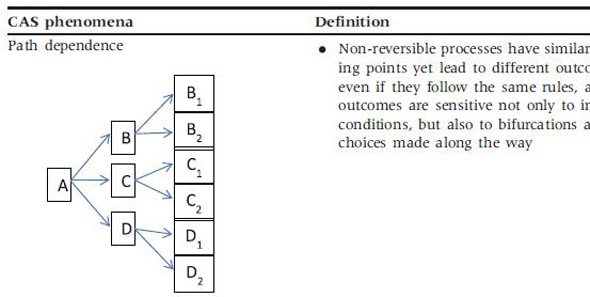
Despite increased prominence and funding of global health initiatives, attempts to scale up health services in developing countries are failing, with serious implications for achieving the Millennium Development Goals. A new paper argues that a key first step is to get a more realistic understanding of health systems, using the lens of complex adaptive systems.
Much ongoing work in development and humanitarian aid is based on the idea of “scaling up” effective solutions. Healthcare is one of the areas where this idea has played a central role – from the World Health Organization’s Health for All in the 1960s to UNICEF’s child healthcare programs, from rolling out HIV-AIDS, malaria and TB treatments to the package of interventions delivered to achieve the Millennium Development Goal on health.
However, despite the fact there are many cost-effective solutions to health problems faced in developing countries, many agencies are still frustrated in their attempts to deliver them at scale. This may be because of a widespread failure to understand the nature of health systems.
Continue reading on Aid on the Edge of Chaos.
Image Credit: Adapted from Table 1, “Understanding pathways for scaling up health services through the lens of complex adaptive systems,” Health Policy and Planning, Oxford University Press.