-
Royal Society Launches ‘People and the Planet’ Study
›“This is a time of rapid and multifaceted change in both population and the planet,” said Parfait Eloundou-Enyegue, a member of the U.K. Royal Society’s People and the Planet working group and contributing author to the report of the same name launched at the Wilson Center on June 4. “The question that the report is trying to address is whether we can actually envision a world in which we can sustainably and equitably meet the consumption needs of seven billion people, and the more to come.” [Video Below] The Royal Society is a self-governing fellowship of scientists that fosters research to address pressing social issues and better inform policy on a global scale. Eloundou-Enyegue, also an associate professor of development sociology at Cornell University, was joined by fellow working group member and African Institute for Development Policy Director and Founder Eliya Msiyaphazi Zulu to discuss their assessment of growing population and consumption pressures on global wellbeing.
Current Trends Are Unsustainable
“The current trends of global population growth and material consumption and the concomitant changes in the environment are unsustainable,” said Zulu.
On the population side, “you have changes that are affecting not just the size, the growth of the population, but also changes in family structure, in the population distribution, [and] population movement,” said Eloundou-Enyegue.
On the consumption side, “beyond the increase in consumption itself, there’s also a dramatic rise in aspiration,” he continued. “People are in greater contact and this tends to encourage…an increasing aspiration to mimic or to emulate the consumption standard of the more industrialized countries.”
Limits to Equitable Growth
When measuring consumption, which itself tends to be a misplaced barometer of wellbeing, according to Eloundou-Enyegue, there is a “disproportionate focus on GDP.”
Using GDP growth as a measure of consumption and wellbeing both “misses a lot of the economic production that’s not mediated through the market,” and “counts as positive things that are damaging to the planet,” he said.
The People and the Planet report marks a departure from the traditional consumption framework by asking “about the relevance of growth – is growth what we ought to be after?”
“The report tried to make a distinction between two types of consumption – the consumption of material resources and the consumption of goods and services – that are all relevant to wellbeing but have different implications for the environment,” Eloundou-Enyegue said. “So there is a need to think about how to shift or to favor consumption that is less damaging to the environment.”
Not an “Either-Or” Proposition
There is “a tendency to look at population and consumption when you’re addressing the impact of the environment in an either-or format, as if you had to choose either population as being the main culprit or consumption,” said Eloundou-Enyegue. “The reality is that they all have to be integrated and considered jointly.”
At the same time, there is “a tendency to shy away from population issues when you set development goals because they tend to be controversial,” he said. And yet, said Zulu, “there’s no question about it, the global population growth needs to be slowed down and ultimately stabilized for both people and the planet to flourish.”
The vast majority of future population growth is expected to come from Africa. Based on the United Nation’s medium variant projection, 70 percent of global population growth over the rest of the century will come from the continent.
That projection, however, belies a big assumption: “that the high fertility countries now will follow the same pattern in decline in fertility as the countries that have [already] achieved lower fertility had [in the past],” said Zulu, which “may actually not be the case.”
“You might actually find a situation where fertility might stabilize around three to four children in some of the…least developed countries,” he said, “and if that happens, it means that actually we stand a much, much bigger chance of getting to the high variant [of 15.8 billion by 2100] than we often tend to assume.”
In spite of that dire warning, however, Zulu said that “we should recognize that demography is not destiny, that through…appropriate socioeconomic and health policies and investment, we can actually slow down population growth.”
The report concludes that voluntary and non-coercive “reproductive health and family planning programs are urgently required,” said Zulu. “There is also a need for strong political leadership and financial commitment to make sure that these programs and services reach out to all women around the world who need them.”
Have We Missed the Boat Again?
Part of the urgency from the working group is because, so far, commitments to reproductive health appear to be falling short. It is the international community’s responsibility “to make sure that women have the contraceptives that they need in order to achieve their fertility aspirations,” said Zulu, but some of the most important agenda-setting events in global development over the past 20 years have sidelined population, reproductive health, and family planning.
The Millennium Development Goals, for instance, “tried to stay clear of population,” said Eloundou-Enyegue, even though “all the indicators that I see are either intrinsically demographic or have a strong demographic component.”
“If you think about stratification and the reproduction of inequality and poverty across generations and the role that differential fertility and reproduction plays, there’s no way you can sidestep population,” he continued. “If you’re talking about maternal mortality and child mortality…it doesn’t make sense to set population aside.”
Now, as the international community prepares for the upcoming Rio+20 summit, “there’s been a big struggle to get…consideration of population issues” on the agenda, said Zulu.
“Population is at the peripheral of all those discussions,” said Zulu. When in Nairobi for a preparatory conference earlier this year, Zulu said UNFPA Executive Director Babatunde Osotimehin “told me that he was quite alarmed that there was hardly any mention of population in all those discussions. And he asked me the question, ‘have we missed the boat again?’”
That concern reinforces the main argument of People and the Planet, said Zulu: there is an “urgent need to reduce material consumption of the richest, and increase consumption and healthcare for the poorest 1.3 billion people.”
“We’re talking about having the majority of people in the world being able to flourish, being able to lead decent lives.”
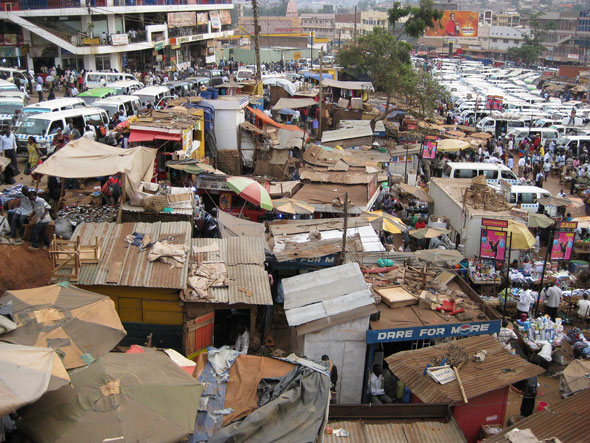
Event Resources:Photo Credit: “Market_Kampala, Uganda,” courtesy of the Hewlett Foundation. -
Nancy Lindborg, The Huffington Post
For Yemen’s Future, Global Humanitarian Response Is Vital
›June 12, 2012 // By Wilson Center StaffThe original version of this article, by Nancy Lindborg, appeared on The Huffington Post.
This weekend in Sana’a, I had dinner with a group of young men and women activists who are on the forefront of Yemen’s historic struggle for a better future. They turned out for change with great courage last year, and at dinner, with great eloquence they outlined for me the many challenges facing Yemen during this critical transition period: conflict in the north and south, weak government institutions, cultural barriers to greater women’s participation, an upended economy, and one of the world’s highest birthrates. And, as one man noted, it is difficult to engage the 70 percent of Yemeni people who live in rural areas in dialogue about the future when they are struggling just to find the basics of life: food, health, water.
His comment makes plain the rising, complex humanitarian crisis facing Yemen. At a time of historic political transition, nearly half of Yemen’s population is without enough to eat, and nearly one million children under the age of five are malnourished, putting them at greater risk of illness and disease. One in 10 Yemeni children do not live to the age of five. One in 10. This is a staggering and often untold part of the Yemen story: a story of chronic nationwide poverty that has deepened into crisis under the strain of continuing conflict and instability.
Unfortunately, in communities used to living on the edge, serious malnutrition is often not even recognized in children until they are so acutely ill that they need hospitalization.
Continue reading on The Huffington Post.
Nancy Lindborg is the assistant administrator of the Bureau for Democracy, Conflict, and Humanitarian Assistance at the U.S. Agency for International Development.
Sources: U.S. Department of State.
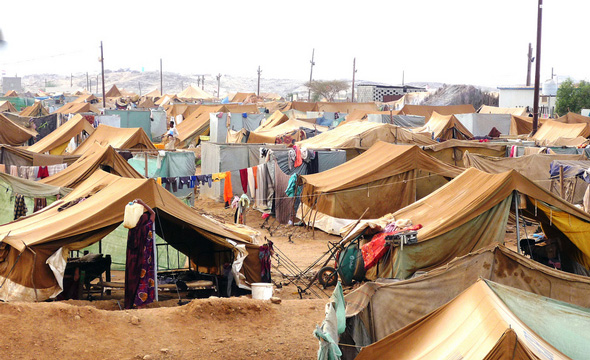
Photo Credit: Informal settlements near the Haddjah governorate, courtesy of E.U. Humanitarian Aid and Civil Protection. -
Loaded Dice and Human Health: Measuring the Impacts of Climate Change
›In a new article in the Proceedings of the National Academy of Sciences (PNAS), “Insights From Past Millennia Into Climatic Impacts on Human Health and Survival,” Anthony McMichael compares scientific literature that reconstructs past climates with epidemiological research and comes away with more than a dozen examples of the influence of climate on human health and survival. “Risks to health [as a result of climatic change] are neither widely nor fully recognized,” McMichael writes, but “weather extremes and climatic impacts on food yields, fresh water, infectious diseases, conflict, and displacement” have led to human suffering across the centuries. Some of the literature reviewed, for instance, links the Younger Dryas (a several centuries long period of cooling) to hunger in the Nile Valley between 11,000 and 12,000 years ago, climatic shifts that expanded the range of disease carrying rats and fleas to the “Black Death” during the mid-1400s, and unusually strong El Niño events to a series of late Victorian-era droughts during the late-1800s.“Climate Variability and Climate Change: The New Climate Dice,” a working paper from James Hansen, Makiko Sato, and Reto Ruedy recently submitted to PNAS, uses surface air temperature analysis from the Goddard Institute for Space Studies to examine the impact of global warming on the frequency of extreme weather events. Using measurements from 1951 to 1980 as a baseline, the study finds, first, that the planet has warmed by around half of a degree Celsius since the reference period, and second, that the global area affected by “extreme anomalies” (exceeding three standard deviations from the mean climate) has increased by a factor greater than 10. Affecting approximately 10 percent of global land surface in the last several years, these anomalies, such as the droughts and heat waves observed in Texas in 2011, Moscow in 2010, and France in 2003, “almost certainly would not have occurred in the absence of the global warming,” according to the authors.
The study uses this new evidence about the impact of climate change to update the concept of climate change as a “loading of the climate dice.” Where, the “climate of 1951-1980 [is represented] by colored dice with two sides red for ‘hot,’ two side blue for ‘cold,’ and two sides white for near average temperature,” and the dice themselves represent the chance of observing variations on mean temperature. Under this metaphor, today’s climate is best approximated by a dice with four sides red, one blue, and one white, according to the study.
As for the future, the data suggest that with just one full degree of warming, anomalies three deviations beyond the mean will be the norm, and five deviations beyond the mean will become more likely (the latest IPCC projections suggest between 1.8 and 4.0 degrees Celsius are likely). In essence, the red side of the die are not only multiplying, but becoming much more extreme. To put this into scale, the Moscow 2010 heat wave, an event that exceeded the three deviations mark, coincided with a doubling of the death rate in the Russian capital. -
Geoff Dabelko On ‘The Diane Rehm Show’ Discussing Global Water Security
›April 13, 2012 // By Wilson Center StaffECSP Director Geoff Dabelko was recently a guest on The Diane Rehm Show to discuss the just-released U.S. intelligence community assessment of world water security. He was joined by co-panelists retired Maj. Gen. Richard Engel (USAF) of the National Intelligence Council’s Environment and Natural Resources Program (a key figure in preparing the report), Jessica Troell of the International Water Program at the Environmental Law Institute, and Steve Fleischli of the Natural Resources Defense Council.
The Department of State-requested assessment (outlined in more detail, here and here) is a very positive contribution, said Dabelko. It “moves away from the arm-waving, headline-grabbing, water wars frame – the kind of sky-is-falling frame that is intuitively appealing and certainly appealing for politicians and headline writers, but doesn’t really reflect the reality.” He continued:What this report instead does, is recognize that there’s been an awful lot of cooperation around water even in the face of scarcity and that that cooperation in part helps us avoid conflicts, whether they’re violent or political, and that we should invest in those institutions that help us get to cooperation.
Visit the show’s program page to listen to the full segment, or read the transcript here.
It also suggests that it’s inadequate and incorrect to think of water as just a single-sector issue. The report is quite clear in connecting it to energy, connecting it to food, connecting it to health, economic development, agriculture obviously, and so that recognition [in] analysis sounds in some way straightforward, but unfortunately, when we organize our responses, we often respond in sector, and there’s not nearly enough communication and cooperation.
And finally, the report does say that the future may not look like the past, and so while we don’t have evidence of states fighting one another over water – and the judgment of the report is in the next 10 years, we won’t see that – it does hold out the prospect for as we go farther down the line, in terms of higher levels of consumption and higher levels of population, that we need to pay special attention because there’s some particular river basins in parts of the world where, as I said, the future may not look like the past and we have greater concerns for higher levels of conflict.
Sources/Image Credit: The Diane Rehm Show. -
More People, Less Biodiversity? The Complex Connections Between Population Dynamics and Species Loss
›March 8, 2012 // By Laurie Mazur“For if one link in nature’s chain might be lost, another and another might be lost, till this whole system of things should vanish by piece-meal.”
~ Thomas Jefferson, 1799This much is clear: As human numbers have grown, the number of species with whom we share the planet has declined dramatically. While it took about 200,000 years for humanity to reach one billion people around 1800, world population has grown sevenfold since then, surpassing seven billion last year.
-
Elizabeth Grossman, Yale Environment 360
How a Gold Mining Boom Is Killing Children in Nigeria
›March 5, 2012 // By Wilson Center StaffThe original version of this article, by Elizabeth Grossman, appeared on Yale Environment 360.
In early 2010, while working in the impoverished rural region of Zamfara in northwestern Nigeria, the group Médecins Sans Frontières – Doctors Without Borders – encountered many young children suffering from fevers, seizures, and convulsions. An unusually high number of very young children, many under age five, were dying, and there were many fresh graves.
The doctors initially suspected malaria, meningitis, or typhoid, all common in the region. But when the sick children didn’t respond to anti-malarial drugs or other antibiotics, one of the physicians began to wonder if local mining activity might be implicated. Historically an agricultural area, Zamfara had been experiencing a small-scale gold rush, thanks to rapidly rising gold prices that encouraged the pursuit of even the most marginal sources of ore. Mining work was taking place in and around the villages and within many of the mud-walled compounds where families were using flour mills to pulverize lead-laden rocks to extract gold.
Médecins Sans Frontières (MSF) doctors sent children’s blood samples for testing and the results revealed acute lead poisoning. Many of the children had blood lead levels dozens, even hundreds, of times higher than international safety standards. Within a week, an emergency medical and environmental remediation team arrived and began to grapple with an epidemic of childhood lead poisoning that is being called unprecedented in modern times. In the past two years, more than 400 children have died in Zamfara, more than 2,000 have been treated with chelation therapy, and thousands more have been – and continue to be – severely poisoned by exposure to pervasive lead dust.
Continue reading on Yale Environment 360.
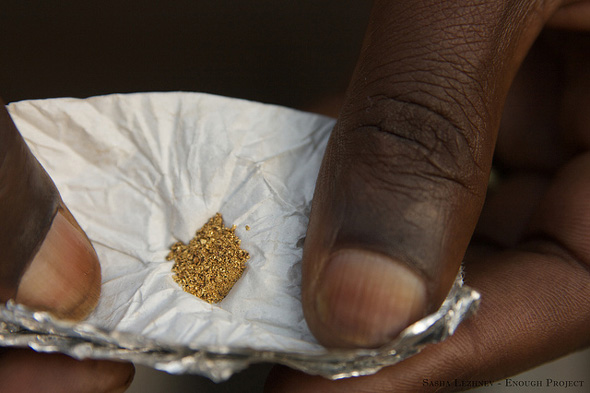
Photo Credit: “Conflict minerals 1,” courtesy of the ENOUGH Project/Sasha Lezhnev. -
Eric Zuehlke, Population Reference Bureau
Democratic Republic of Congo and Madagascar Connect Family Planning With Environmental Health
›February 10, 2012 // By Wilson Center StaffRemote rural communities in developing countries typically face the related challenges of extreme poverty, poor health, and environmental degradation. And population growth often exacerbates these challenges. In communities that face environmental challenges along with high fertility and high maternal and child mortality, health programs that include family planning can have great benefits for the health and well-being of women and families, with positive influences on the local environment. Meeting the reproductive health needs of women and ensuring environmental sustainability by connecting family planning with environment programs has proven to be a “win-win” strategy. Yet this connection has often been seen as controversial or irrelevant to environmental policymaking.
-
New UNEP Climate Report Says Women Face “Disproportionately High Risks”
›December 8, 2011 // By Brenda ZuluA new United Nations Environment Programme (UNEP) report, Women at the Frontline of Climate Change: Gender Risks and Hopes, released at COP-17, says that women, particularly those living in mountainous regions in developing countries, “face disproportionately high risks to their livelihoods and health from climate change, as well as associated risks such as human trafficking.”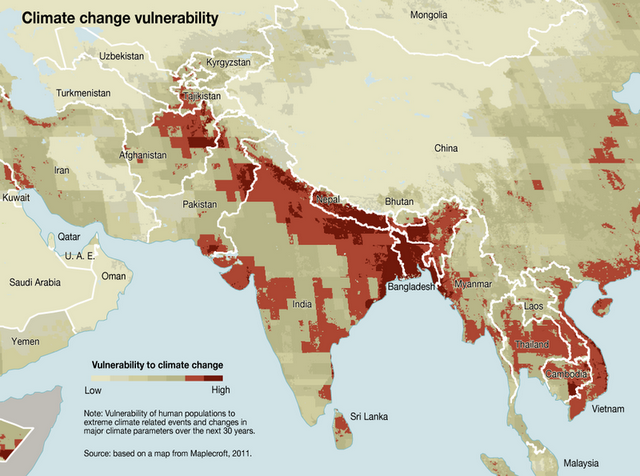
Droughts, floods, and mudslides are affecting a growing number of people worldwide, in part because of climate change, but also because population growth is highest in some of the most vulnerable areas of the world. For example, in the 10 years from 1998-2008, floods affected one billion people in Asia, but only four million people in Europe.
According to UNEP, women often bear the brunt of such disasters: “In parts of Asia and Africa, where the majority of the agricultural workforce are female, the impacts of such disasters have a major impact on women’s income, food security, and health,” as they are responsible for about 65 percent of household food production in Asia and 75 percent in Africa. In addition, they are often more likely than men to lose their lives during natural disasters.
UNEP Executive Director Achim Steiner said in a press release that “women often play a stronger role than men in the management of ecosystem services and food security. Hence, sustainable adaptation must focus on gender and the role of women if it is to become successful.”
“Women’s voices, responsibilities, and knowledge on the environment and the challenges they face will need to be made a central part of governments’ adaptive responses to a rapidly changing climate,” he added.
Investing in low-carbon, resource-efficient green technologies, water harvesting, and alternatives to firewood could strengthen climate change adaptation and improve women’s livelihoods, says UNEP.
“If Insufficient, Family Planning Funds Should Be Scaled Up”
UNEP spokesperson Nick Nuttall said in an interview that there are wide differences between how people consume natural resources, with North Americans and Europeans consuming far more than someone in a developing country. We should move toward more efficient use of natural resources, make the transition to a low-carbon economy, and scale up renewable energies, which can reduce demand for fossil fuels to meet economic growth and population increases, he said.
Asked whether climate change funds should therefore support family planning, Nuttall said the UN supports the right of couples and women to choose the size of their families and that many UN agencies and NGOs provide that support already.
But, he said, “there are funds available for family planning and, if insufficient, they should be scaled up to meet the demands and requests of developing countries. Given that this is an issue far wider than climate change, these existing funding streams should be where the financial support comes, rather than from a climate fund.”
Brenda Zulu is a member of Women’s Edition for Population Reference Bureau and a freelance writer based in Zambia. Her reporting from the COP-17 meeting in Durban (see the “From Durban” series on New Security Beat) is part of a joint effort by the Aspen Institute, Population Action International, and the Wilson Center.
Sources: UNEP.
Image Credit: “Climate change vulnerability,” courtesy of Riccardo Pravettoni, UNEP/GRID-Arendal.
Showing posts from category environmental health.