• woodrow wilson center
  • ecsp

New Security Beat

Subscribe:
  • rss
  • mail-to
  • Who We Are
  • Topics
    • Population
    • Environment
    • Security
    • Health
    • Development
  • Columns
    • China Environment Forum
    • Choke Point
    • Dot-Mom
    • Friday Podcasts
    • Navigating the Poles
    • Reading Radar
  • Multimedia
    • Water Stories (Podcast Series)
    • Backdraft (Podcast Series)
    • Tracking the Energy Titans (Interactive)
  • Films
    • Water, Conflict, and Peacebuilding (Animated Short)
    • Paving the Way (Ethiopia)
    • Broken Landscape (India)
    • Scaling the Mountain (Nepal)
    • Healthy People, Healthy Environment (Tanzania)
  • Publications
  • Events
  • Contact Us

NewSecurityBeat

The blog of the Wilson Center's Environmental Change and Security Program
Showing posts from category education.
  • The Missing Link in Understanding Global Trends? Demography

    ›
    Guest Contributor  //  August 11, 2014  //  By Monica Duffy Toft
    Gao_youth_crowd

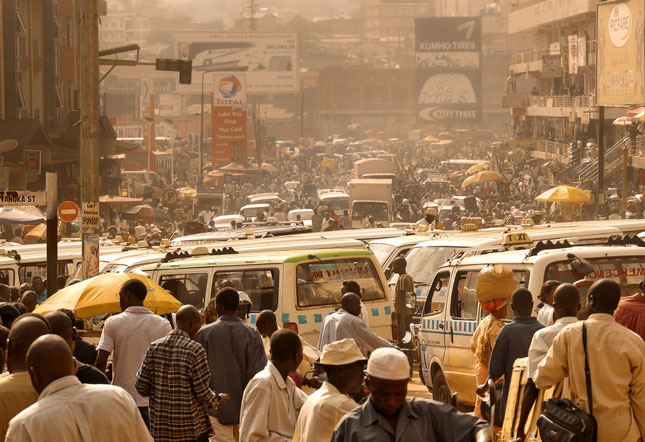
    Since the end of World War II, a number of the world’s most dramatic political events have resulted from demographic shifts and governments’ reaction to them. Despite this, political demography remains a neglected topic of scholarly investigation.

    MORE
  • Securing Rights or Results? A False Choice in Integrating Youth Into Sustainable Development

    ›
    From the Wilson Center  //  August 7, 2014  //  By Sarah Meyerhoff
    kabul_school

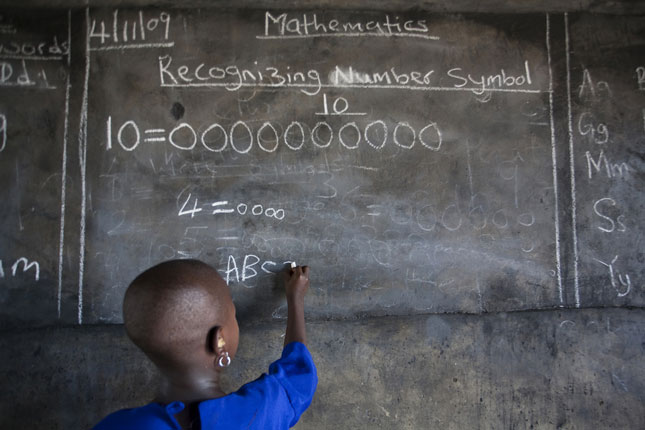
    “The greatest challenge we have today is that we have a world that is pushing back on rights,” said Dr. Babatunde Osotimehin, executive director of the United Nations Population Fund (UNFPA), at the Wilson Center. [Video Below]

    MORE
  • Suzanne Ehlers: Global Development Agenda Needs Re-Framing to Focus on Rights of Young People

    ›
    Friday Podcasts  //  August 1, 2014  //  By Sarah Meyerhoff
    ehlers_small

    Successfully incorporating the rights of young people and women into whatever development agenda succeeds the Millennium Development Goals next year hinges not only on the scope of new goals, but how those goals are worded, says Suzanne Ehlers in this week’s podcast.

    MORE
  • Lisa Palmer, Future Food 2050

    The Politics of Food Technology Innovation for Africa

    ›
    July 22, 2014  //  By Wilson Center Staff
    food-innovation-in-Africa

    The original version of this article, by Lisa Palmer, appeared on Future Food 2050.

    As a boy growing up on the shores of Lake Victoria in Kenya, Harvard international development professor Calestous Juma noticed a thing or two about innovations designed to bring more food into his community. He noticed, for instance, that the fishermen were always tinkering with new ways to trap fish while his father, a carpenter, would build the traps. He also noticed that his grandmother, a peanut grower, and other farmers who grew traditional crops such as sweet potatoes, struggled with ways to increase production beyond simply planting the best quality seeds and tubers.

    MORE
  • Investing in the Leaders of Tomorrow: World Population Day 2014 Youth Infographic

    ›
    Eye On  //  July 11, 2014  //  By Schuyler Null
    Leaders-of-Tomorrow_INFOGRAPHIC-final

    World Population Day began in 1987 after public imagination was sparked by the idea that there could be 5 billion people on Earth. Today, we’re well past 7 billion and according to the latest UN projections, headed north of 9 billion by mid-century.

    MORE
  • Youth and Global Violence: Saving History’s Largest Generation of Young People

    ›
    July 9, 2014  //  By Moses Jackson
    Syria_youth_violence

    As the largest-ever generation of young people enters adulthood, armed conflict is having a profound effect on their future. People under the age of 24 comprise nearly half the world’s population but are the primary participants in conflict today. Conflict is more prevalent in younger societies, and half of all forcibly displaced people are children.

    MORE
  • Lisa Meadowcroft on Integrating Water and Sanitation With Maternal Health Goals in Kenya

    ›
    Dot-Mom  //  Friday Podcasts  //  May 9, 2014  //  By Donald Borenstein
    Meadowcroft_small

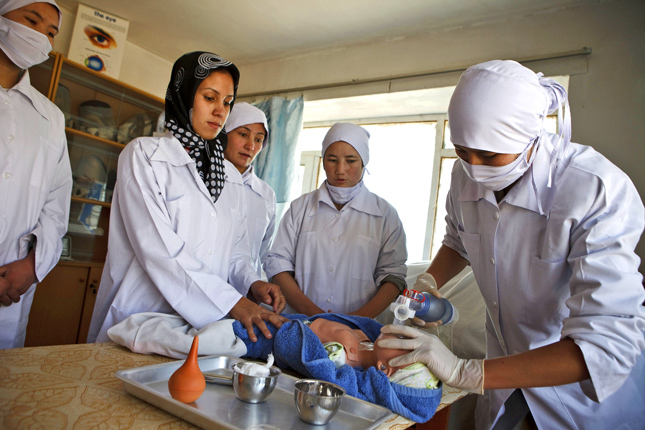
    In sub-Saharan Africa, women collectively spend an estimated 40 billion hours a year gathering water, often walking miles to the nearest source, which may not be clean, and braving exhaustion, harassment, and worse along the way. Water availability and quality at health clinics is often not much better, creating a crisis for women, especially pregnant women, throughout the continent. A mutual solution lies in better coordination between efforts to improve water, sanitation, and hygiene (WASH) and maternal health, says the African Medical and Research Foundation’s Lisa Meadowcroft in this week’s podcast.

    MORE
  • Why They Care: Reproductive Health Champions Spotlight Personal Connections to Development, Environment, More

    ›
    On the Beat  //  April 29, 2014  //  By Schuyler Null

    “Saving the planet depends on women achieving full human rights, and that begins with reproductive rights,” writes the Natural Resources Defense Council’s Frances Beinecke in a new set of essays on reproductive health published by the United Nations Foundation and the Aspen Institute.

    MORE
Newer Posts   Older Posts
View full site

Join the Conversation

  • RSS
  • subscribe
  • facebook
  • G+
  • twitter
  • iTunes
  • podomatic
  • youtube
Tweets by NewSecurityBeat

Trending Stories

  • unfccclogo1
  • Pop at COP: Population and Family Planning at the UN Climate Negotiations

Featured Media

Backdraft Podcast

play Backdraft
Podcasts

More »

What You're Saying

  • Volunteers,At,The,Lagos,Food,Bank,Initiative,Outreach,To,Ikotun, Pan-African Response to COVID-19: New Forms of Environmental Peacebuilding Emerge
    Rashida Salifu: Great piece 👍🏾 Africa as a continent has suffered this unfortunate pandemic.But it has also...
  • A desert road near Kuqa An Unholy Trinity: Xinjiang’s Unhealthy Relationship With Coal, Water, and the Quest for Development
    Ismail: It is more historically accurate to refer to Xinjiang as East Turkistan.
  • shutterstock_1779654803 Leverage COVID-19 Data Collection Networks for Environmental Peacebuilding
    Carsten Pran: Thanks for reading! It will be interesting to see how society adapts to droves of new information in...

What We’re Reading

  • Rising rates of food instability in Latin America threaten women and Venezuelan migrants
  • Treetop sensors help Indonesia eavesdrop on forests to cut logging
  • 'Seat at the table': Women's land rights seen as key to climate fight
  • A Surprise in Africa: Air Pollution Falls as Economies Rise
  • Himalayan glacier disaster highlights climate change risks
More »
  • woodrow
  • ecsp
  • RSS Feed
  • YouTube
  • Twitter
  • Facebook
  • Home
  • Who We Are
  • Publications
  • Events
  • Wilson Center
  • Contact Us
  • Print Friendly Page

© Copyright 2007-2021. Environmental Change and Security Program.

Woodrow Wilson International Center for Scholars. All rights reserved.

Developed by Vico Rock Media

Environmental Change and Security Program

Woodrow Wilson International Center for Scholars

Ronald Reagan Building and International Trade Center

  • One Woodrow Wilson Plaza
  • 1300 Pennsylvania Ave., NW
  • Washington, DC 20004-3027

T 202-691-4000