-
Which Demographic “End of History”?
› First published 30 years ago in the National Interest, Francis Fukuyama’s landmark essay, “The End of History?,” argued that, with the fall of fascism and communism, no serious blueprint for modern-state development lay open, save for those paths that would ultimately embrace both political and economic liberalism. Over the past two decades, movement toward this ideal end-state has trickled to a halt. Instead, the political elites of Eurasia’s regional powers—Russia, Turkey, Iran, and China—have crafted stable illiberal regimes that borrow whatever they need from free-market economics, electoral politics, nationalism, and religion. Their ascent has produced a form of “non-endpoint stability”—two mutually antagonistic camps: one composed of liberal democracies, the other a mix of illiberal hybrids. As long as these camps remain stable, the international system falls far short of Fukuyama’s theoretical end of history.
 -
Investing in Women’s Empowerment Essential to Achieving Peace, Security in Africa
›Africa in Transition // From the Wilson Center // November 14, 2019 // By Brigitte Hugh & Deekshita Ramanarayanan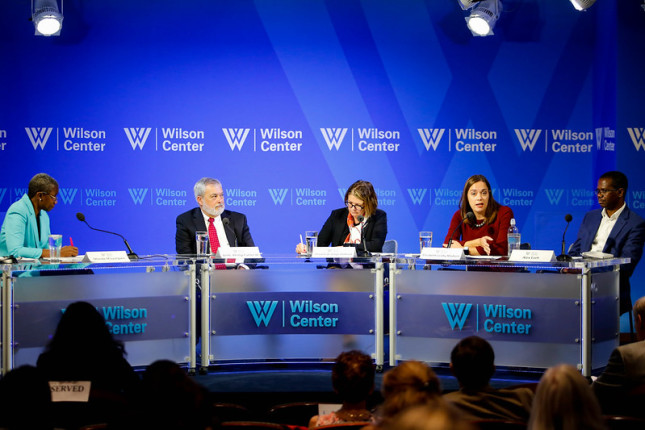
A country can achieve sustainable peace and security only if women are included, said Monde Muyangwa, Director of the Wilson Center’s Africa Program at a recent Wilson Center event on the role of women in promoting peace and security in Africa. “And I would argue that part of the challenges that we face on the African continent, the insecurity that we face in parts of the African continent,” she said, “is precisely because not all segments of society are included.”
-
Upcycling ‘Beach Snow’: Clearing Taiwan’s Oyster Farming Marine Debris
›“If you go to some Taiwan beaches, you can see snow,” said Chieh-Shen (Jason) Hu, Ocean Initiative Coordinator for Taiwan’s Society of Wilderness, a 6,000-member organization similar to Sierra Club. Hu was referring to pervasive Styrofoam marine debris from western Taiwan’s oldest industry, oyster aquaculture.
-
Hidden Forces: The Role of Water in Economic Prosperity
›From the Wilson Center // Water Security for a Resilient World // October 22, 2019 // By Brigitte Hugh“If you woke up one morning and found the taps in your house were dry, the first thing many of us here would do is pick up our phone and call the utility,” said Gordon Mumbo, Team Leader for Sustainable Water for the Mara River Basin, Winrock International. But for people living in the Mara River Basin, if their taps run dry, there is no utility to call, said Mumbo. Their only choice is to grab the water container and head down to the river where water quality may be poor. Mumbo spoke at the September 30th event, “Hidden Forces: The Role of Water in Economic Prosperity,” part of the “Water Security for a More Resilient World” series co-hosted by the Wilson Center, Winrock International, and the Sustainable Water Partnership.
-
To Accelerate Economic Growth, Uganda Should Prioritize Young People’s Health Care
›Even though it has always been said that young people are the future of society, it is important to note that we are very much present. We are ready to thrive and become productive adults. Unfortunately, many adolescents and young people are robbed of their potential. We still face a high risk of unplanned pregnancy, sexually transmitted infections, teenage pregnancy, early child bearing, unsafe abortions, and dropping out of school.
-
Redefining Geopolitics in the Age of Electric Vehicles
›Oil has played a pivotal role in shaping geopolitics for more than a century. But the rise of electric vehicles and shift toward cleaner fuels means that the world’s dependence on oil could begin to shrink, with both expected and unexpected consequences.
-
Healthy Women, Healthy Economies: Gender Parity in the Workplace
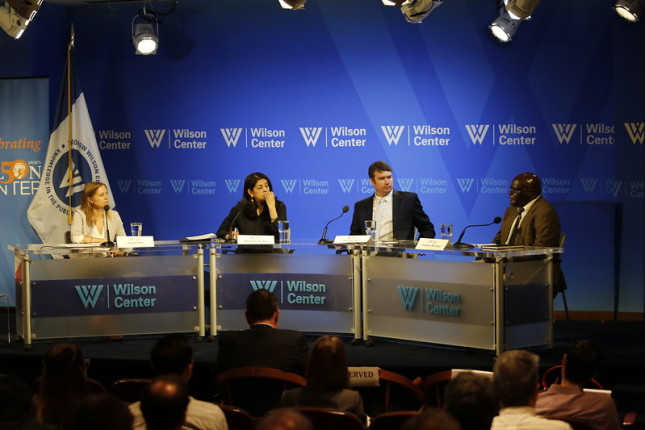
›“When you get to the power of voice, you have to be brave and you have to be that person that will speak up and say this isn’t right, but I want to be a part of the solution,” said Eileen Martin, the Global Director of Inclusion at EMD Serono, the U.S. division’s biopharmaceutical arm, of Merck KGaA, Darmstadt, Germany. She spoke at a recent Wilson Center event on the intersections between women’s health, leadership, and economic prosperity. This edition of Friday Podcasts is led by Sarah B. Barnes, Project Director of the Maternal Health Initiative at the Wilson Center. -
Healthy Women, Healthy Economies: A Look at Brazil (New Report)
›“Globally, women face obstacles to entering, advancing in, and remaining in the workforce as a result of gender discrimination, harassment, and a lack of supportive, gender-sensitive policies.” – Healthy Women, Healthy Economies: A Look at Brazil
In Healthy Women, Healthy Economies: A Look at Brazil, Sarah B. Barnes, Project Director of the Maternal Health Initiative, and Elizabeth Wang, Maternal Health Initiative Intern, discuss the intersections of women’s health and well-being and their economic empowerment. The report also takes a look at current progress and remaining barriers to female participation in Brazil’s workforce.
Showing posts from category economics.
 First published 30 years ago in the National Interest, Francis Fukuyama’s landmark essay, “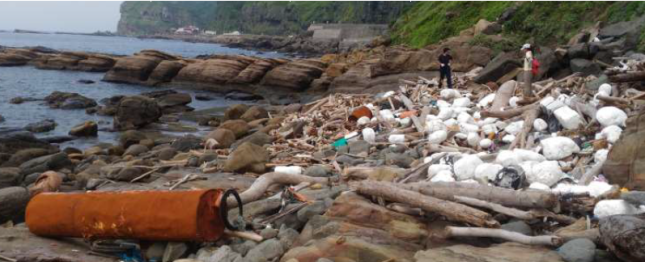

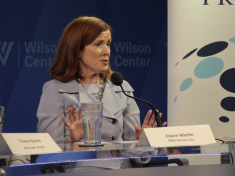 “When you get to the power of voice, you have to be brave and you have to be that person that will speak up and say this isn’t right, but I want to be a part of the solution,” said Eileen Martin, the Global Director of Inclusion at