-
Meeting the Needs of Latin America’s Rural and Urban Populations
›October 14, 2010 // By Kayly OberThere are two Latin Americas according to demographers. In one of the most urbanized regions of the world, the population of some countries remains highly rural. While countries like Chile, Argentina, and Uruguay are close to 90 percent urbanized, much of Central America, as well as Ecuador, Paraguay, and Bolivia, are only about 50-60 percent urban.
Across the continent, Latin America’s total fertility rate has fallen from almost six children per woman in the 1960s to 2.2 children in 2005. Population growth rates are projected to continue to decline from 1.5 percent in 2010 to roughly 0.75 percent by 2020. But less-urbanized countries continue to experience high population growth in their rural areas, particularly among their large indigenous populations, who are not experiencing the same shifts from high to low fertility.
For example, since 1990, communities surrounding Guatemala’s Sierra de Lacandon National Park have grown by 10 percent each year, with birthrates averaging eight children per woman. These larger communities and households have led to agricultural expansion into the park, which has lost 10 percent of its forest canopy since 1990.
Rural-to-rural migration is also a key, but often overlooked, dynamic as migrants move to other rural areas in search of new land to farm. Between 1961 and 2001, Central America’s rural population increased by 59 percent. This increased population was accompanied by a 15 percent increase in deforestation, totaling some 13 million hectares.
Although many rural areas of Latin America have high fertility rates and expanding populations, they also have a high unmet demand for contraception. Indigenous populations are particularly underserved by health providers for many reasons, including cultural barriers, language, and accessibility. According to the Population Reference Bureau, an estimated 50 percent of indigenous women in the Ecuadorian Amazon do not want another child, yet 98 percent of them do not have access to a modern contraceptive method.
While reaching historically disadvantaged populations in rural communities is not easy, some programs have had considerable success—and saved money—by combining environmental and health efforts. For example, the Guatemalan NGO ProPeten trained more than 80 midwives and health promoters and developed a radio soap opera in both Spanish and Q’eqchi’ to deliver health services and environmental education to the communities living near the Maya Biosphere Reserve.
Given links between rural population growth and agricultural expansion, expanding access to family planning may not only be a cost-effective way to help women reach their desired family size, but also a smart investment in forest conservation and climate mitigation—and perhaps a down-payment on a more secure future for all. -
UN Millennium Development Goals Summit: PHE On the Side
›September 21, 2010 // By Wilson Center StaffFrom 20-22 September 2010, world leaders will meet in New York City to discuss the United Nations’ “We Can End Poverty 2015” Millennium Development Goals, which include food security, maternal and child health, and environmental sustainability as key objectives, but controversially, make no mention of population. Officially, there is only one small “side session,” organized by Vicky Markham of the Center for Environment and Population, devoted to talking about the MDGs in the integrated context of population, health, and environment (PHE).
Since 2005, annual Millennium Development Goals reports have published data from a large number of international organizations and UN agencies to track progress. According to the 2010 Millennium Development Goals Report, the 2008 economic downturn has stalled momentum to achieve the eight goals. The report also stated that “though progress had been made, it is uneven. And without a major push forward, many of the MDG targets are likely to be missed in most regions.”
While PHE remains somewhat taboo at the UN, The New Security Beat continues to highlight the important linkages between these issues. Check out some of our recent coverage including Calyn Ostrowski’s blogging from the 2010 Global Maternal Health Conference, perspectives on Pakistan’s ongoing environmental and development disaster, the World Bank’s latest report on international land grabs and their effect on food security, and our coverage of all things population, health, and environment.
Sources: AFP, United Nations.
Photo Credit: Adapted from “United Nations,” courtesy of flickr user Ashitakka. -
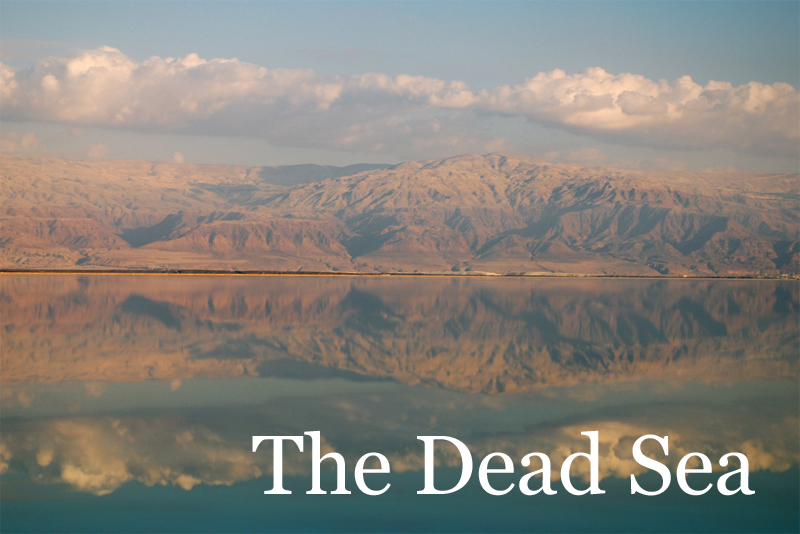
The Dead Sea: A Pathway to Peace for Israel and Jordan?
›September 7, 2010 // By Russell SticklorThe Middle East is home to some of the fastest growing, most resource-scarce, and conflict-affected countries in the world. New Security Beat’s “Middle East at the Crossroads” series takes a look at the most challenging population, health, environment, and security issues facing the region.
Amidst the start of a new round of Middle East peace negotiations, the fate of the Dead Sea — which is divided between Israel, Jordan, and the West Bank — may not seem particularly relevant. But unlike the perpetually thorny political issues of Israeli settlement policy and Palestinian statehood, the Dead’s continuing environmental decline has sparked rare consensus in a region beset by conflict. Israelis, Jordanians, and Palestinians all agree that something must be done. The much more difficult question, however, is what. But no one is lacking for ideas.Who Stole the Dead’s Water?
Some 1,400 feet below sea level, the shoreline of the Dead Sea lies at the lowest dry point on the planet. Since the 1970s, this ancient inland saltwater sea has been changing, and fast, with the water level dropping at a rate of three feet per year. The region’s stifling heat and attendant high evaporation rates have certainly played their part. But the real culprits are irrigated agriculture and household water demand, spurred by population growth, which have siphoned off much of the precious little water that once flowed into the sea.
Historically, the Jordan River and its tributaries have contributed roughly 75 percent of the Dead’s annual inflow, or about 1.3 billion cubic meters per year. Even though the Jordan isn’t a large river system, it is an economic lifeline in this parched region. The basin’s waters have been tapped to the point of exhaustion by businesses, farms, and households in Israel, Jordan, the West Bank, and, father afield, Syria and Lebanon. With the cumulative population of those areas projected to increase by 68 percent between now and 2050 (or from 44.9 million today to 75.4 million by mid-century), strain on the region’s water supply will only increase with each passing year.
Already, the Jordan and its tributaries are far worse for the wear. Pollution is an ongoing concern thanks to untreated wastewater entering the river system, while a sprawling network of dams and other irrigation diversions to “make the desert bloom” has carried with it a hefty environmental price tag. The Jordan now delivers a scant 100 million cubic meters to the Dead each year, with up to 50 percent of that flow likely contaminated by raw sewage due to inadequate wastewater treatment upstream.
Meanwhile, water depletion rates in the Dead have been exacerbated by mineral-extraction companies on the sea’s southern reaches, which rely heavily on evaporation ponds to remove valuable minerals from the saltwater.
Tapping the Red
Attempts to internationalize the environmental dilemmas facing the greater Dead Sea region range from a proposed transborder “peace park” in the Jordan River valley to a global, internet-driven campaign to vote the Dead Sea as one of the seven natural wonders of the world. But by far the most ambitious — and controversial — idea for restoring the Dead Sea’s health is to build a 186-mile canal to bring in water from the Red Sea.
The plan has been around for decades, but has not gotten off the drawing board due to its large scale and costs. The project’s centerpiece would be a waterway built through the Arava Desert Valley along the Israeli-Jordanian border. Proponents on both sides of the border say the canal could help raise the Dead’s surface level, helping restore the area’s struggling ecosystems. And given the canal’s substantial elevation drop from sea level to shoreline, its waters could likely be harnessed for hydroelectricity, powering desalination plants that would provide new fresh water for the region.
The project could also harness cross-border environmental issues to transcend long-standing political and religious divisions between the region’s Jewish and Arab populations. “People are saying that water will cause wars,Dr. Hazim el-Naser in a 2002 interview on the canal project, when he served as Jordanian minister of water and irrigation. “We in the region, we’re saying, ‘No.’ Water will enhance cooperation. We can build peace through water projects.” Currently, the canal proposal is the subject of a World Bank feasibility study expected to be completed in 2011.
Deep Skepticism Remains
Still, as diplomatically and environmentally promising as a Red-Dead canal may seem, not everyone is on board with the proposed project. Environmentalists’ concerns run the gamut from unintended ecological impacts on the Dead Sea’s delicate chemical composition, to a sense that, even after decades of on-and-off consideration, the project is being pushed at the expense of other possible policy options.
The New Security Beat recently contacted Mira Edelstein of the international environmental nonprofit Friends of the Earth Middle East via email to discuss some of the group’s concerns about the canal. Edelstein highlighted some of the potential pitfalls of — and alternatives to — a canal link to the Dead:
New Security Beat: How have population growth and the corresponding rise in food demand in Israel, Jordan, and the West Bank affected the Dead Sea’s health?Mira Edelstein: The Jordanian and Israeli agricultural sectors still enjoy subsidized water tariffs, making it easy to continue growing water-intensive crops. But this depletes flows in the lower Jordan River system, and directly impacts the Dead Sea.
NSB: Why is your organization opposed to the idea of a Red-Dead canal link?ME: Friends of the Earth Middle East does not support a Red Sea link, as this option carries the risk of irreparable damage. We believe that this option will not only damage the Dead Sea itself — where the mixing of waters from two different seas will surely impact the chemical balance that makes the Dead Sea so unique — but also because we are worried that pumping such an enormous amount of water from the Gulf of Aqaba will likely harm the coral reefs in the Red Sea itself.
NSB: What steps do you propose to improve environmental conditions in the Dead Sea and the Jordan River valley?
Additionally, the Arava Desert Valley, where the pipes will be laid, is a seismically active region. Any small earthquake might damage the pipes, causing seawater to spill and polluting underground freshwater aquifers.ME: It all has to do with the water policies in the region. The governments [of Israel, Jordan, and the West Bank] desperately need to reform our unsustainable policies, and at the top of this list is agriculture. This means removing water subsidies and changing over from water-intensive crops to more sustainable crops appropriate for the local environment.
Sources: Friends of the Earth Middle East, Israel Marine Data Center, Israel Ministry of Foreign Affairs, National Geographic, the New York Times, Population Reference Bureau, United Nations, Washington Post, Waternet, the World Bank.
In addition, wastewater treatment plants need to be built throughout all of the Jordan valley region so that only treated wastewater is used for agriculture. Some of that treated water, and of course fresh water, should be brought back into the Jordan River system that will later flow into the Dead Sea…In addition, ecotourism projects should be encouraged, as they are an economic stimulus that can help support greater environmental conversation in the region.
Photo Credit: “Dead Sea Reflection,” looking east across the Dead Sea to the Jordanian shore, courtesy of flickr user Mr. Kris. -
Interview With Wilson Center’s Maria Ivanova: Engaging Civil Society in Global Environmental Governance
›August 13, 2010 // By Russell SticklorFrom left to right, the five consecutive Executive Directors of the United Nations Environment Programme: Achim Steiner, Klaus Toepfer, Elizabeth Dowdeswell, Mostafa Tolba, and Maurice Strong, at the 2009 Global Environmental Governance Forum in Glion, Switzerland.
In the eyes of much of the world, global environmental governance remains a somewhat abstract concept, lacking a strong international institutional framework to push it forward. Slowly but surely, however, momentum has started to build behind the idea in recent years. One of the main reasons has been the growing involvement of civil society groups, which have demanded a more substantial role in the design and execution of environmental policy—and there are signs that environmental leaders at the international level are listening.
On the heels of the UN Environment Programme’s Governing Council meeting earlier this year in Bali, a call was put out to strengthen the involvement of civil society organizations in the current environmental governance reform process. To that end, UNEP is creating a Civil Society Advisory Group on International Environmental Governance, which will act as an information-sharing intermediary between civil society groups and regional and global environmental policymaking bodies over the next few years. (The application deadline has been extended; applicants interested in joining the Advisory Group should submit their materials via e-mail by Sunday, August 15, 2010—full instructions are listed at the end of this post.)
Maria Ivanova, a fellow at the Woodrow Wilson Center and director of the Global Environmental Governance Project, played a key role in ensuring civil society engagement in the contemporary political process on international environmental governance reform. Ivanova recently sat down with the New Security Beat to talk about the future prospects for global environmental governance, the Rio+20 Earth Summit in Brazil in 2012, and how to foster a more open and sustained dialogue between the worlds of environmental policymaking and academia.
New Security Beat: What are the pitfalls of a regional approach to addressing climate change and other environmental issues, as opposed to an international approach?
Maria Ivanova: Global environmental problems cannot be solved by one country or one region alone, and require a collective global response. But they can also not be addressed solely at the global level because they require action by individuals and organizations in particular geographies. The conundrum with climate change is that the countries and regions most affected are the ones least responsible for causing the problem in the first case. We cannot therefore simply substitute a national or regional response for a global action plan, as more often than not, it would be a case of “victim pays” rather than “polluter pays”—the fundamental principle of environmental policy in the United States and most other countries. Importantly, however, our global environmental institutions do not possess the requisite authority and ability to enforce agreements and sanction non-compliance.
NSB: What are some of the inherent difficulties in getting countries to see eye-to-eye and collaborate on the development of institutions for global environmental governance?
MI: The most important difficulty is perhaps the lack of trust and a common ethical paradigm accompanied by a pervasive suspicion about countries’ motives. Secondly, there is a perceived dichotomy between environment and development that has lodged in the consciousness of societies around the world. Thirdly, there’s the inability of current institutions to deliver on existing commitments. The resulting blame game feeds suspicions and restarts the whole cycle again.
NSB: Do you see the 21st century’s various environmental challenges as being a driver of international conflict or cooperation?
MI: After the fall of the Berlin Wall, it was expected that global environmental (and other) issues would be a driver for cooperation. A green dividend was expected, and the 1992 Rio Earth Summit fostered much hope. But quite the opposite happened. Global environmental challenges such as climate change, for example, have caused more conflict than cooperation. Other concerns, such as whaling and biodiversity loss, have also triggered conflicts as governments have become fiercely protective of their national sovereignty. On the other hand, civil society groups and even individuals around the world have come together in new coalitions and formed new alliances. So while at a governmental level we observe increased tension, at a civil society level, we witness unprecedented mobilization and collaboration, especially through social media. Obviously, we live in a new world.
NSB: There has been a lot of talk about bridging the gap between the academic and policy worlds—two communities that do not typically have much interaction, but likely have a lot to learn from one another. What steps do you think can be taken regarding environmental governance that might facilitate a sustained dialogue and interaction between the two sides?
MI: Many academics have thought, debated, and written about global environmental governance. Fewer have presented their analysis to policymakers and politicians. At the Global Environmental Governance (GEG) Project that I direct, we seek to bridge that gap and provide a clearinghouse of information, serving as a “brutal analyst,” and acting as an honest broker among various groups working in this field. Moreover, we are in the process of launching a collaborative initiative among the Global Environmental Governance Project, the Center for Law and Global Affairs at Arizona State University, and the Academic Council on the UN System to collect, compile, and communicate academic thinking on options for reform to the ongoing political process on international environmental governance. We are creating a Linked-In group where we hope to engage in discussions with colleagues from universities around the world with the purpose of generating ideas, developing options, and testing them with policymakers. Moreover, we are engaging with civil society beyond academia. The GEG Project is sponsoring five regional events on governance in Argentina, China, Ethiopia, Nepal, and Uganda that are taking place in August and September. Led by young environmental leaders in those countries who attended the 2009 Global Environmental Governance Forum in Glion, Switzerland, these consultations are generating genuine engagement in thought and action on governance. So, new initiatives are certainly emerging and the results could be visible by the Rio+20 conference in May 2012.
NSB: What are your expectations for Rio+20?
MI: Given that governance is a major issue on the agenda for Rio+20, my hope is that the conference will bring about a new model for global governance, which reframes the environment-development dichotomy, cultivates shared values, and fosters leadership. Indeed, I am convinced that leadership is the most important necessary condition for change. We need to encourage more bold, visionary, entrepreneurial behavior rather than conformity.
My hidden hope for Rio+20 is that it will dramatically shift the narrative and move us from sustainable development to sustainability. Sustainability builds on sustainable development but goes further than that. As a concept it allows for new thinking, new actors, and new politics. It avoids the North-South polarization of sustainable development, which is so often equated with development and is therefore understood as what the North has already attained and what the South is aspiring to. By contrast, no one society has reached sustainability, and learning by all is necessary. Moreover, much of the innovative thinking about sustainability is happening in developing countries, which are trying to improve quality of life without jeopardizing the carrying capacity of the environment. Progressive thinking is also taking place on campuses in industrialized countries, which are creating a new sense of community and collaboration. Indeed, young people around the world are engaging in finding new ways of living within the planetary limits in a responsible and fulfilling manner.
Maria Ivanova is director of the Global Environmental Governance Project, a fellow at the Woodrow Wilson International Center for Scholars, and an assistant professor of global governance at the McCormack Graduate School of Policy and Global Studies, University of Massachusetts Boston.
If you wish to nominate yourself or someone else as a candidate for the Civil Society Advisory Group on IEG, you need to submit materials to civil.society@unep.org by Sunday, August 15, 2010 (please copy info@environmentalgovernance.org). You can find the nomination form and the Terms of Reference for the group at the Global Environmental Governance Project’s website.
Photo Credit: “UNEP Leadership,” courtesy of the Global Environmental Governance Project. -
Flooded With Food Insecurity in Pakistan
›The floods sweeping across Pakistan have caused widespread destruction, ruined livelihoods, displaced millions, and sparked a food crisis. Food prices have skyrocketed across the country as miles of farmland succumb to the deluge, including 1.5 million hectares in Punjab province, Pakistan’s breadbasket and agricultural heartland.
Food insecurity is now rife across the country — yet even before the floods, millions of Pakistanis struggled to access food. Back in 2008, the UN estimated that 77 million Pakistanis were hungry and 45 million malnourished. And while many developing nations have begun to recover from the global food crisis of 2007-08, Pakistan’s food fortunes have remained miserable. Throughout 2010, Pakistan’s two chief food staples, rice and wheat, have cost 30 to 50 percent times more than they did before the global food crisis. Drought, rampant water shortages, and conflict have intensified food insecurity in Pakistan in recent months.
A new edited book volume published by the Wilson Center’s Asia Program, Hunger Pains: Pakistan’s Food Insecurity, examines the country’s food insecurity. The book has already been the subject of a news story and an editorial in the Pakistani newspaper Dawn. The book, edited by Michael Kugelman and Robert M. Hathaway, is based on the 2009 Wilson Center conference of the same name. It assesses food supply challenges, access issues, governance constraints, social and structural dimensions, gender and regional disparities, and international responses.
The book makes a range of recommendations. These include:- Declare hunger a national security issue. Since some of Pakistan’s most food-insecure regions lie in militant hotbeds, hunger should be linked to defense, and food provision projects should be given ample public funding.
- Diversify the crop mix so that Pakistan’s agricultural economy revolves around more than wheat and rice. The country should accord more resources to crops that are less water-intensive and more nutritious.
- Give schools a central focus in food aid and food distribution. Using schools as a venue for food distribution gives parents powerful incentives to send their children to school.
- Tackle the structural dimensions. Strengthening agricultural institutions, improving infrastructure and storage facilities, and injecting capital into a stagnant farming sector are all key to making Pakistan more food-secure. Yet unless Pakistan deals with poverty, landlessness, and entrenched political interests in agriculture, food insecurity will remain.
Michael Kugelman is program associate with the Asia Program at the Woodrow Wilson International Center for Scholars.
Photo Credit: “Chitarl, Pakistan” where floods damaged the way over Lawari pass and killed five in August 2006. Courtesy of flickr user groundreporter -
Land, Education, and Fertility in Rural Kenya
›August 10, 2010 // By Wilson Center StaffExcerpted from a summary on the Population Reference Bureau‘s website, by Karina Shreffler and F. Nii-Amoo Dodoo. The original version of this article appeared in Population and Environment 30, no. 3 (2009): 75-92.
Little is known about the role of land inheritance in the link between land availability and fertility. The recent transition from high to lower levels of fertility in some African countries presents an opportunity to clarify the underlying causes of this decline, since the individuals involved in the transitions are still alive.
Using data from focus group discussions with people whose childbearing occurred before and during the rapid and unexpected fertility decline in Nyeri District in rural Kenya, we examined the impact of diminishing land availability, farm size, and inheritance patterns on fertility decisionmaking and behavior. The results shed new light on the role of education, long considered the key determinant of fertility transition.
Our research suggests that rather than inheritance being an external factor affecting fertility behavior, parents in Nyeri District chose to educate their children after realizing they would not be able to bequeath a sufficient amount of land. Our work provides evidence of the importance of considering the influence of environmental factors on demographic processes, particularly in regions of resource dependence.
Continue reading on PRB.
For more on Kenya’s youth, see New Security Beat‘s interview with Wilson Center Scholar Margaret Wamuyu Muthee.
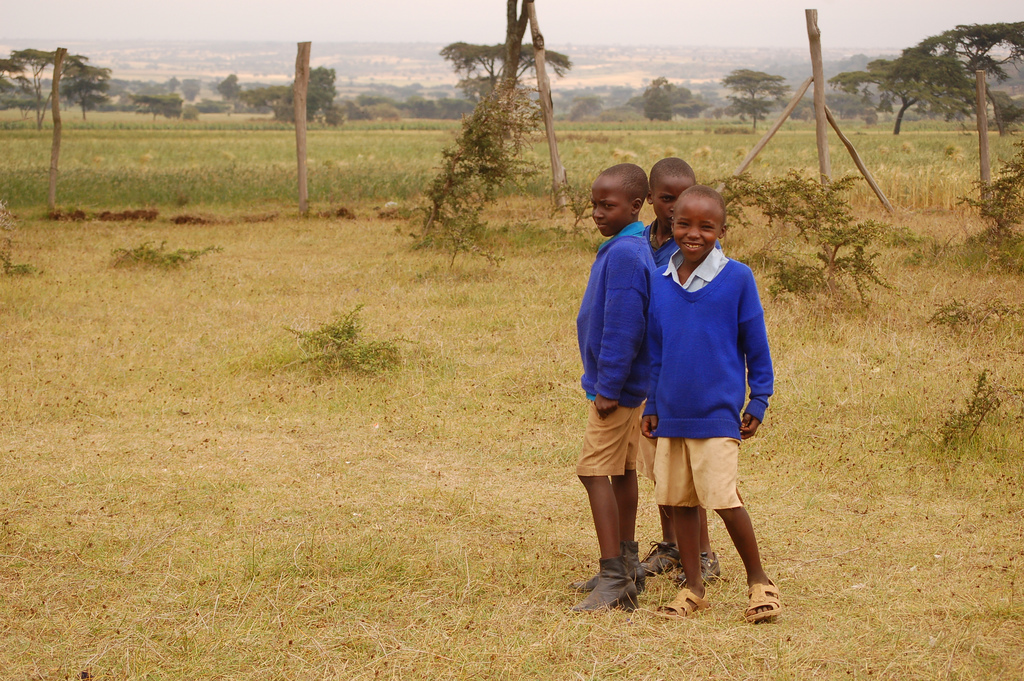
Photo Credit: “Olaimutiai Primary School (Maasai Land, Kenya),” courtesy of flickr user teachandlearn. -
“There Is No Choice:” Climate, Health, Water, Food Security Must Be Integrated, Say Experts
›August 9, 2010 // By Russell SticklorBureaucratic stovepipes plague international development efforts, and aid for pressing environmental and human security concerns—such as climate change, food shortages, fresh water access, and global health threats—rarely matches the reality on the ground in the developing world, where such health and environmental problems are fundamentally interconnected.
Instead, development efforts in the field—whether spearheaded by multilaterals, bilaterals, or NGOs—are commonly devoted to single sectors: e.g., the prevention and treatment of a single disease; the implementation of irrigation infrastructure in a specific area; or the introduction of a new crop in a certain region. The reasons for such a narrow focus can come from multiple sources: finite resources, narrowly constructed funding streams, emphasis on simple and discrete indicators of success, and institutional and professional development penalties for those who conduct integrated work. But some experts argue that integrating problem-solving initiatives across categories would not only improve the efficacy of development efforts, but also better improve lives in target communities.
As part of the USAID Knowledge Management Center‘s 2010 Summer Seminar Series, a recent National Press Club panel on integration featured a frank discussion of both the opportunities and challenges inherent in breaking down barriers within and between development agencies. Panelists from the World Bank’s Environment Department, the White House Council on Environmental Quality, and the Woodrow Wilson Center’s Environment Change and Security Program weighed in on the prospects for cross-sectoral integration.
Addressing the impacts of a global problem like climate change “requires multilevel approaches,” and necessitates that we “think multisectorally along the lines of agriculture, water, transportation, energy, [and] security,” said Loren Labovitch of the White House Council on Environmental Quality. The four topics under discussion—climate change, food security, water, and health—are all Obama administration priorities, as reflected by dedicated programs and special initiatives. Finding ways to practically integrate these interrelated challenges (through efforts like the Feed the Future Initiative or the Global Health Initiative) is getting more attention from policy analysts and policymakers with each passing year.
Integration in Practice: Success Stories
While there may be an emerging willingness to discuss and even experiment with holistic programming, what does it actually look in practice? Panelist Geoff Dabelko, director of the Woodrow Wilson Center’s Environmental Change and Security Program, singled out integrated development programs in the Philippines, the Democratic Republic of Congo, and Asia as examples.
Philippines: The PATH Foundation Philippines’ Integrated Population and Coastal Resource Management (IPOPCORM) initiative uses an integrated approach to address health and environmental concerns in coastal communities. Their “basket of services” includes establishing a locally managed protected marine sanctuary to allow local fish stocks to recover, promoting alternative economic livelihoods outside of the fishing industry, and improving access to local health services and commodities, said Dabelko. To date, IPOPCORM has yielded several notable improvements, among them reduced program costs and improved health and environmental outcomes as compared to side-by-side single sector interventions. A forthcoming peer-reviewed article will appear in Environmental Conservation, and will detail the controlled comparison study of the IPOPCORM project.
Democratic Republic of Congo: Mercy Corps has also successfully pursued cross-sectoral programming as part of a larger effort to be more holistic in its humanitarian and development responses. In war-torn eastern DRC, Mercy Corps brought practitioners with expertise in natural resource management into the fold of what has historically been an emergency relief mission. In particular, the Mercy Corps mission has fused humanitarian assistance with longer-term development efforts such as enhanced environmental stewardship. For example, promoting the use of fuel-efficient cookstoves eases pressure on local forest resources by lowering the need for firewood, and improves respiratory health by lowering air pollution. The project scaled up the effort through resources from further integration, with carbon credits from avoided emissions being sold through a local broker to the European cap and trade market. These resources in turn helped finance more cook stoves, which now total 20,000 for this project.
“The lesson is we have no excuse for not doing this anywhere in the world and saying some place is too unstable,” Dabelko said. “If we can do it [integrated projects] in eastern DRC, we should be able to do it anywhere.”
Asia: Tackling programmatic integration starts with better understanding the interconnections between environmental and health challenges. Dabelko cited a recent effort of the environment and natural resources team within USAID’s Asia Bureau as an example of breaking out of narrow bureaucratic stovepipes.
USAID staff recognized that a wide set of climate, energy, economic, governance, and conflict issues affected their core biodiversity and water portfolios, even if they did not have the time, expertise, or resources to investigate those issues in detail. Trends that appeared to be in the periphery were not viewed as peripheral to planning and designing programs for long-term success.
Working with the Woodrow Wilson Center, the USAID Asia Regional Bureau engaged experts on a diverse set of topics normally considered outside their portfolios. The resulting workshop series and report led to a deeper understanding of the possible impacts of increased Himalayan glacier melt and Chinese hydropower plans on food security and biodiversity programs in the lower reaches of the Mekong River. Bringing analysis from these topically and geographically remote areas into local-level development planning is a process that will require a similar willingness to go outside the typical bounds of one’s brief.
More Integration Ahead?
These case studies provide a glimpse of what integrated programming can look like on the ground. Still, significant hurdles remain standing in the way of regular and effective integration. Cross-sectoral programming demands that old problems be addressed in innovative and perhaps unfamiliar ways, requiring the addition of new capacity in development organizations and better coordination within and between agencies. That can be a complicated process, noted Dabelko, since efforts to pursue greater programming integration can be “hamstrung by earmarks and line items.”
Integration can also prove tricky because it requires a greater willingness to accept multiple indicators of success unfolding over different time frames—health gains may occur quickly, for example, while progress on environmental conservation may unfold less speedily. This means existing programs might need to be reshaped and reoriented to accommodate these divergent time frames, which could prove somewhat difficult. “Integration can be a challenge, both from a programming perspective and from an organizational perspective,” acknowledged moderator Tegan Blaine, climate change advisor for USAID’s Africa Bureau.
Further, the temptation remains strong among appropriators and implementers alike to maintain control over authority and resources in their traditional portfolios. Getting long-time practitioners in particular issue areas to willingly cede some of their turf in the pursuit of greater integration has historically been the “real world” that stands in the way of such integrated work.
But, as shown by the standing-room-only crowd at the seminar, momentum is slowly starting to build in pursuit of breaking down old programming walls and finding new approaches to addressing emerging challenges in human and environmental security.
“There is no choice” but to fuse development agendas with climate change adaptation efforts, asserted Warren Evans, director of the World Bank’s Environment Department. “It can’t be a parallel process anymore.”
Photo Credit: “2010 Summer Seminar Series – July 15th Panel Discussion on Food Security, Climate Change, Water and Health,” used courtesy of USAID and the National Press Club. -
Drug Barons, Poachers, Ranchers, Oh My! Guatemala’s Forests Under Siege
›July 29, 2010 // By Kayly OberLast week, the New York Times ran an article about the many threats converging on Guatemala’s Maya Biosphere Reserve. “There’s traffickers, cattle ranchers, loggers, poachers and looters,” Richard D. Hansen, an American archaeologist, told NYT. “All the bad guys are lined up to destroy the reserve. You can’t imagine the devastation that is happening.”
Eric Olson, senior associate of the Mexico Institute at the Woodrow Wilson Center, agrees that drug trafficking is a major problem in the Petén, a region of northern Guatemala that lies within the Biosphere. “Petén’s isolation has made it possible for the biodiversity of the area to survive and thrive during periods of great social turmoil, especially in the 1980s,” Olson told the New Security Beat. “However, the isolation also makes it an ideal place for drug traffickers to move their illegal product northward.”
According to NYT, peasant squatters in search of farmland constitute an additional threat because they “often become pawns of the drug lords,” and, in some instances, “function as an advance guard for the drug dealers, preventing the authorities from entering, warning of intrusions, and clearing land that the drug gangs ultimately take over.”
Plus, the situation seems poised to worsen. According to a UNESCO report, Petén’s population has surged from 25,000 during the 1970s to upwards of 500,000 today. This growth, coupled with an attendant rise in subsistence farming, has had significant environmental impacts across the region.
Population Growth in Protected Areas
“Population has a huge impact on Guatemala’s ecological diversity,” David López-Carr, an associate professor in the University of California-Santa Barbara’s Geography Department, wrote in an e-mail to the New Security Beat. Most striking, according to López-Carr, are total fertility rates in rural areas, which remain “over 5 and much higher still – higher than 6 – in the most remote rural areas where ecological diversity is highest.”
Despite the fact that most migrants move to Guatemala City, smaller cities, or the United States, López-Carr wrote that the “tiny fraction (probably under 5%) that move to remote rural areas have a major impact on biodiversity and forest conversion.” López-Carr pointed out that “in core conservation areas of the Maya Biosphere Reserve, in-migration has swelled the population in some regions by nearly 10% annually during the past two decades.”
At a 2008 meeting at the Woodrow Wilson Center, professors Justin Brashares and George Wittemyer said three factors drive population growth near protected areas in Africa and Latin America: 1) more money for parks (as measured by protected-area funds from the Global Environment Facility); 2) more park employees; and 3) more deforestation on the edges of protected areas.
To avoid population pitfalls, Guatemala’s President Alvaro Colom should take this research into account before putting his “Cuatro Balam” eco-tourism plan into action. The initiative—named for the four main figures in the Mayan creation myth—seeks to divide the reserve into an archaeological park in the north and an agricultural zone in the south, while setting up a Maya studies center for scholars and installing an $8 million electric mini-train to shuttle tourists through the reserve.
The Perils of “Pristine Conservation”
While President Colom’s plan is certainly ambitious, communities in Petén are cautious. They see Cuatro Balam as a continuation of earlier government-funded projects, where “pristine conservation” – oft-touted by large conservation organizations – prohibited human interaction with the forests and limited socioeconomic opportunities for local populations.
Liza Grandia, an anthropology professor at Clark University who has lived and worked in the Peten region, points out in Conservation and Society that “primary” or “pristine” forests flagged as biological hotspots by these conservation organizations are likely remnants of ancient Mayan agroforestry. However, Mayan descendents are not allowed to live within nor manage these areas.
Instead, stewardship of many federal parks is delegated to large conservation outfits or the government. But Rosa Maria Chan, director of ProPeten, a community-based environmental organization, wrote in an e-mail to the New Security Beat that “the environment is not always the government’s priority,” adding that “development” normally signifies large infrastructure projects, instead of smaller-scale ideas that would better address human development.
The Benefits of Community-Based Conservation
One successful local project is the Association of the Forest Community of Péten (ACOFOP), a community-based association made up of 23 indigenous and farming organizations. Under ACOFOP’s direction, uncontrolled settlement in the biosphere reserve has been stopped, communities have ceased the conventional slash-and-burn practices, and forest fires have virtually ceased in community-managed areas. ACOFOP’s projects have also created jobs in local communities, where the beneficiaries re-invest their earnings into collective infrastructure.
In the mid-1990s/early 2000s, ProPeten’s Remedios I and II programs, funded mainly by USAID, used radio soap operas and mobile theaters to educate residents about conservation, reproductive health, nutrition, and sustainable agriculture. Underlying these programs’ success was an unprecedented survey that gathered data on the rapidly changing population-environment dynamics in this frontier region.
Grandia, who served as head of ProPeten’s board of directors from 2003-2005, writes in 2004 Wilson Center article that “the integrated DHS [Demographic and Health Survey] has been a critical part of developing…programs linking health and population with the environment,” which lowered Petén’s total fertility rate from 6.8 to 5.8 children per woman in just four years. Plans are underway to include a similar environmental module in the next DHS survey.
Although the fate of Guatemala’s forests is subject to many outside forces, from the government’s development plans to the cartel’s smuggling operations, small-scale, community-based programs may have the best shot at transforming the drivers of deforestation into sustainable, economic development opportunities.
Photo Credit: “Keel-billed Toucan at Tikal National Park, Guatemala,” courtesy of flickr user jerryoldenettel.
Showing posts from category conservation.