-
Double Dividends: Population Dynamics and Climate Adaptation
›
If current projections hold, Africa’s population will more than double in 40 years, putting more people at risk of food, water, health, and economic insecurity as the climate changes, as well as negating progress made in reducing carbon emissions per person. But what if it didn’t? [Video Below]
-
New Film Explains Blue Ventures’ Integrated Approach to Development and Conservation in Madagascar
›Blue Ventures has become a leader in the population, health, and environment (PHE) community through its work with the remote, semi-nomadic Vezo people living along Madagascar’s southwestern coast. In a new short documentary, The Freedom to Choose: Empowering Communities to Live With the Sea, Blue Ventures describes how their approach has helped the Vezo respond to the combined challenges of resource scarcity, poor reproductive health, and unsustainable livelihoods.
-
Mapping China’s Dam Rush – and the Environmental Consequences
›
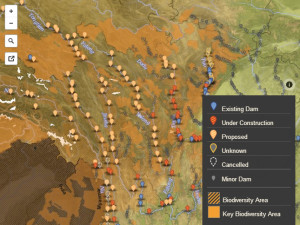
In southwestern China, three parallel rivers – the Nu, Lancang, and Jinsha (also known as the Upper Mekong, Salween, and Yangtze, respectively) – form a series of corridors that connect the tropical rainforests of Southeast Asia to the Tibetan Plateau. These areas are some of the most biodiverse in the world, and scientists argue they have value as “climate refugia” – places worth preserving in order to allow species to retreat to cooler, more suitable climates as temperatures rise. A cascade of dams, however, has been planned for the region, threatening to submerge habitats, reduce the flow of tributary rivers, and make the area less suitable for many plant and animal species.
-
Kathleen Mogelgaard: Four Steps to Better Link Climate Adaptation and Reproductive Health Strategies
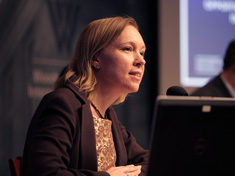
›Climate change vulnerability is closely tied to population dynamics, says Kathleen Mogelgaard in this week’s podcast. “We know that population size, composition and spatial distribution around the world is constantly changing, and that these changes do have implications for climate change exposure, sensitivity, and adaptive capacity – the three elements of vulnerability.”
-
In Nepal, Integrating Forest and Family Health Is Improving Lives
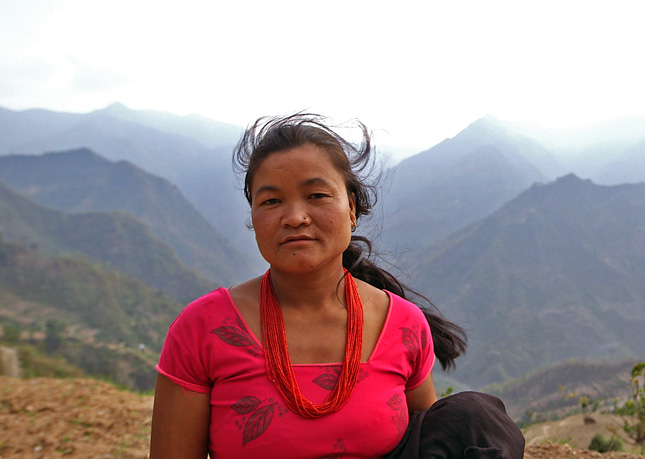
›March 24, 2014 // By Sean PeoplesFor years, the Chepang people have lived off the land in Nepal’s forested central foothills. Communities cleared trees to start small subsistence farms, harvested the surrounding area for firewood, and eventually moved on after the wood, soil, and water were depleted.
-
Gidon Bromberg: Jordan River Shows Water Can Be a Path to Peace, Generate Will for Change
›
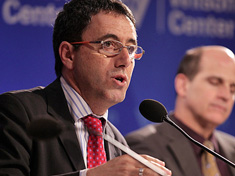
At last month’s launch of the USAID Water and Conflict Toolkit at the Wilson Center, Gidon Bromberg explained that the toolkit is about much more than just conflict. “It’s put very much in forefront the possibilities of peacebuilding,” he says in this week’s podcast. “Water is an opportunity in areas where there aren’t many opportunities.”
-
To Save the Environment, Move Beyond Finger Pointing, Says Andrew Revkin
›“The idea that there’s an information deficit – that if you fill it, it’ll change the world – is fantasy,” says Andrew Revkin in an interview at the Wilson Center.
-
Chris Berdnik, Pulitzer Center on Crisis Reporting
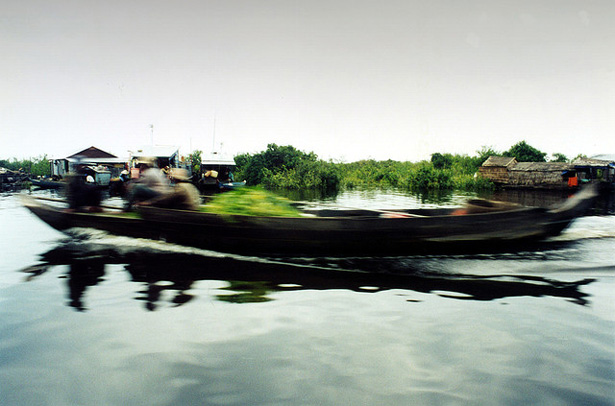
Density Breeds Scarcity on Cambodia’s Lake Tonle Sap
›March 10, 2014 // By Wilson Center StaffThe original version of this article, by Chris Berdnik, appeared on the Pulitzer Center on Crisis Reporting.
I meet Keo Mao, 42, in the floating fishing village of Akol on Cambodia’s Lake Tonle Sap. The houses here move seasonally with the lake, which expands by a factor of five during the monsoon rains and recedes again in the dry months. Fish supply about 80 percent of the animal protein eaten by Cambodians, and about 60 percent of the inland catch comes from the Tonle Sap.
Showing posts from category conservation.